Shape identification Adding up to 1000 Worksheets for Ages 6-7
6 filtered results
-
From - To
Explore our Shape Identification Adding up to 1000 Worksheets, designed for children aged 6-7. These engaging printables effortlessly combine shape recognition with advanced addition practice, helping young learners master essential math skills. Each worksheet presents a unique set of shapes and addition challenges, reinforcing analytical abilities and boosting confidence. Perfect for both classrooms and home study, these worksheets make learning fun and effective. Tailored for developing minds, our expertly crafted activities ensure your child is on the path to math success. Visit our webpage to download and incorporate them into your teaching toolkit today!
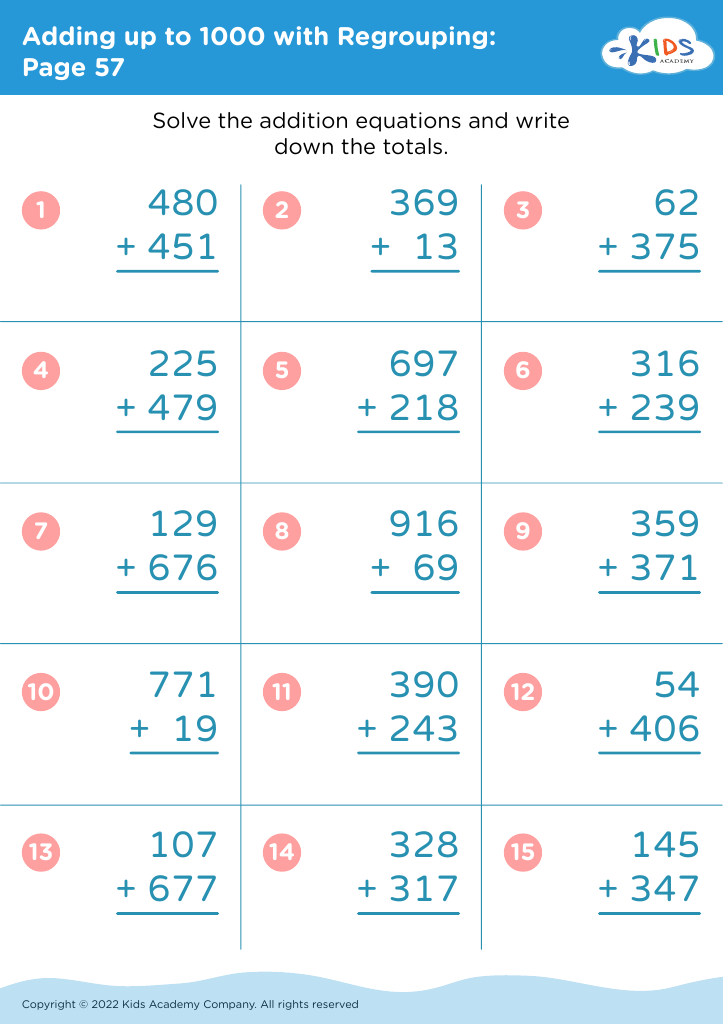
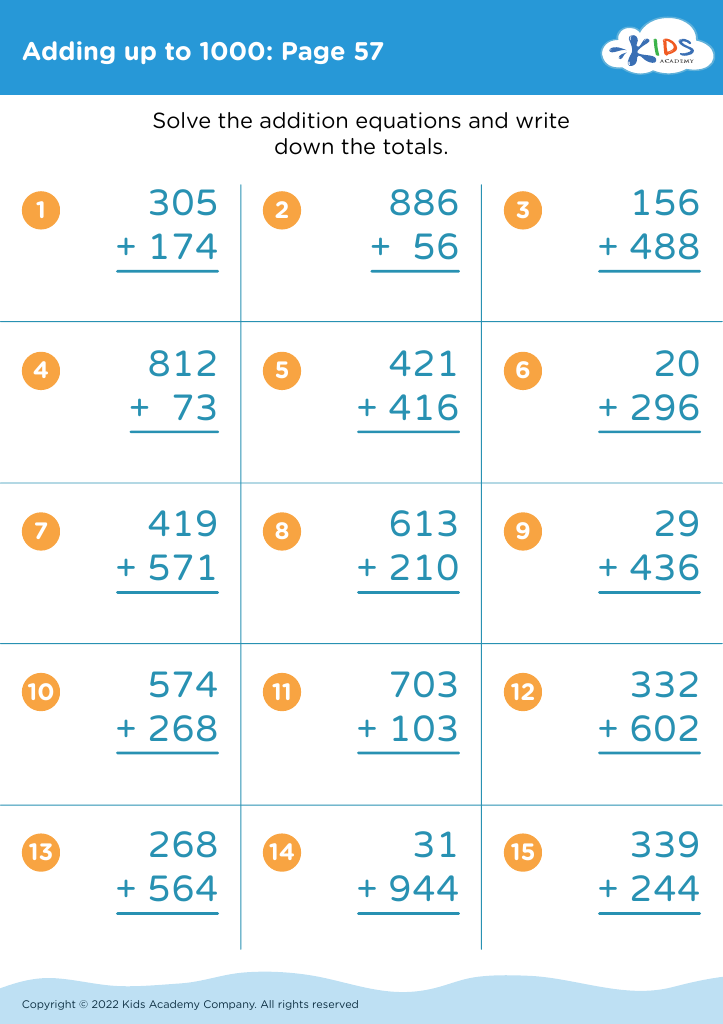
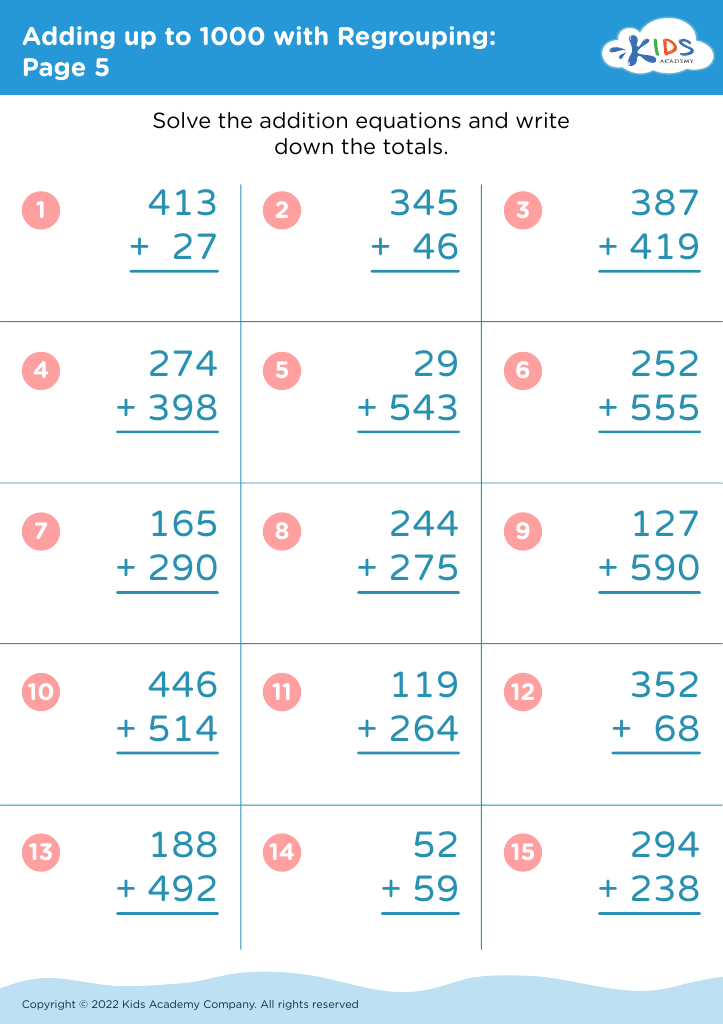
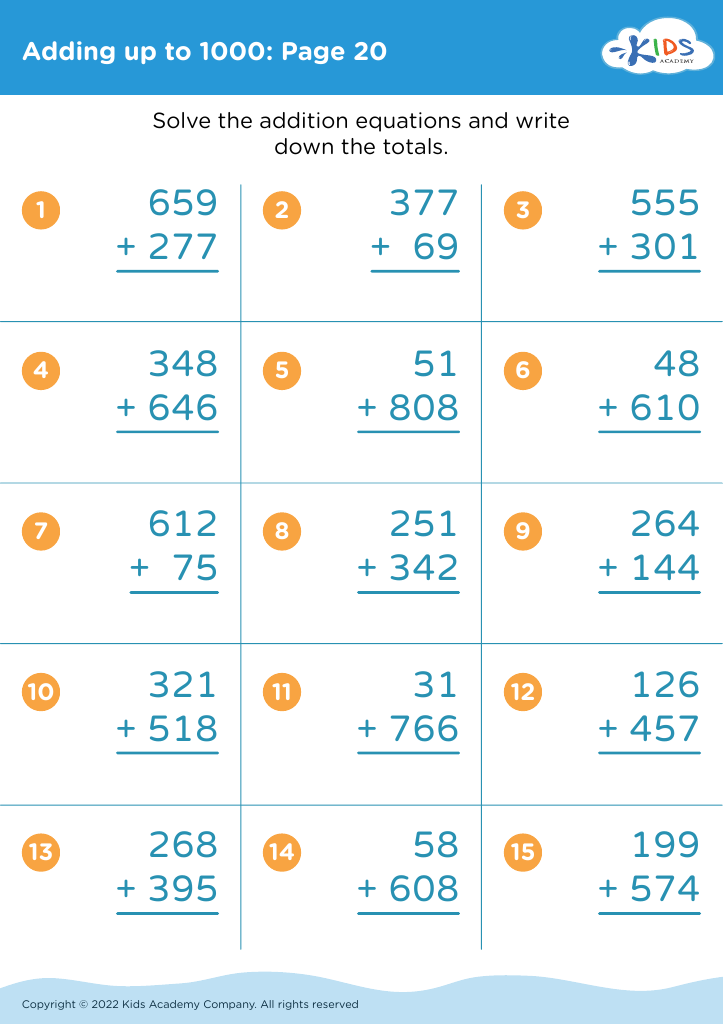
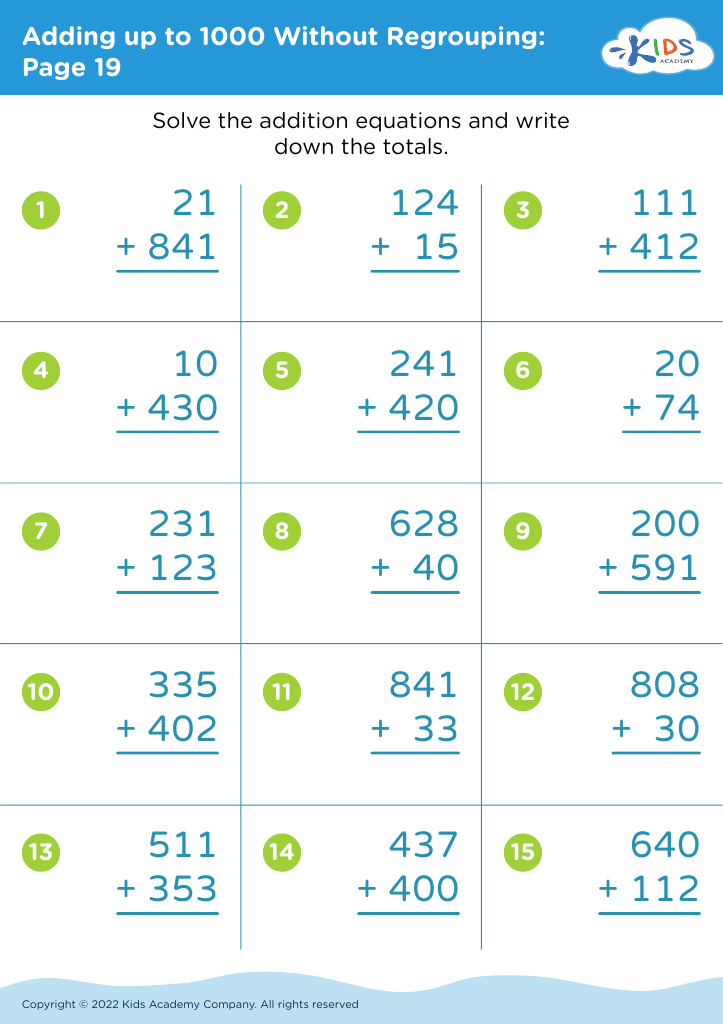
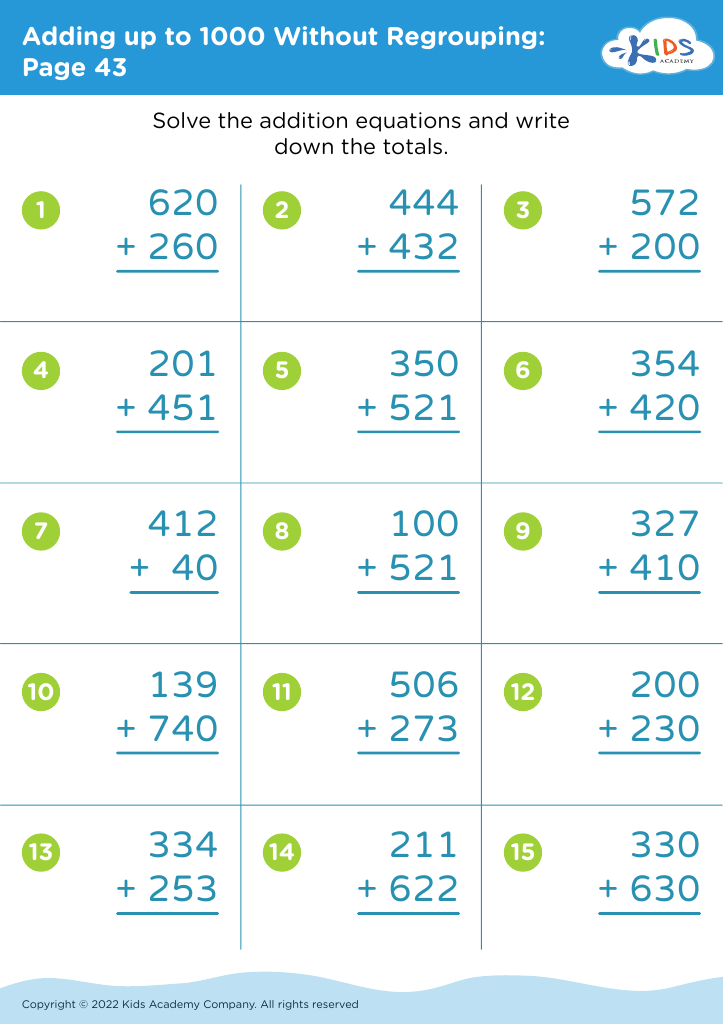



Parents and teachers play vital roles in nurturing foundational skills in children aged 6-7, and shape identification and adding up to 1000 are crucial components of early learning.
Shape identification is pivotal because it lays the foundation for geometry, spatial reasoning, and problem-solving skills. Recognizing shapes helps children understand the properties of objects and their place in space. This cognitive skill enhances their ability to categorize and describe their environment, fostering critical thinking. Mastering shapes is also integral to reading and writing since letters and numbers consist of different shapes.
Adding up to 1000 introduces children to basic arithmetic, enhancing their comprehension of numbers and their relationships. This skill is crucial because it builds the groundwork for more advanced mathematical concepts. Understanding addition fosters computational thinking and the ability to break down complex problems into manageable steps. It also enhances everyday skills like telling time, managing money, and organizing.
Investing in these areas not only builds academic proficiency but also improves confidence and curiosity. With these skills, children become more prepared for future education and day-to-day tasks, making teachers' and parents' support in these areas essential for well-rounded development.








