Subtraction skills Adding up to 1000 Worksheets for Ages 6-7
4 filtered results
-
From - To
Enhance your child's math abilities with our engaging Subtraction Skills Worksheets designed specifically for ages 6-7. These worksheets focus on the essential skill of subtracting numbers up to 1000, providing children with a solid foundation in math through fun and interactive exercises. Each worksheet offers a variety of subtraction problems that challenge and motivate young learners. With clear instructions and visually appealing graphics, these resources cater to different learning styles, ensuring every child can grasp the concept of subtraction. Perfect for classroom use or home practice, our worksheets will build confidence and competence in their mathematical skills. Start your child’s subtraction journey today!
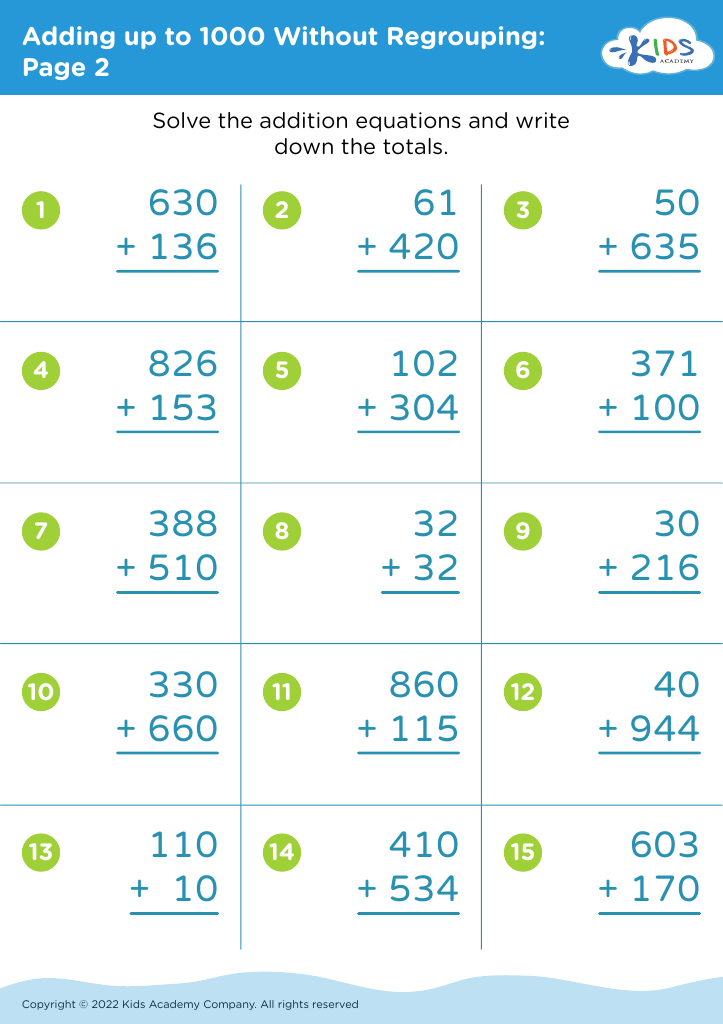
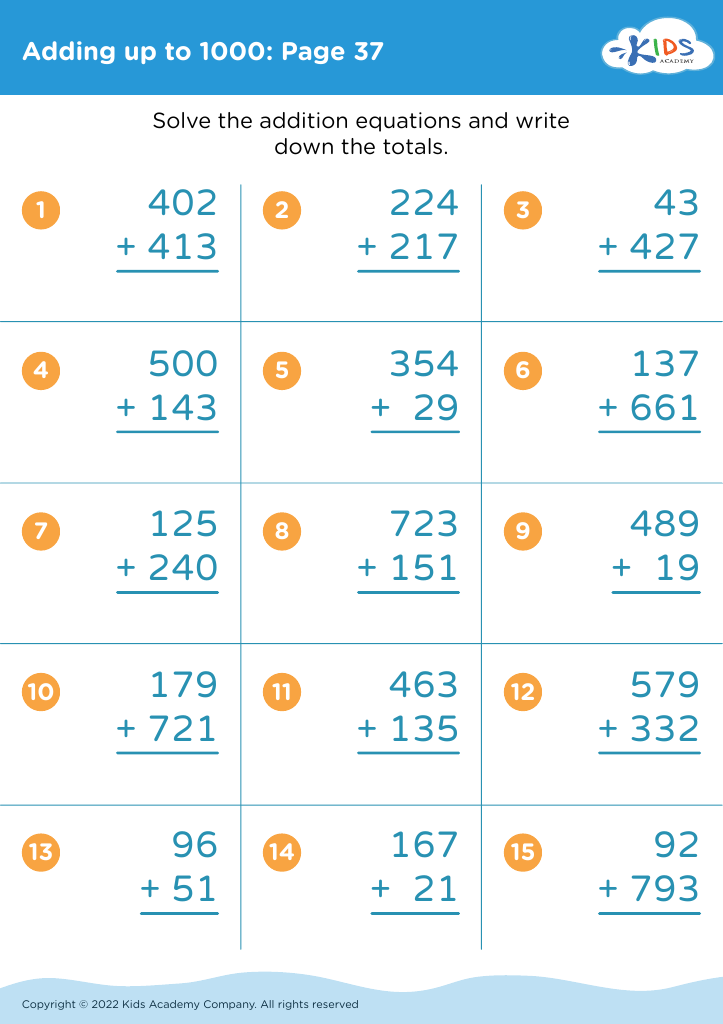
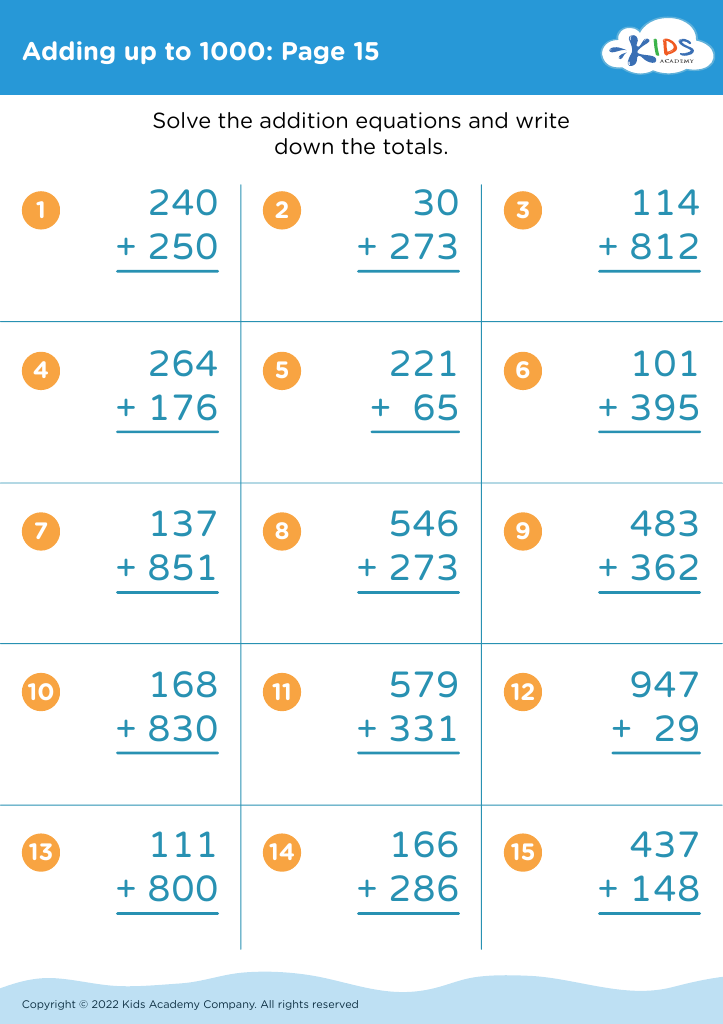
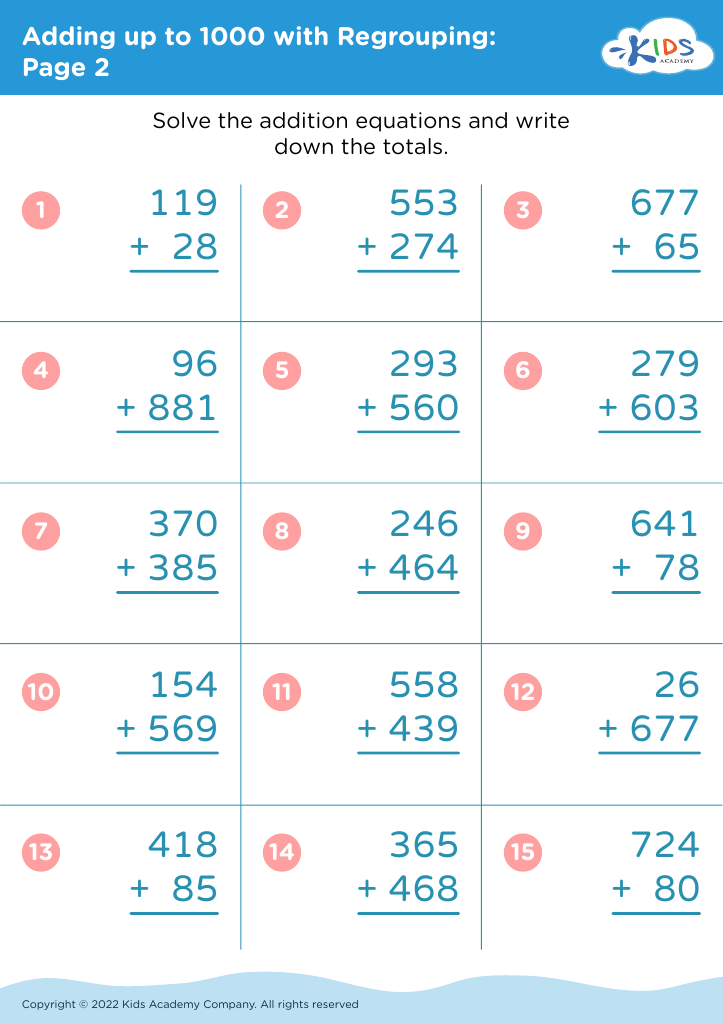



Subtraction skills, especially when dealing with numbers up to 1000, are crucial for children aged 6-7 as they form the foundation for mathematical reasoning and problem-solving. Mastery of subtraction not only fosters a deeper understanding of number relationships, but also promotes essential life skills.
At this age, children start engaging with more complex mathematical concepts and real-world situations, such as budgeting or measuring. Understanding subtraction equips them to handle challenges like calculating change during shopping or working out distances, reinforcing the application of math in everyday life.
Additionally, strong subtraction skills boost students’ confidence in their mathematical abilities. This confidence can translate into a positive attitude toward learning, enhancing their overall academic performance.
Moreover, as subtraction skills progress, they help children develop critical thinking and logical reasoning. Parents and teachers are instrumental in providing support and resources to facilitate this learning phase. Without a solid grasp of subtraction, students may find it challenging to tackle addition, multiplication, and division later on, creating gaps in their learning. By focusing on subtraction, parents and teachers can equip children with the skills they need for future success, both academically and in everyday life.








