Understand subtraction Adding up to 1000 Worksheets for Ages 6-7
3 filtered results
-
From - To
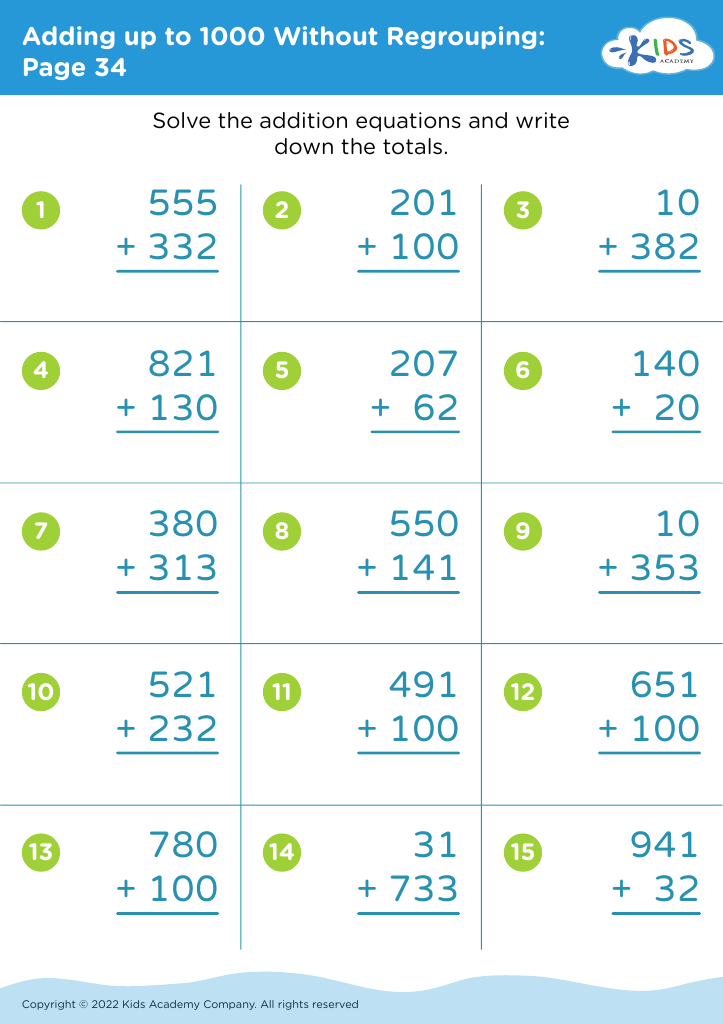
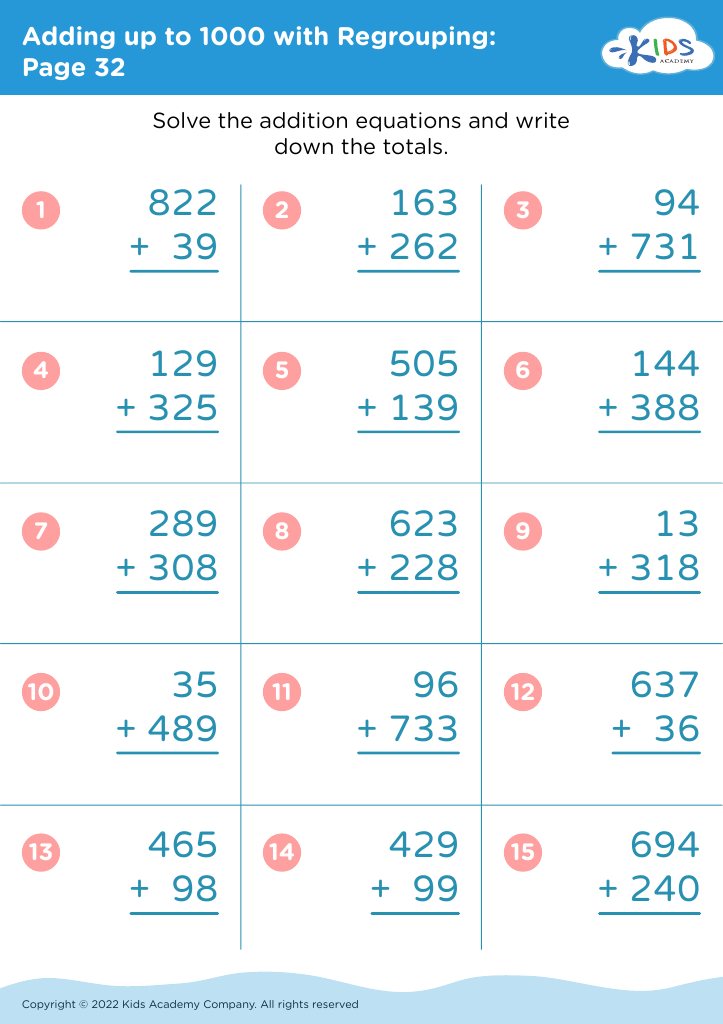
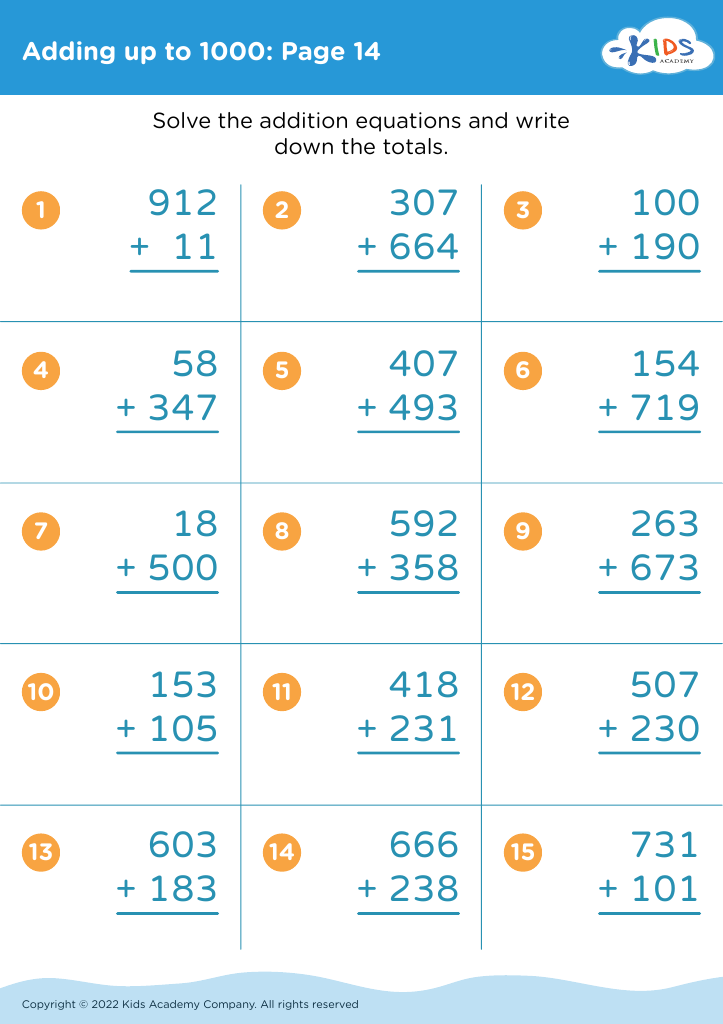
Explore our engaging "Understand Subtraction Adding Up to 1000 Worksheets" designed for children ages 6 to 7. These worksheets provide a fun and interactive way for young learners to master subtraction concepts through colorful visuals and practical exercises. Tailored to align with educational standards, they reinforce essential math skills while building confidence in problem-solving. Each worksheet encourages critical thinking as students tackle subtraction scenarios related to adding up to 1000. Ideal for classroom or home use, our resources help nurture a solid mathematical foundation. Get started today to make subtraction a breeze for your little mathematicians!



Understanding subtraction and mastering the concept of adding up to 1000 are crucial skills for children aged 6-7. Parents and teachers should prioritize these foundational math concepts for several reasons.
Firstly, they are essential for developing numerical literacy. At this age, children are transitioning from basic counting to more complex operations, and subtraction helps them understand the relationship between numbers. It fosters critical thinking and problem-solving skills, as children learn to manipulate numbers to arrive at solutions.
Secondly, proficiency in subtraction and addition up to 1000 builds a strong mathematical foundation for future learning. As they advance in school, students will encounter increasingly complex math concepts, including multiplication, division, and fractions. A firm grasp of addition and subtraction ensures they have the necessary skills to tackle these challenges confidently.
Moreover, these mathematical operations teach children real-life application. From balancing budgets to measuring quantities in recipes, the ability to add and subtract is used daily, preparing children for future responsibilities.
Finally, mastering stepping stones in mathematics fosters a sense of achievement and boosts students' confidence, motivating them to engage with and enjoy learning. Overall, a solid understanding of subtraction and addition is indispensable for academic success and everyday life.








