Understanding division Adding up to 1000 Worksheets for Ages 6-7
3 filtered results
-
From - To
Explore our "Understanding Division Adding Up to 1000 Worksheets" designed for ages 6-7! These engaging, printable worksheets help young learners grasp the concept of division through fun activities and visual aids. Each worksheet allows students to practice division skills, reinforcing their understanding of how numbers relate and how to break down larger sums into manageable parts. By integrating colorful illustrations and simple examples, our resources cater to different learning styles, making math enjoyable and accessible. Encourage your child's mathematical journey and build a strong foundation in division while adding up to 1000 with these comprehensive learning tools!
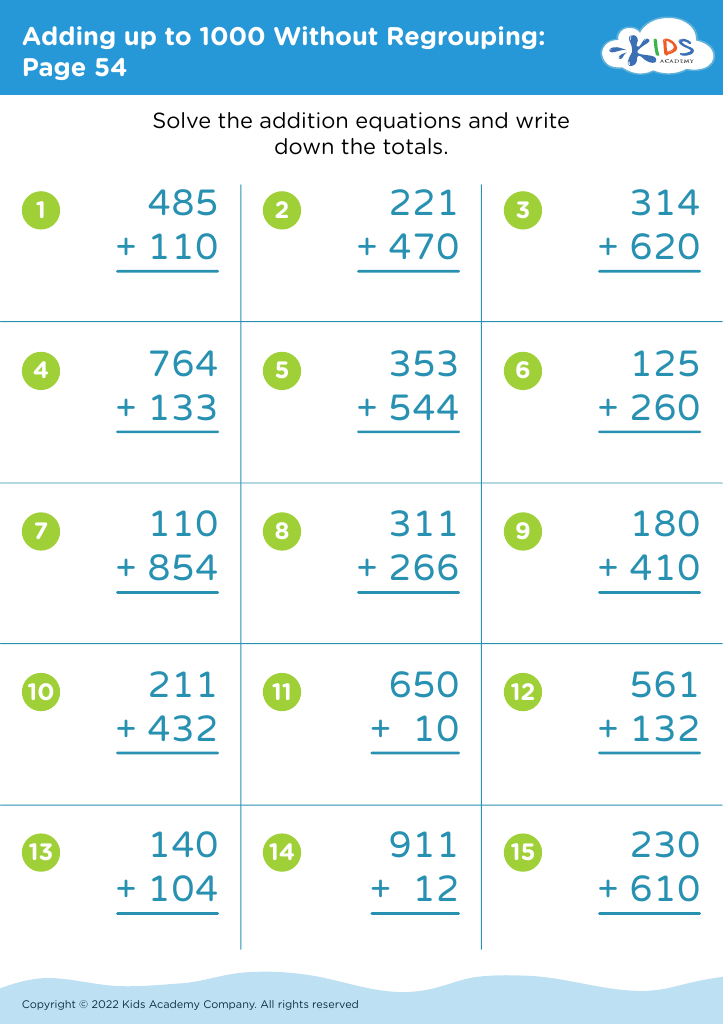
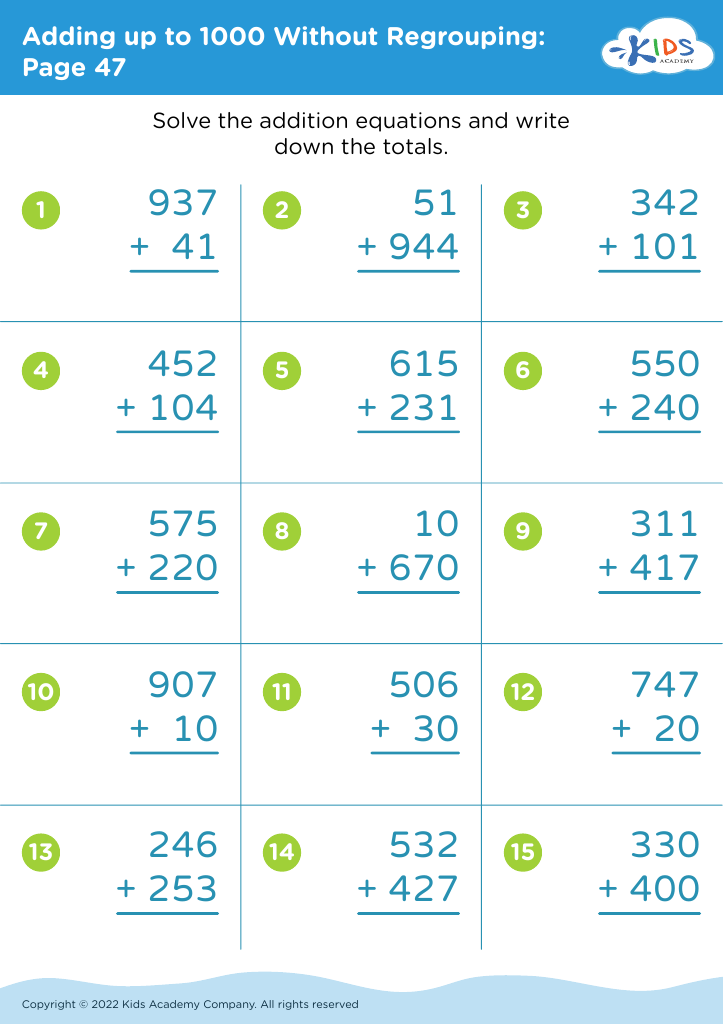
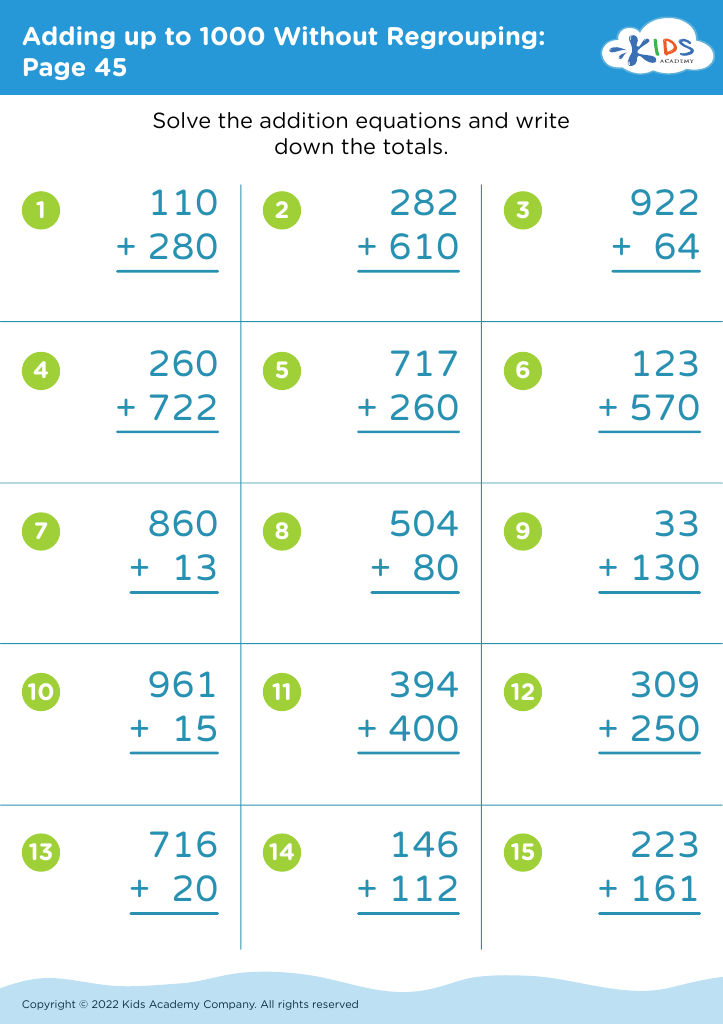



Understanding division is a crucial mathematical concept for children aged 6-7, as it serves as a foundational skill for their academic growth. At this age, children are developing their number sense, and comprehending division helps them grasp the concept of sharing and grouping. This understanding improves their problem-solving abilities and sets the stage for more complex arithmetic, such as fractions and ratios, in later grades.
Moreover, when students learn to add up to 1000, they are engaging with larger numbers, which boosts their confidence in handling various mathematical operations. This knowledge allows for a deeper understanding of place value and the relationships between numbers. It encourages mental calculations and reinforces their addition and subtraction skills, making math more accessible and enjoyable.
For parents and teachers, nurturing this understanding fosters not only academic success but also equips children with essential life skills. The ability to divide and perform arithmetic operations can help children tackle everyday situations that involve sharing, fair distribution, and budget management later in life. Encouraging this understanding through engaging and practical activities can cultivate a positive attitude towards math that lasts a lifetime.








