Understanding patterns Adding up to 1000 Worksheets for Ages 6-7
5 filtered results
-
From - To
Discover our "Understanding Patterns: Adding Up to 1000 Worksheets" designed for children aged 6-7. These engaging worksheets help young learners identify and understand numerical patterns, fostering essential math skills. Through colorful illustrations and interactive exercises, kids will gain confidence as they practice addition and explore relationships between numbers. Each worksheet is crafted to encourage critical thinking and problem-solving, ensuring that learning feels fun and accessible. Perfect for home or classroom use, these resources support the development of foundational math skills, making it easier for students to progress toward more complex concepts in a structured yet enjoyable way. Explore and start learning today!
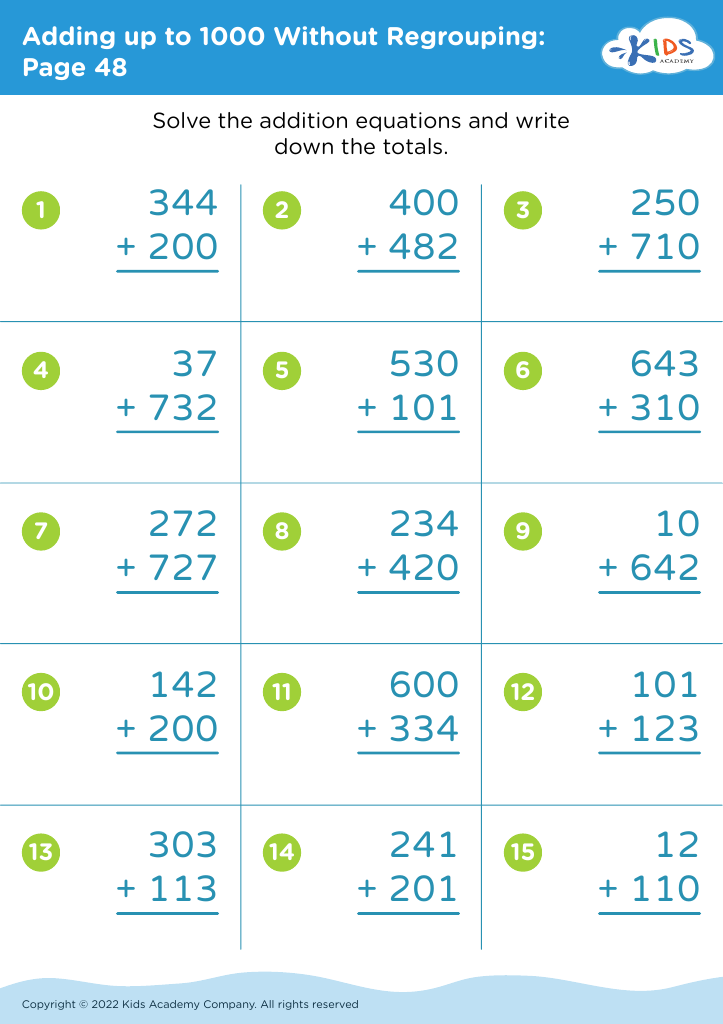
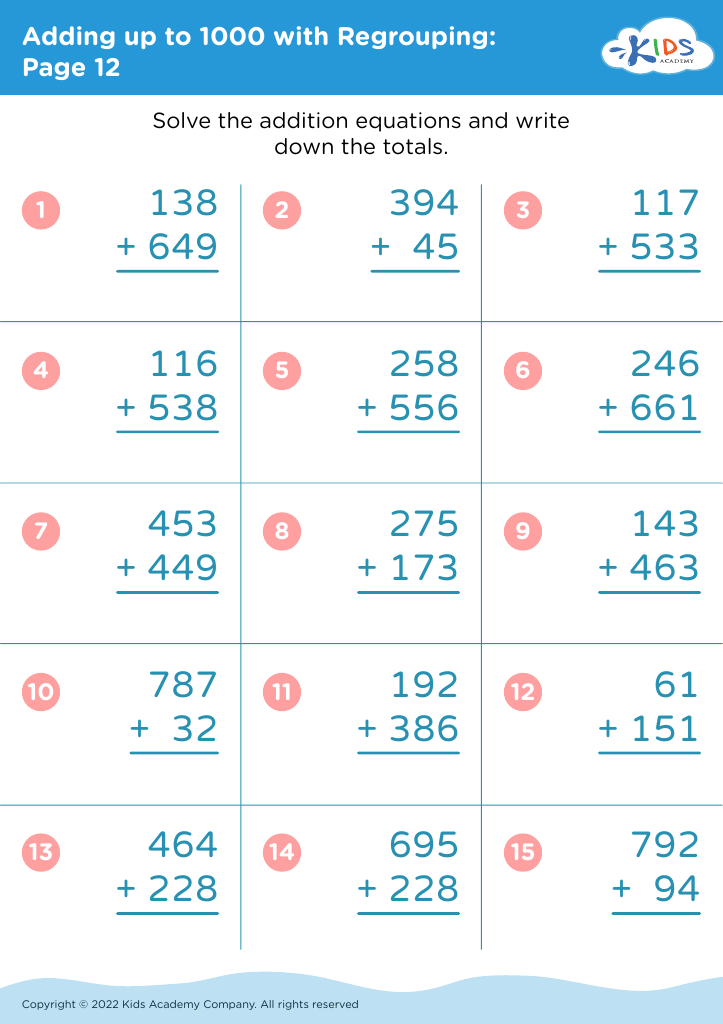
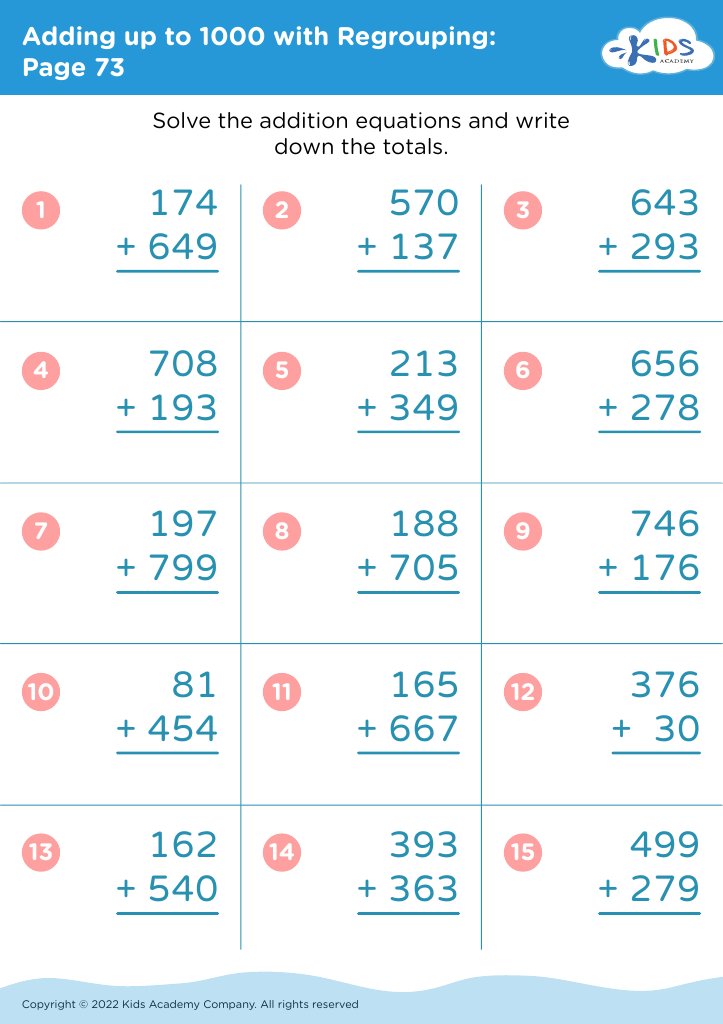
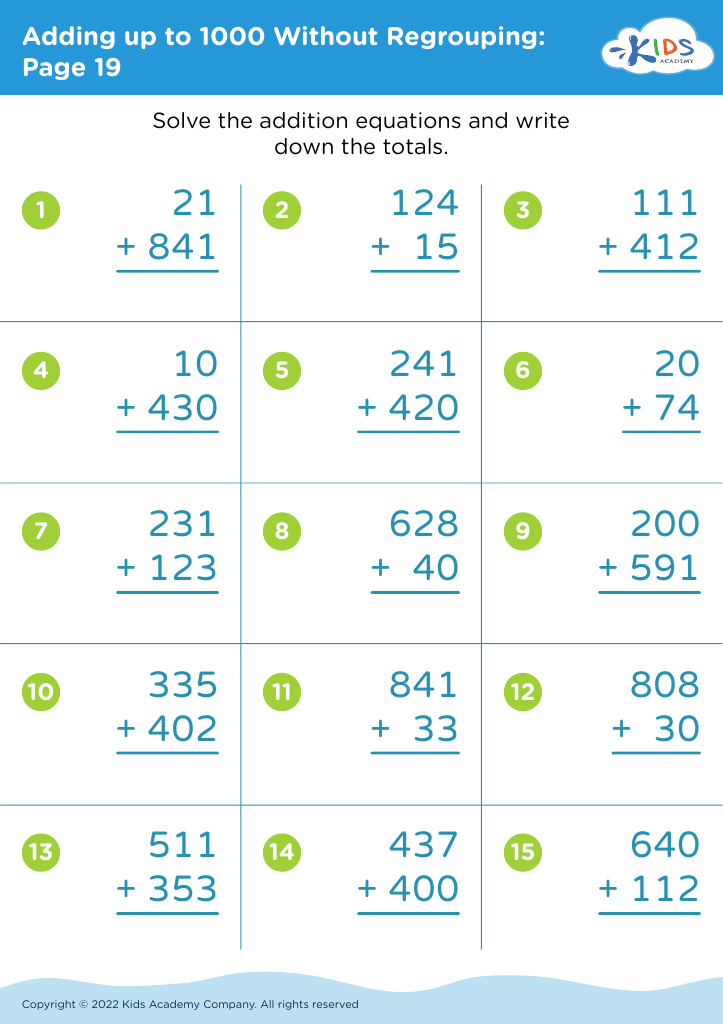
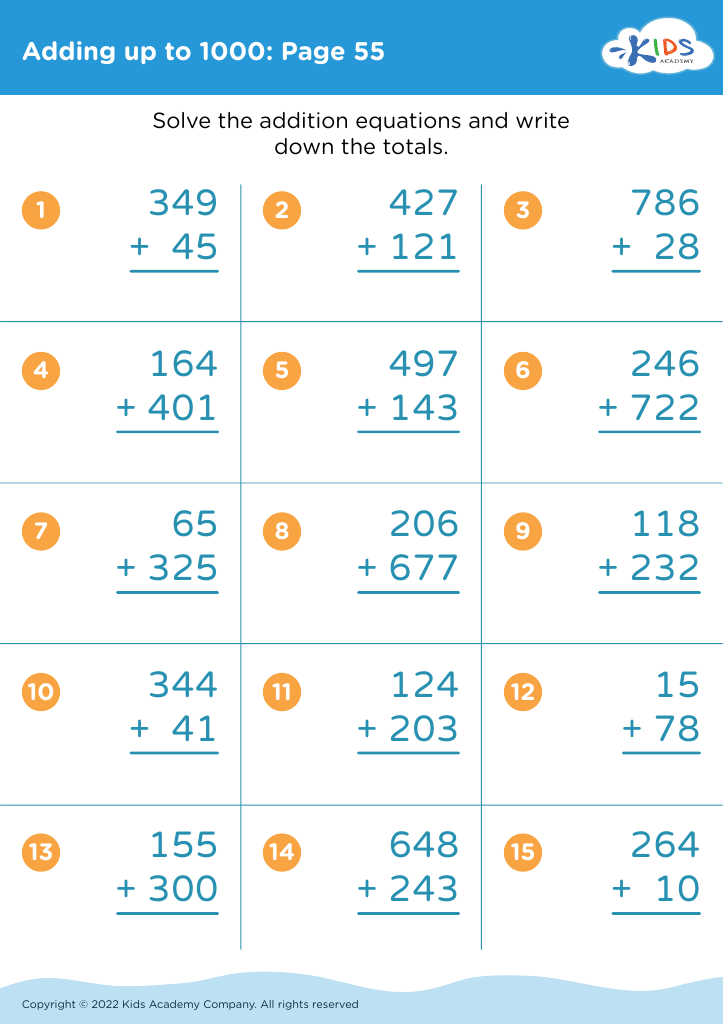



Understanding patterns, particularly in the context of adding up to 1,000, is vital for children aged 6-7 as it lays a foundational skill for mathematics and critical thinking. At this stage, kids are developing their cognitive abilities and starting to grasp complex concepts. Recognizing patterns helps them understand the relationships between numbers, fostering a deeper comprehension of addition and subtraction.
When children learn to identify patterns, they can approach problems with greater confidence and efficiency. For instance, understanding that adding by increments—such as 10s or 100s—simplifies calculations. This not only enhances their mathematical fluency but also encourages problem-solving and analytical thinking, skills that are crucial for future academic success.
For parents and teachers, supporting this understanding is key to nurturing a child's enthusiasm for math. Engaging children in activities that highlight patterns and number relationships can make learning enjoyable and improve their overall math performance. Moreover, instilling a robust mathematical foundation at an early age can help prevent future struggles with math, ensuring that children are well-prepared for more advanced concepts they will encounter in later grades. Encouraging an appreciation for patterns contributes to a more holistic education and better prepares children for the challenges ahead.








