Understanding Sequences Adding up to 1000 Worksheets for Ages 6-7
6 filtered results
-
From - To
Welcome to our "Understanding Sequences Adding up to 1000" worksheets designed specifically for children ages 6-7! These printable resources aim to enhance your child's mathematical skills by helping them explore and understand number sequences. Through engaging and interactive exercises, learners will practice adding numbers to reach a sum of 1000, fostering both confidence and fluency in math. Each worksheet is tailored to make learning enjoyable while building a solid foundation in arithmetic. Perfect for home and classroom use, these worksheets will empower young learners to master the concept of sequences while developing critical thinking and problem-solving skills. Start exploring today!
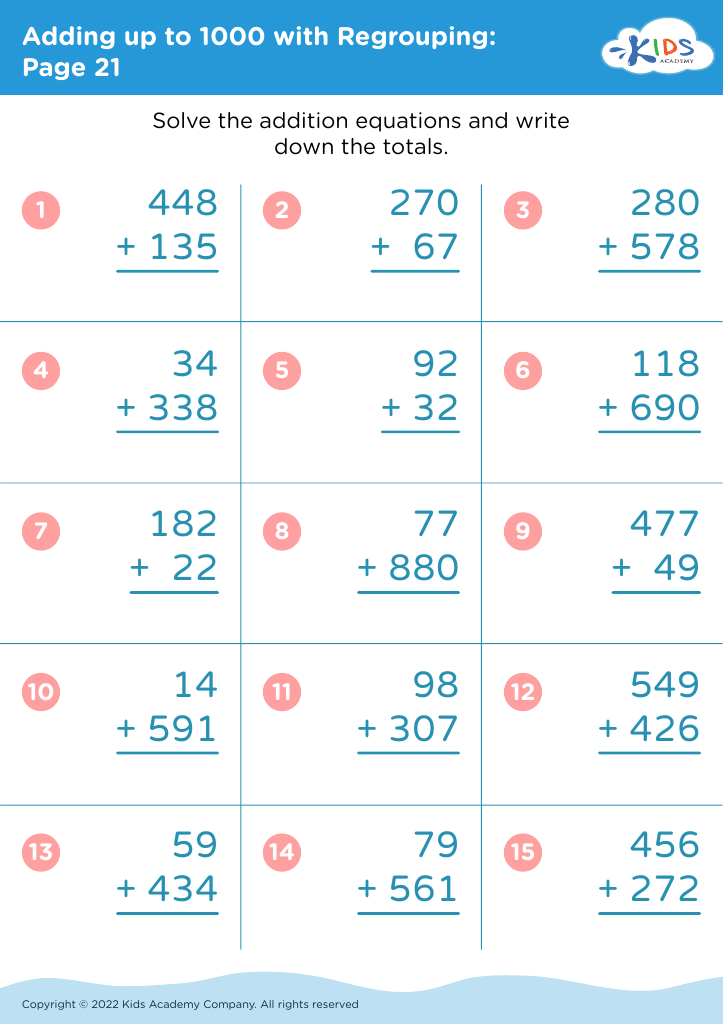
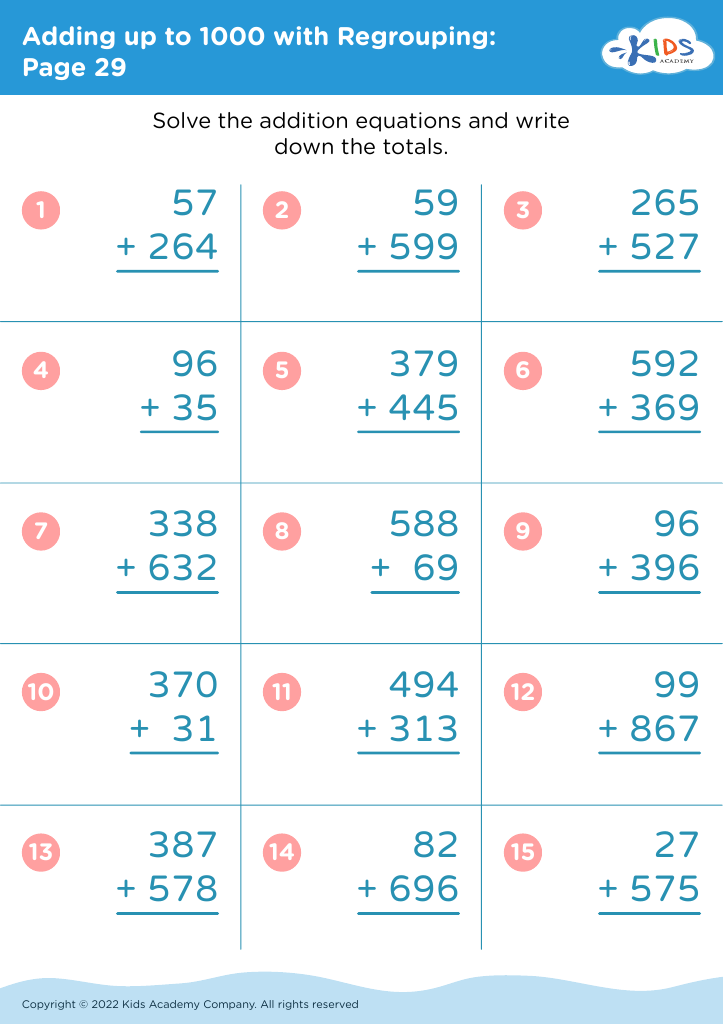
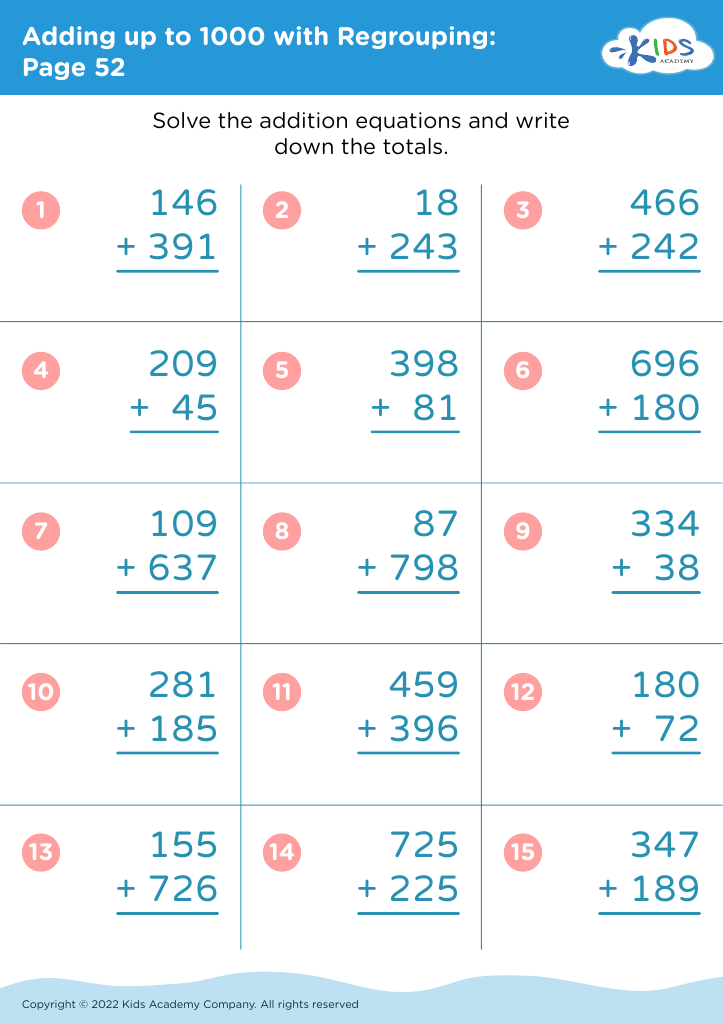
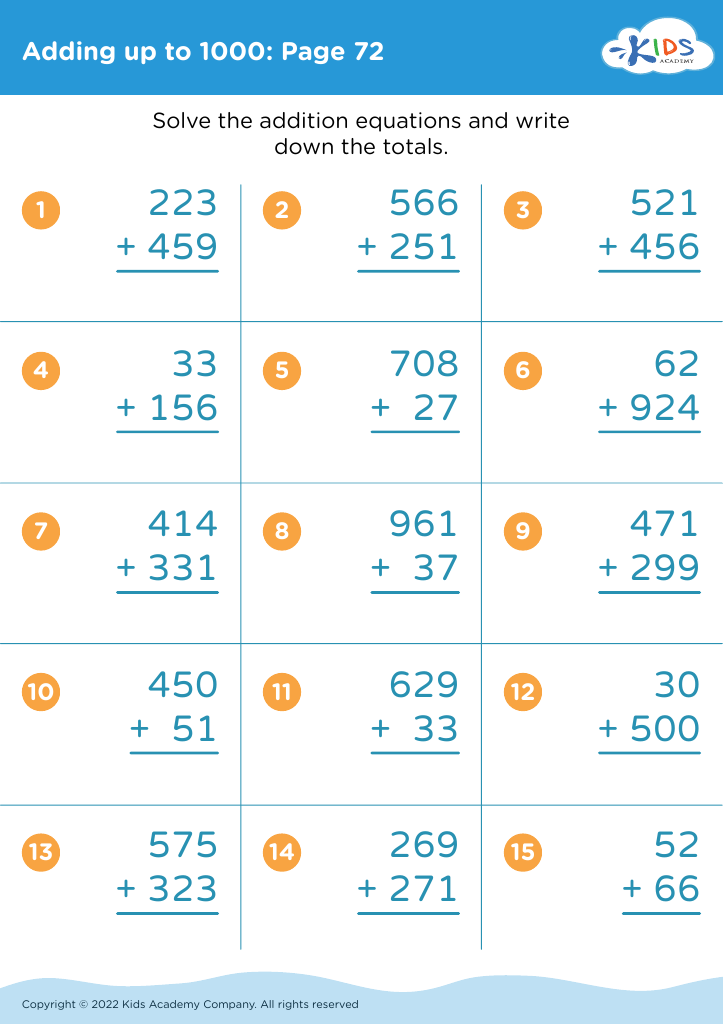
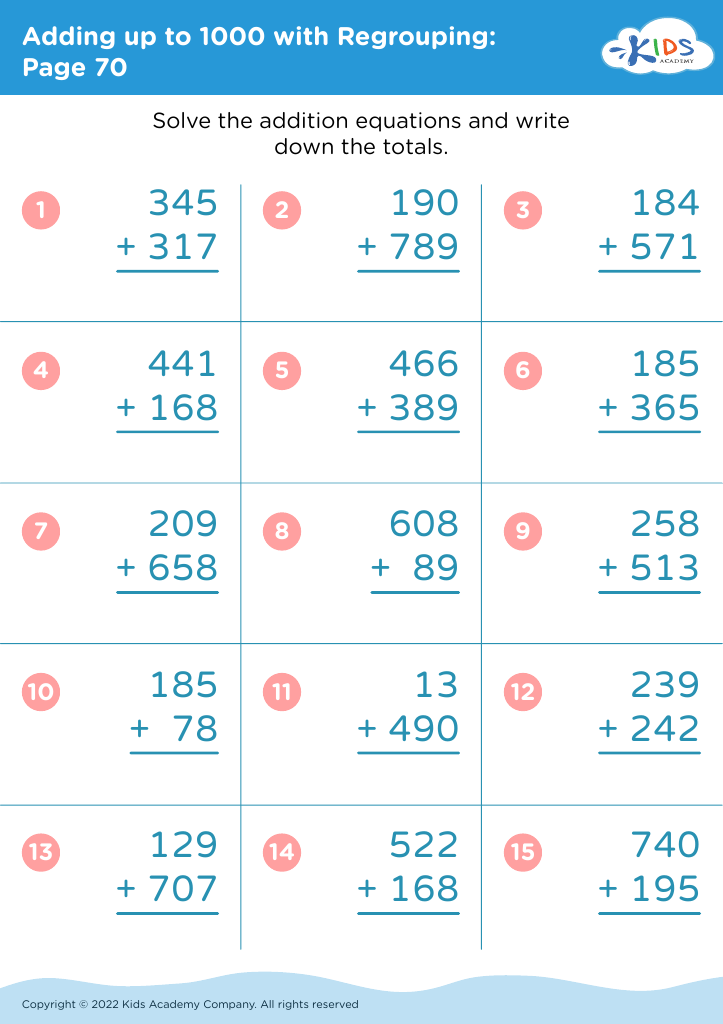
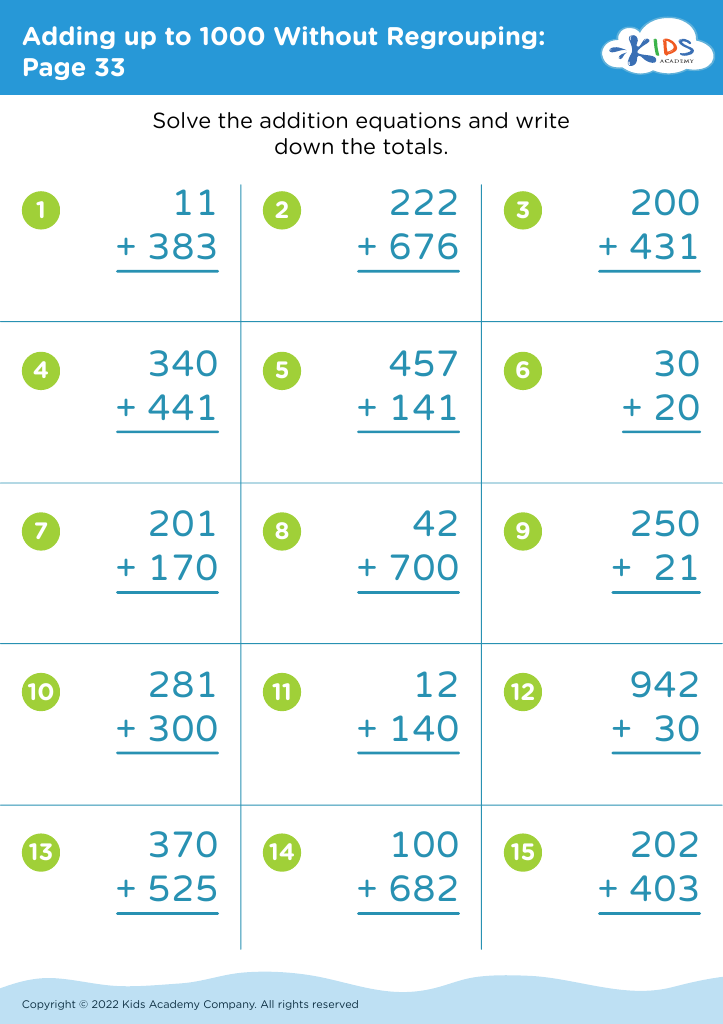



Understanding sequences that add up to 1000 is important for children aged 6-7 as it lays the groundwork for their mathematical skills and logic development. Recognizing numerical patterns and sequences fosters critical thinking and problem-solving abilities, essential skills in everyday life and future academic pursuits.
At this age, children are developing their number sense, which is crucial for more complex mathematical concepts. Identifying how numbers combine to form larger totals encourages them to explore addition and subtraction in a more dynamic way. It also helps them understand the relationship between numbers, enabling them to perform calculations more efficiently.
Additionally, sequences enhance children's ability to visualize and organize information, reinforcing concepts of order and organization in their thinking. This is not limited to math; the skills acquired through these exercises can translate to improved skills in reading and writing as children learn to recognize and create patterns within language as well.
Ultimately, when parents and teachers emphasize sequences adding up to 1000, they not only build a strong mathematical foundation but also cultivate confidence and curiosity in young learners, encouraging them to explore and embrace the world of mathematics with excitement.








