Understanding sequencing Adding up to 1000 Worksheets for Ages 6-7
3 filtered results
-
From - To
Discover our "Understanding Sequencing - Adding Up to 1000 Worksheets" designed specifically for children aged 6-7 years. These engaging worksheets support young learners in grasping the concept of sequencing numbers while practicing addition up to 1000. With colorful visuals and age-appropriate problems, kids will enhance their critical thinking and mathematical skills in a fun, interactive way. Each worksheet is crafted to boost confidence and foster a deeper understanding of number patterns and relationships. Perfect for both classroom and home learning, these resources make math exciting and accessible. Empower your child’s learning journey with our comprehensive sequencing worksheets today!
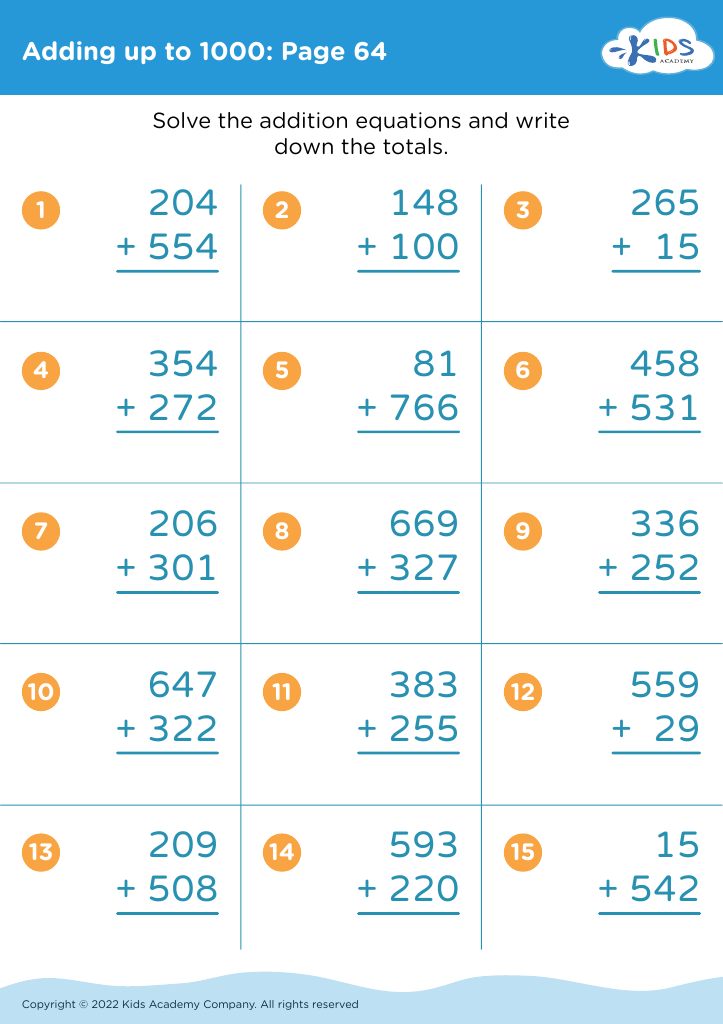
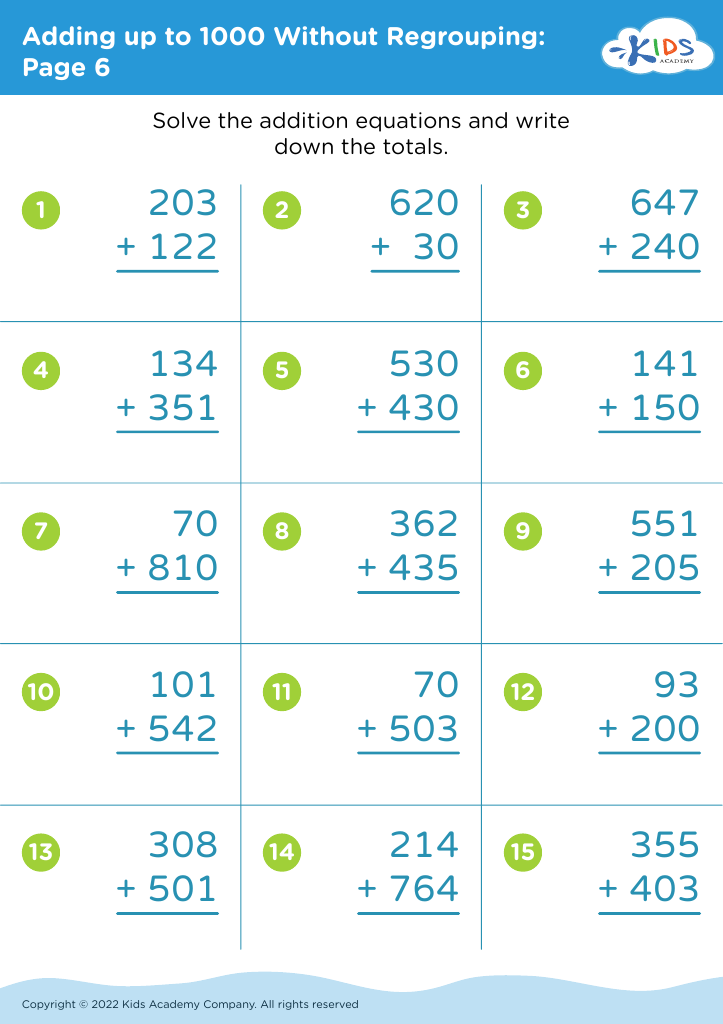
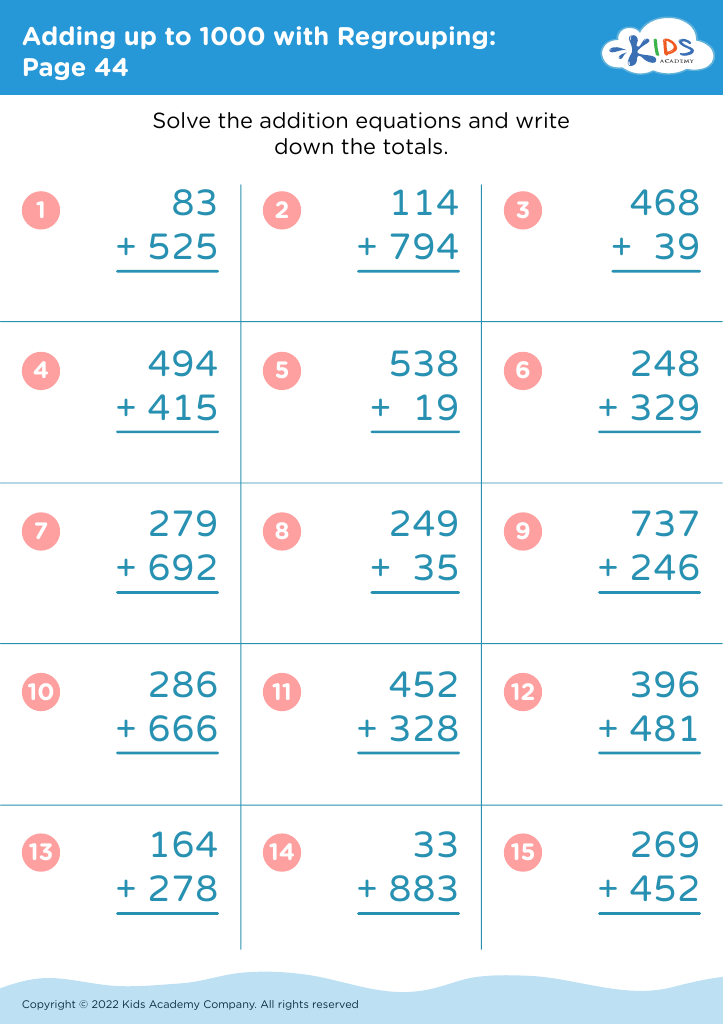



Understanding sequencing in addition, especially for numbers up to 1000, is crucial for young learners aged 6 to 7. This foundational skill not only helps children grasp number patterns but also enhances their problem-solving abilities. Sequencing allows children to break down larger numbers into manageable components. For example, knowing that 300 + 400 = 700 helps reinforce the concepts of place value, ensuring students understand tens, hundreds, and units.
Furthermore, strong sequencing skills positively impact math fluency, enabling kids to perform calculations efficiently and with confidence. They learn to approach problems methodically, enhancing critical thinking and logical reasoning.
For parents and teachers, nurturing these skills is essential. It not only aids in fulfilling curriculum standards but also prepares students for future mathematical concepts they'll encounter in higher grades. Engaging in fun, hands-on sequencing activities or using visual aids can make learning both enjoyable and effective.
Overall, focusing on sequencing in addition lays a strong foundation for numerical comprehension, helps children become skilled in math, fosters a positive attitude toward learning, and builds confidence—skills that will be invaluable throughout their academic journey and beyond.








