Understanding symmetry Adding up to 1000 Worksheets for Ages 6-7
4 filtered results
-
From - To
Explore "Understanding Symmetry: Adding up to 1000 Worksheets for Ages 6-7" at Kids Academy! Specifically designed for young learners, these printable worksheets combine essential arithmetic skills with the fascinating concept of symmetry. Children practice adding numbers up to 1000 while enhancing their understanding of symmetrical patterns. Perfect for home or classroom use, these activities are curated to keep kids engaged as they develop critical math abilities. Boost your child’s confidence and make learning fun with our expert-crafted, hands-on exercises that cater directly to their educational needs. Start your journey to mastering math and symmetry concepts today!
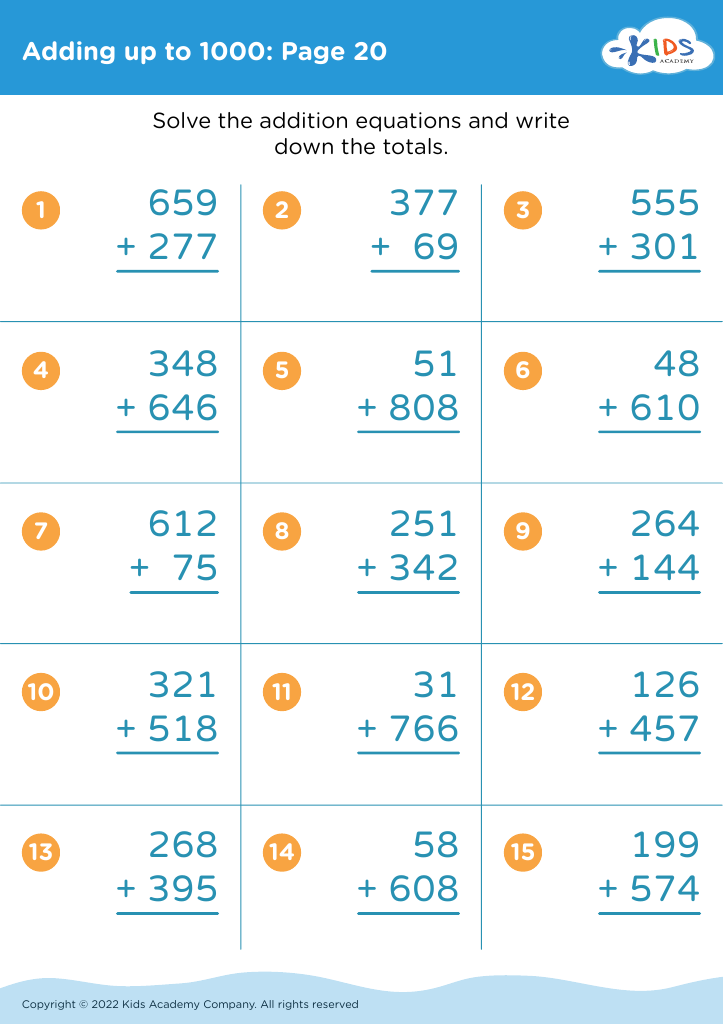
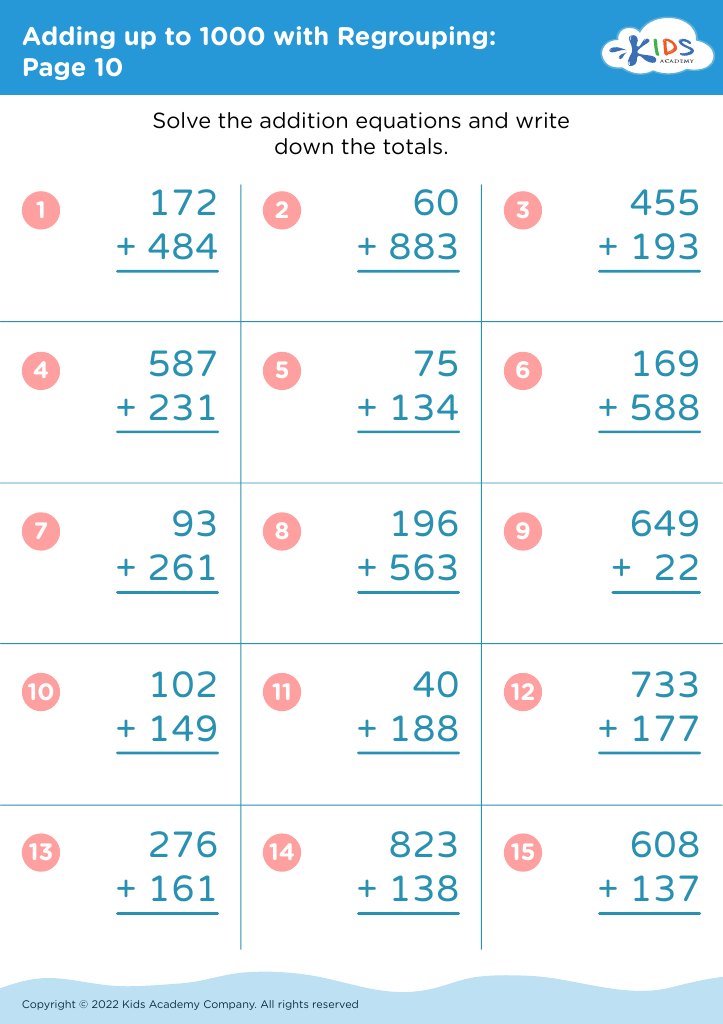
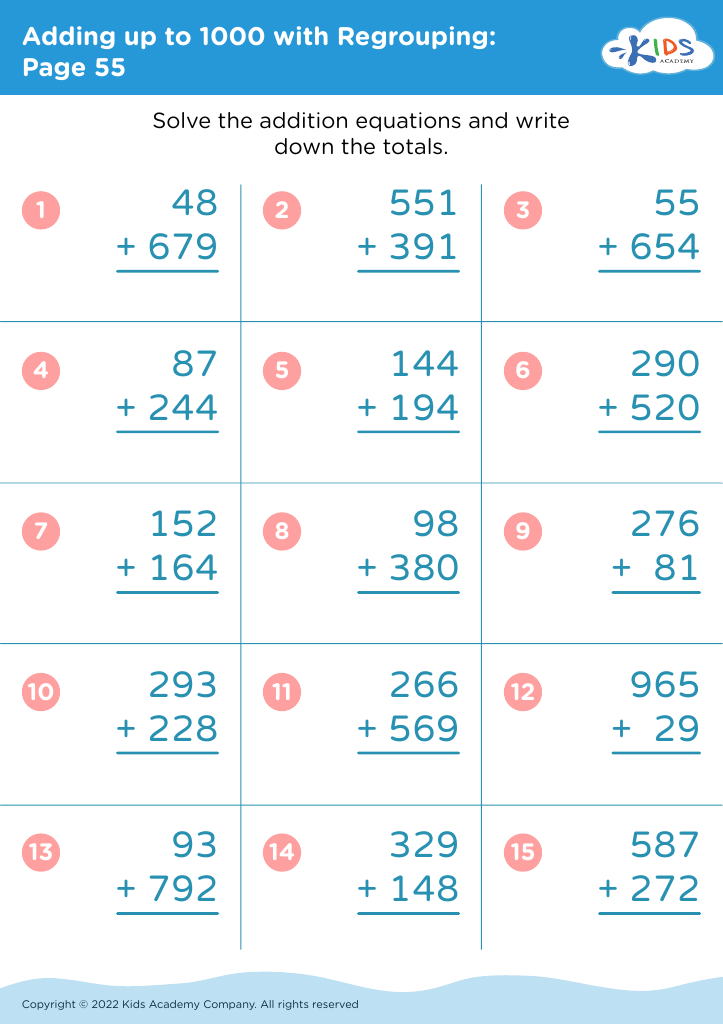
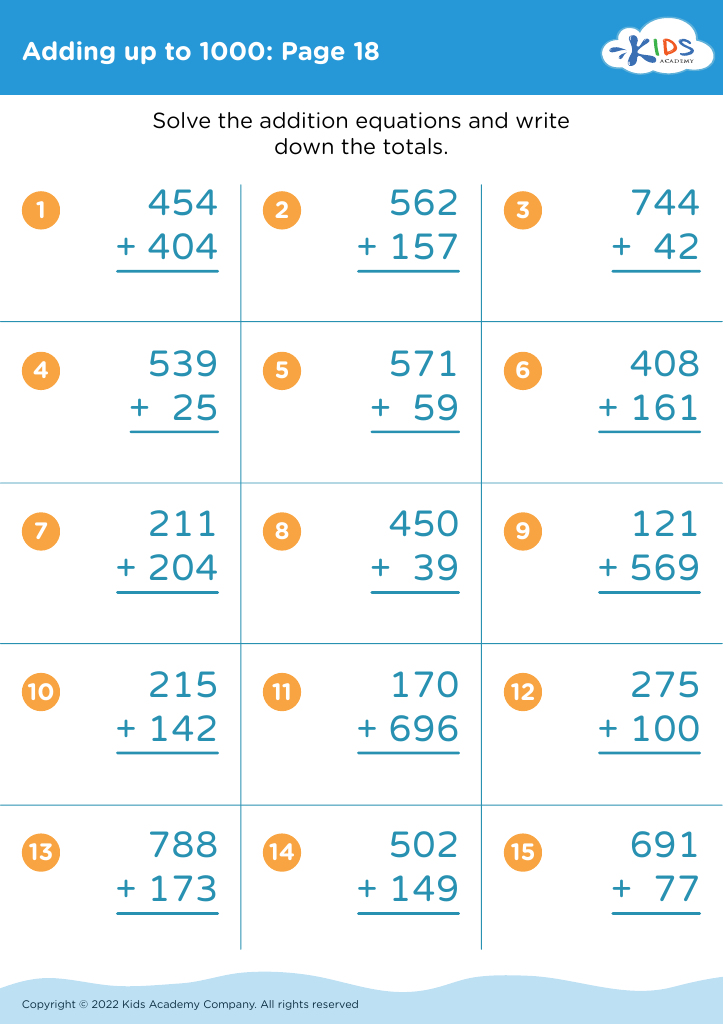



Understanding symmetry and learning to add up to 1000 are foundational skills that are important for children ages 6-7. Symmetry is central in many areas of mathematics and enhances spatial reasoning skills, allowing children to recognize patterns and shapes, which are crucial in geometry. Learning about symmetry also fosters artistic and aesthetic appreciation, making lessons engaging and enjoyable for young learners.
On the other hand, adding up to 1000 helps children gain confidence with larger numbers and improves their mental arithmetic and number sense. This skill is essential as it lays the groundwork for more complex mathematical concepts such as multiplication, division, and problem-solving operations they will encounter in later grades.
Furthermore, mastering these skills supports the development of logical thinking, precision, and attention to detail. Incorporating activities that involve symmetry and addition allows children to practice these concepts in a manner that feels like play, promoting positive attitudes toward math which can lead to better performance and less math anxiety in later years.
In summary, teaching symmetry and addition up to 1000 to young children equips them with crucial cognitive skills while keeping the learning experience enjoyable, thereby setting a solid foundation for more advanced mathematical concepts and everyday problem-solving skills.








