Understanding time Adding up to 1000 Worksheets for Ages 6-7
3 filtered results
-
From - To
Unlock your child's potential with our "Understanding Time: Adding up to 1000 Worksheets" designed for ages 6-7. These engaging and interactive worksheets provide crucial math skills while incorporating valuable concepts of time. Your child will learn to add and subtract numbers up to 1000, enhancing their numeracy and time-telling abilities. Each worksheet is thoughtfully crafted to make learning fun, featuring colorful illustrations and age-appropriate activities. Boost your child's confidence in math while they master how to read clocks, understand schedules, and manage time effectively. These worksheets are perfect for classroom use or at-home learning. Download now and watch your child excel!
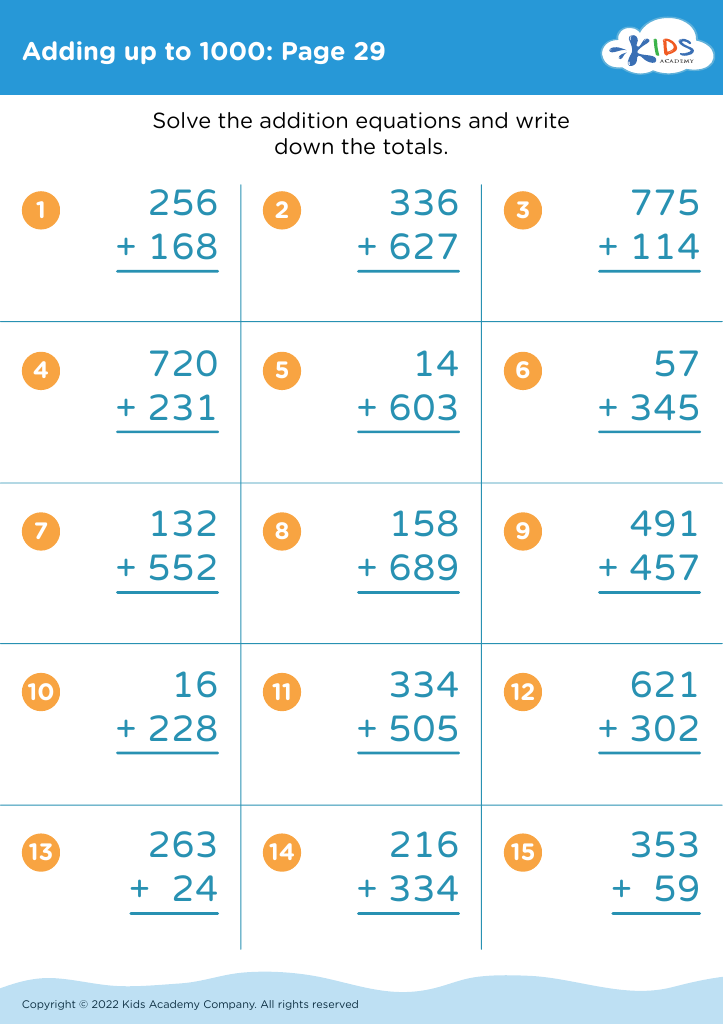
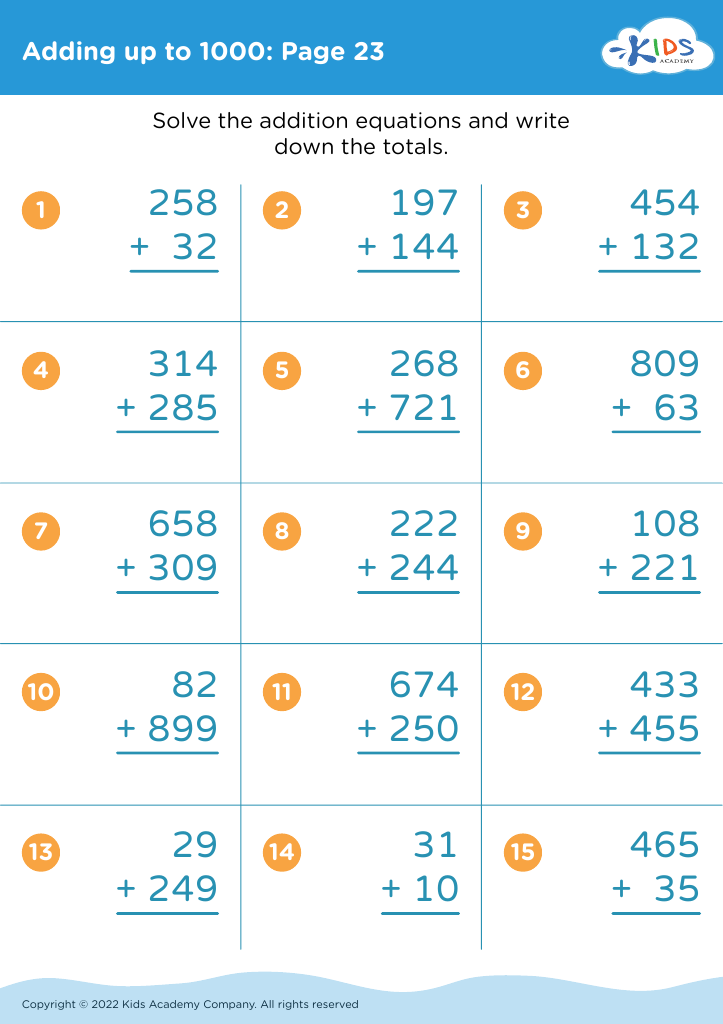
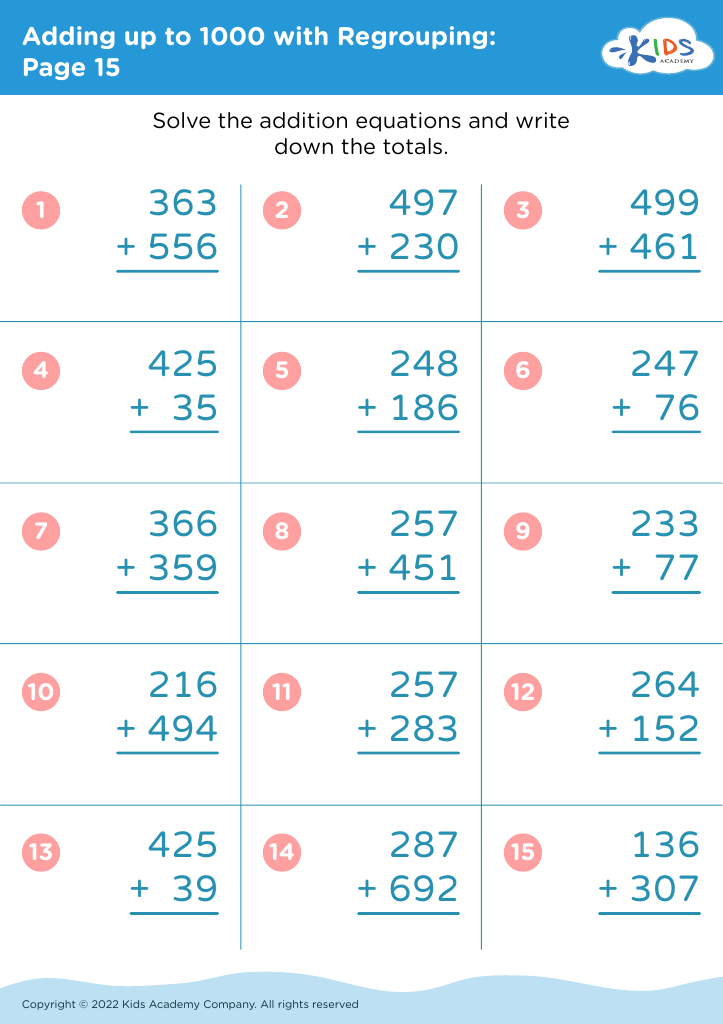



Understanding time and developing number sense, particularly mastering addition up to 1000, are crucial skills for children ages 6-7. These foundational skills pave the way for their future academic success and everyday functioning.
For parents and teachers, caring about these concepts is essential because mastering time helps children develop routines, manage their schedules, and foster independence. It reinforces their understanding of sequences and events, making them more organized and aware of their surroundings.
Additionally, understanding addition up to 1000 cultivates mathematical reasoning. At this age, children begin to grasp place value, which is essential for future operations. This skill encourages problem-solving and critical thinking, enabling children to make calculations relevant to real-life situations, like budgeting or measuring distances.
Furthermore, a strong grasp of time and addition nurtures confidence. Children who feel competent in these skills are more likely to engage positively with math and everyday scenarios. Grip on these fundamentals also enhances literacy, as they will be able to comprehend changes in storyline sequences and timelines in narratives.
Ultimately, investing in these skills nurtures well-rounded students who are equipped for both academic challenges and daily life.








