Visual interpretation Adding up to 1000 Worksheets for Ages 6-7
3 filtered results
-
From - To
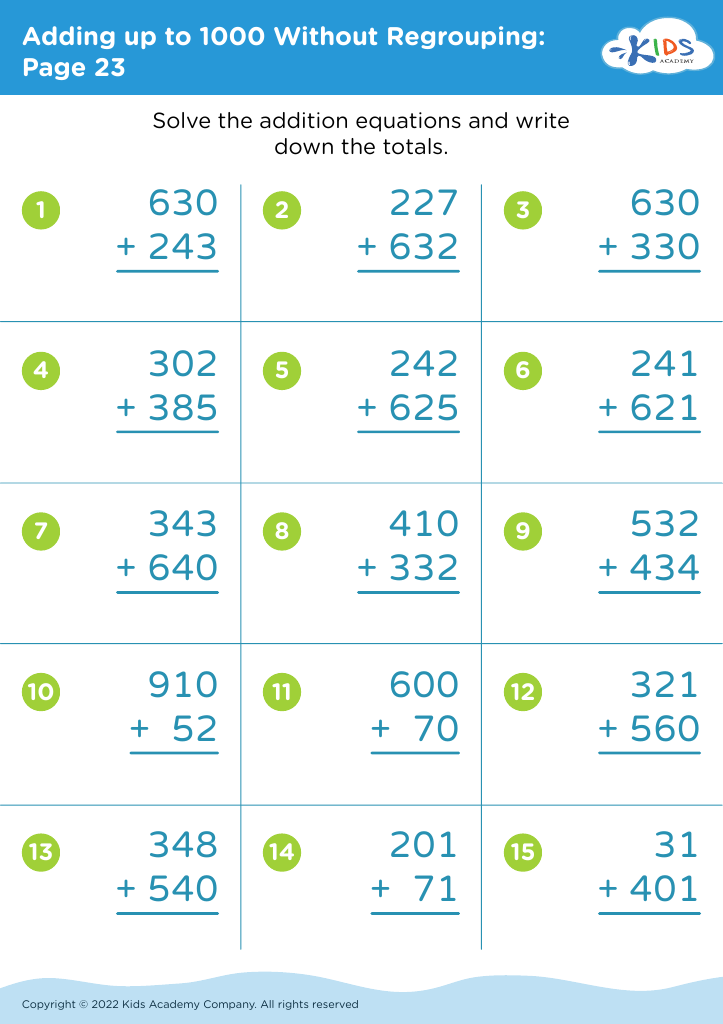
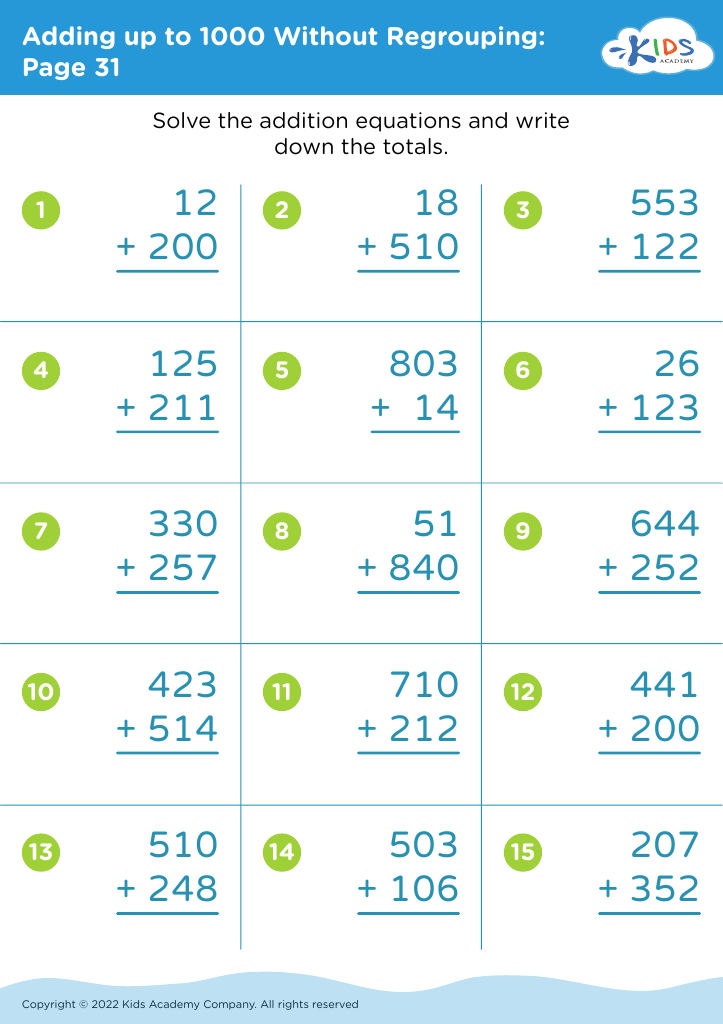
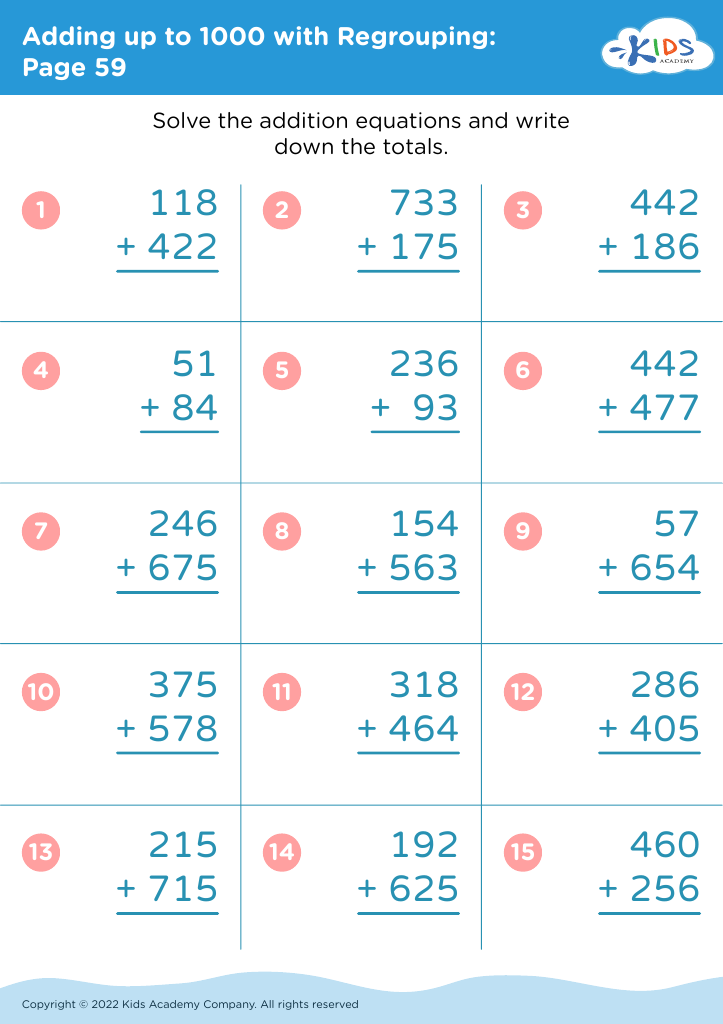
Discover our engaging "Visual Interpretation: Adding Up to 1000 Worksheets" designed for children ages 6-7! These worksheets provide an exciting way for young learners to strengthen their math skills through visual aids. By using various illustrations and diagrams, kids can easily grasp the addition concepts, making complex numbers manageable. Each worksheet aims to enhance their understanding of number relationships and boosts their confidence in solving problems up to 1000. Perfect for use in the classroom or at home, our visually stimulating resources aim to create a positive learning environment. Start your child’s math journey today with enjoyable visual interpretation!



Visual interpretation is vital for children aged 6-7 as it lays the foundation for their understanding of the world. At this age, children encounter various visual stimuli—books, charts, diagrams, and digital media—that require them to make sense of what they see. When parents and teachers emphasize visual interpretation, they equip children with essential skills for reading comprehension, problem-solving, and critical thinking.
Understanding visuals helps students break down complex information into manageable parts. For example, when they look at a chart showing numbers or a storybook with illustrations, they learn to connect visual elements with text, fostering better comprehension and retention. Additionally, visual skills enhance creativity, as children learn to express their ideas through drawings and presentations.
Moreover, children today are increasingly engaging with technology, including educational apps and platforms that rely heavily on visuals. By encouraging visual interpretation, parents and teachers can support students in navigating these tools effectively, promoting digital literacy.
Ultimately, fostering visual interpretation skills not only enriches a child's learning experience but also prepares them for future academic challenges. By recognizing the importance of this interdisciplinary approach, families and educators can cultivate well-rounded learners who thrive in both school and life.








