Word Recognition Adding up to 1000 Worksheets for Ages 6-7
3 filtered results
-
From - To
Enhance your child's math and reading abilities with our "Word Recognition Adding up to 1000 Worksheets for Ages 6-7." Designed for young learners, these engaging worksheets seamlessly combine fundamental math skills and vocabulary building. Each printable worksheet offers fun, hands-on activities that help children practice addition up to 1000 while enhancing their word recognition skills. Perfect for both classroom and at-home learning, these worksheets are an excellent resource to ensure your child stays ahead academically. Foster a love for learning with our expertly crafted worksheets, tailored to challenge and encourage your 6-7-year-old’s growing mind.
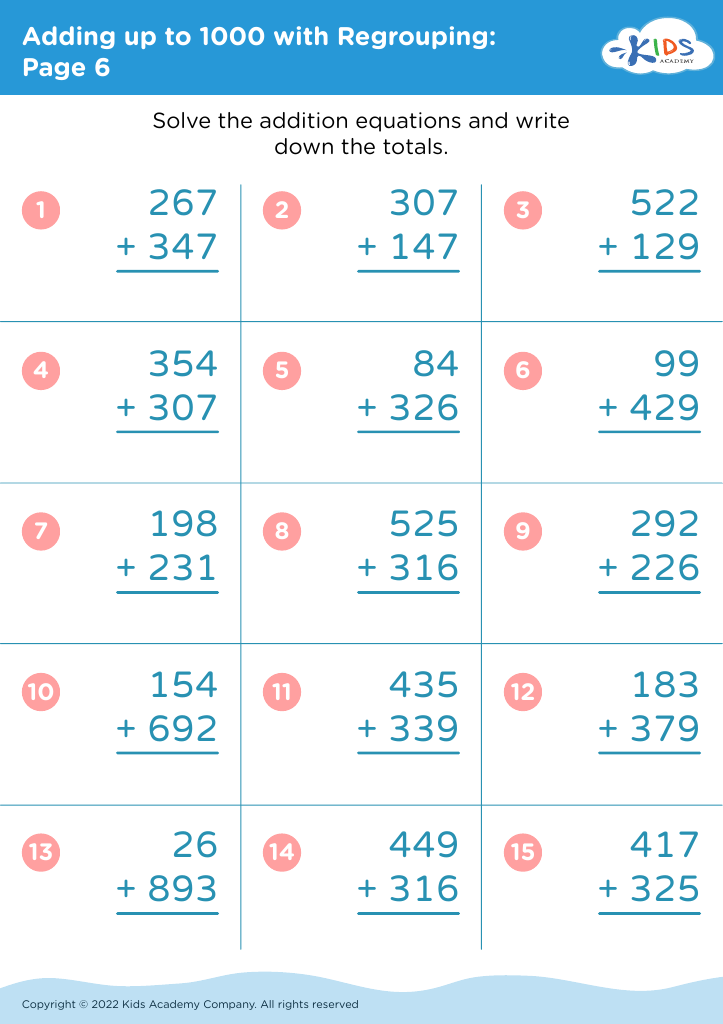
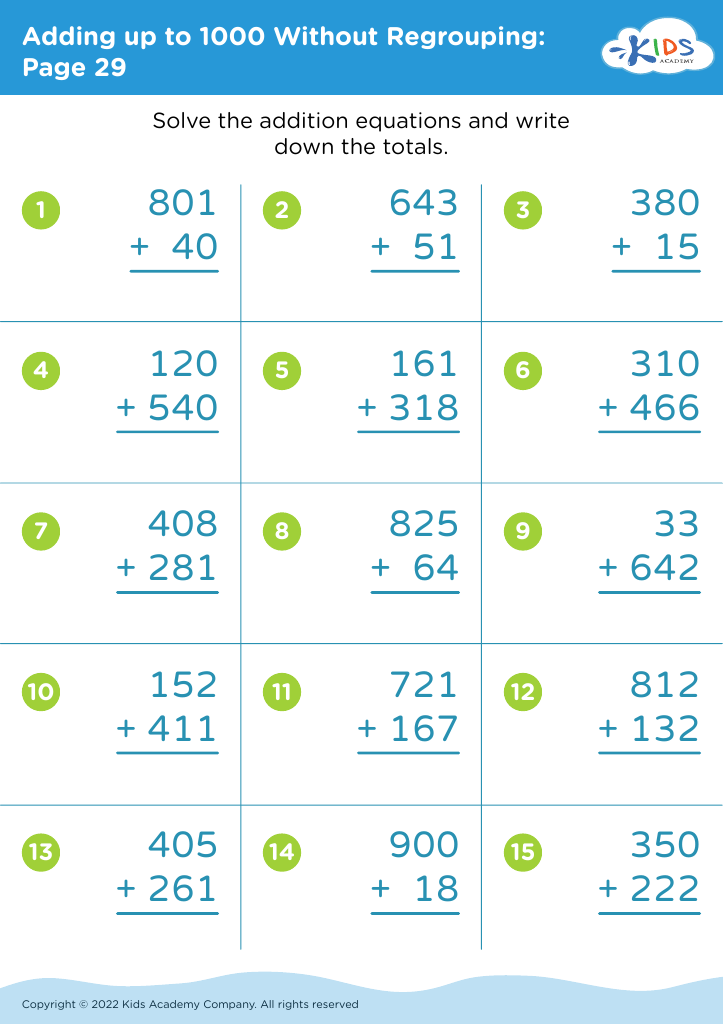
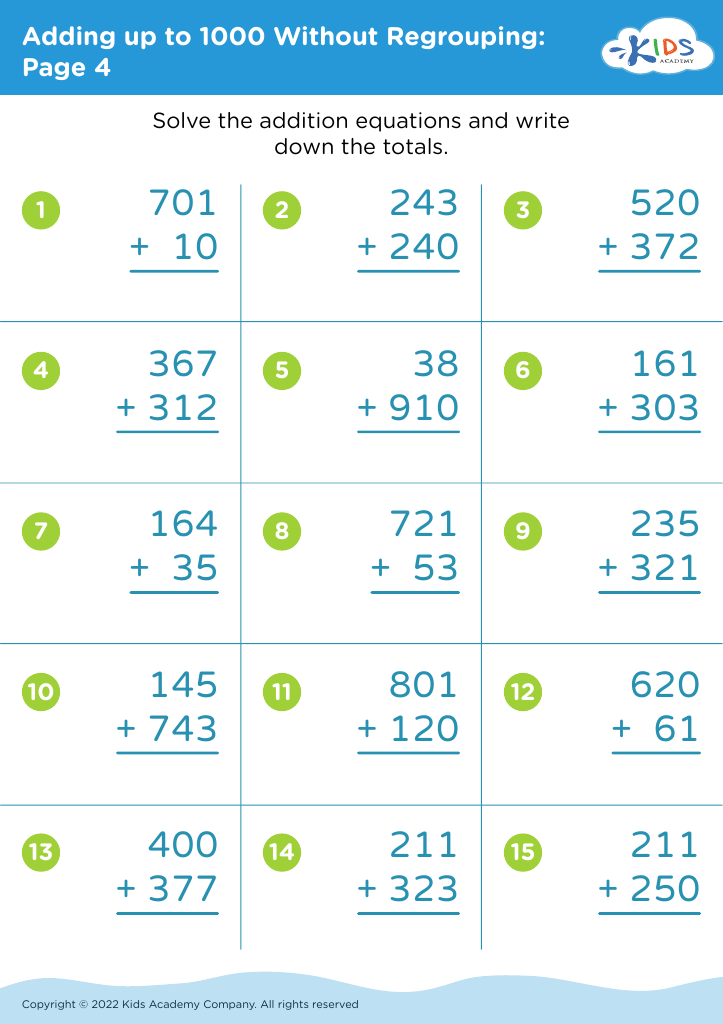



Word recognition and mathematical fluency form the foundation of a child's educational development. For children ages 6-7, grasping the concept of adding up to 1000 is a significant milestone that supports later complex mathematical understanding. Numeracy skills, including addition, enable children to comprehend basic math concepts that are crucial for academic success.
Combining word recognition with numeric addition benefits cognitive development in unique ways. When children recognize words associated with numbers and mathematical actions (“add,” “sum,” “total”), their comprehension depth increases, making abstract numbers more tangible. This dual focus helps solidify the connection between language and math skills, enhancing overall literacy and numeracy.
Moreover, mastering addition up to 1000 contributes to problem-solving confidence. A child adept at managing larger numbers feels more capable and motivated to tackle advanced mathematical challenges. It fosters a positive outlook towards math, reducing math anxiety often seen in later school years.
Parents and teachers play a crucial role in integrating these skills into everyday activities. Simple tasks like counting change, reading numbers out loud, and playing educational games reinforce the learned concepts. Fostering a positive learning environment at an early age ensures a solid foundation for future learning pursuits, benefiting children in unimaginable ways throughout their academic journeys and beyond.








