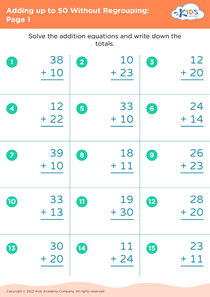
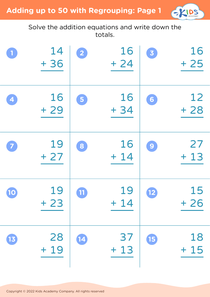
Addition Practice Adding up to 50 Misc Worksheets for Ages 6-7
5 filtered results
-
From - To
Enhance your child's math skills with our engaging "Addition Practice: Adding Up to 50 Miscellaneous Worksheets" designed for ages 6-7. These printable worksheets offer a variety of fun and interactive exercises that make learning addition enjoyable. With scenarios ranging from simple addition problems to word problems, your child will cultivate their understanding and fluency in adding numbers up to 50. Ideal for home or classroom use, these worksheets not only support foundational math skills but also promote critical thinking. Equip your child with the tools they need for mathematical success while enjoying the learning journey!
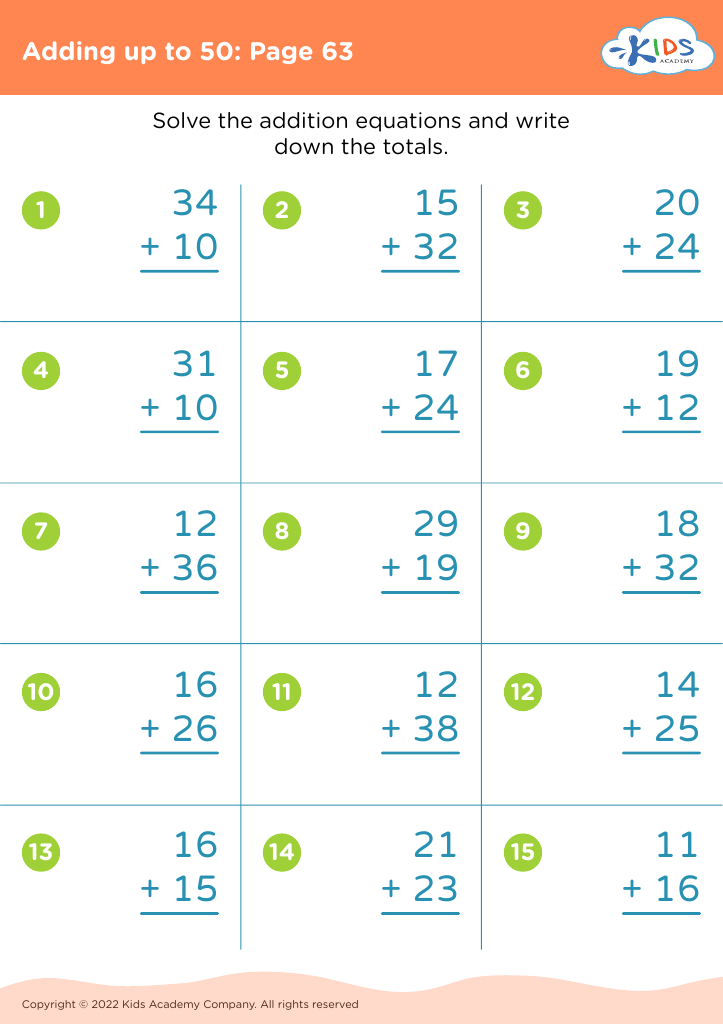
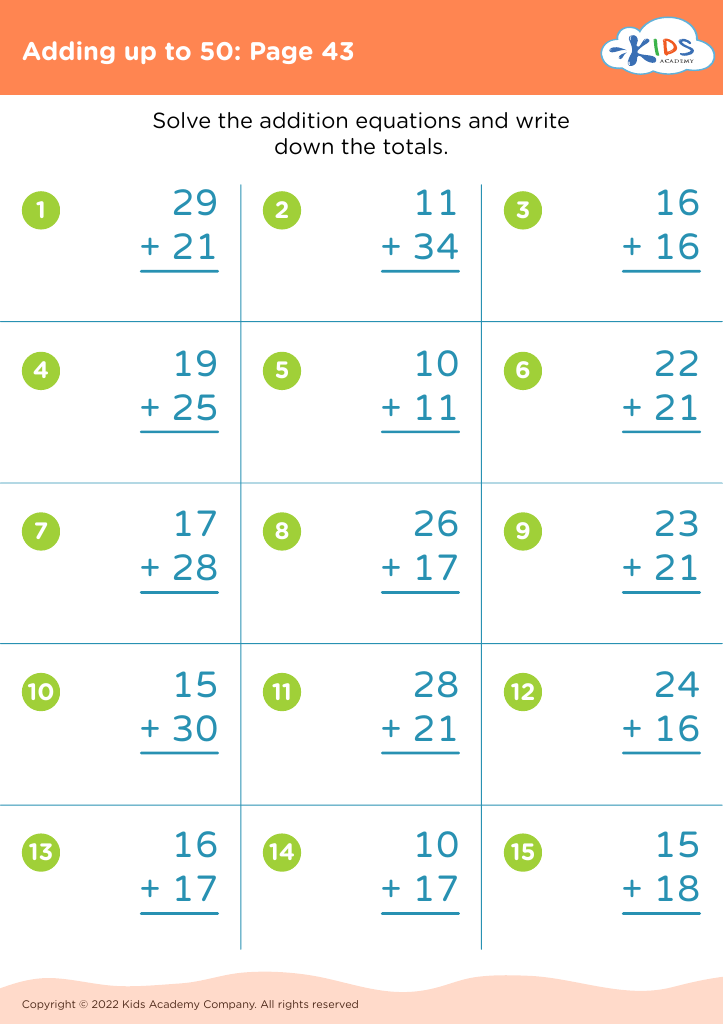
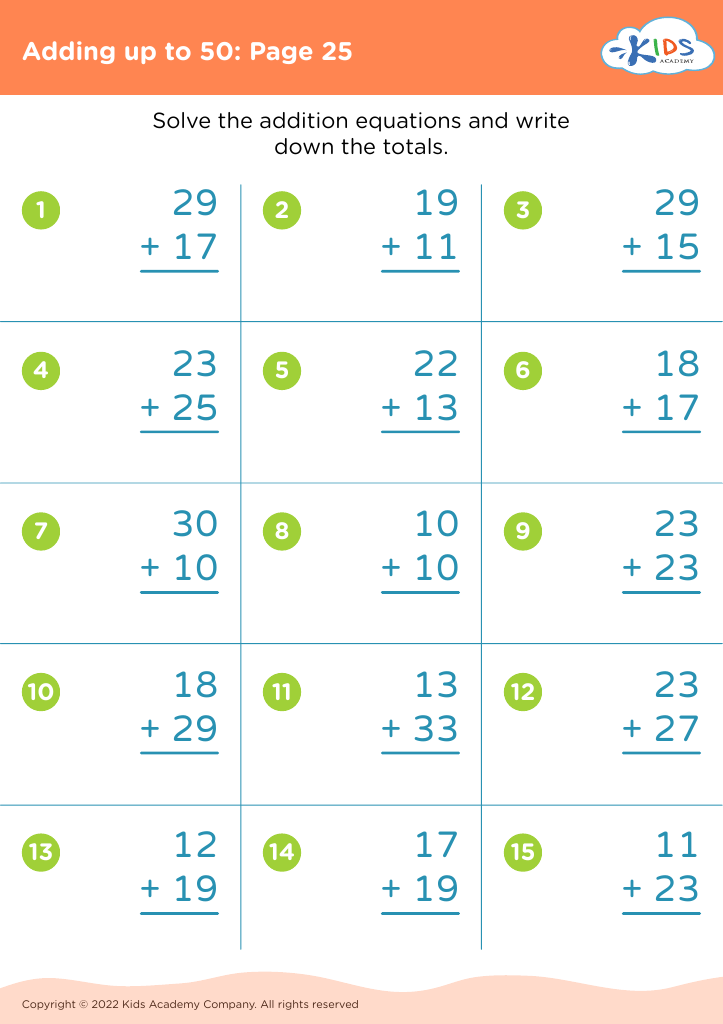
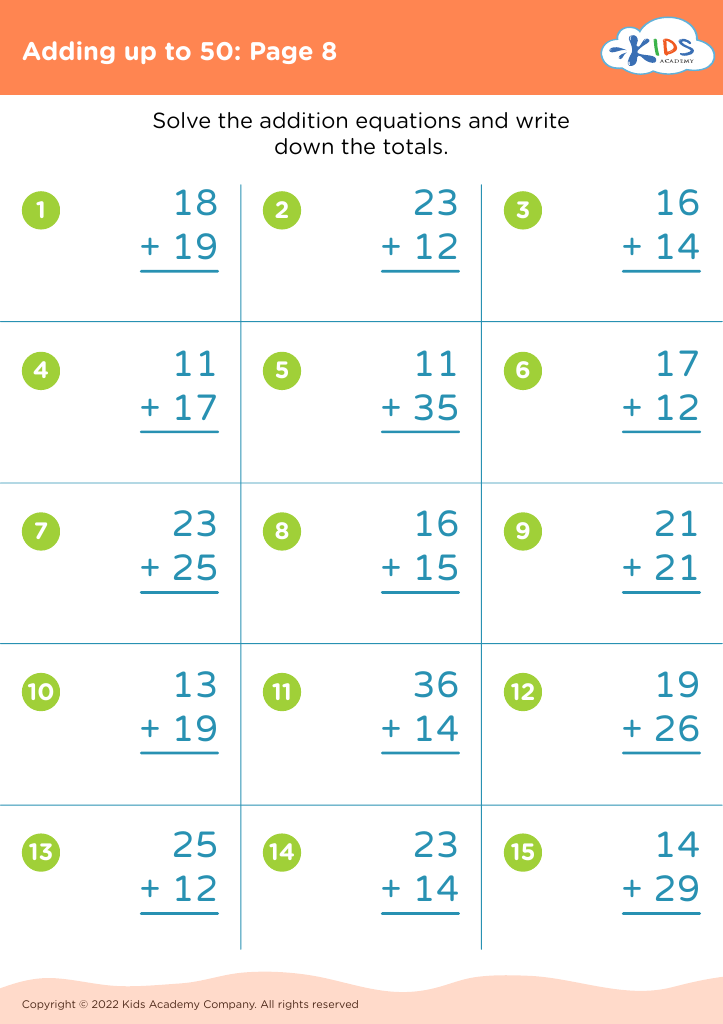
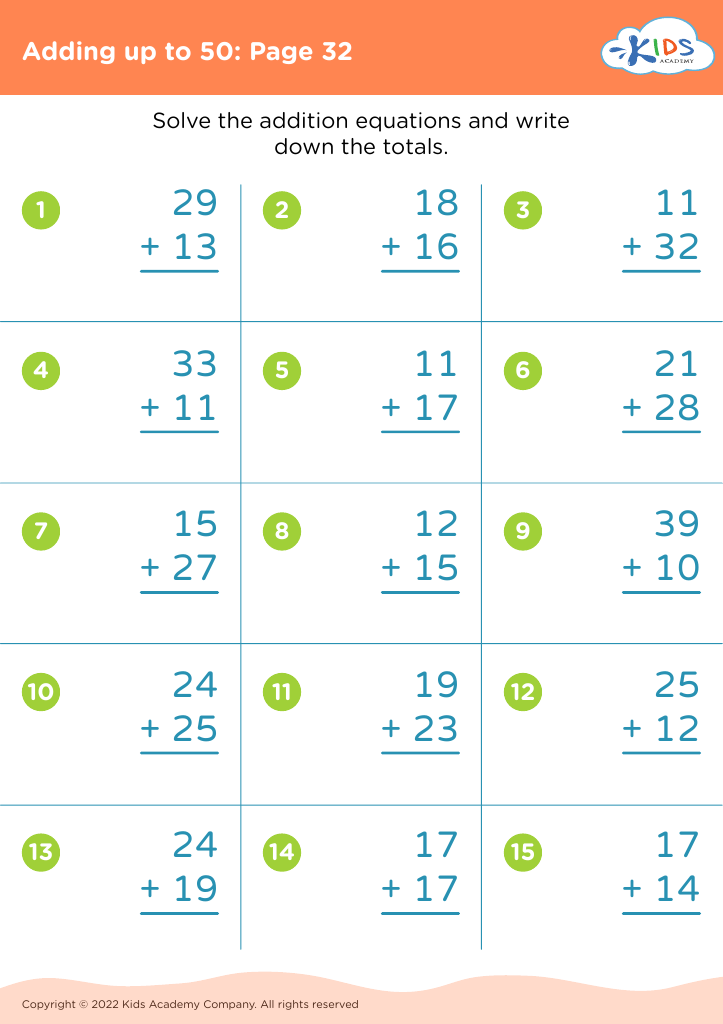


Addition practice, especially with numbers up to 50, is crucial for children aged 6-7 as it lays the foundation for their mathematical understanding. At this age, children are developing key cognitive skills and learning to think critically about numbers. Mastery of addition builds their confidence and strengthens their problem-solving abilities, fostering a positive attitude toward math.
For parents and teachers, engaging children in adding up to 50 helps reinforce essential concepts such as counting, number recognition, and the understanding of relationships between numbers. Regular practice enables children to quickly and accurately perform calculations, making future mathematical concepts, like subtraction and multiplication, easier to grasp.
Additionally, math skills significantly affect performance in other subjects, promoting a well-rounded education. Encouraging addition practice can also provide opportunities for bonding through enjoyable activities and games that make learning fun.
Presenting these challenges in a supportive environment inspires resilience and a hunger for knowledge in young learners. As children gain mastery over addition, they build a strong mathematical foundation that will serve them well in higher-level mathematics and real-world applications in the years to come.