Fraction comparison Adding up to 50 Misc Worksheets for Ages 6-7
4 filtered results
-
From - To
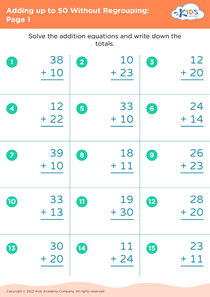
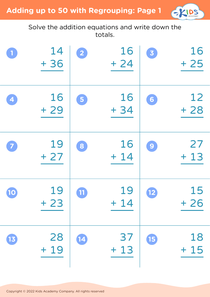
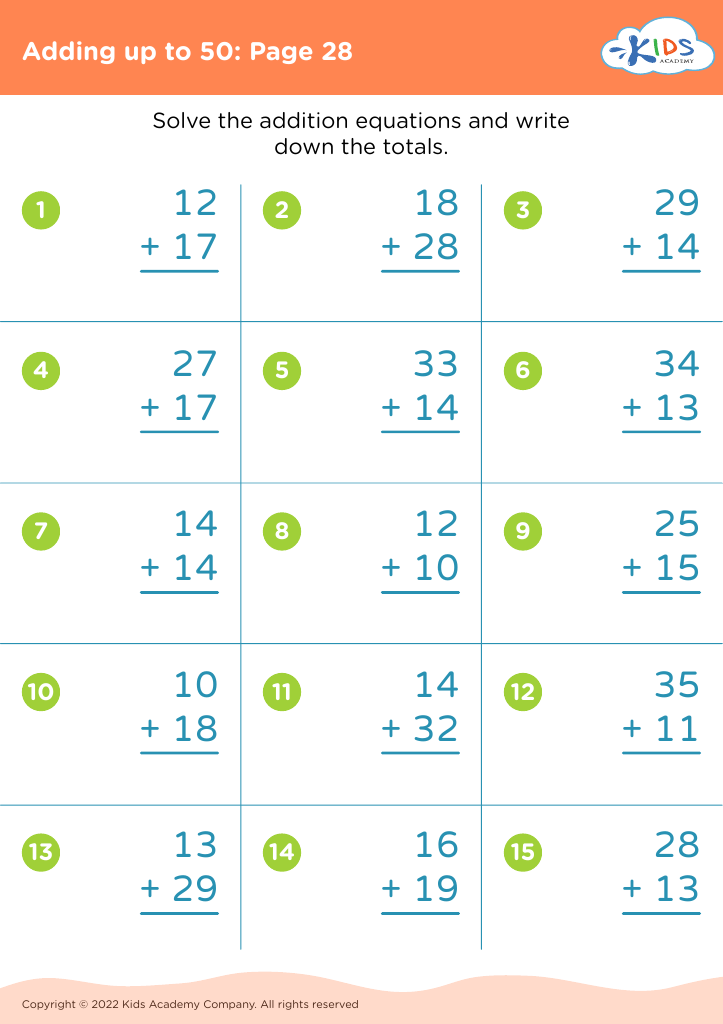
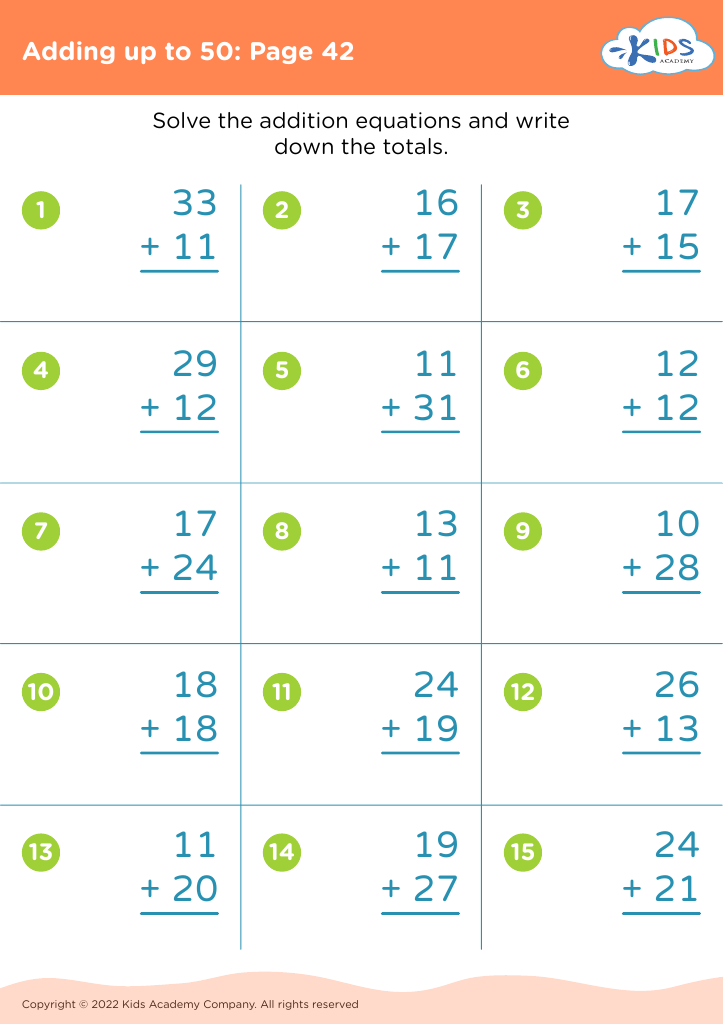
Explore our engaging "Fraction Comparison Adding Up to 50 Misc Worksheets" specifically designed for children aged 6-7. These worksheets provide a fun and interactive way to help young learners understand the concept of fractions while enhancing their addition skills up to 50. Through colorful visuals and relatable contexts, kids will grasp how to compare fractions effectively, developing foundational math skills that align with early curriculum standards. Perfect for classroom use or at-home practice, these resources aim to boost confidence and foster a love for math in your little ones. Download now and watch them excel in their math journey!
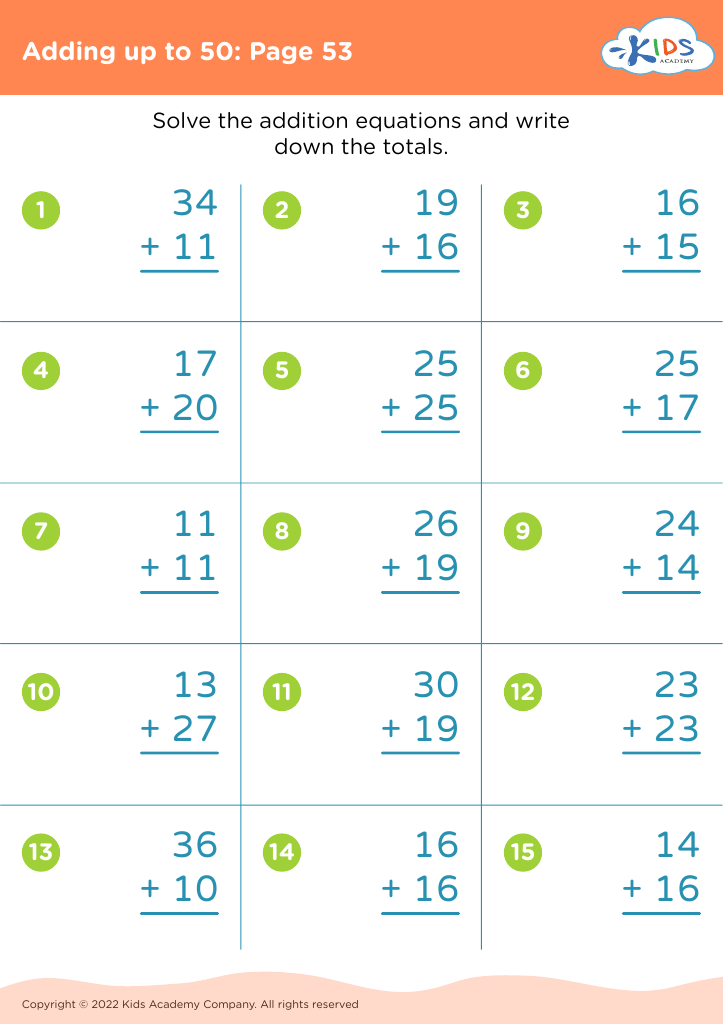
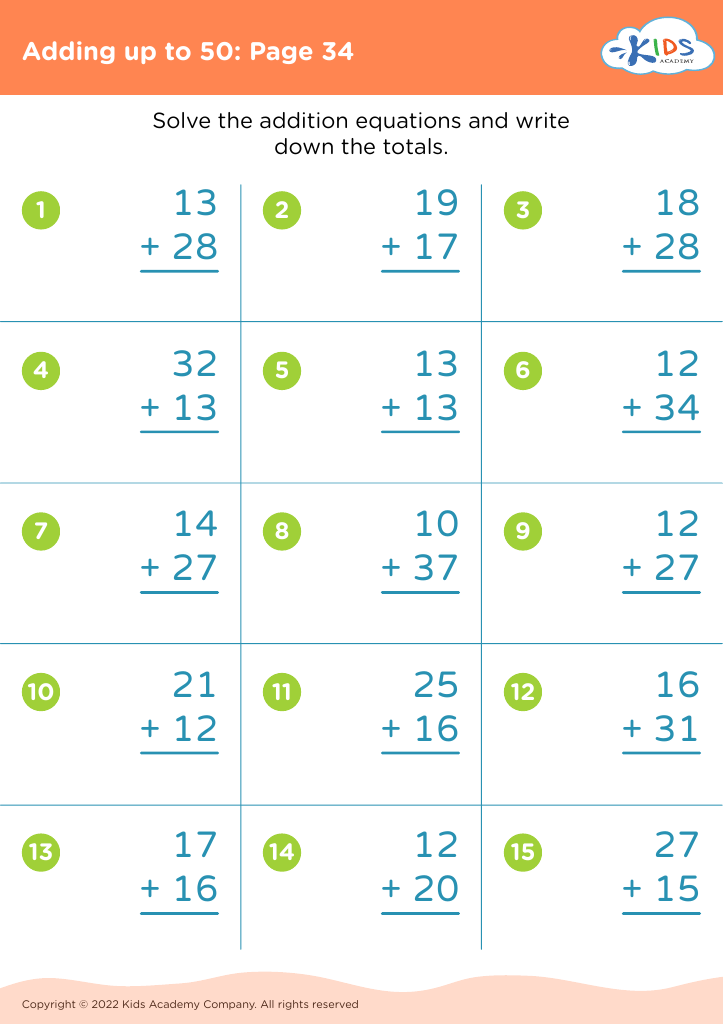


Understanding fraction comparison is crucial for children aged 6-7 as it lays the foundation for more advanced mathematical concepts. At this critical development stage, children are learning to recognize and evaluate parts of a whole. Mastering fractions enables them to make sense of everyday situations, such as sharing food or dividing items fairly, which enhances their problem-solving skills.
Additionally, focusing on number sense—such as adding numbers up to 50—supports children's ability to work with larger numbers and perform basic arithmetic operations. By engaging with these concepts, children build confidence and develop a strong mathematical understanding, which is essential for their academic growth.
Moreover, learning to compare fractions helps children to identify relationships between numbers, an important skill for future topics including ratios, percentages, and algebra. Teachers and parents play a vital role in providing a supportive environment where children can explore and deduce meanings from fractional relationships. By incorporating playful and hands-on learning activities, they can foster a love for mathematics and enhance critical thinking.
Ultimately, focusing on these elements not only equips young learners with essential math skills but also promotes persistence, resilience, and a positive attitude towards challenges in learning.