Simplifying Fractions Adding up to 50 Misc Worksheets for Ages 6-7
4 filtered results
-
From - To
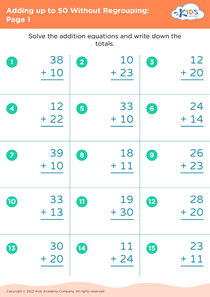
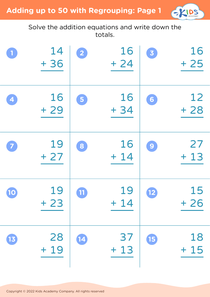
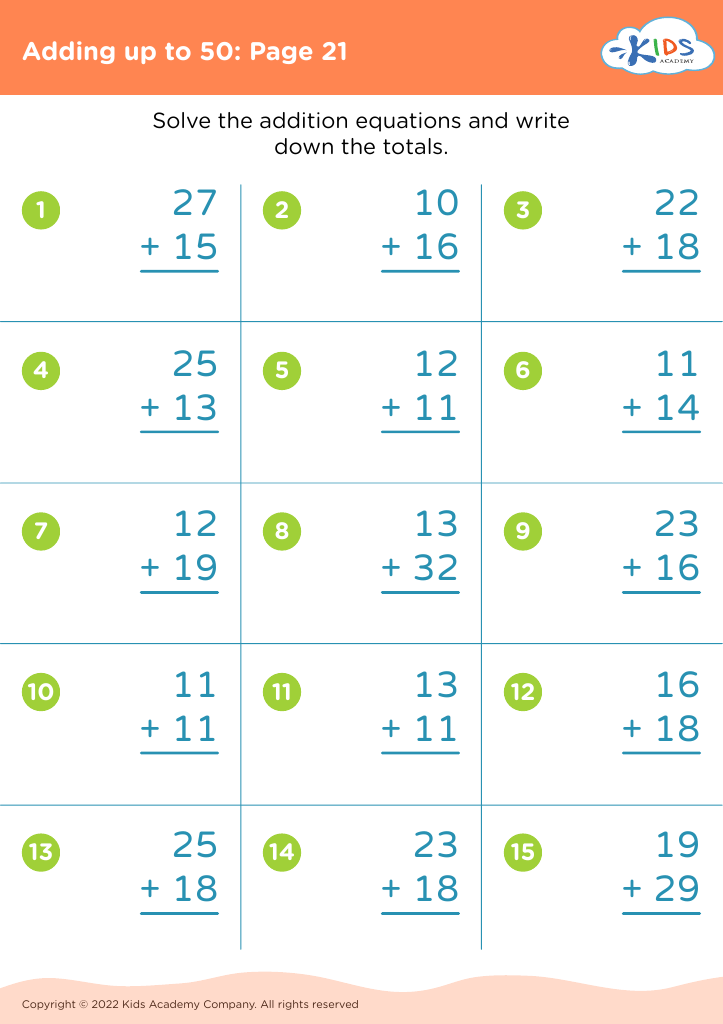
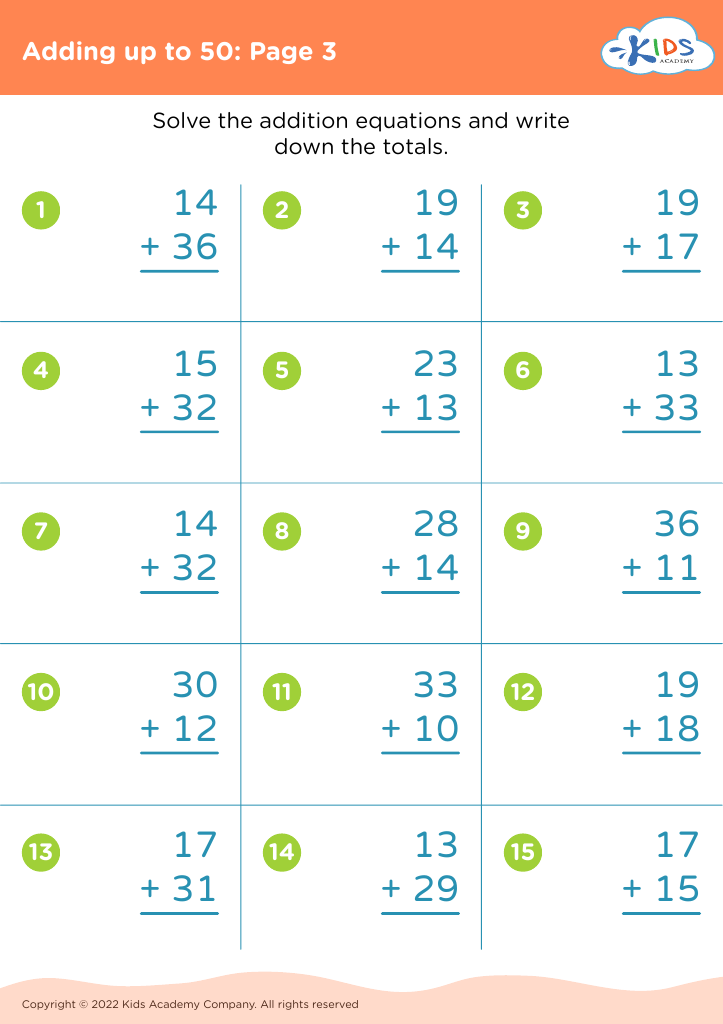
Discover engaging "Simplifying Fractions Adding up to 50 Misc Worksheets" designed for young learners aged 6-7. These fun and educational worksheets help kids master the skill of simplifying fractions while also practicing addition up to 50. Our collection includes a variety of exercises aimed at enhancing mathematical understanding and problem-solving abilities. Perfect for early grade students, these worksheets make learning fractions enjoyable and accessible. Boost your child's confidence and proficiency in math with these beautifully crafted resources, available for easy download. Keep your lessons exciting and effective with Kids Academy's exceptional worksheets!
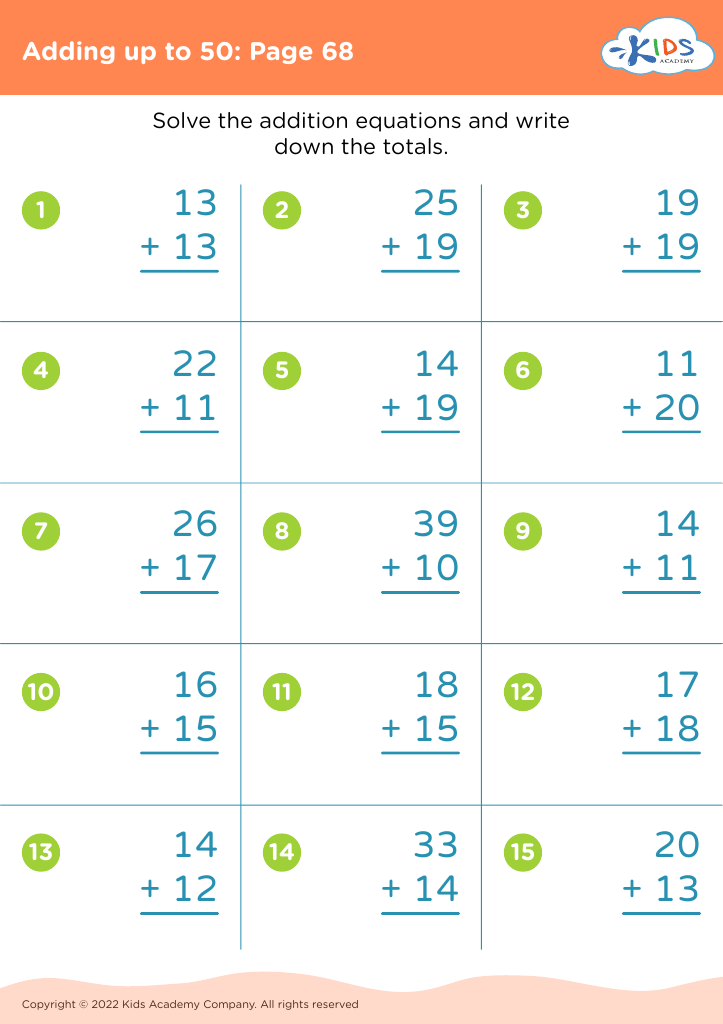
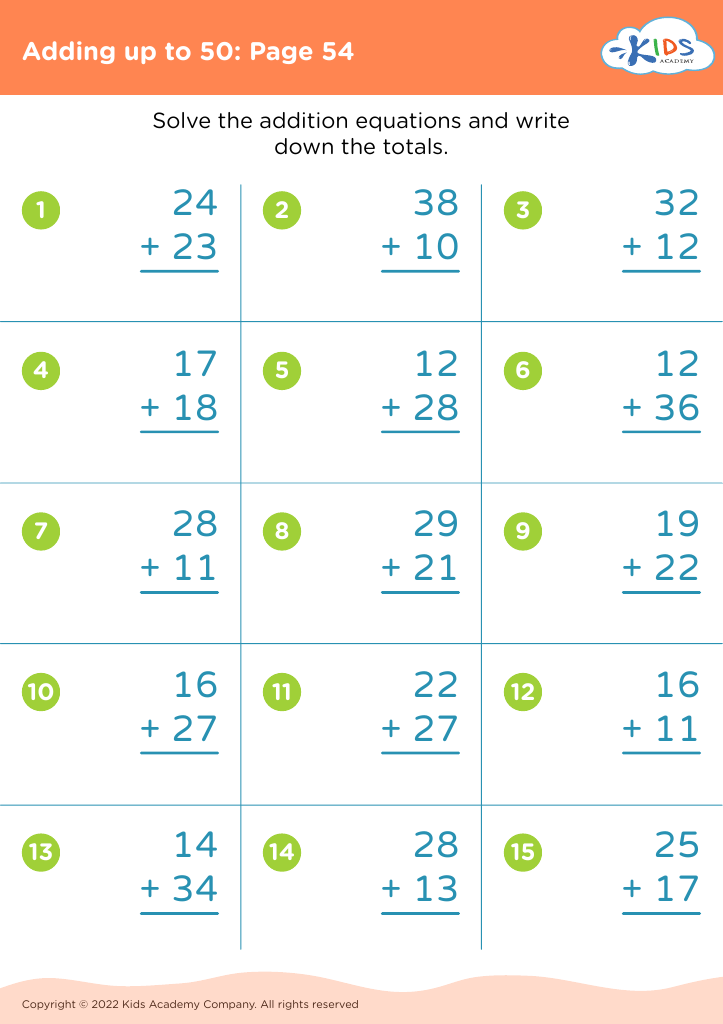


Simplifying fractions and mathematical exercises such as adding up to 50 are critical foundations for children between the ages of 6-7, a period when their cognitive abilities for understanding numbers and relationships between them are rapidly developing. Parents and teachers should care about these skills as they directly influence a child’s future success in mathematics and science. Learning to simplify fractions helps children comprehend part-whole relationships, an essential concept that aids in understanding more complex mathematical operations.
Activities like adding numbers up to 50 improve children’s number sense by enhancing their ability to recognize patterns, understand place value, and perform basic arithmetic efficiently. These early experiences with numbers are vital as they build the groundwork for more advanced skills such as multiplication, division, and problem-solving. Mental addition and simplification exercises also enhance memory, concentration, and logical thinking.
Providing engaging, age-appropriate mathematical challenges fosters a positive attitude toward learning and helps children develop confidence in their abilities. When children feel successful in these tasks, they are more likely to take on and enjoy later, more challenging mathematical concepts. Overall, nurturing these skills in early education can lead to greater academic achievement and a lifelong appreciation for mathematics.