Understand fractions Adding up to 50 Misc Worksheets for Ages 6-7
3 filtered results
-
From - To
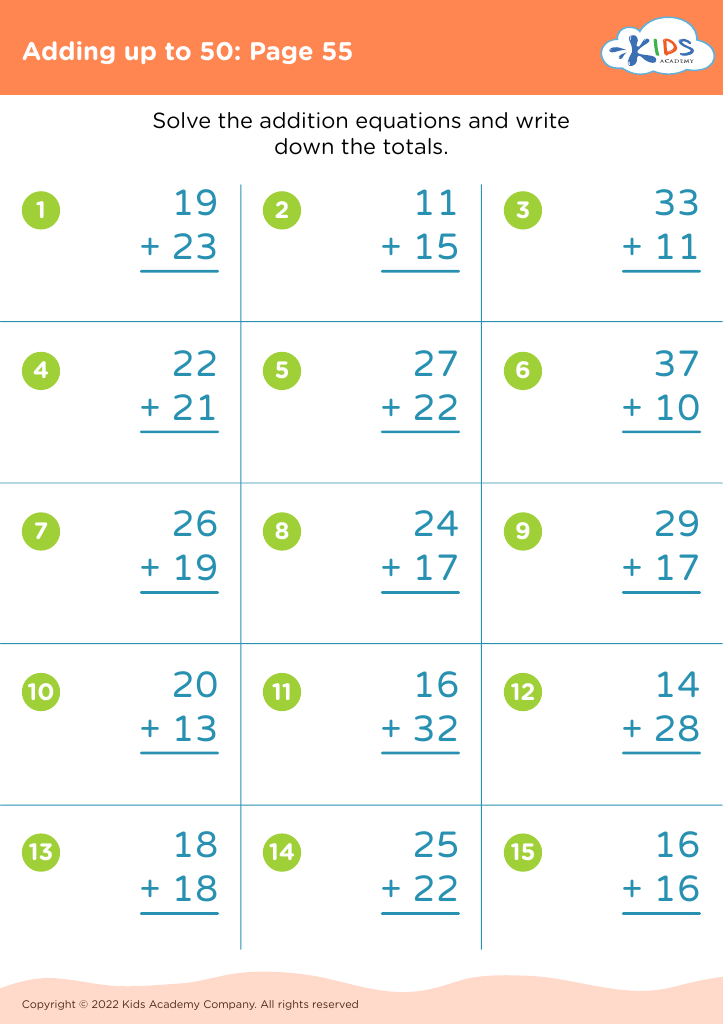
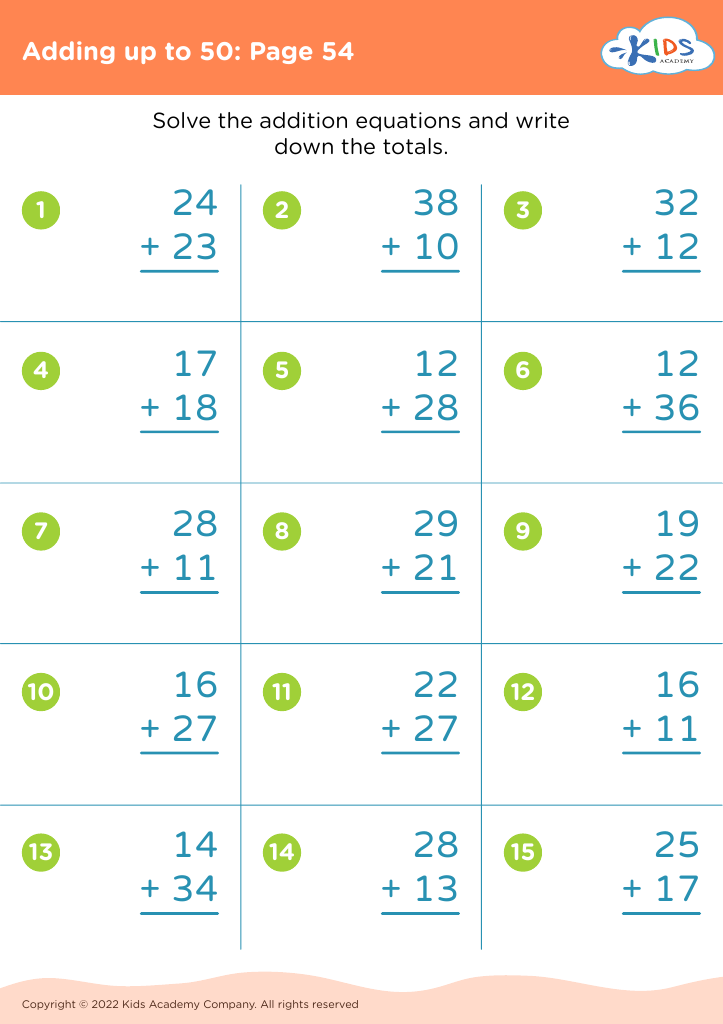
Explore our engaging "Understand Fractions: Adding up to 50 Misc Worksheets" designed specifically for children ages 6-7. Our comprehensive worksheets help young learners grasp fundamental fraction concepts while practicing addition up to 50. These vibrant and interactive activities keep kids excited about math, boosting their confidence and foundational skills. Perfect for classroom supplements or at-home practice, our worksheets cater to individual learning needs and foster a love for math. Harness the power of structured, enjoyable learning to guide your child towards mastering fractions and addition with ease. Experience the best in educational resources with Kids Academy today!
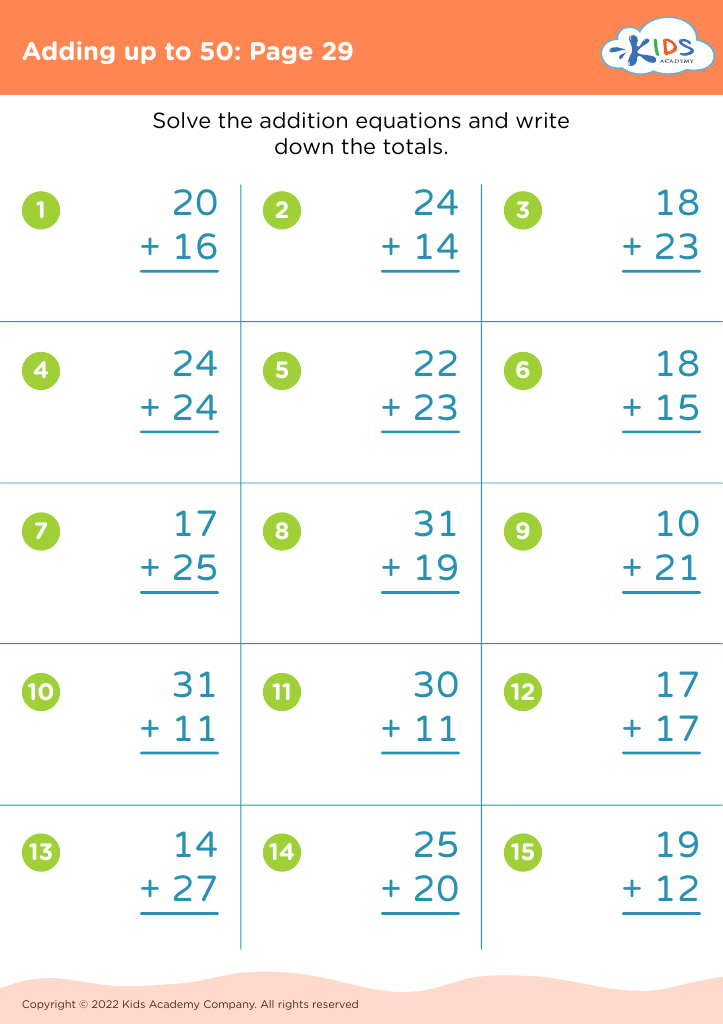


Understanding fractions and basic addition are fundamental building blocks of math, forming the foundation for more complex mathematical concepts. At ages 6-7, children are typically in first or second grade, when they're developing their number sense and arithmetic skills. Here's why parents and teachers should care about children learning these concepts:
-
Conceptual Foundation: Fractions, although seemingly simple, introduce the idea that numbers can represent parts of a whole, a key concept in both everyday life and advanced math. Early exposure helps demystify the idea and fosters a deeper comprehension of various quantities.
-
Numeracy Skills: Proficiency in adding smaller numbers up to 50 primes children for tackling more advanced arithmetic. This practice enhances their mental math abilities, fluency, and confidence in handling numbers.
-
Problem-Solving & Critical Thinking: These foundational skills aid in developing problem-solving strategies and critical thinking abilities. They learn to approach math problems methodically and with confidence.
-
Real-Life Application: Whether it’s dividing a pizza or measuring ingredients, fractions are everywhere. Simplifying everyday tasks instills practical knowledge and shows children the relevance of what they’re learning.
-
Future Learning: Solidifying these early math skills is crucial as it sets the stage for more advanced topics like multiplication, division, and fractions involving larger numbers in the later grades.
By caring about these early concepts, parents and teachers ensure children have the essential tools for future academic success and everyday life.