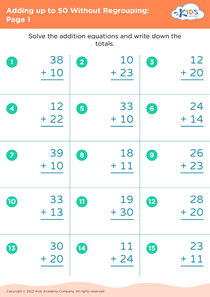
Fraction comparison Adding up to 50 with Regrouping Worksheets for Ages 6-7
3 filtered results
-
From - To
Discover our engaging "Fraction Comparison Adding up to 50 with Regrouping Worksheets," designed specifically for children aged 6-7! These worksheets incorporate essential fraction comparison skills while introducing regrouping concepts in addition. Perfect for reinforcing math understanding, these activities encourage students to compare fractions, comprehend their values, and enhance their addition skills while working with numbers up to 50. Developed with vibrant visuals and age-appropriate challenges, our worksheets make learning fun and interactive. Foster a solid foundation in fractions and addition for your young learners today! Explore our collection and watch their confidence and math skills grow!
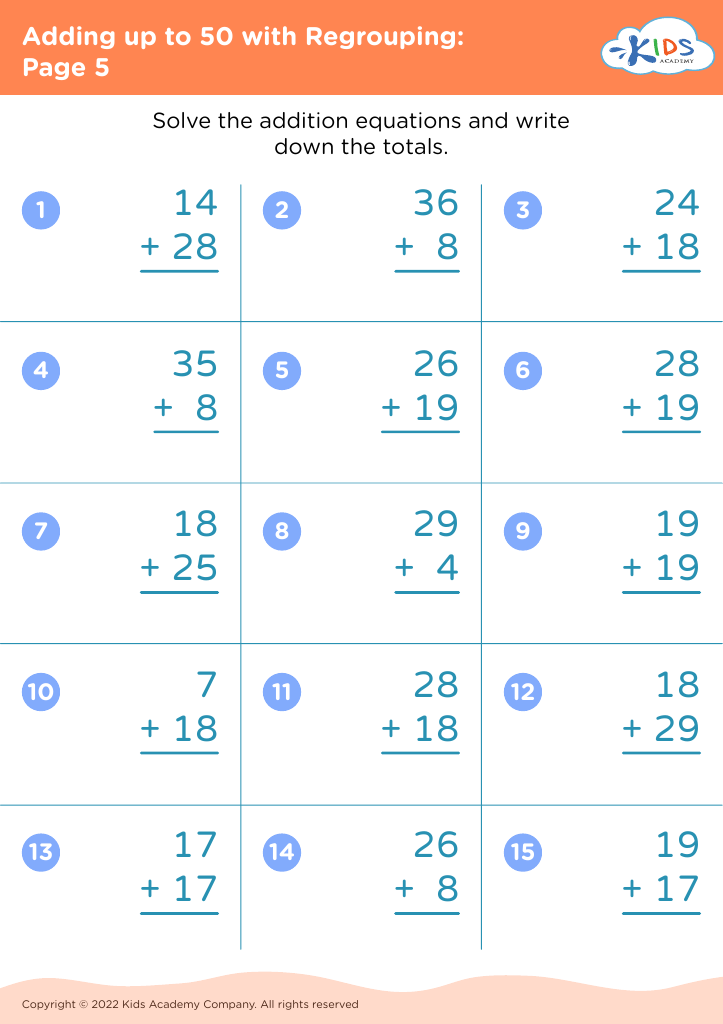
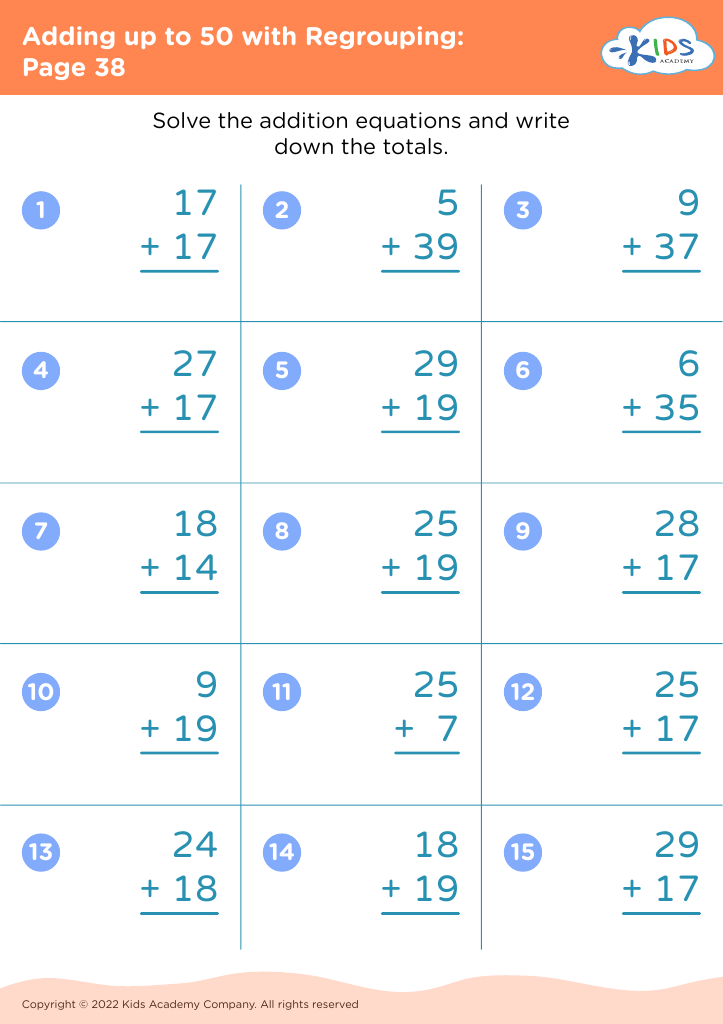
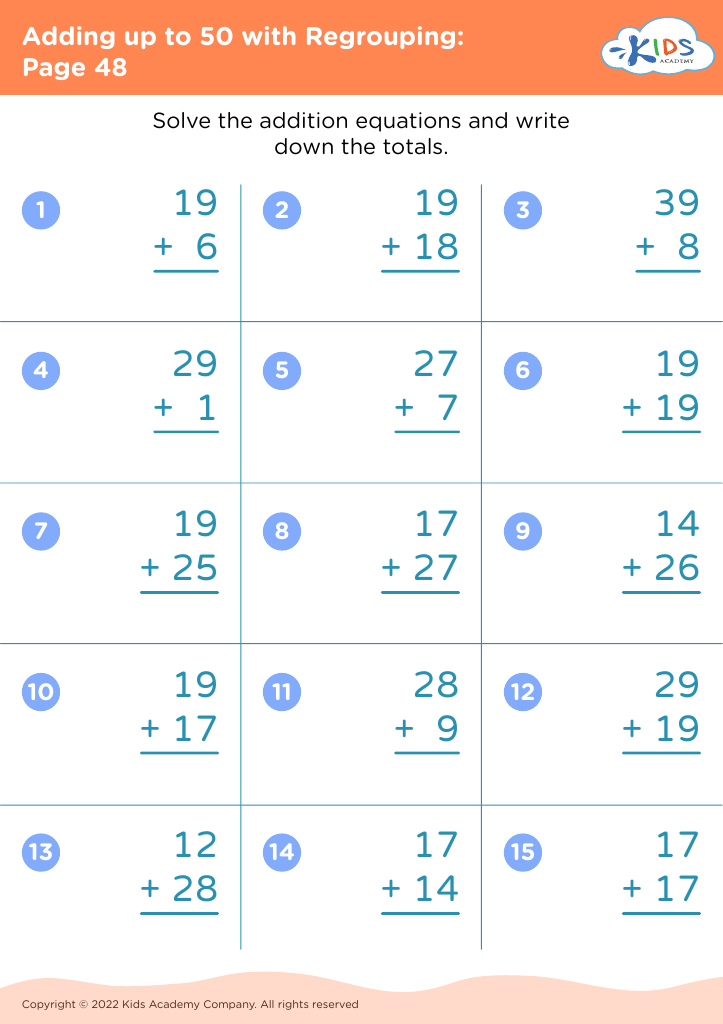


Understanding fraction comparison and the process of regrouping in addition is essential for children aged 6-7 as it lays the groundwork for their mathematical development. For parents and teachers, prioritizing these concepts fosters critical thinking and problem-solving skills, which are vital at this developmental stage.
Firstly, comparing fractions enhances number sense and helps children grasp the idea of parts of a whole—this is foundational for future math concepts. For instance, recognizing that 1/2 is larger than 1/3 helps students make sense of divisions, measurements, and various everyday scenarios.
Secondly, regrouping during addition, especially when sums can go beyond 10, teaches children how to handle larger numbers efficiently. It encourages the understanding of place value, which is crucial as they progress into more complex arithmetic.
By emphasizing these skills, parents and teachers also nurture resilience and adaptability in young learners, as they learn to tackle challenges and explore different problem-solving strategies. Engaging with fractions and regrouping in a fun, supportive environment boosts confidence and sets the stage for a lifelong appreciation for math. Thus, investing time in these areas is highly beneficial for foundational educational growth.