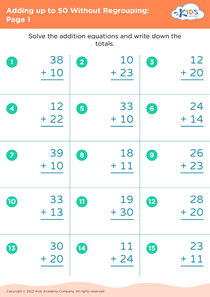
Simplifying Fractions Adding up to 50 with Regrouping Worksheets for Ages 6-7
4 filtered results
-
From - To
Explore our engaging "Simplifying Fractions Adding Up to 50 with Regrouping Worksheets" designed for children ages 6-7. These worksheets provide a hands-on approach to mastering basic fraction concepts while practicing regrouping strategies in addition. Each activity encourages young learners to break down complex problems into manageable steps, fostering a deeper understanding of fractions in relation to addition. Colorful illustrations and interactive exercises ensure that the learning process remains fun and captivating. Help your child build essential math skills and boost their confidence with our thoughtfully crafted worksheets. Start their journey to math proficiency today! Perfect for home or classroom use.
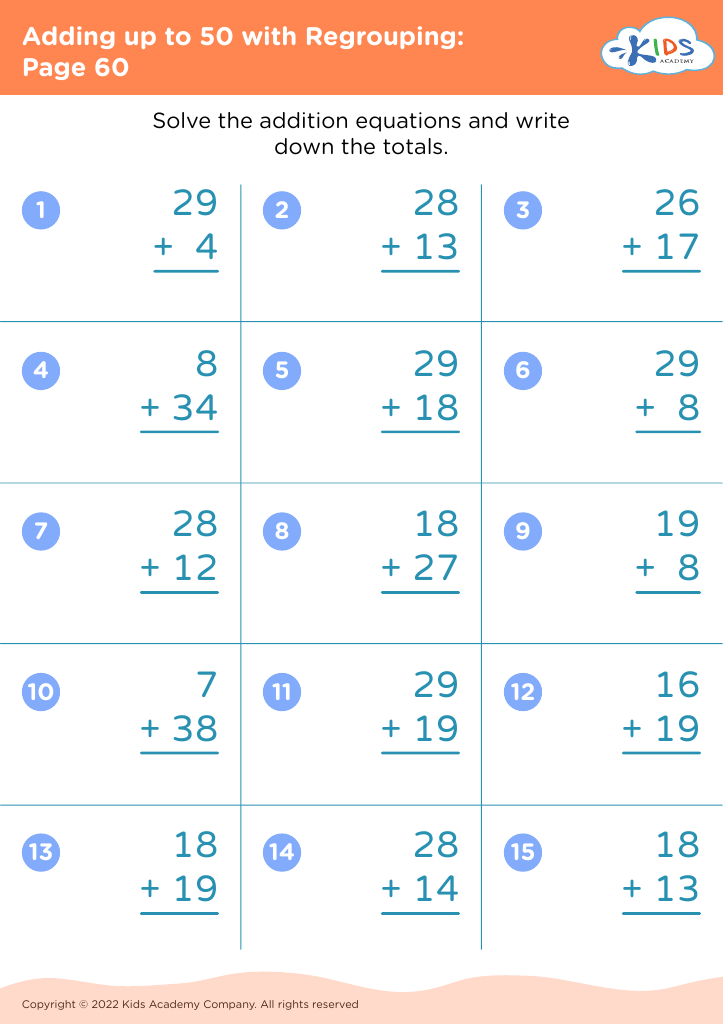
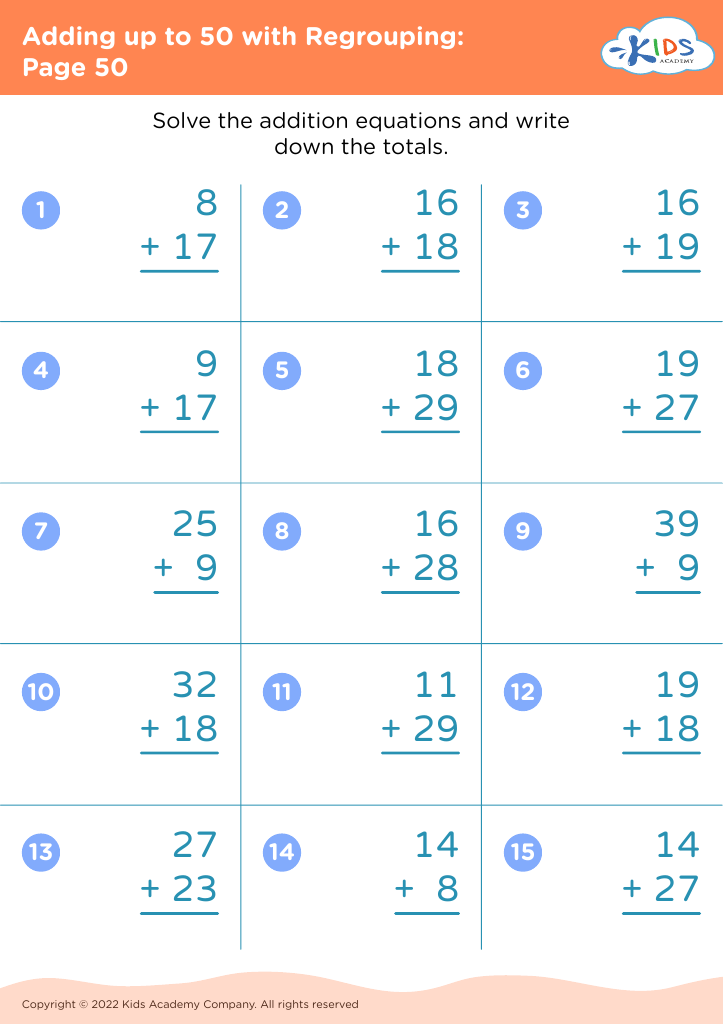
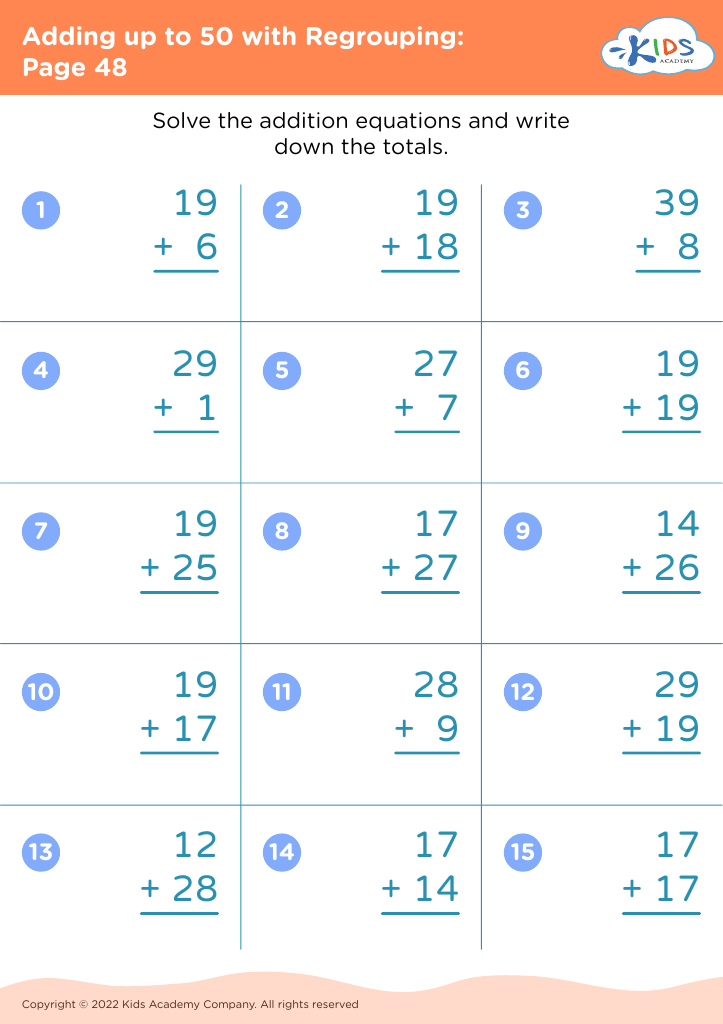
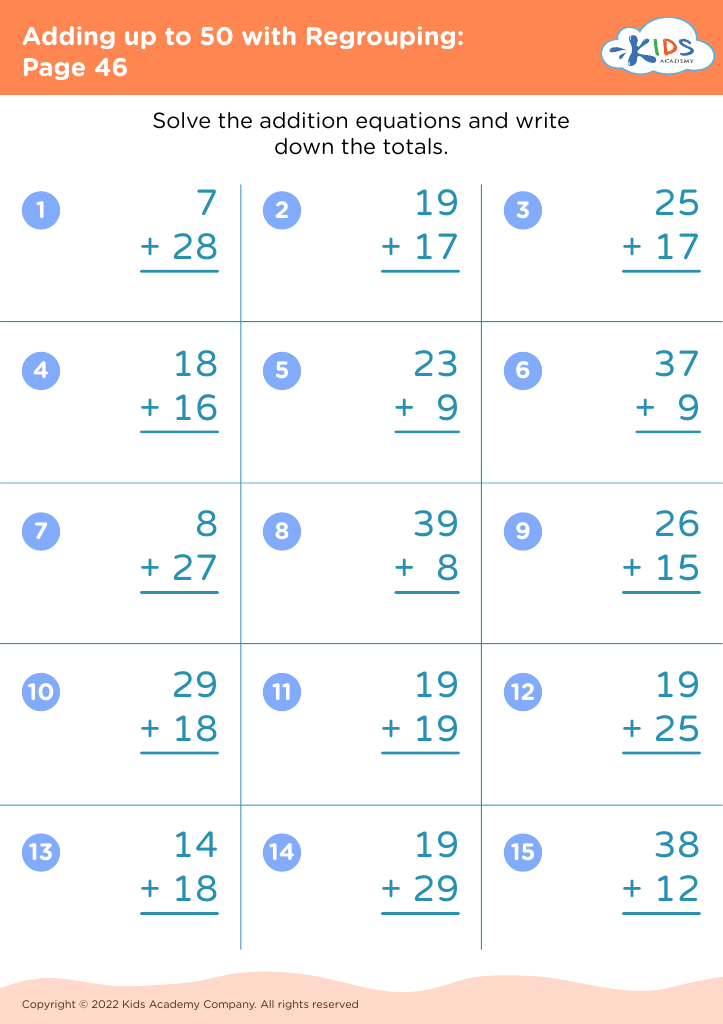


Simplifying fractions and mastering addition with regrouping are foundational skills in early mathematics that significantly influence a child's overall mathematical understanding. For children aged 6-7, these concepts serve as critical building blocks for future math skills. Parents and teachers should care about these topics because they promote number sense, critical thinking, and problem-solving abilities.
When children learn to simplify fractions, they gain a clearer understanding of numerical relationships, which helps them make sense of more complex math concepts later on. Additionally, adding up to 50 with regrouping encourages them to visualize and manipulate numbers, fostering a deeper comprehension of place value.
Incorporating engaging activities related to these skills can make learning enjoyable. It helps to scaffold these concepts, catering to varied learning styles and abilities, while ensuring students feel confident in their understanding. Moreover, mastering these skills early on can prevent math anxiety, a prevalent issue in later grades.
Overall, prioritizing simplification of fractions and addition with regrouping not only equips children with crucial skills for their current math endeavors but also instills a love for learning and a sense of accomplishment that can last throughout their educational journeys.