Addition Practice Adding up to 50 Without Regrouping Worksheets for Ages 6-7
6 filtered results
-
From - To
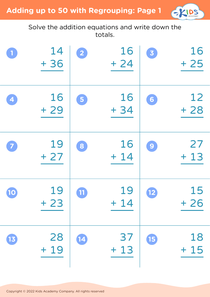
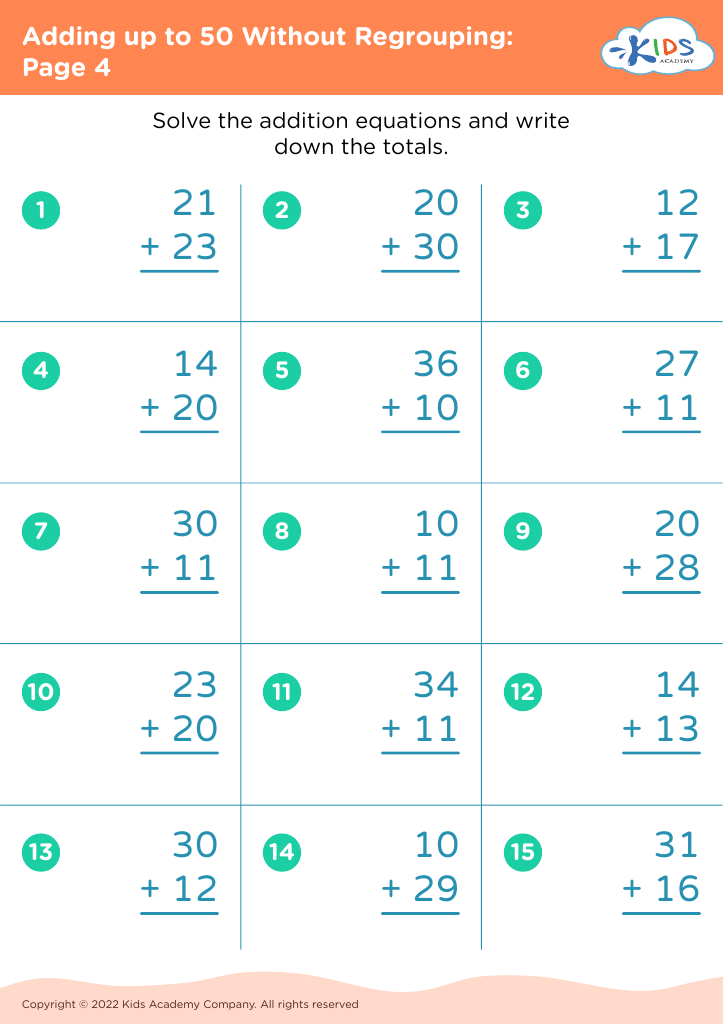
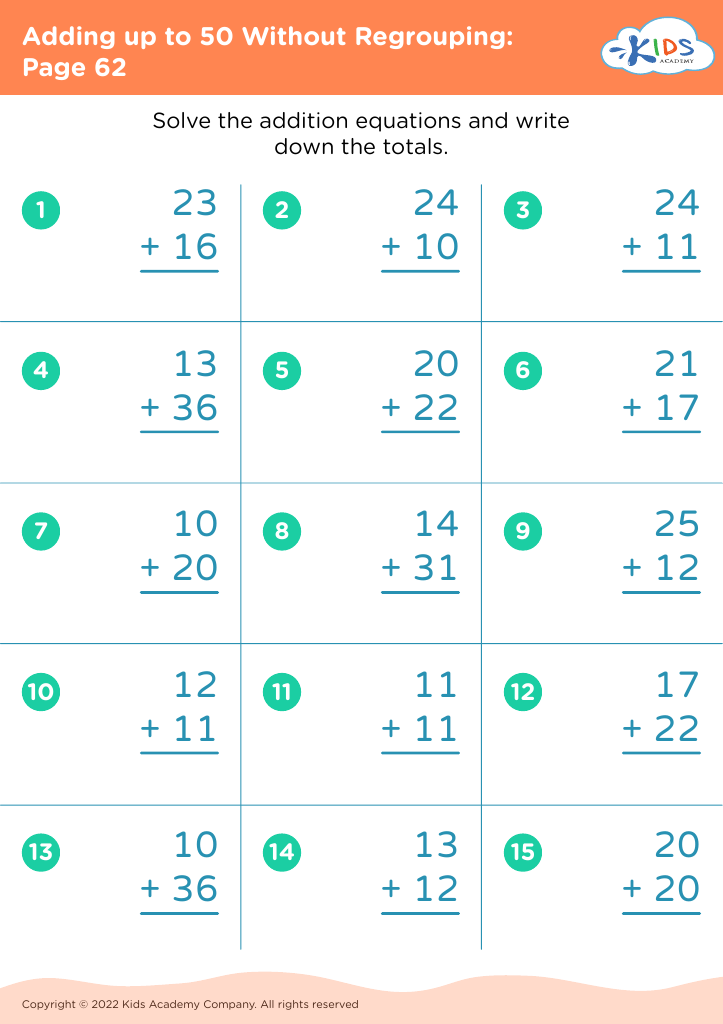
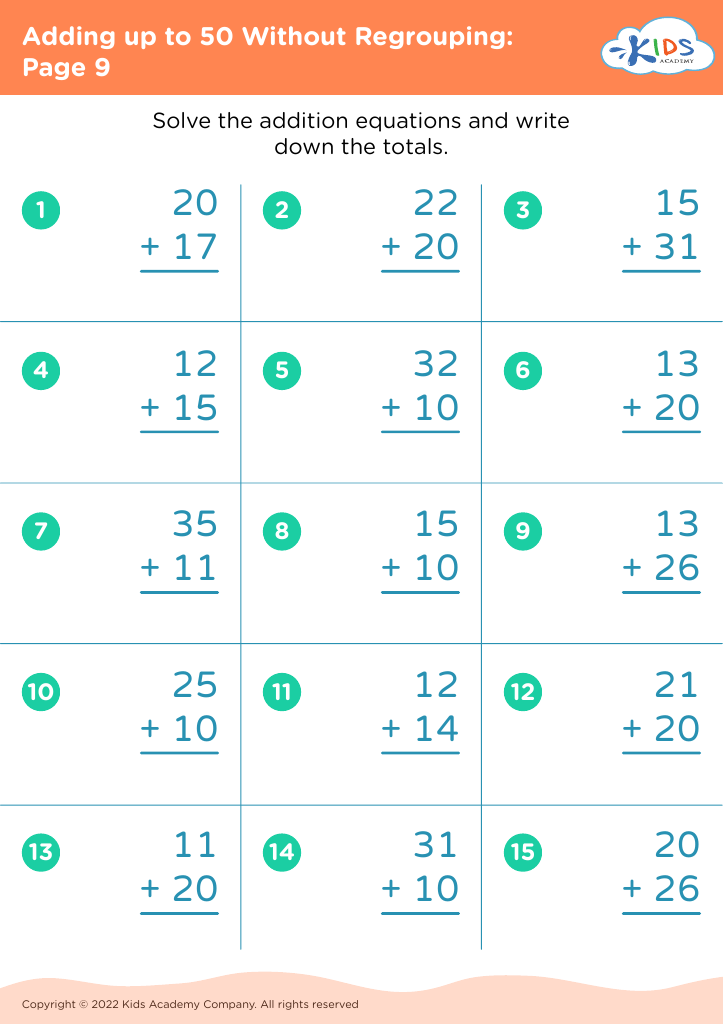
Enhance your child's math skills with our engaging Addition Practice Worksheets, designed for ages 6-7! These worksheets focus on adding numbers up to 50 without regrouping, making it easier for young learners to build foundational arithmetic abilities. Each activity encourages fun and interactive learning, helping students quickly recognize and solve problems while boosting their confidence in mathematics. With a variety of exercises tailored to different learning styles, your child will enjoy practicing addition in an approachable way. Empower your young mathematician with these essential tools for success! Explore our worksheets today and watch your child excel in addition!
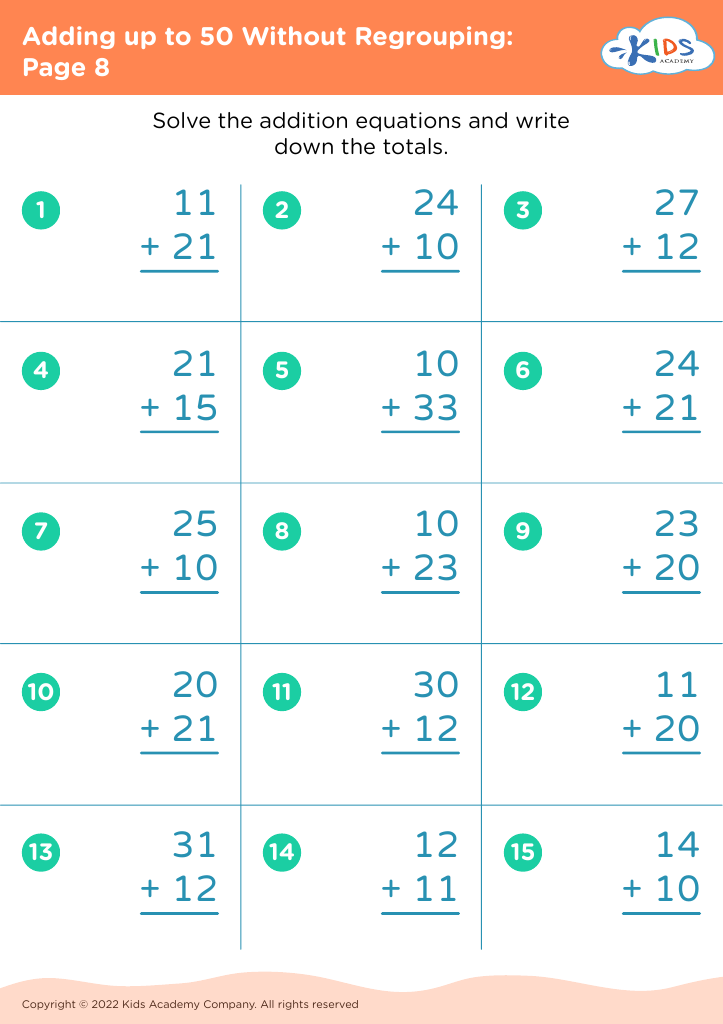
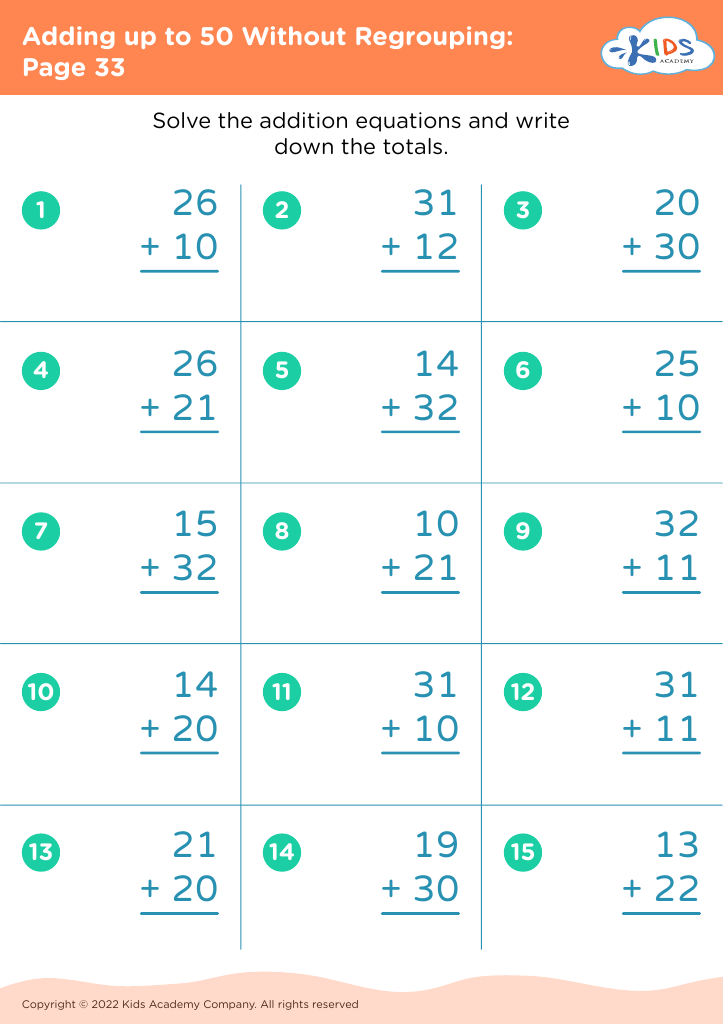
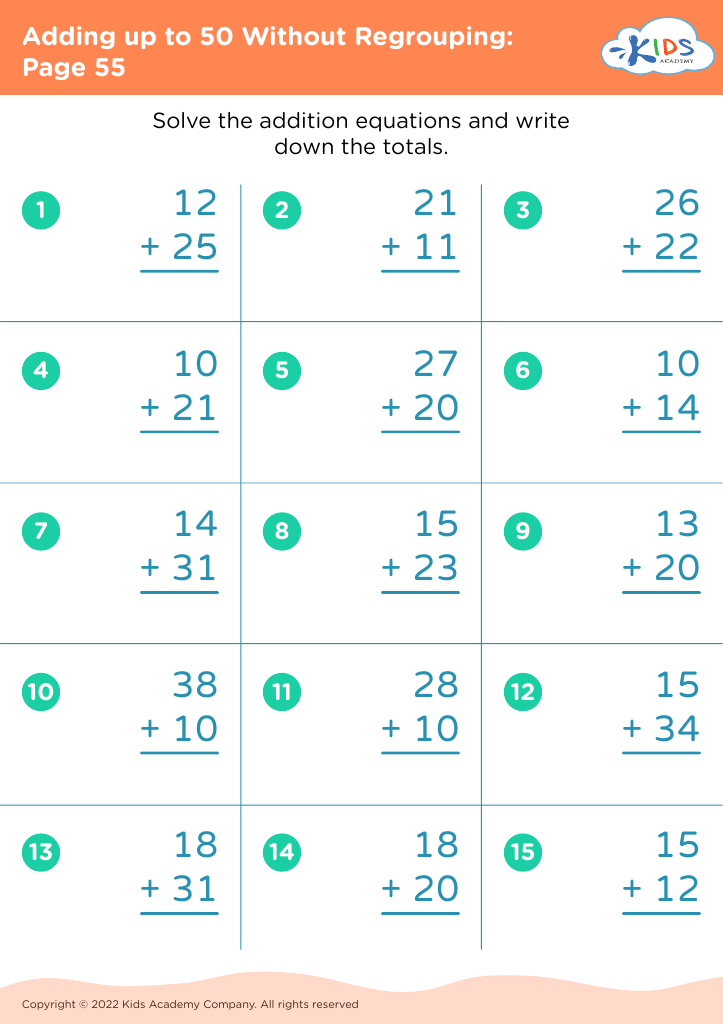


Parents and teachers should prioritize addition practice for children aged 6-7, particularly when it involves adding numbers up to 50 without regrouping, for several compelling reasons. Firstly, mastering basic addition skills lays the foundation for their overall mathematical understanding. At this age, children are beginning to develop number sense, and practice with simple addition helps them recognize patterns and relationships between numbers. This skill is crucial as they advance to more complex math concepts.
Moreover, learning to add without regrouping encourages mental calculation strategies, boosting their confidence and cognitive agility. It fosters a sense of accomplishment and reinforces a positive attitude toward mathematics. As students learn to perform addition accurately and efficiently, they reduce the likelihood of frustration in future math challenges.
Additionally, regular practice facilitates retention of information and strengthens fluency in math, which can be beneficial in both academic and real-world situations. Lastly, engaging in fun and interactive addition activities at home or in class can enhance the parent-child or teacher-student bond, making learning a delightful experience. By emphasizing addition practice, adults can empower young learners to navigate their mathematical journeys with ease, confidence, and curiosity.