Improve counting skills Adding up to 50 Without Regrouping Worksheets for Ages 6-7
6 filtered results
-
From - To
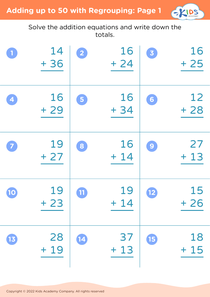
Boost your child's math abilities with our "Improve Counting Skills: Adding up to 50 Without Regrouping Worksheets for Ages 6-7." These engaging and colorful worksheets are designed to help young learners practice addition within 50 without the need for regrouping. Perfect for first graders, these activities reinforce counting skills, number sense, and essential math concepts through fun and interactive exercises. By completing these worksheets, your child will build a strong foundation in math, preparing them for more advanced topics. Give your kid a head start in their math journey with our expertly crafted resources on Kids Academy.
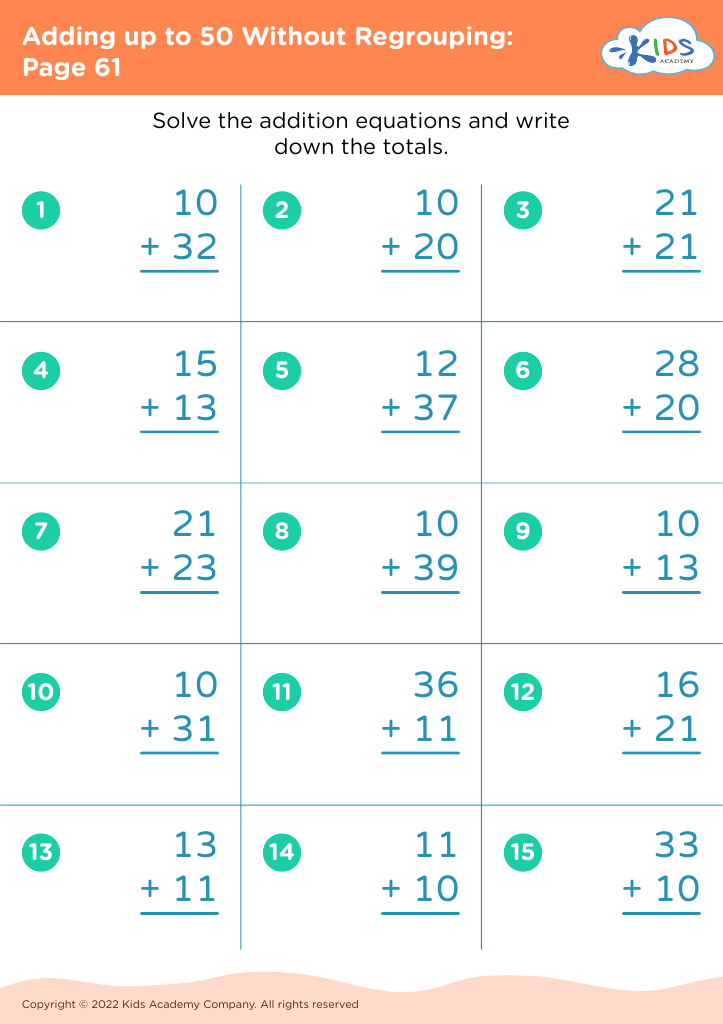
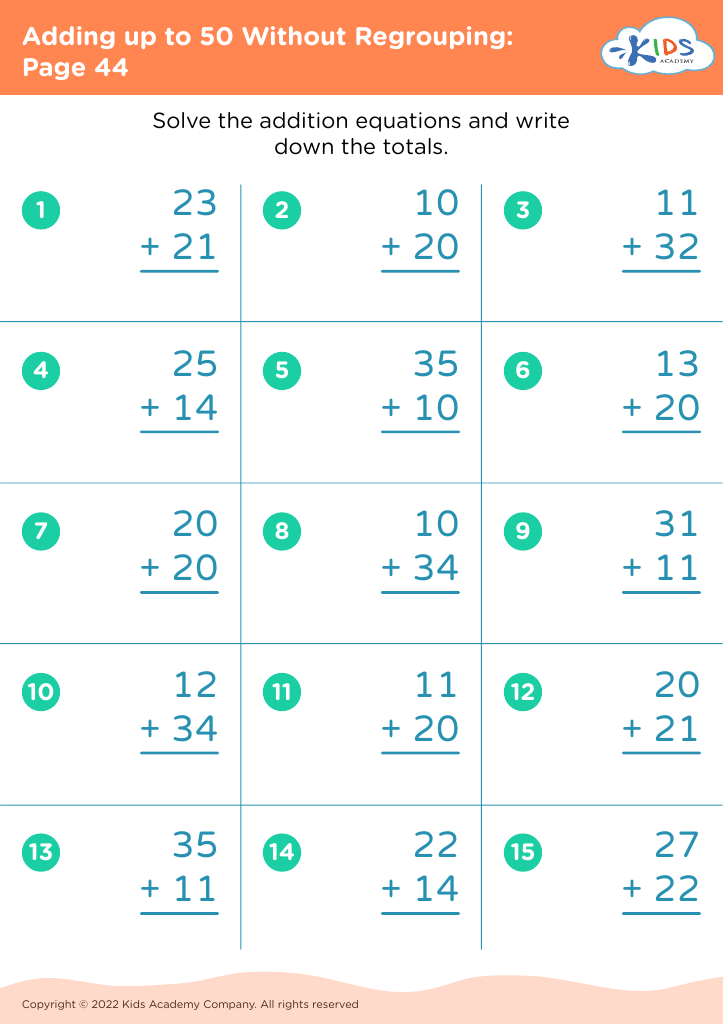
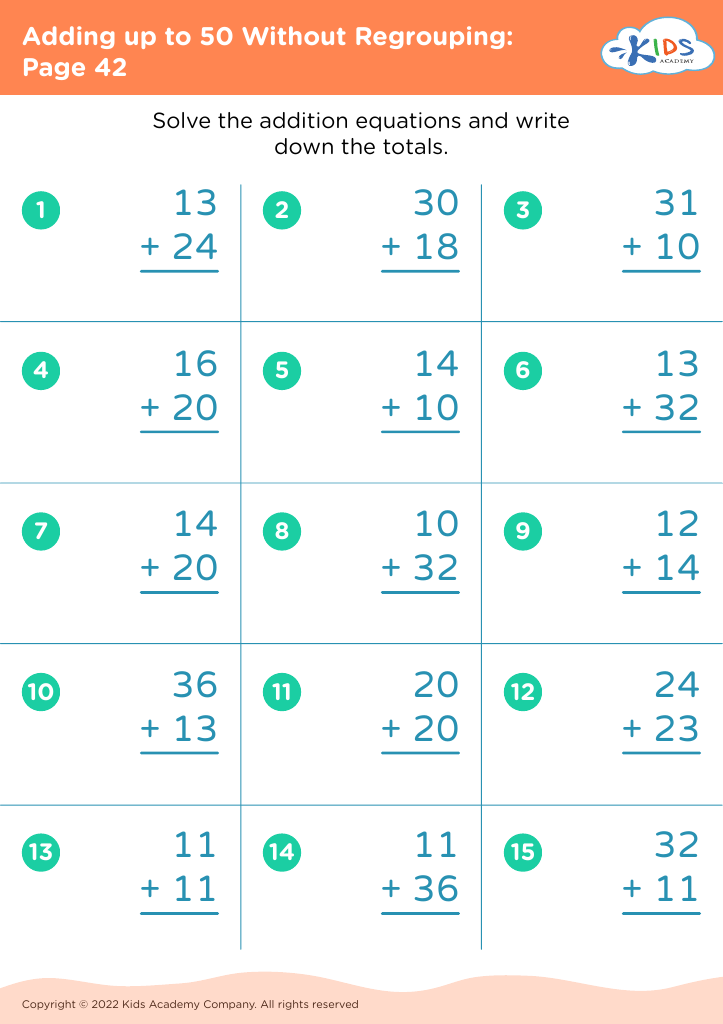
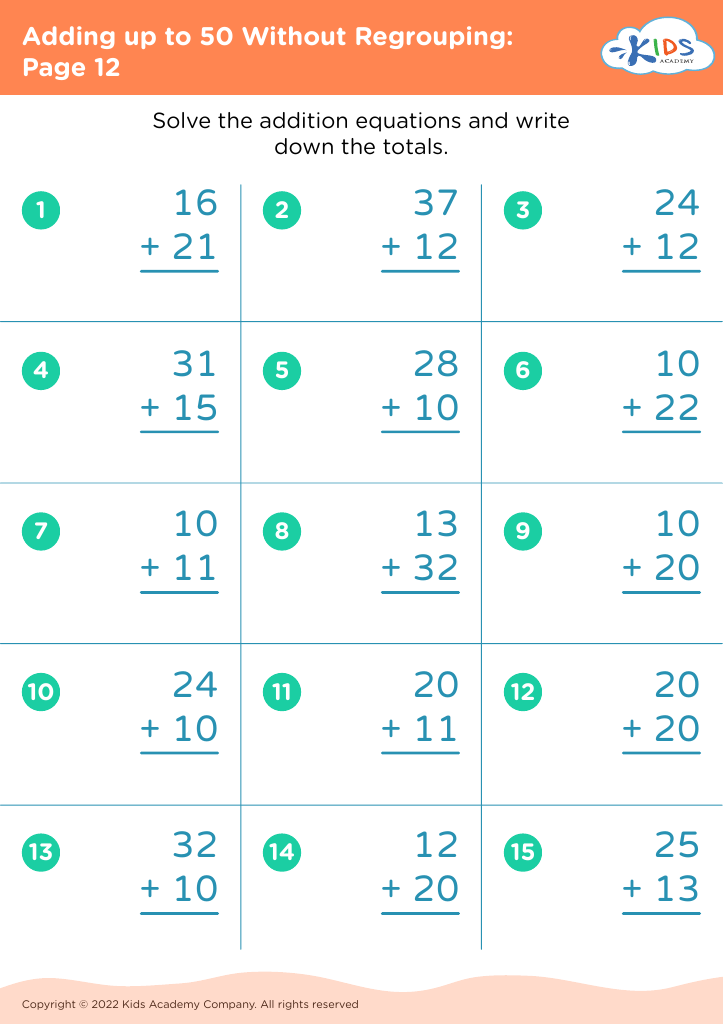
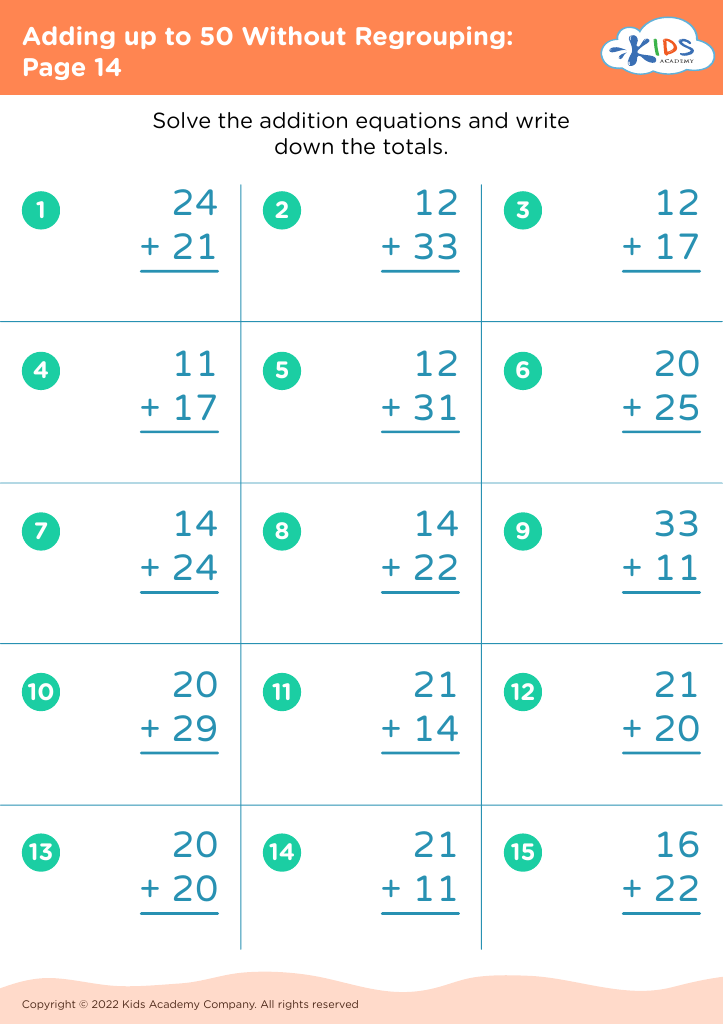
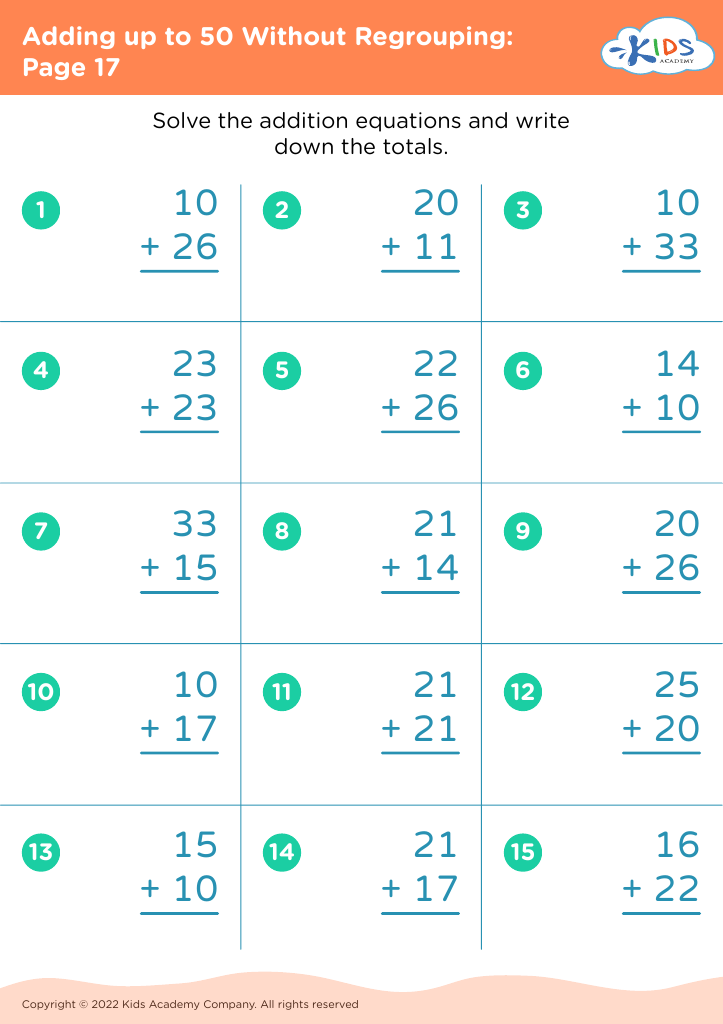


For children aged 6-7, developing counting skills and the ability to add up to 50 without regrouping is essential for several reasons. Firstly, it lays a solid foundation for more advanced mathematical concepts. Understanding basic addition enhances number sense and solidifies the comprehension of how numbers work, which is crucial for tackling future math challenges such as subtraction, multiplication, and division.
Secondly, proficiency in these skills fosters confidence and reduces anxiety towards math. When children can add up to 50 without regrouping efficiently, they experience a sense of accomplishment that builds a positive attitude towards learning. This positive reinforcement can translate to better academic performance across other subjects due to increased self-esteem.
Moreover, the ability to perform these basic calculations is key to real-life situations that children encounter daily. Whether dealing with counting money, measuring ingredients for cooking, or figuring out time intervals, adding up to 50 without regrouping is a practical skill that simplifies everyday tasks.
Finally, early intervention and practice prevent the development of learning gaps that become harder to address later. Parents and teachers play a critical role in encouraging practice and providing the necessary support, ensuring that crucial mathematical principles are mastered early on, thus setting the stage for future academic and life success.