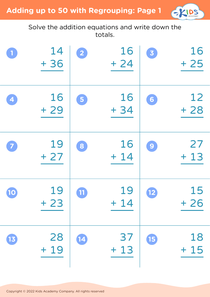
Recognizing Patterns Adding up to 50 Without Regrouping Worksheets for Ages 6-7
4 filtered results
-
From - To
Discover our engaging "Recognizing Patterns Adding up to 50 Without Regrouping Worksheets" tailored for ages 6-7! These thoughtfully designed worksheets help young learners master addition by identifying patterns and relationships between numbers. Perfect for reinforcing math skills, students will practice adding numbers together without the need for regrouping, fostering confidence and fluency. Each worksheet features colorful imagery and varied problem sets to maintain interest and encourage critical thinking. Ideal for classroom activities or at-home practice, these exercises promote cognitive development while making math fun! Start building a strong mathematical foundation today with our easy-to-use resources, and watch your child thrive!
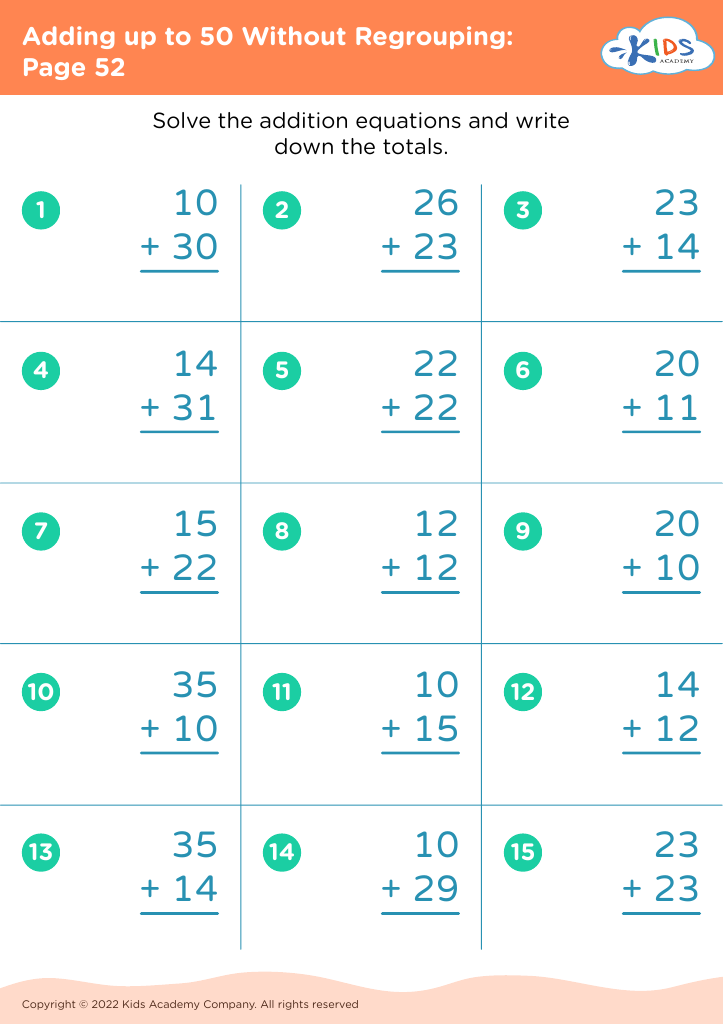
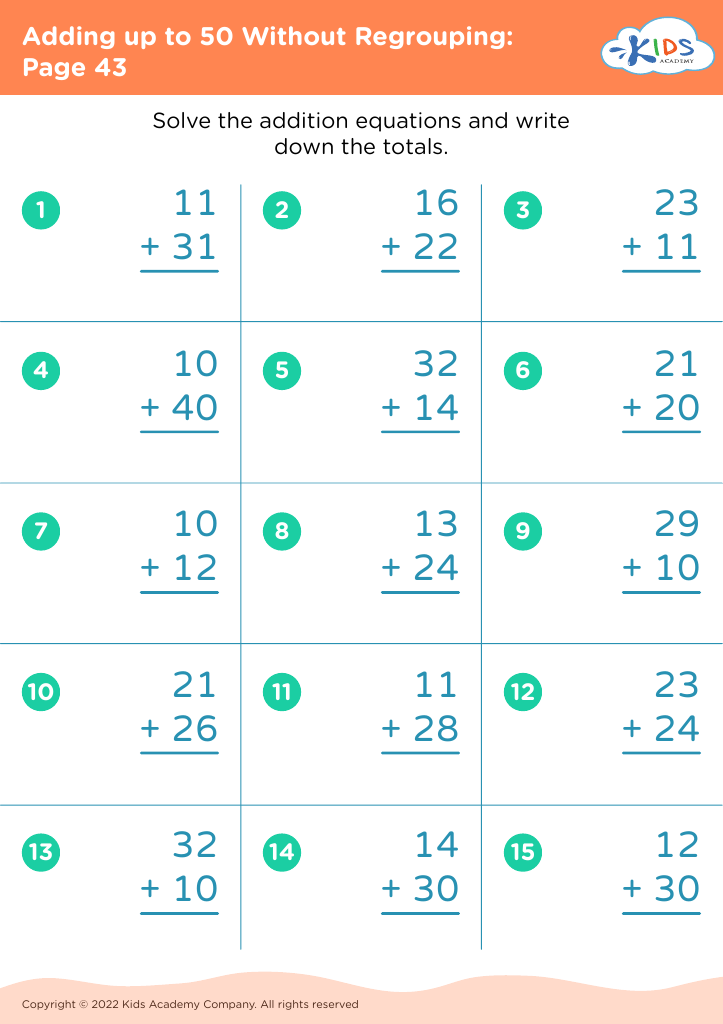
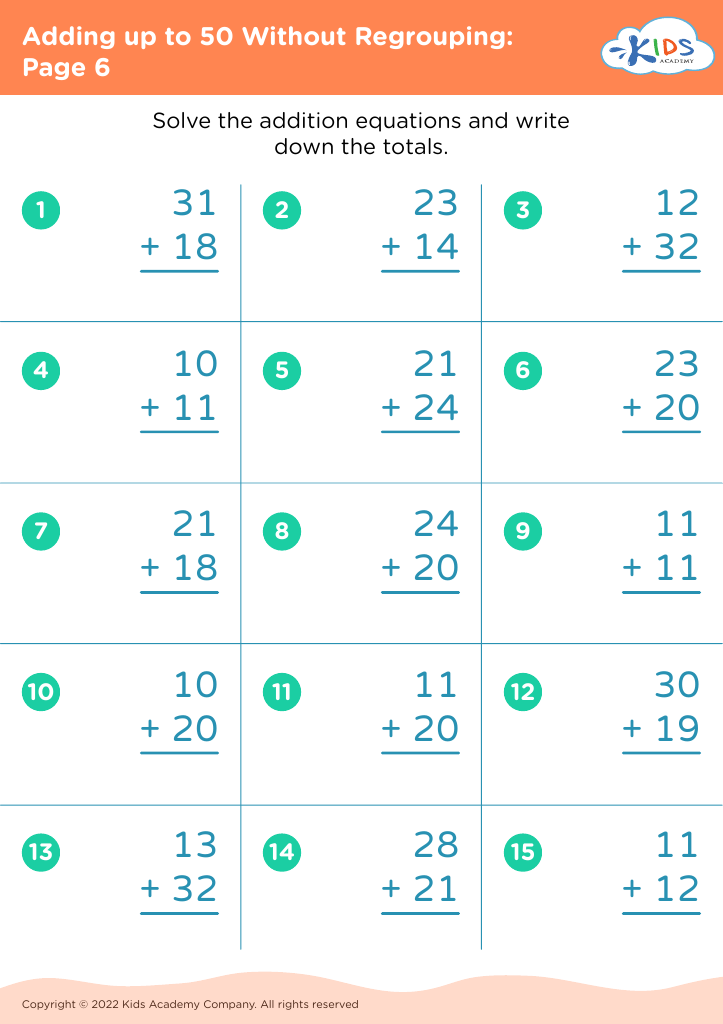
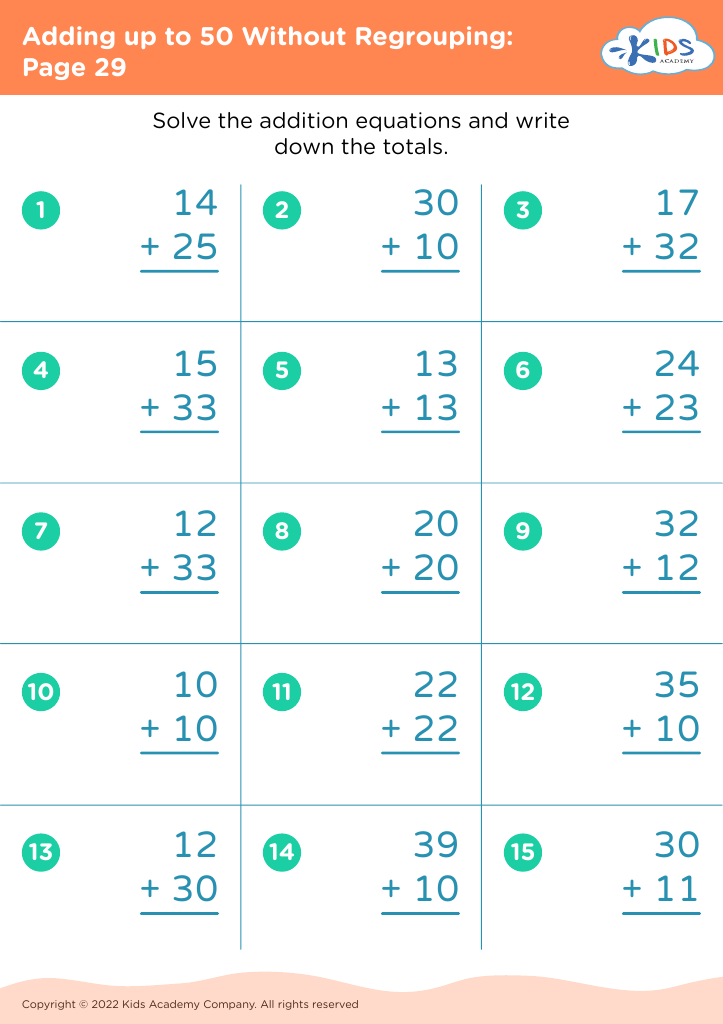


Recognizing patterns in addition is a fundamental skill that can greatly enhance a child's mathematical understanding, especially for ages 6-7. At this developmental stage, children are beginning to form a number sense, and mastering the ability to add numbers that equal 50 without regrouping lays a solid foundation for more complex arithmetic later on.
When children recognize patterns, they develop critical thinking and problem-solving skills. For example, understanding manipulations of numbers like 25 + 25 or 40 + 10 helps them visualize relationships among numbers. This comprehension not only equips them to solve addition problems more swiftly but also builds their confidence in tackling mathematical concepts.
Moreover, these skills encourage a positive attitude toward math, setting the tone for future learning. Engaging with patterns fosters greater interest and participation in classroom activities. This empowerment through math skills can also assist in developing resilience as they learn to navigate challenges in problem-solving.
In summary, parents and teachers should emphasize recognizing patterns for children, as it’s key to their early mathematical education—it enhances understanding, boosts confidence, and lays a groundwork for future learning, ultimately contributing to their overall educational success.