Recognizing shapes Adding up to 50 Without Regrouping Worksheets for Ages 6-7
5 filtered results
-
From - To
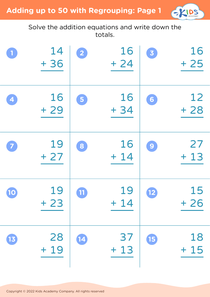
Discover our "Recognizing Shapes Adding Up to 50 Without Regrouping Worksheets" designed for children ages 6 to 7. These engaging worksheets blend geometry and arithmetic, helping young learners identify shapes while practicing addition skills up to 50 without the need for regrouping. Each activity includes colorful visuals and easily understandable problems tailored to captivate and motivate students. Perfect for classroom settings or at-home learning, these worksheets promote critical thinking and reinforce foundational math concepts in a fun and interactive way. Enhance your child’s mathematical proficiency while nurturing their understanding of shapes with these thoughtfully crafted resources!
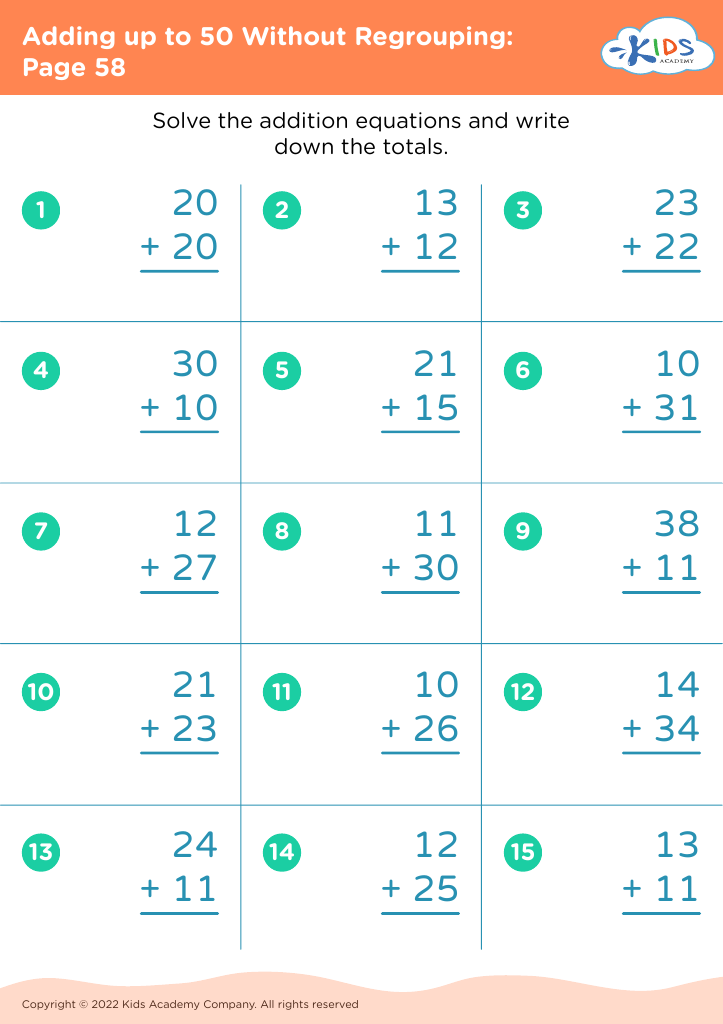
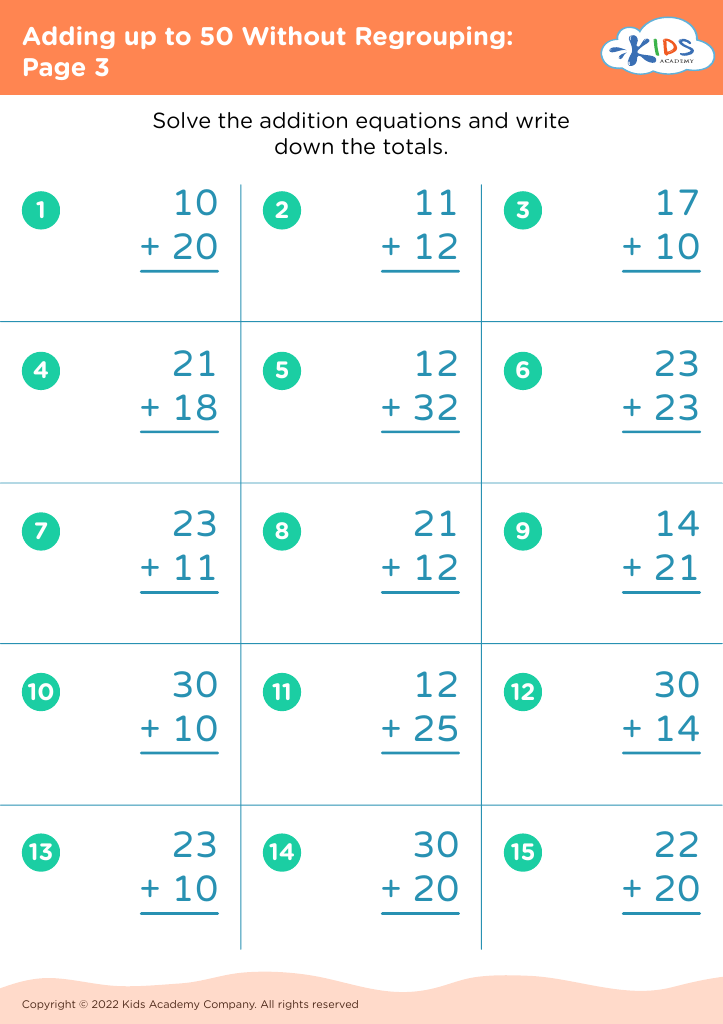
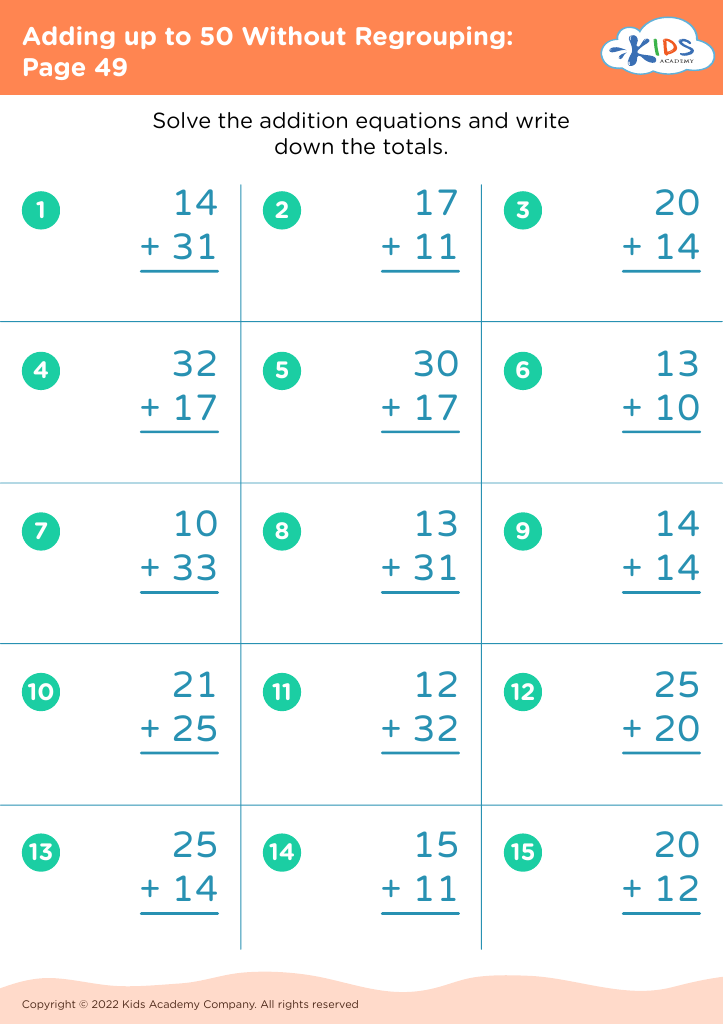
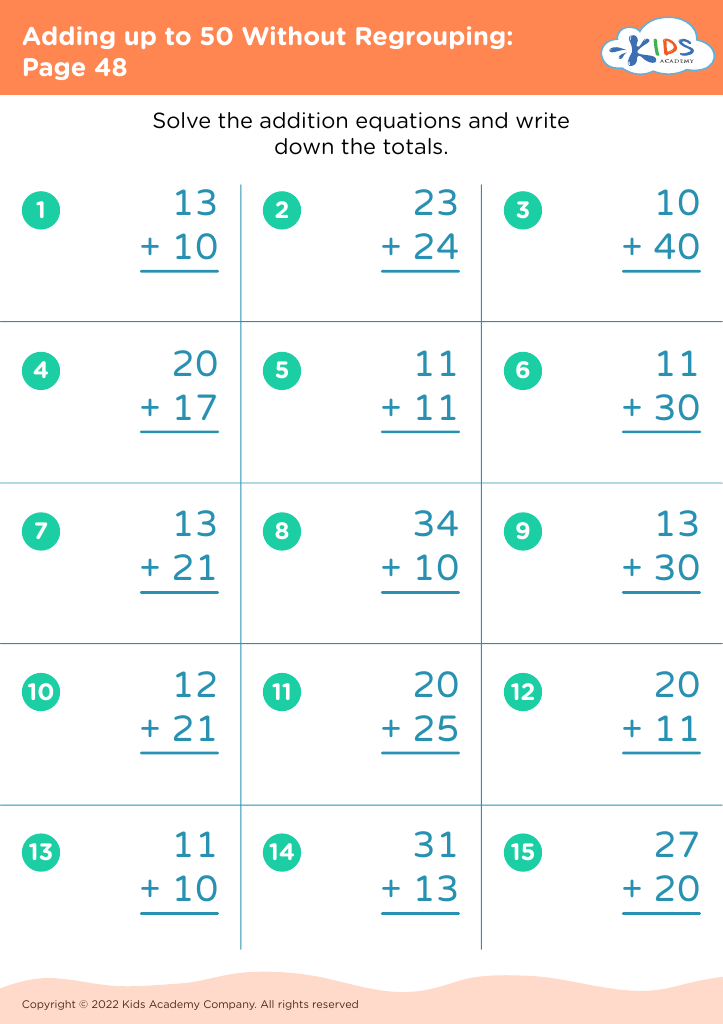
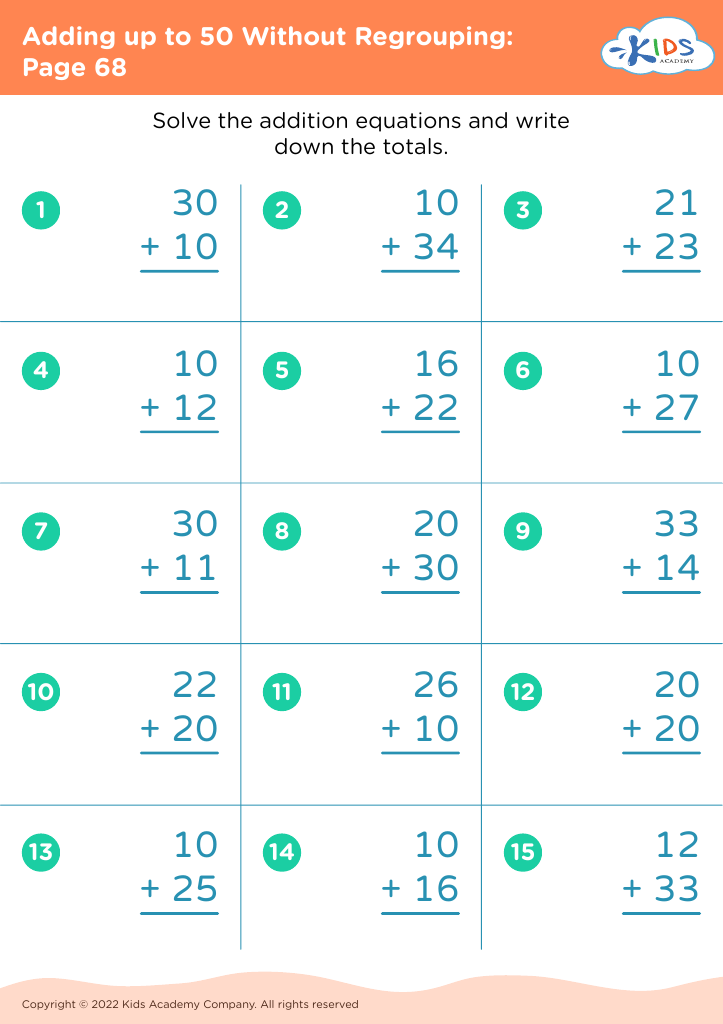


Recognizing shapes and understanding addition skills, specifically adding up to 50 without regrouping, are foundational skills for children aged 6-7. These skills are crucial for several reasons. Firstly, shape recognition helps children develop spatial awareness andmathematical reasoning. By identifying and classifying different shapes, children enhance their problem-solving abilities and creativity, essential skills for future learning.
Additionally, mastering addition skills without regrouping fosters confidence in young learners. When children can seamlessly add numbers up to 50, they build a strong numerical foundation, which is vital for tackling more advanced mathematical concepts later on, such as subtraction, multiplication, and division. Understanding places valued contributes to number sense, allowing students to comprehend the relationships between numbers.
Moreover, these skills are directly applicable to everyday life. For example, recognizing shapes aids in identifying objects around them, influencing their ability to navigate their environment. Similarly, basic addition helps in practical situations like budgeting or shopping, making math relatable and engaging.
Ultimately, guiding children in recognizing shapes and adding numbers helps to prepare them for academic success, enhances their cognitive development, and equips them with skills necessary for real-world problem-solving, contributing to their holistic growth.