Addition Practice Addition & Subtraction Worksheets for Ages 6-7 - Page 5
101 filtered results
-
From - To
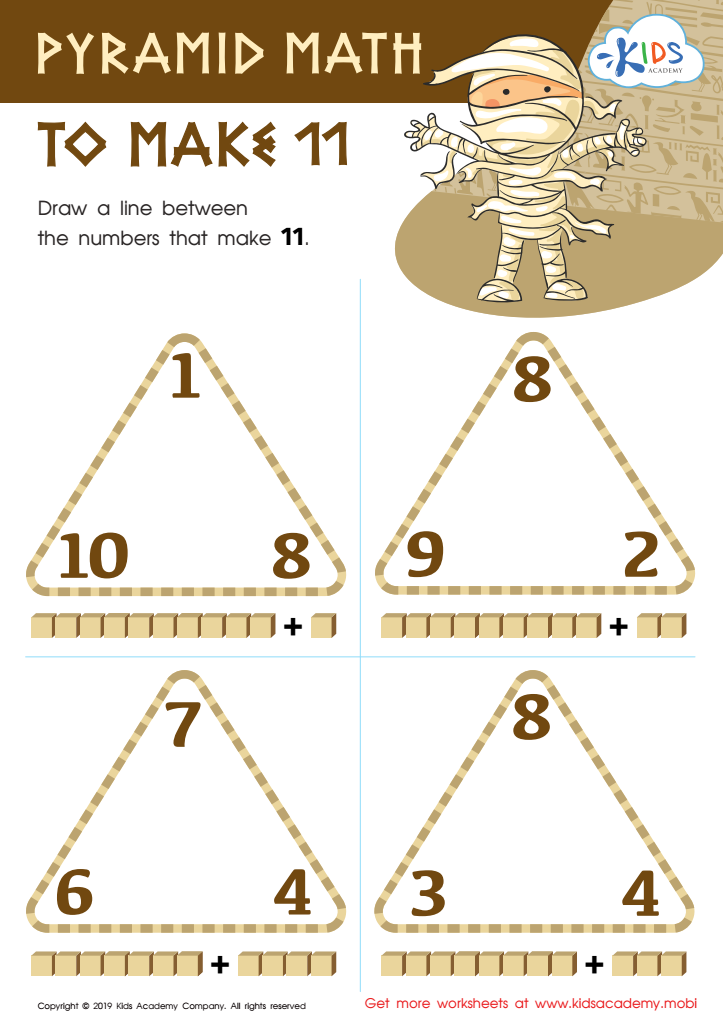
Pyramid Math to Make 11 Worksheet
 Assign to My Students
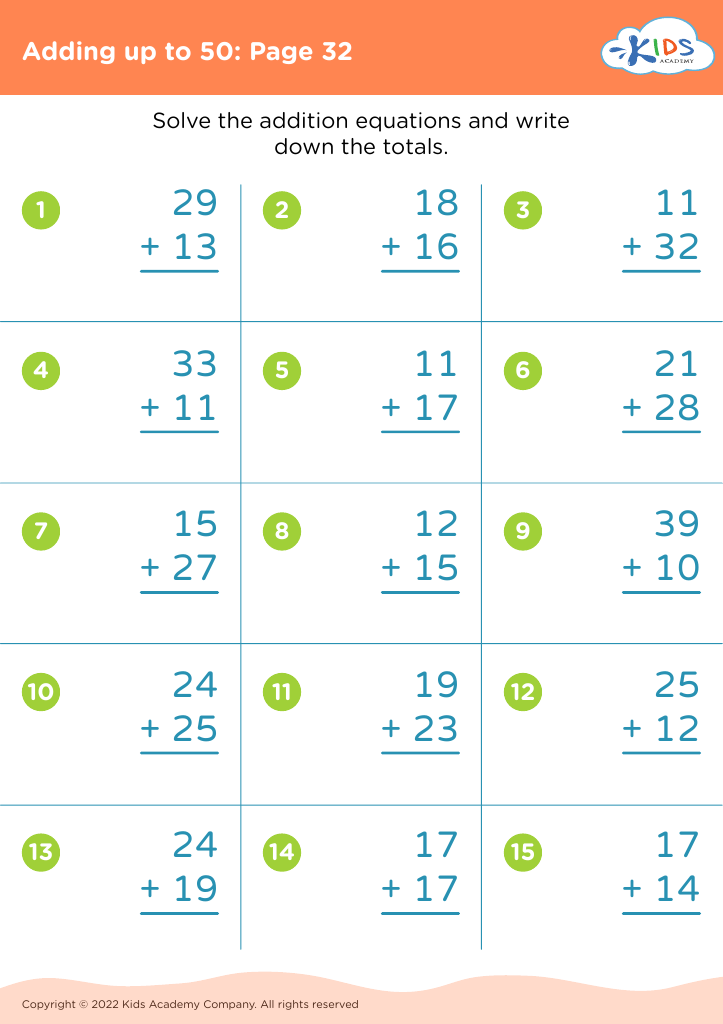








Parents and teachers should prioritize addition and subtraction practice for children aged 6-7 as it lays the foundational groundwork for their future mathematical understanding and academic success. This developmental stage, typically corresponding to first grade, is crucial for introducing key concepts in arithmetic, which form the basis for more advanced math topics. Practicing these skills enhances number sense, an essential competence that helps children understand the relationships between numbers and magnitudes.
Frequent practice not only solidifies these critical computational skills but also boosts cognitive abilities such as problem-solving, logical thinking, and the ability to follow multi-step processes. Regular exercises in addition and subtraction also improve memory retention and keen attention to detail.
Furthermore, mastering these basic math skills at an early age builds confidence. Confident children are more likely to enjoy mathematics and approach future mathematical challenges with a positive mindset. This early success and enjoyment can foster a lifelong interest in STEM subjects, broadening future academic and career opportunities.
Finally, collaboration in these learning activities strengthens parent-child or teacher-student relationships, reinforcing a supportive learning environment. In summary, ensuring robust practice in addition and subtraction for young children captivates them into a world of numerical literacy, nurturing well-rounded and perseverant learners.








