Comparing numbers Addition & Subtraction Worksheets for Ages 6-7
4 filtered results
-
From - To
Explore our engaging "Comparing Numbers: Addition & Subtraction Worksheets for Ages 6-7"! These interactive worksheets are designed to enhance your child's understanding of number relationships through addition and subtraction. With fun exercises and colorful illustrations, children will learn to compare numbers, improving their critical thinking and problem-solving skills. Our resources focus on fostering a strong foundational knowledge in mathematics while keeping learning enjoyable. Perfect for classroom use or at-home practice, these worksheets cater to young learners’ needs, ensuring they build confidence and competence in their math abilities. Start your child on the path to mathematical success today!
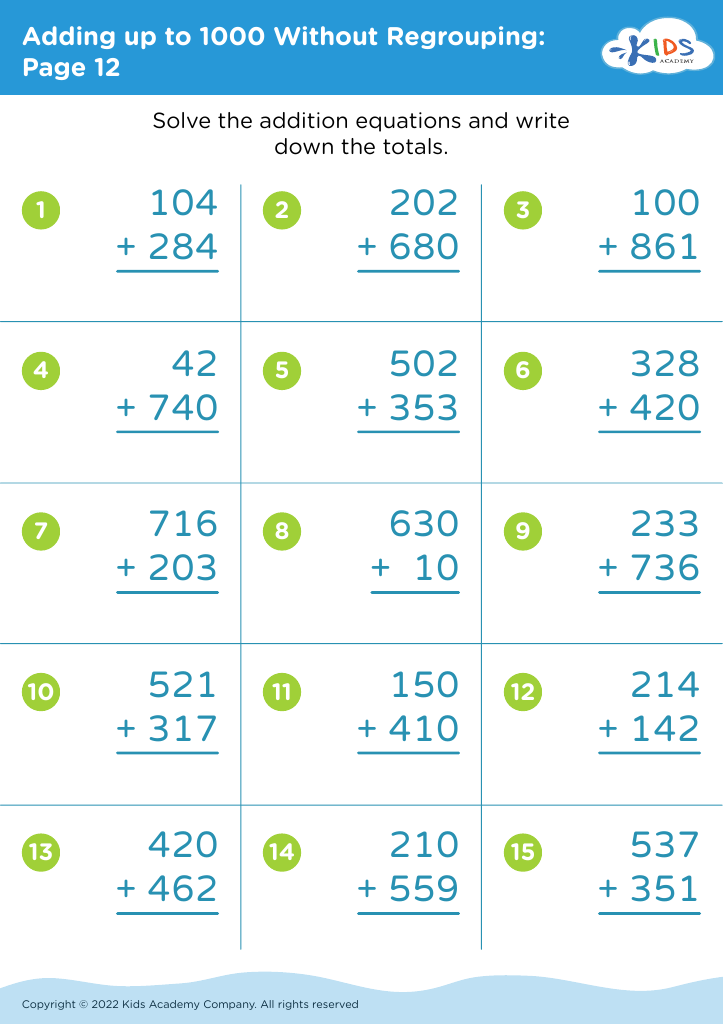
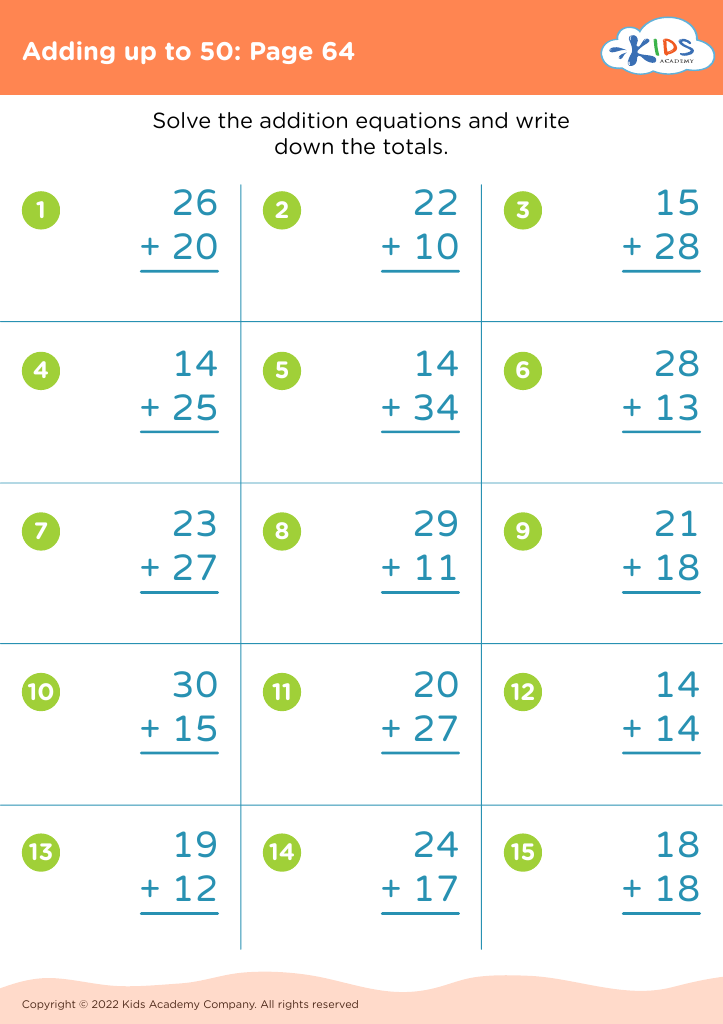
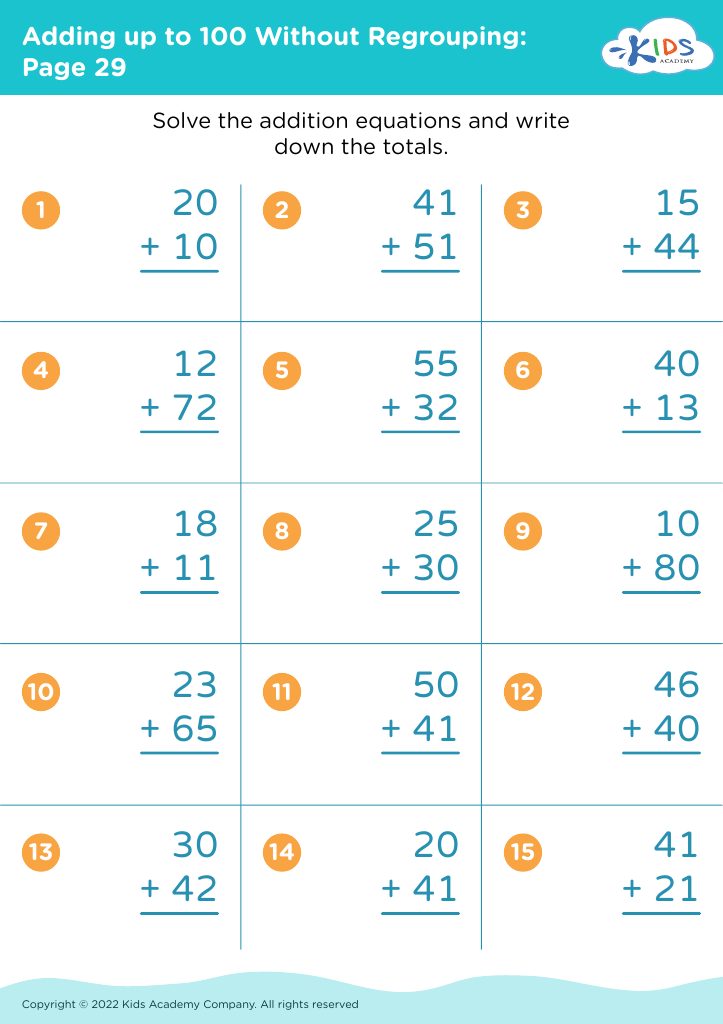
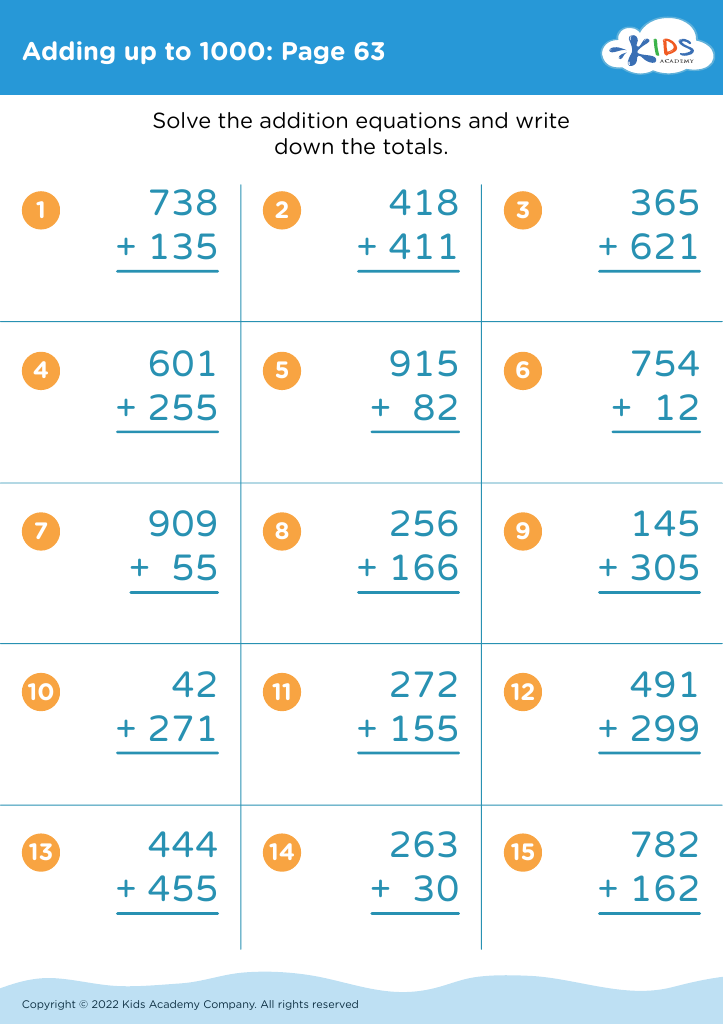








Parents and teachers should prioritize teaching children to compare numbers, along with mastering addition and subtraction, because these foundational skills are critical for early math development. At ages 6-7, children begin to grasp the concept of quantity and learn how to assess relationships between numbers. Understanding how to compare numbers helps students comprehend greater and lesser values, a skill essential for problem-solving and decision-making in everyday life.
Fostering proficiency in addition and subtraction further builds this understanding, as it allows students to manipulate numbers effectively. These operations enable them to solve practical problems, from budgeting an allowance to measuring ingredients for cooking. Furthermore, cultivating comfort with these concepts lays the groundwork for more advanced mathematical skills, ensuring students are well-prepared for future learning.
Additionally, engaging in meaningful number comparisons and calculations encourages critical thinking and helps develop perseverance when faced with challenges. As students gain confidence, they will be more likely to enjoy math and develop positive attitudes toward learning. In a world increasingly reliant on quantitative reasoning, nurturing these skills early on equips children for success in school and beyond, making it essential for parents and educators to remain actively involved in their mathematical journey.








