Improving observation skills Addition & Subtraction Worksheets for Ages 6-7
3 filtered results
-
From - To
Enhance your child's math journey with our "Improving Observation Skills Addition & Subtraction Worksheets" designed specifically for ages 6-7. These interactive worksheets incorporate engaging activities that not only reinforce fundamental addition and subtraction concepts but also sharpen observation skills critical in early learning. Students will explore patterns, problem-solving, and critical thinking through fun exercises. Ideal for classroom settings or at-home learning, these resources foster a love for math while building confidence. Experience the joy of learning as your child interprets complex information with ease and accuracy. Download our worksheets today and transform your child’s approach to math challenges!
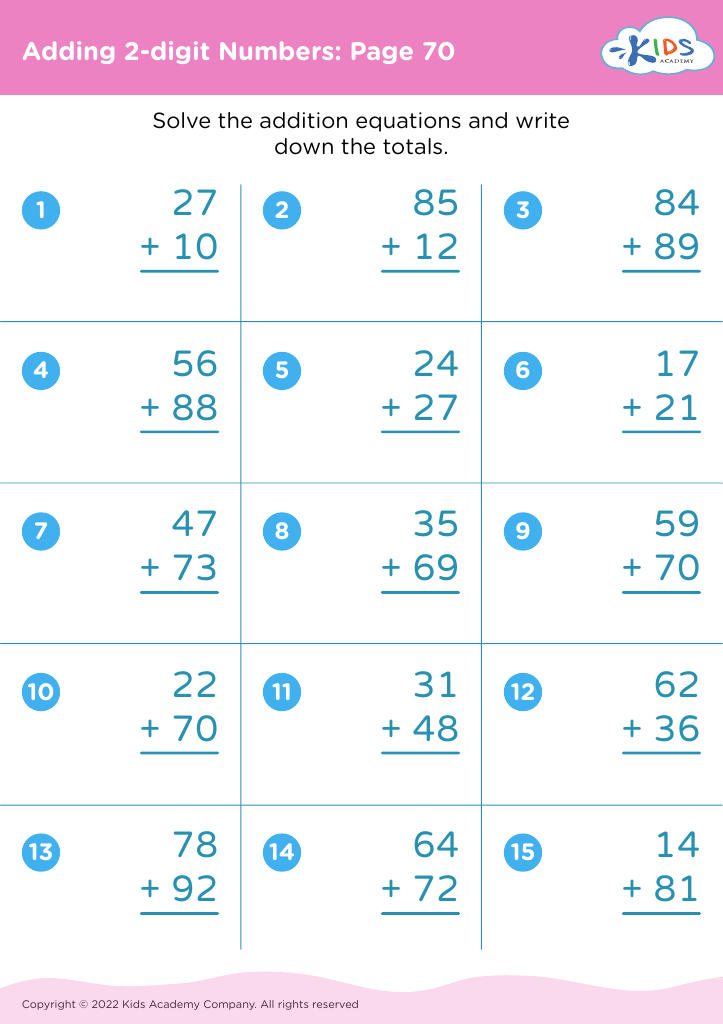
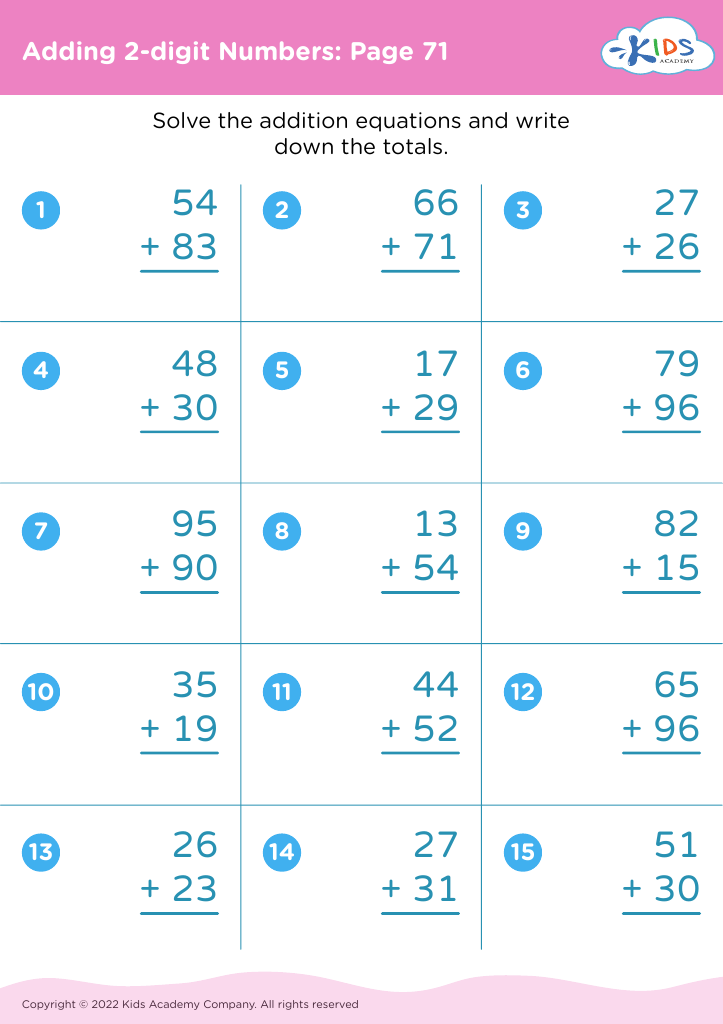
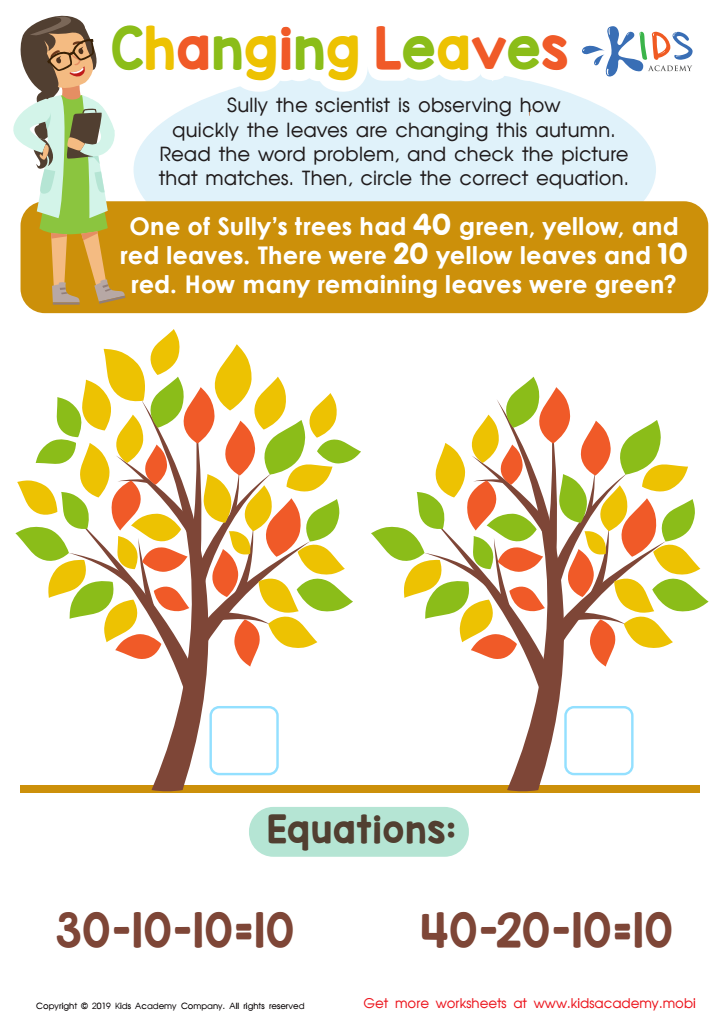
Changing Leaves Worksheet
 Assign to My Students








Improving observation skills in addition and subtraction for children aged 6-7 is vital for several reasons. At this developmental stage, children are learning foundational math concepts that are crucial for their academic success. Enhanced observation skills foster a deeper understanding of mathematical relationships and patterns, enabling children to recognize how numbers interact in both addition and subtraction.
Teachers and parents play a key role in cultivating these skills. By encouraging observation, they help children become more aware of their problem-solving processes, which in turn builds confidence in their abilities. When children engage in observational tasks—such as counting objects, recognizing patterns in everyday life, or visualizing numbers through play—they sharpen their analytical thinking and become more adept at tackling more complex math concepts in the future.
Additionally, strong observation skills can support not only math but also promote literacy, as similar skills aid in reading comprehension and narrative construction. Therefore, prioritizing the improvement of observation skills during this crucial developmental time not only enriches children’s mathematical abilities but also provides a well-rounded foundation for overall learning. Investing time in these activities nurtures curious and capable learners, laying the groundwork for lifelong educational success.








