Addition of fractions Addition Worksheets for Ages 6-7
3 filtered results
-
From - To
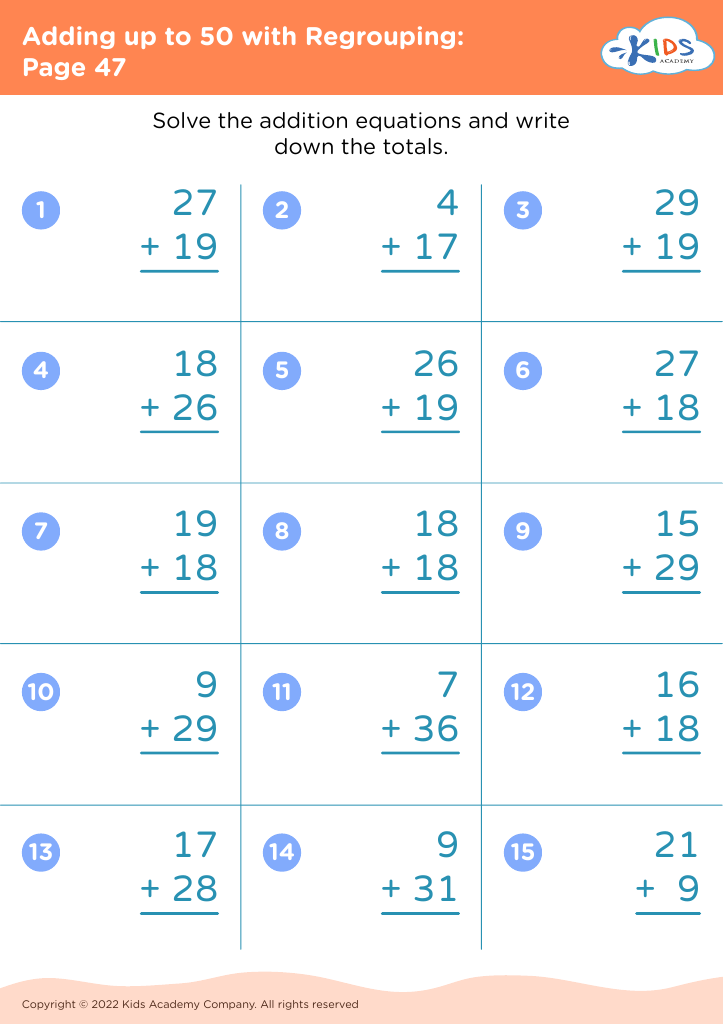
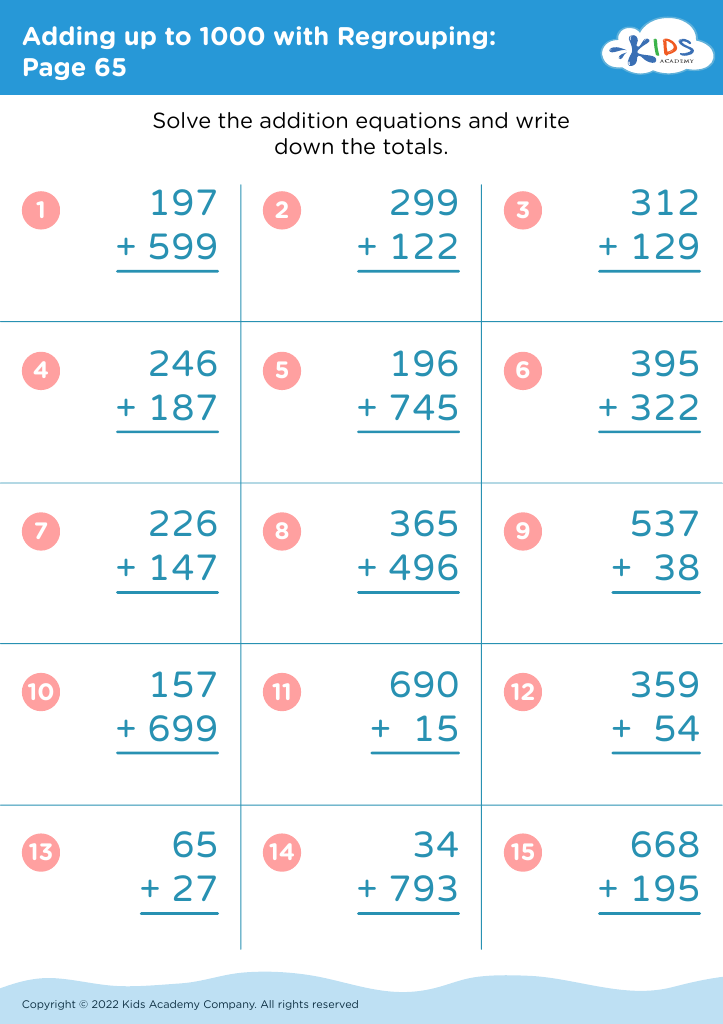
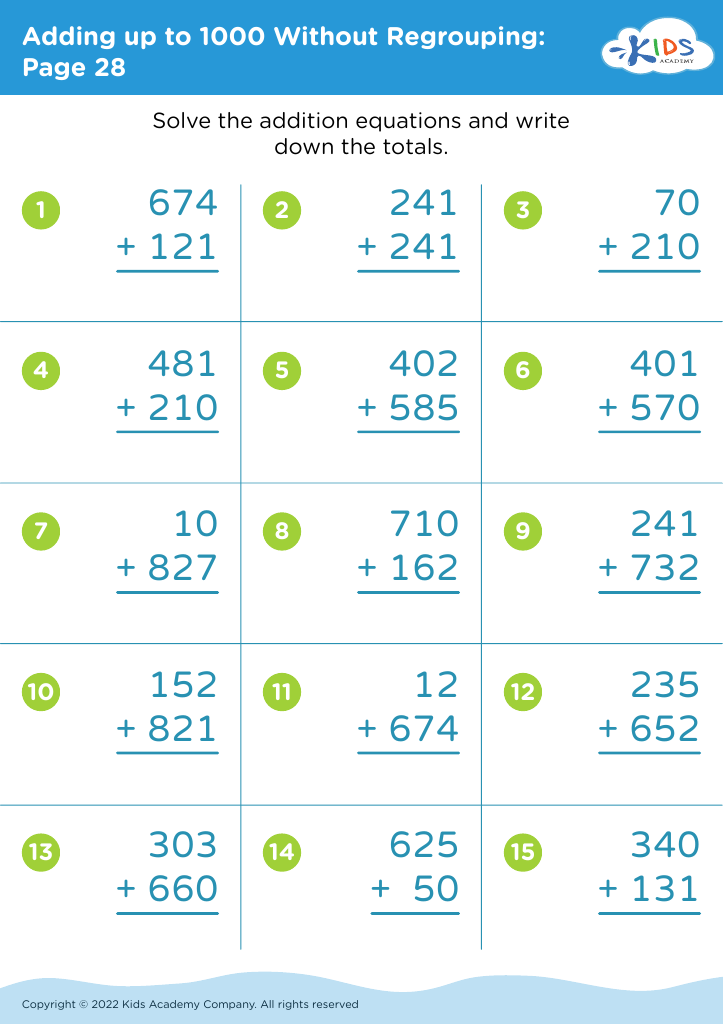
Introducing our "Addition of Fractions" worksheets, specifically designed for kids ages 6-7! These engaging and educational printables simplify the concept of adding fractions, making math fun and accessible. Each worksheet provides easy-to-follow examples, interactive activities, and visual aids to support your child's learning journey. With colorful illustrations and step-by-step guidance, children will master fraction addition in no time. Perfect for reinforcing classroom learning or for additional practice at home, our worksheets are an excellent resource to boost your child's confidence and competence in math. Explore, learn, and grow with Kids Academy!







Teaching the addition of fractions to children aged 6-7 is valuable because it lays a strong foundation for their future understanding of mathematics and helps cultivate critical thinking skills. At this early stage, children are highly capable of grasping basic mathematical concepts, and learning to add fractions builds on their existing knowledge of whole numbers while introducing them to more complex ideas about parts and wholes.
Understanding fractions also extends beyond the classroom. By learning how to add fractions, children develop the ability to solve practical, everyday problems involving food, cooking, sharing, and budgeting. These skills are essential for making informed decisions in real-life situations.
Additionally, early exposure to fractions deepens a child's number sense and promotes mathematical fluency. It encourages logical reasoning and problem-solving abilities, which are critical skills not just in math but across all areas of learning. When children learn to work with fractions, they enhance their ability to understand ratios, proportions, and more advanced topics that they will encounter later in their education.
Overall, parents and teachers should care about introducing addition of fractions to help children build confidence in math, foster a love for learning, and equip them with practical skills for everyday life.








