Color matching Addition Worksheets for Ages 6-7
3 filtered results
-
From - To
Discover our engaging Color Matching Addition Worksheets designed for children aged 6-7! These interactive worksheets blend fun with education, enabling young learners to enhance their math skills while enjoying vibrant visuals. Each worksheet promotes essential addition concepts through color matching, helping to strengthen number recognition and problem-solving abilities. Perfect for classroom settings or at-home learning, these activities encourage creativity and keep kids entertained while they master addition. Watch as your child flourishes in math with our colorful resources, tailored to spark their interest and boost their confidence. Explore our collection today and make learning addition a colorful adventure!
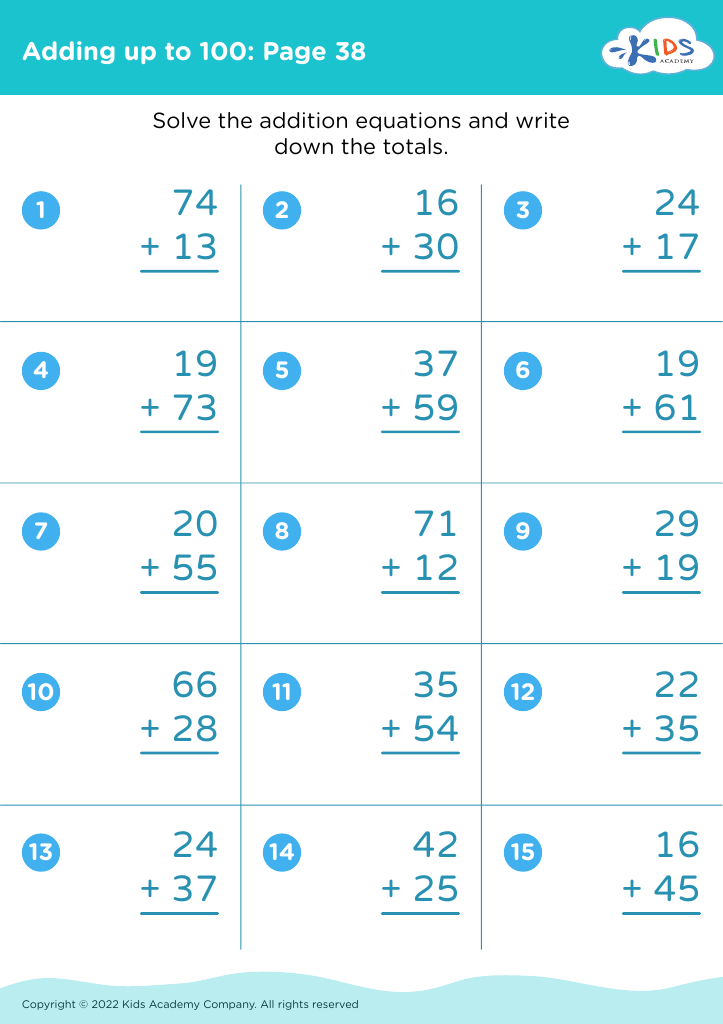
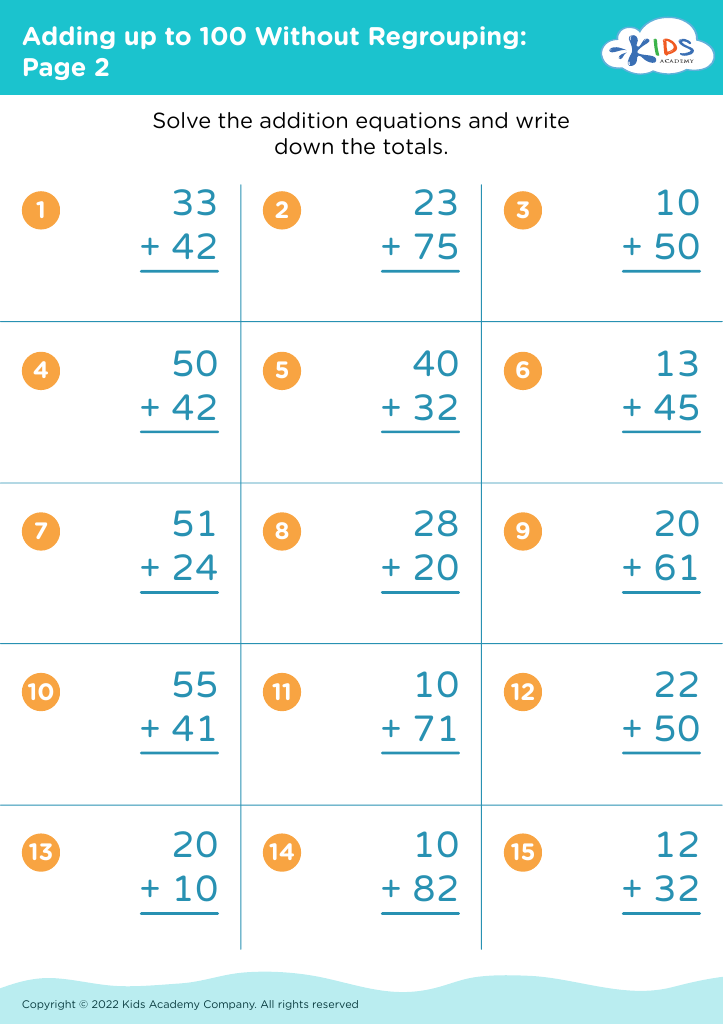
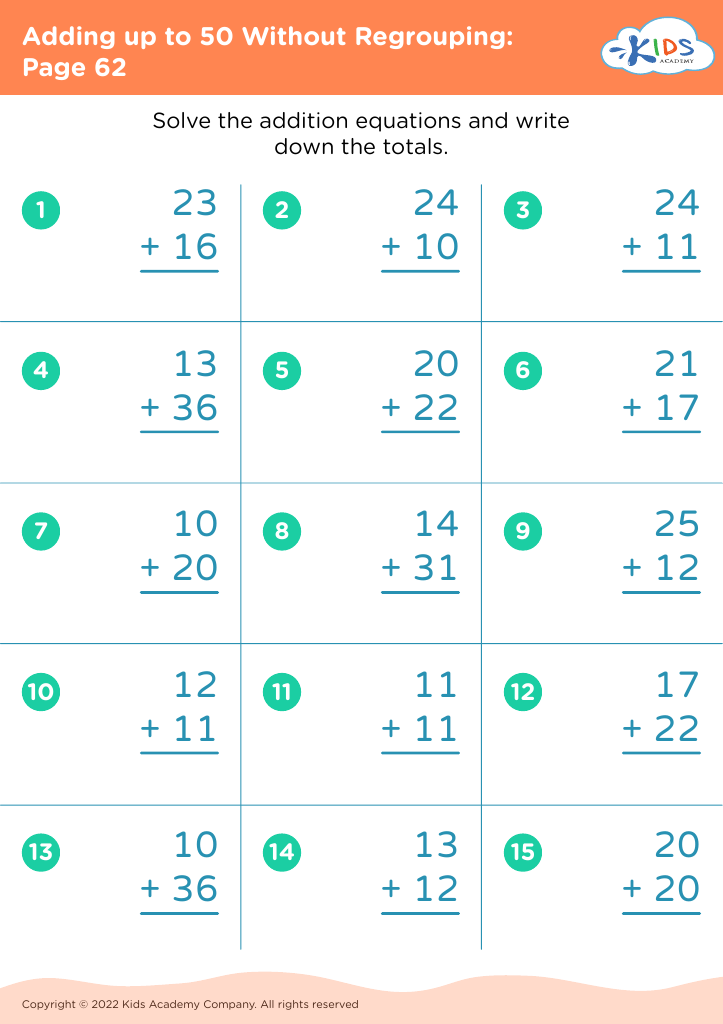








Color matching addition for children ages 6-7 offers a unique and engaging way to help them understand basic mathematical concepts while keeping their interest alive. This method combines visual learning with hands-on activities, making math more relatable and easier for young learners to grasp. Using colors allows children to categorize and group numbers, which solidifies their understanding of addition in a fun and creative manner.
Parents and teachers should care about this technique because it caters to diverse learning styles. Many children in this age group are kinesthetic learners; by incorporating color matching, they can interact with numbers physically and visually, fostering a deeper comprehension. Moreover, color matching addition promotes problem-solving and critical thinking skills, as it often requires students to compare and analyze different colored items to solve math problems.
Additionally, this playful approach encourages cooperation and communication among peers when done in group settings, boosting social skills and building confidence. By making math enjoyable and accessible, color matching addition has the potential to instill a lifelong love for learning in children while laying a solid foundation for more advanced mathematical concepts in the future. Ultimately, fostering these skills can lead to greater academic success as they progress in their education.








