
Identifying Animals Addition Worksheets for Ages 6-7
4 filtered results
Difficulty Level
Grade
Age
-
From - To
Subject
Activity
Standards
Discover our engaging "Identifying Animals Addition Worksheets" designed specifically for ages 6-7! These educational worksheets combine fun animal identification with essential addition practice to enhance young learners' math skills. Perfect for first graders, each sheet presents captivating animal images alongside simple addition problems, encouraging kids to solve and improve their arithmetic abilities while learning about animals. Ideal for classroom activities or at-home learning, these worksheets support parents and teachers in making math enjoyable and educational. Download today and watch your child's curiosity and confidence in math and nature grow!
Favorites
With answer key
Interactive
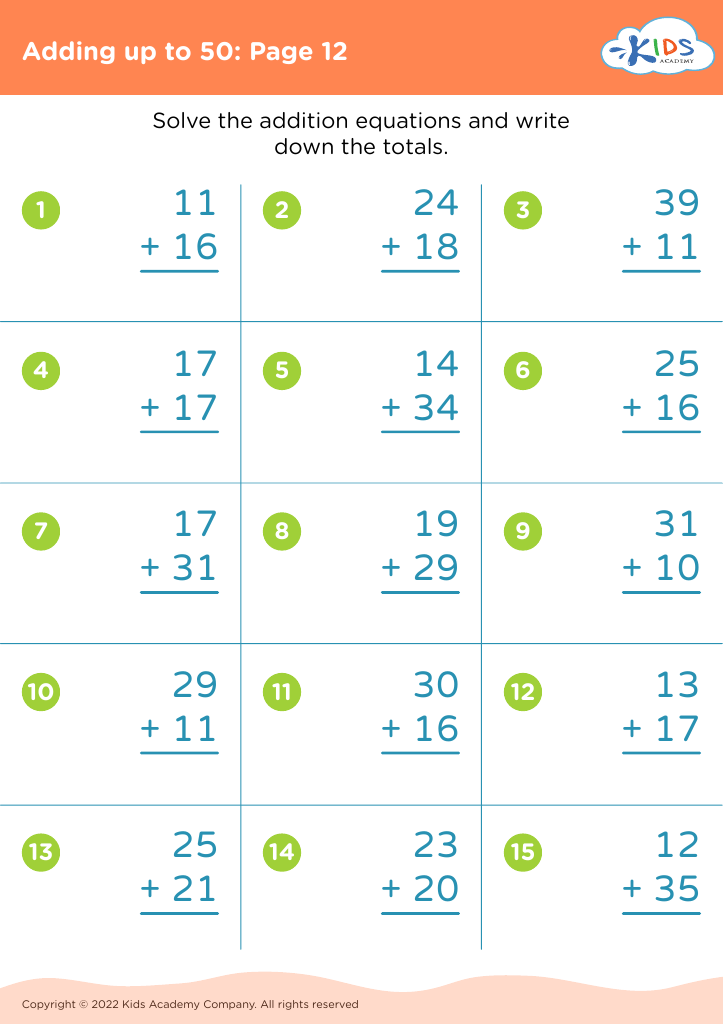
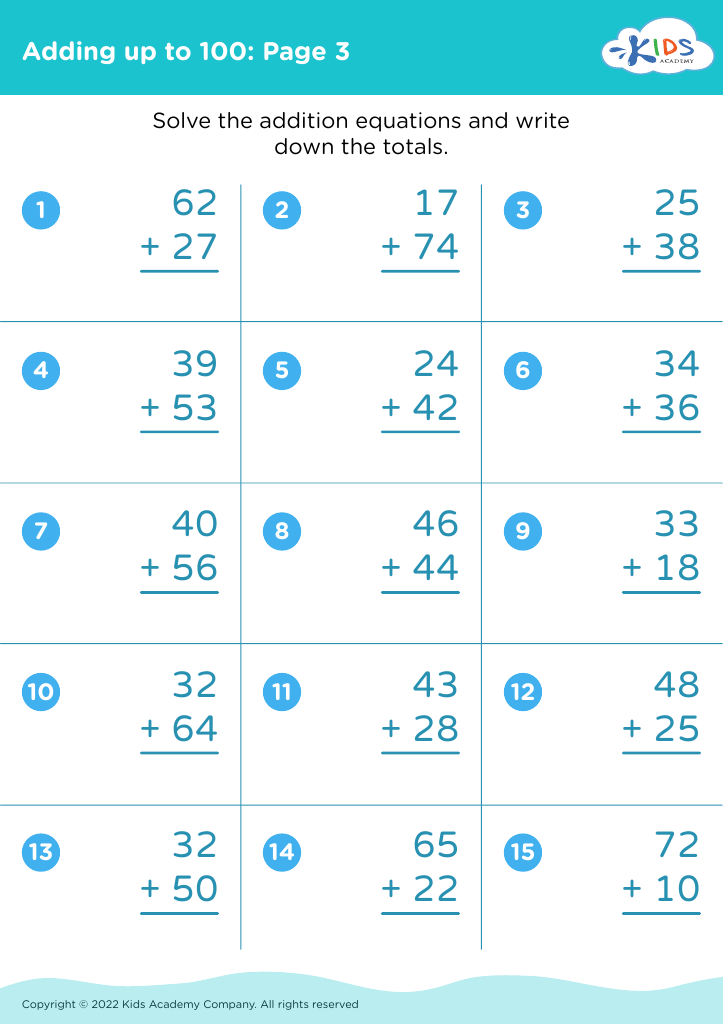
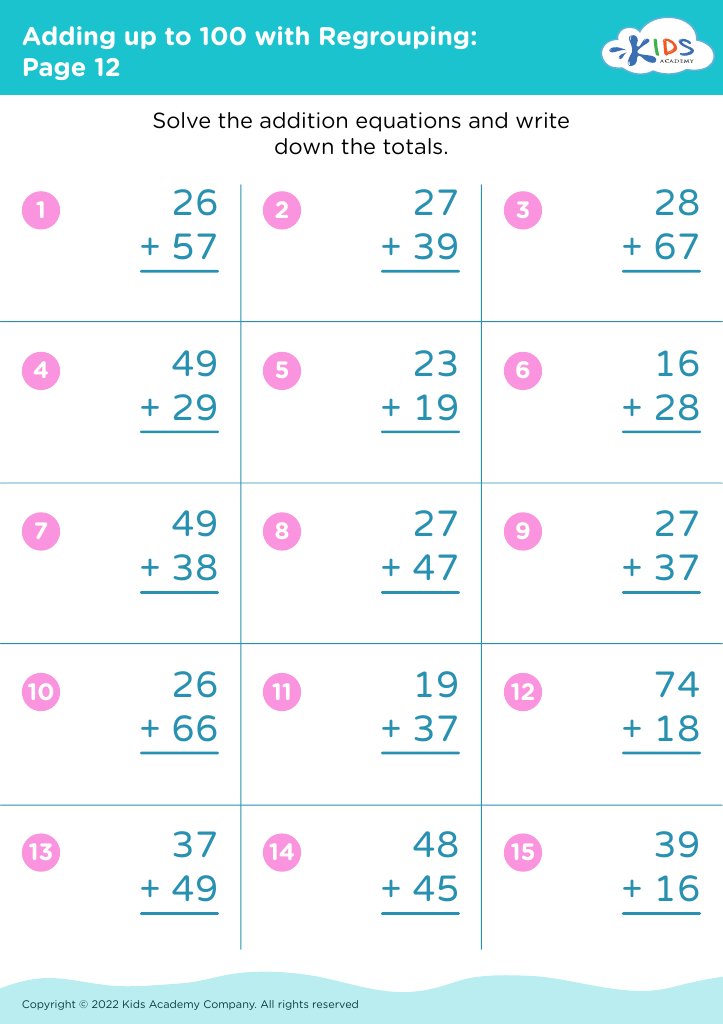
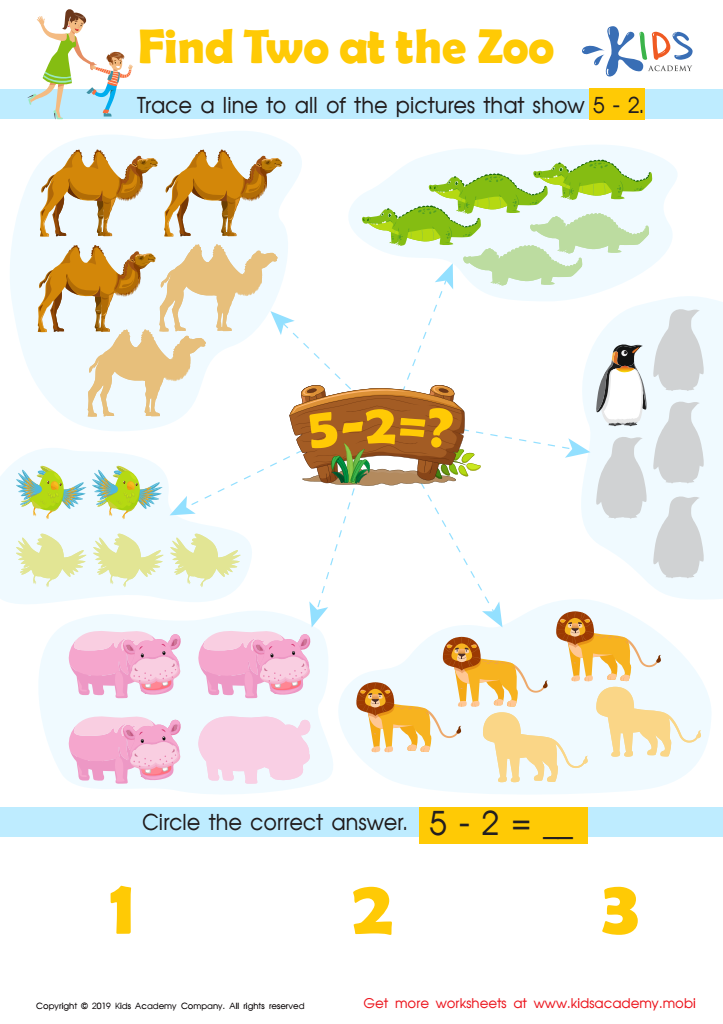
Find Two at the Zoo Worksheet
Help your kids overcome math fears and practice subtracting numbers with this traceable PDF. Ask them to identify the 6 groups of animals in the picture and count the animals in each group. Then, help them trace a line to all of the pictures that illustrate the equation 5-2.
 Assign to My Students
Find Two at the Zoo Worksheet
Worksheet
Join Kids Academy for Free
Who is primarily going to use this learning content?








Identifying animals and understanding basic addition are foundational skills that hold immense value for children aged 6-7. At this stage, children are developing essential cognitive, language, and numerical skills, and fostering these early on can significantly influence their overall educational trajectory.
Understanding animals helps young children develop observation and classification skills, triggering their natural curiosity about the world. This appreciation for living creatures promotes empathy and environmental awareness, instilling values that can last a lifetime. Moreover, discussing animals' physical characteristics, habitats, and behaviors enhances vocabulary and comprehension skills in a fun and engaging way.
Simultaneously, basic addition is a crucial mathematical concept that supports problem-solving abilities and logical thinking. Encouraging children to practice addition through interactive activities strengthens memory, concentration, and fine motor skills. By integrating addition with animal identification—say, grouping and counting animals or solving simple word problems involving animals—children receive a dual benefit. This thoughtfully combines their budding numeric sense with real-world examples that make abstract concepts more relatable and understandable.
Teachers and parents should care about this integrated approach because it leverages children's natural interests to build foundational literacy, numeracy, and environmental stewardship, laying down a holistic groundwork for future academic success. Engaging young minds in this manner ensures enduring interest and retention, making learning an enjoyable and fruitful experience.








