Improving mathematical skills Addition Worksheets for Ages 6-7
4 filtered results
-
From - To
Our "Improving Mathematical Skills: Addition Worksheets for Ages 6-7" are designed to make learning addition enjoyable and effective for young learners. With colorful and engaging exercises, these worksheets help children build a solid foundation in basic arithmetic by practicing addition through fun activities and real-world scenarios. Ideal for home or classroom use, the worksheets progress in difficulty, helping to gradually enhance your child's skills. These resources not only boost math confidence and accuracy but also foster critical thinking and problem-solving abilities. Watch your child master addition and develop a love for mathematics with our expertly crafted worksheets!
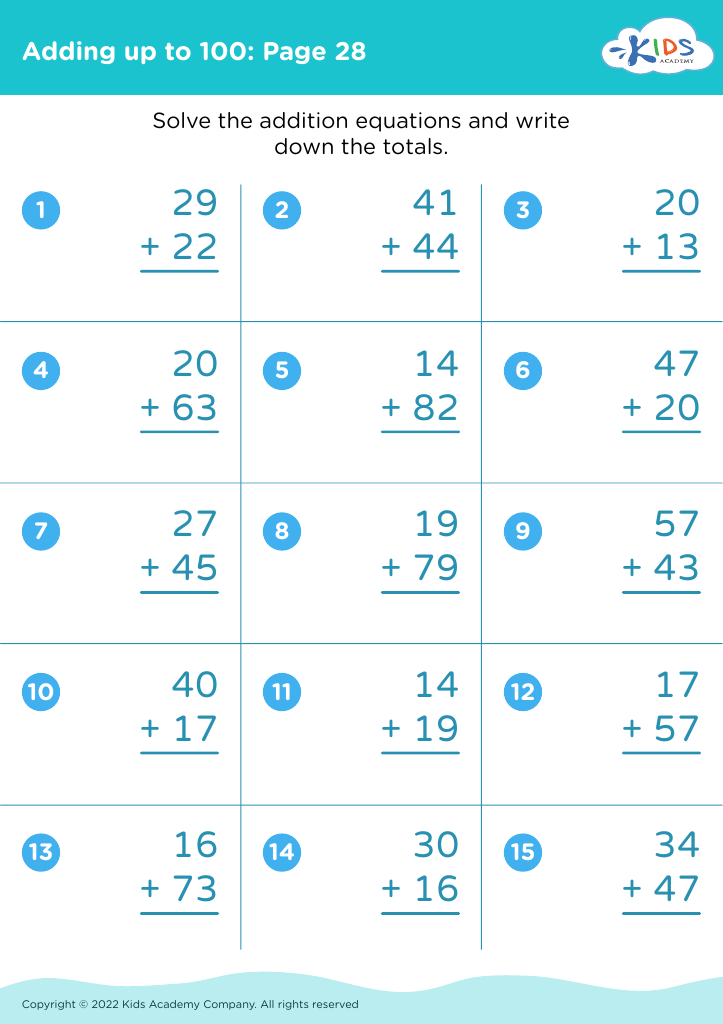
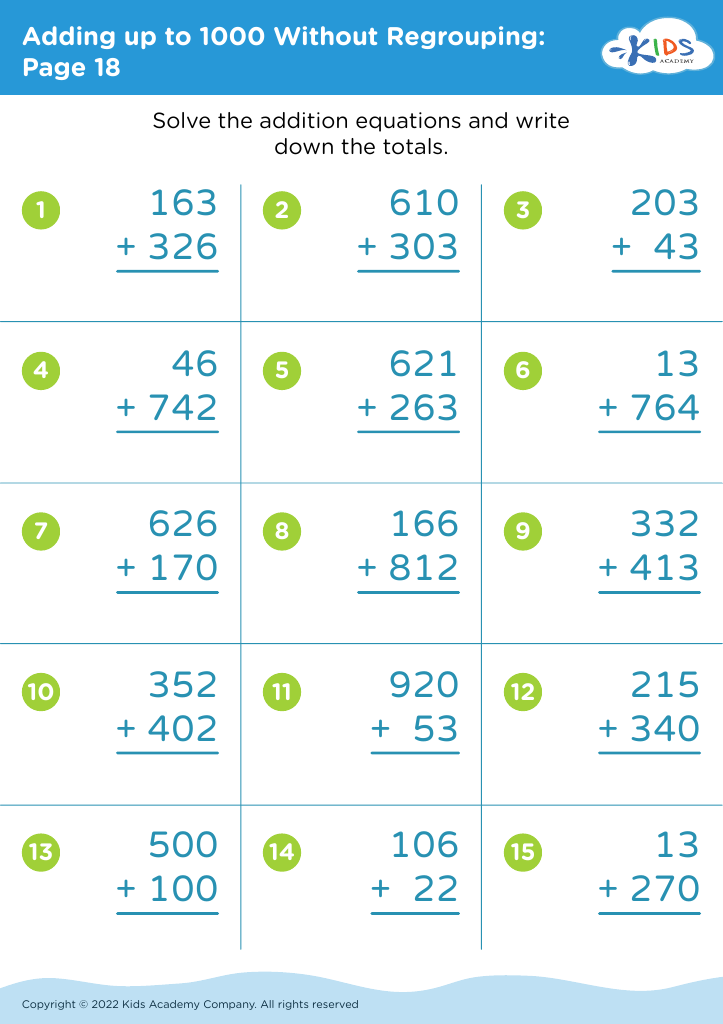
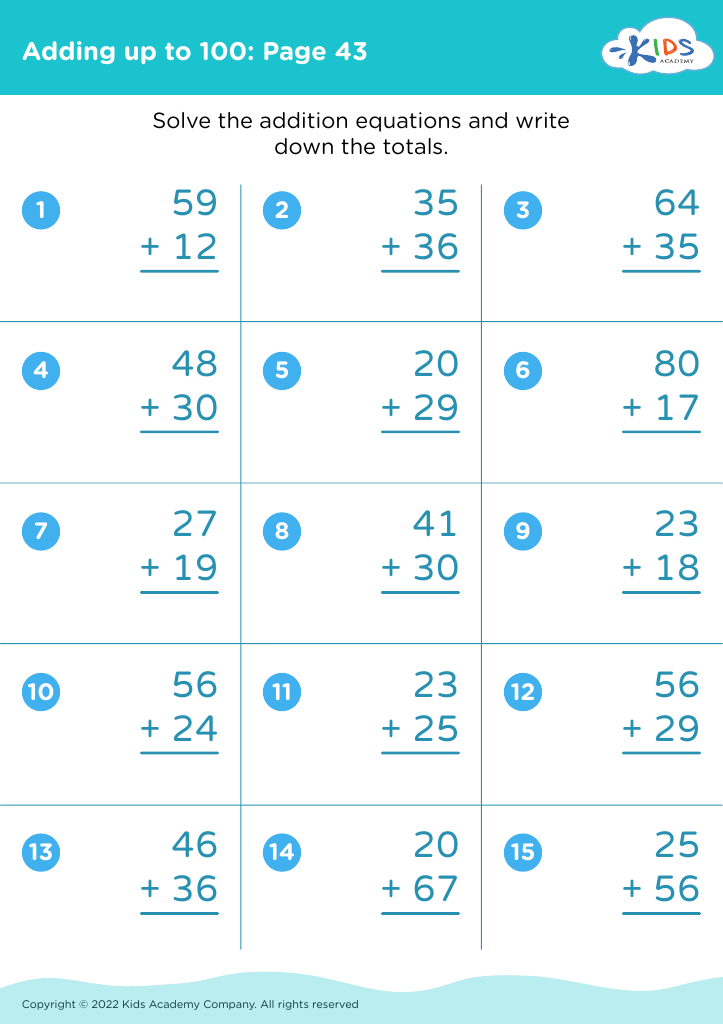
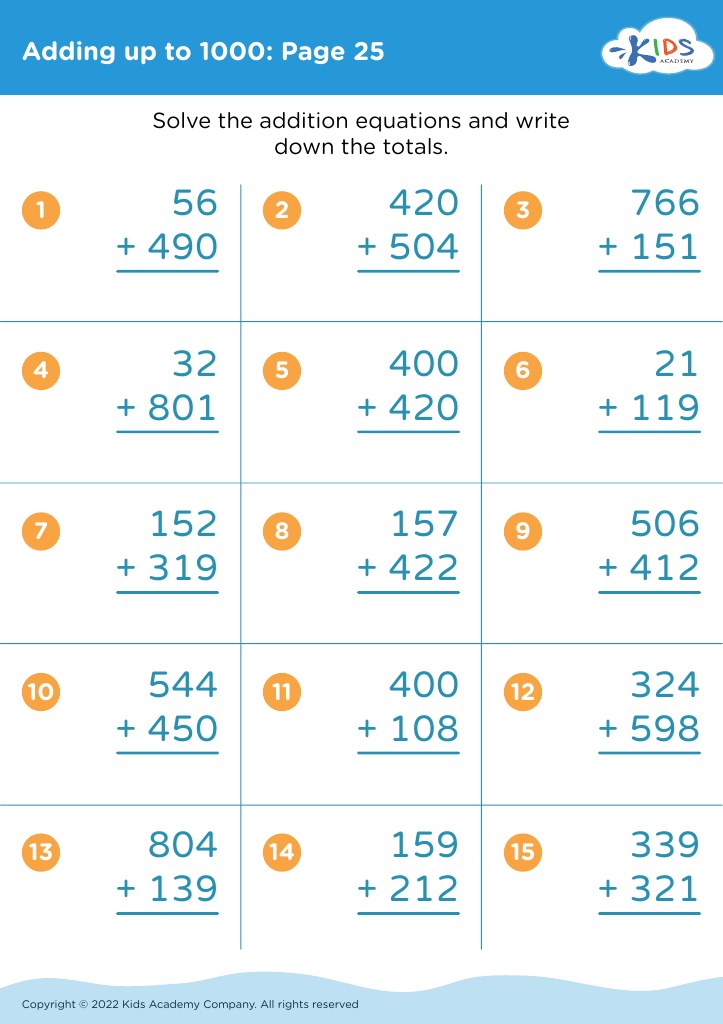






.jpg)

Improving mathematical skills in addition for ages 6-7 is crucial as it lays the foundation for future learning and everyday problem-solving. Children at this age transition from concrete to more abstract thinking and develop their number sense, which is essential to understand more complex math concepts later.
First, addition is a fundamental building block. Mastery in addition facilitates understanding of subtraction, multiplication, and ultimately division. When children excel in addition, they are better prepared to tackle these advanced concepts effectively.
Second, math skills influence academic success. Early proficiency in addition isn't just about handling numbers; it also boosts overall academic confidence and enhances logical thinking, organizing abilities, and attention to detail, which are transferable to other subjects.
Furthermore, math skills have real-world relevance. Accurate and quick addition helps children in practical situations like handling money, estimating time, and spatial awareness. For example, figuring out the total cost while shopping or how much more time is needed to complete a task are essential life skills.
Finally, fostering a positive attitude towards math from a young age prevents math anxiety, setting a foundation for a lifelong appreciation of the subject. Therefore, parents and teachers encouraging and supporting the development of addition skills contribute to a holistic, confident, and capable young learner.








