
Matching skills Addition Worksheets for Ages 6-7
3 filtered results
Difficulty Level
Grade
Age
-
From - To
Subject
Activity
Standards
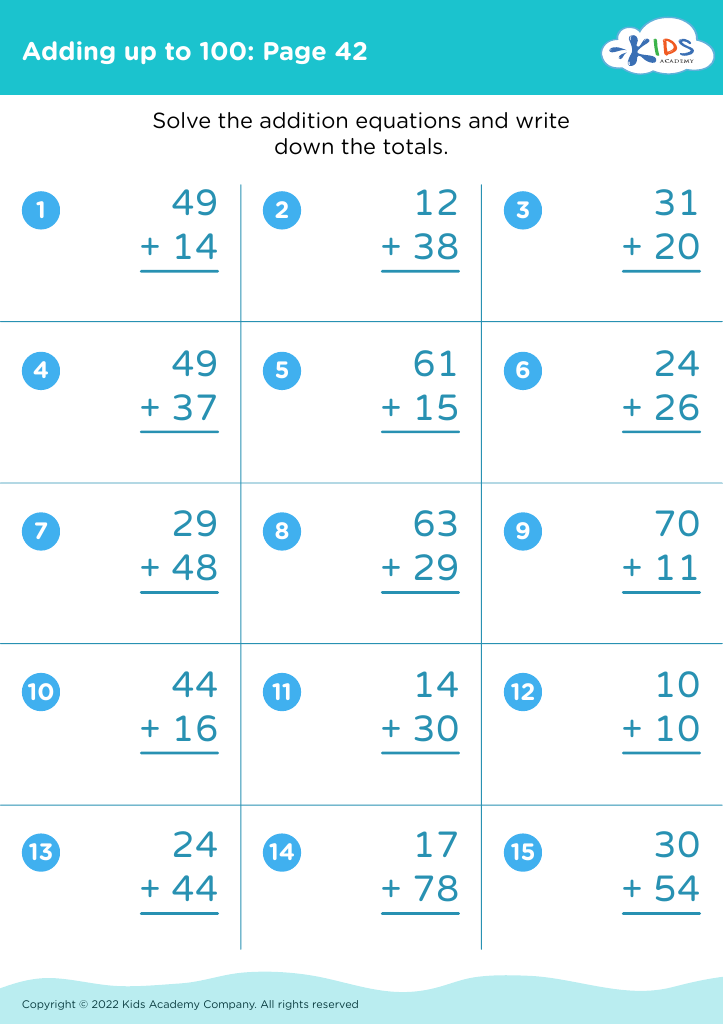
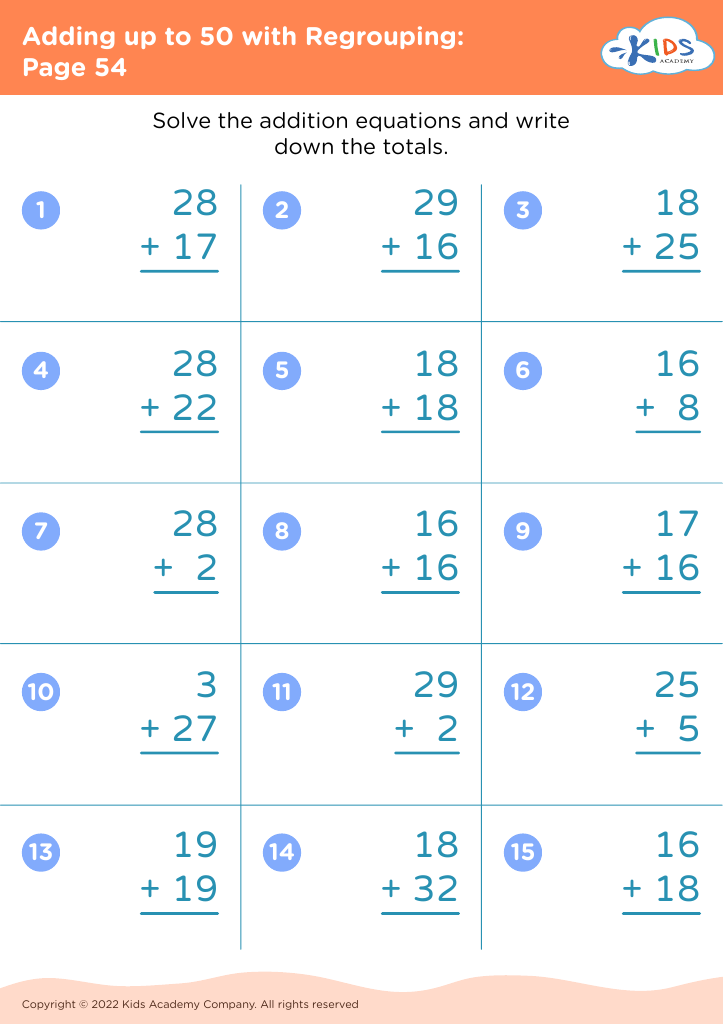
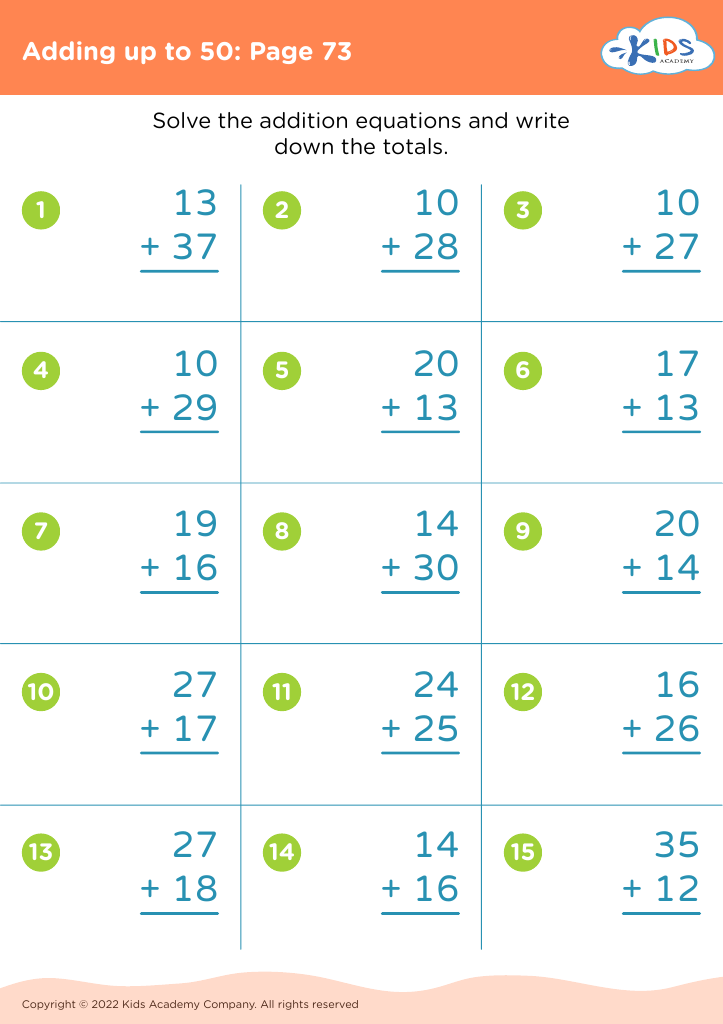
Boost your child's math confidence with our "Matching Skills Addition Worksheets" designed specifically for ages 6-7. These engaging and interactive worksheets focus on helping young learners develop their addition skills through fun matching activities. Children will match numbers with corresponding sums while enhancing critical cognitive abilities. Perfect for homeschooling or classroom use, these worksheets can make learning math enjoyable and effective. With colorful illustrations and clear instructions, kids will stay motivated and focused as they explore the world of addition. Start your child's mathematical journey today and provide them with the tools they need to excel! Download now for a fun learning experience!
Favorites
With answer key
Interactive
Join Kids Academy for Free
Who is primarily going to use this learning content?





.jpg)


Matching skills in addition for ages 6-7 are essential for several reasons that significantly contribute to a child's mathematical foundation and overall cognitive development. First, mastering basic addition helps children understand numerical concepts and quantities, fostering confidence in their ability to tackle more complex mathematical problems later on.
Matching skills encourage children to make connections between numbers and their representations, enhancing problem-solving abilities. This is a critical time for developing foundational skills, as children transition from concrete understanding to more abstract thinking. Moreover, engaging in matching activities promotes focus and attention to detail. Pairing or grouping numbers requires children to concentrate and submit to a process, which aids in the development of executive functioning skills.
From a social-emotional perspective, these activities can also encourage teamwork and collaborative learning when children work in pairs or small groups, enhancing their communication skills. Both parents and teachers play a pivotal role in providing opportunities for children to practice matching addition problems, ensuring that learning is both effective and enjoyable. Building a strong base in addition not only prepares children for future math challenges but also instills a love for learning that can benefit them throughout their educational journey.








