
Mathematical reasoning Addition Worksheets for Ages 6-7
22 filtered results
Difficulty Level
Grade
Age
-
From - To
Subject
Activity
Standards
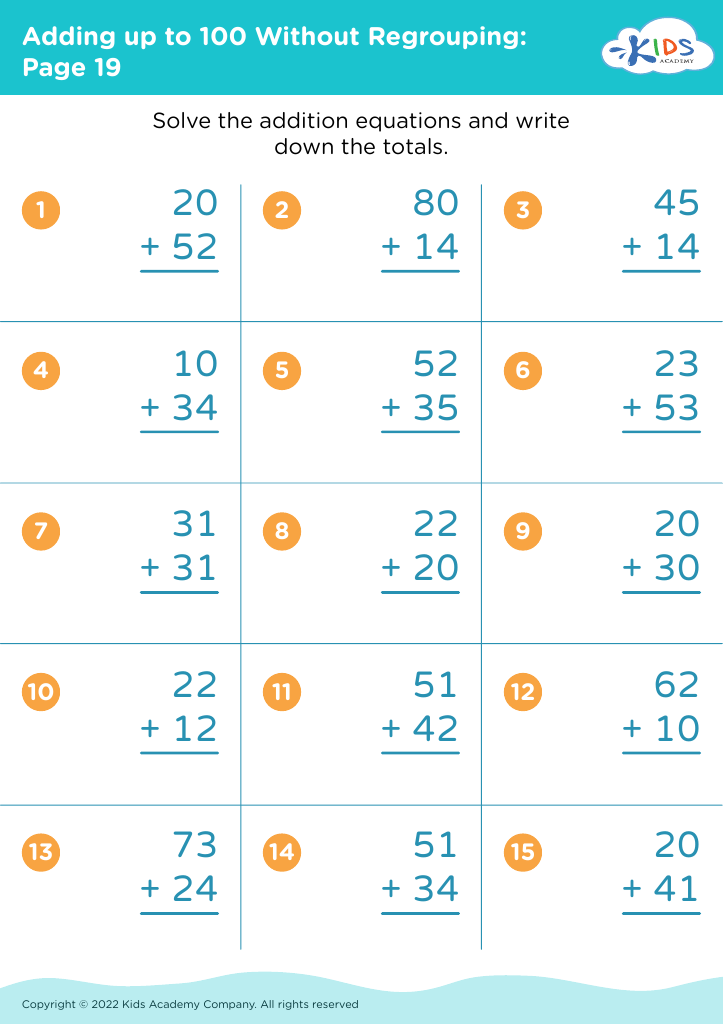
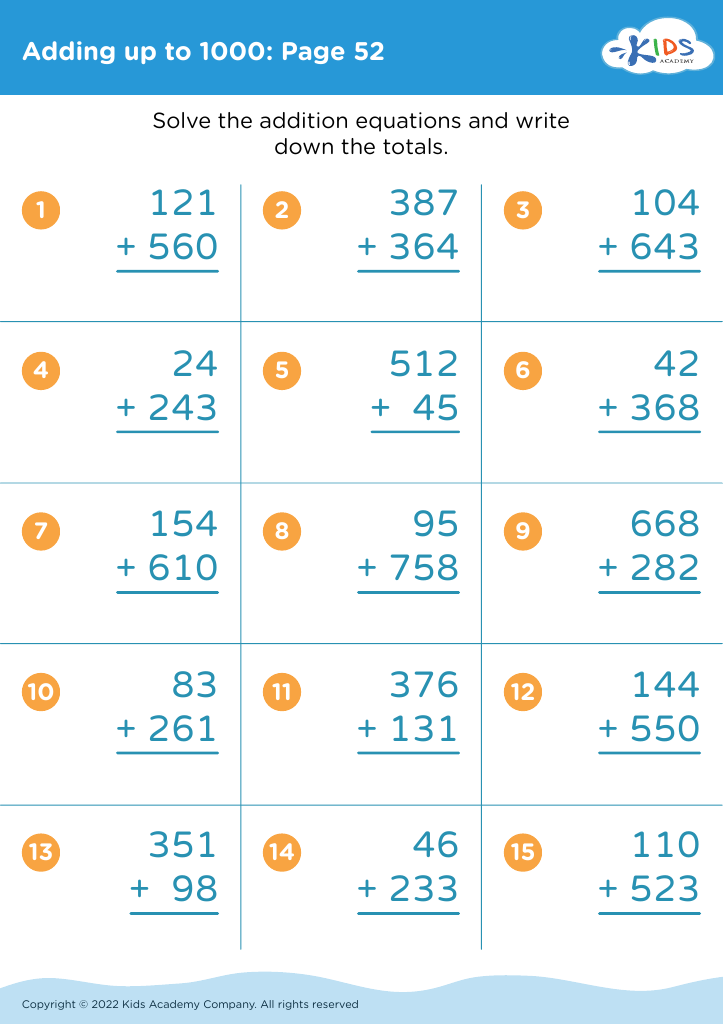
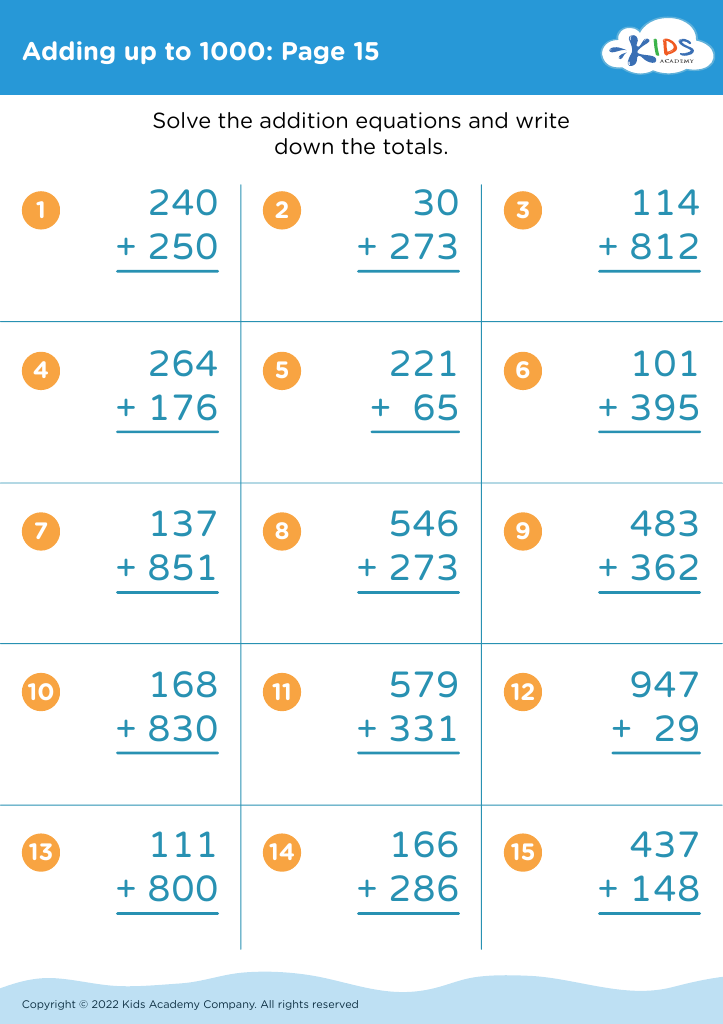
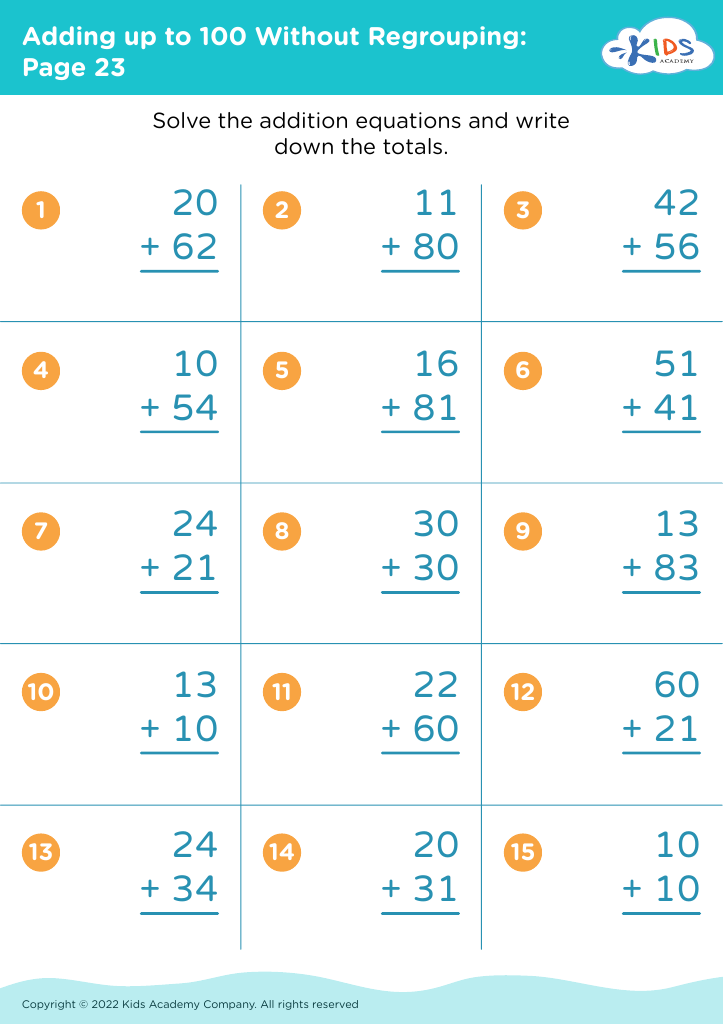
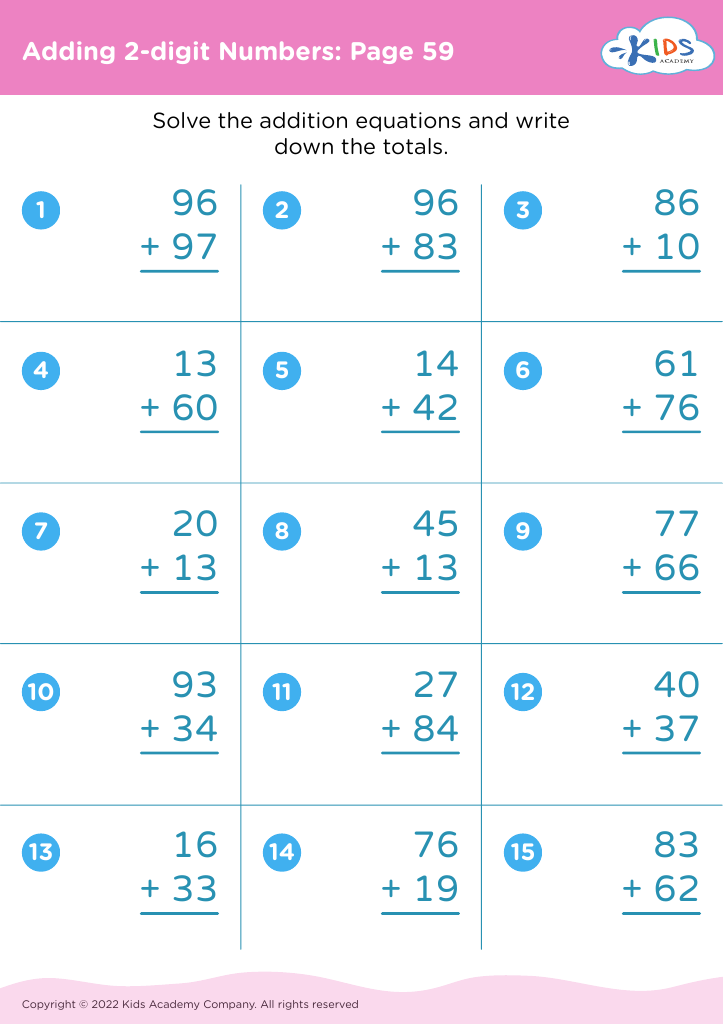
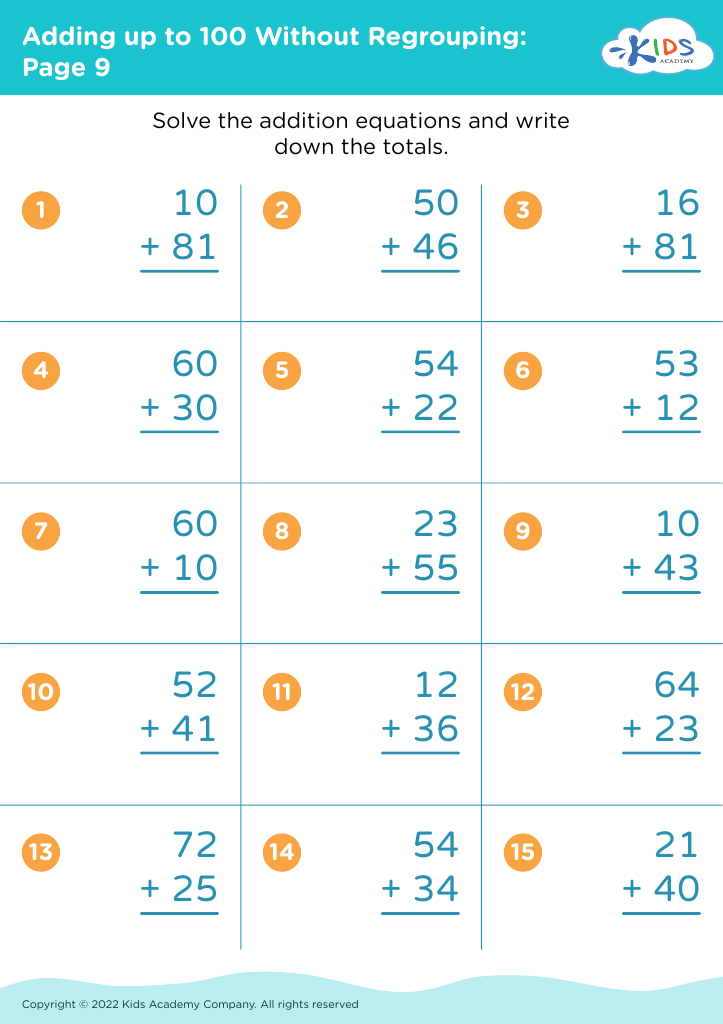
Discover our engaging Mathematical Reasoning Addition Worksheets designed specifically for children ages 6-7. These worksheets aim to enhance students' understanding of addition through a variety of fun and interactive activities. By focusing on mathematical reasoning, kids will not only practice basic addition skills but will also develop problem-solving abilities and critical thinking. Browse through our carefully curated selection of printable worksheets that encourage exploration and application of math concepts in real-world scenarios. Perfect for home or classroom use, these resources make learning addition enjoyable and effective. Equip your young learners with essential skills for their academic journey today!
Favorites
With answer key
Interactive
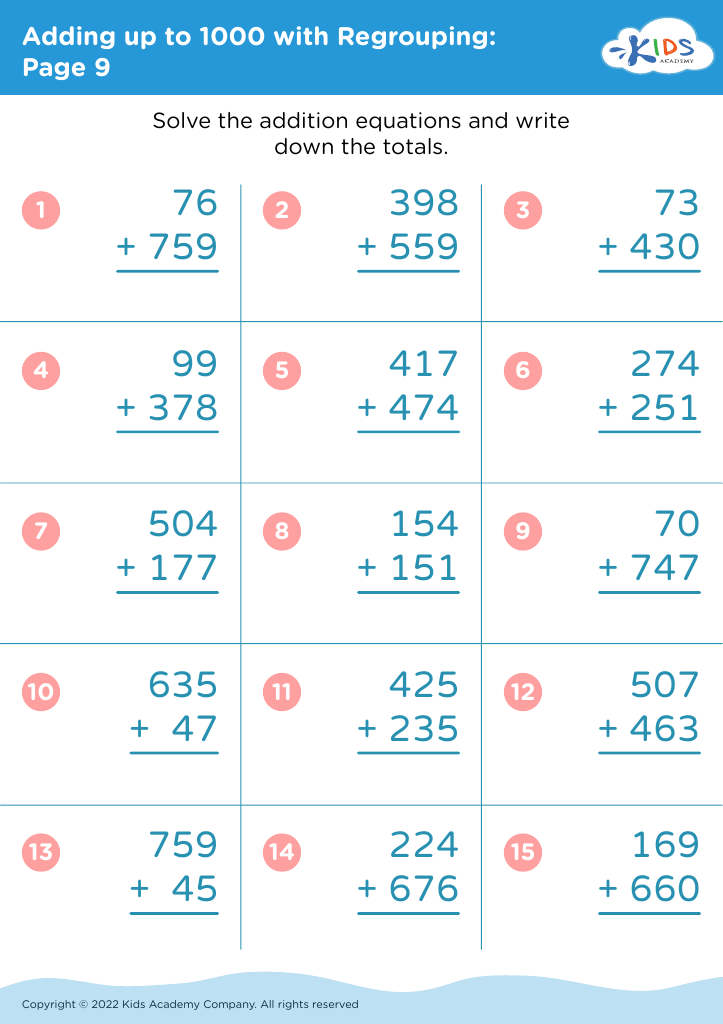
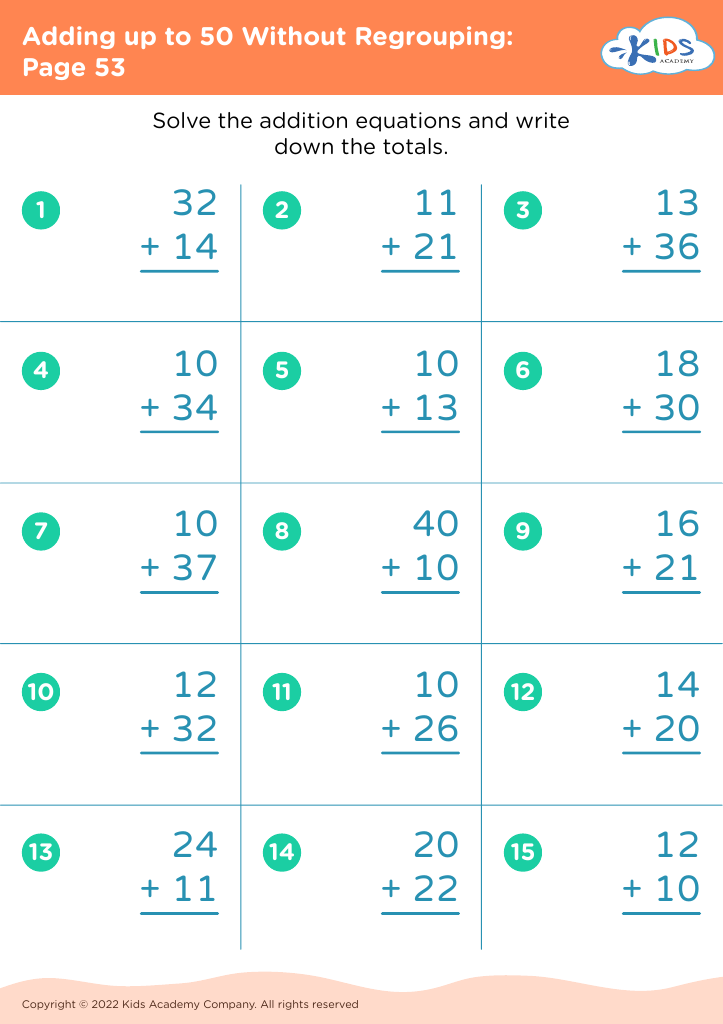
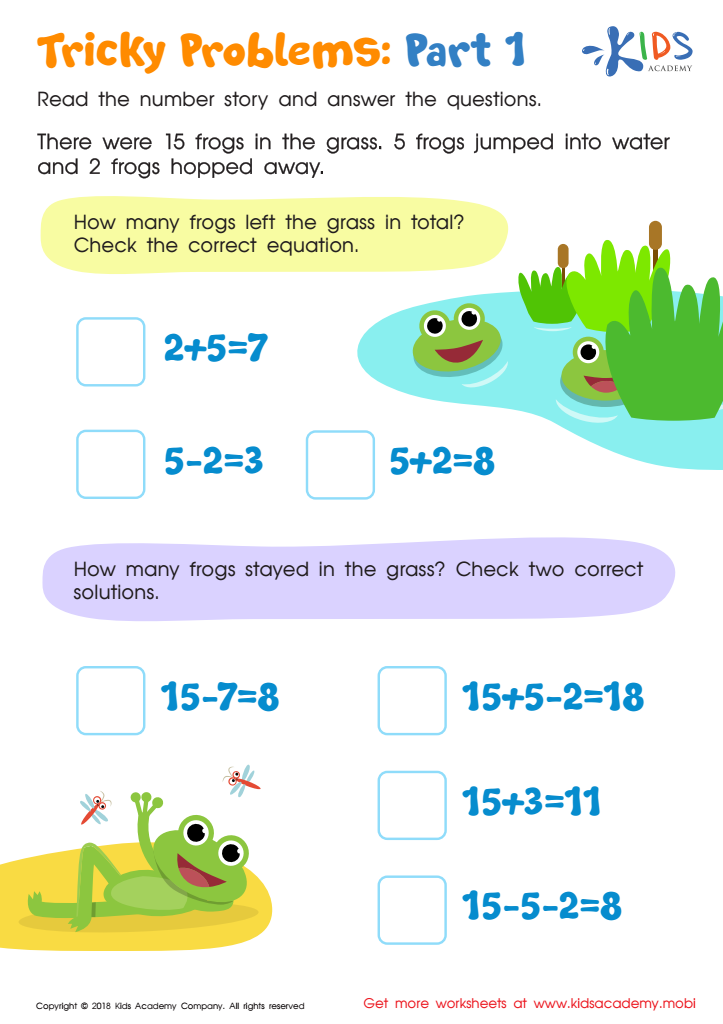
Tricky Problems Worksheet: Part 1
Visualizing word problems can help students solve them. This fun PDF worksheet encourages students to create mental images using math facts, then check boxes to match the equations for basic addition problems. It's a great way to build confidence in solving math.
 Assign to My Students
Tricky Problems Worksheet: Part 1
Worksheet
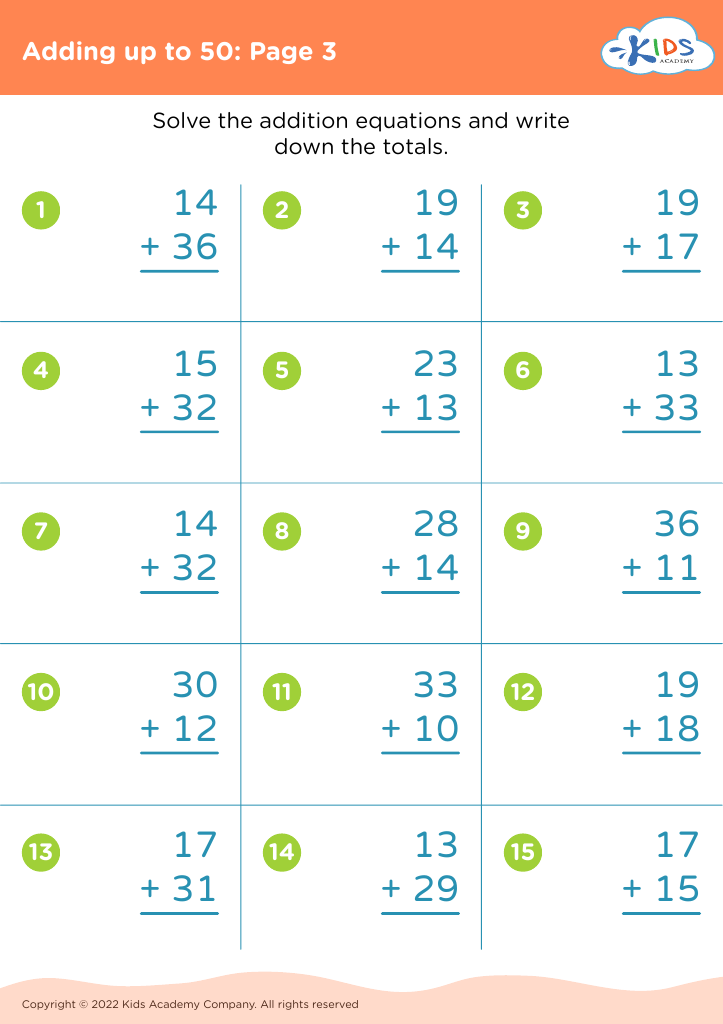
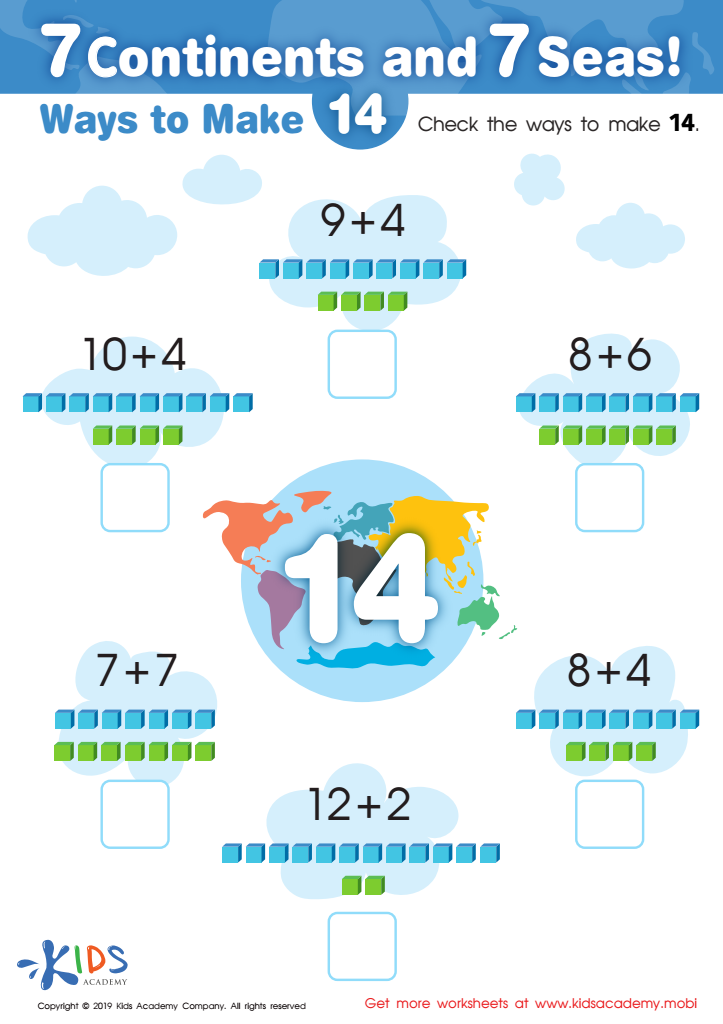
7 Continents and 7 Seas Worksheet
Remind kids of the continents and show them how different numbers can add up to the same figure. Give examples, like 2+2 =4, and 3+1 =4. Ask if they can provide other examples, then work through the simple additions in this worksheet with them. Ask them to circle all equations that make 14.
7 Continents and 7 Seas Worksheet
Worksheet
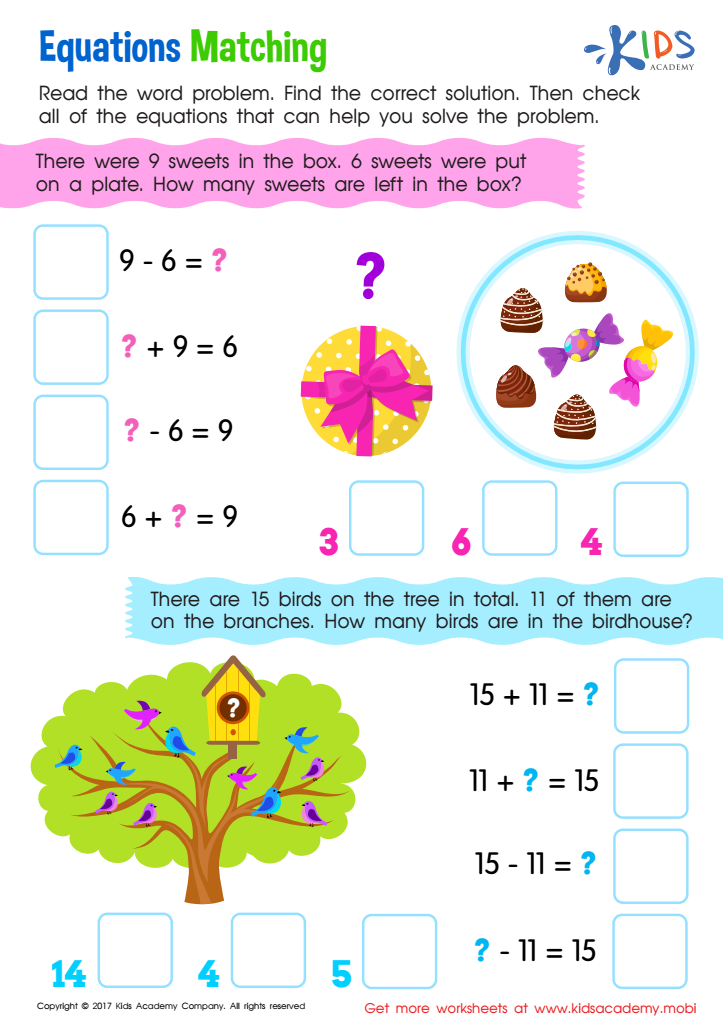
Equations Matching Word Problems Worksheet
Download this worksheet and give your young mathematician practice in solving equations using matching numbers and number family facts. They'll solve word problems, develop critical thinking and algebraic reasoning, and gain success with addition and subtraction.
Equations Matching Word Problems Worksheet
Worksheet
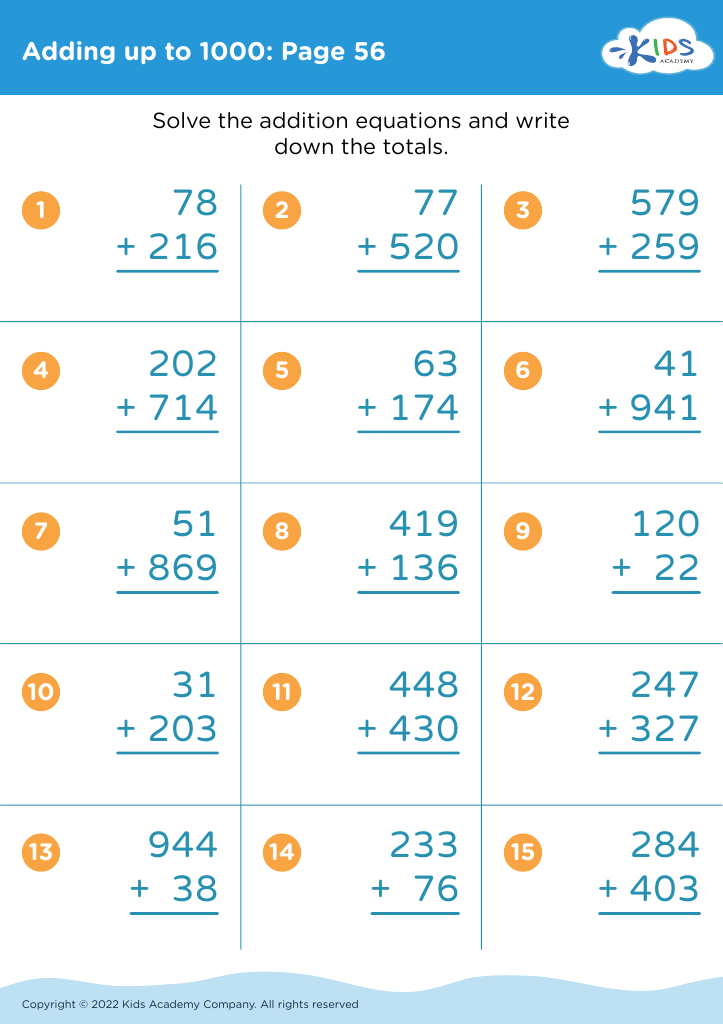
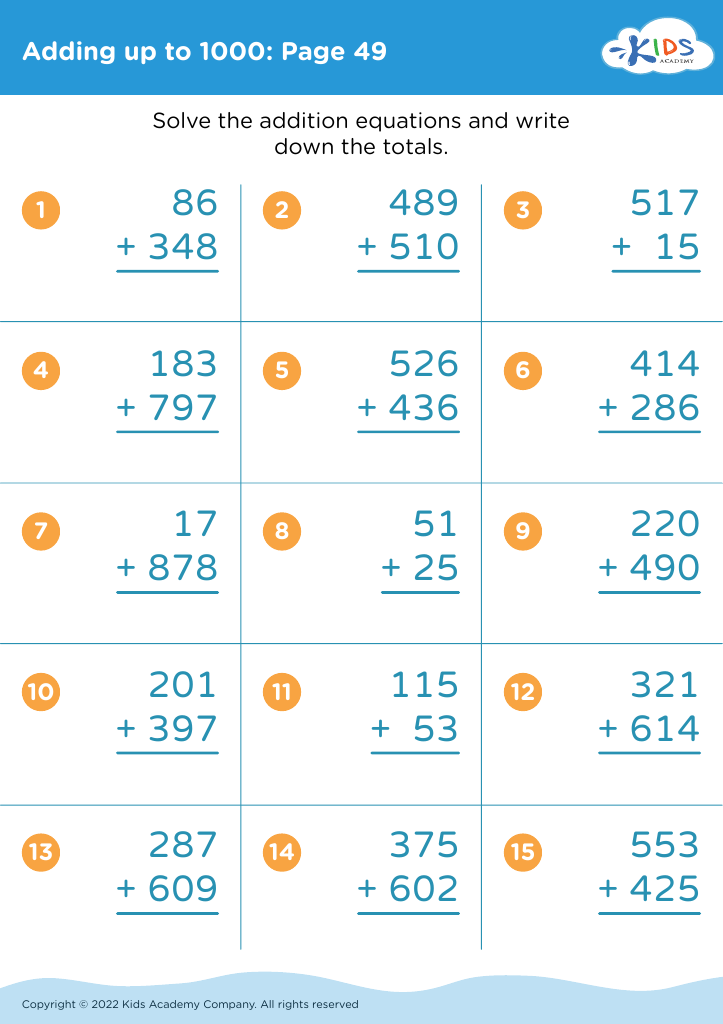
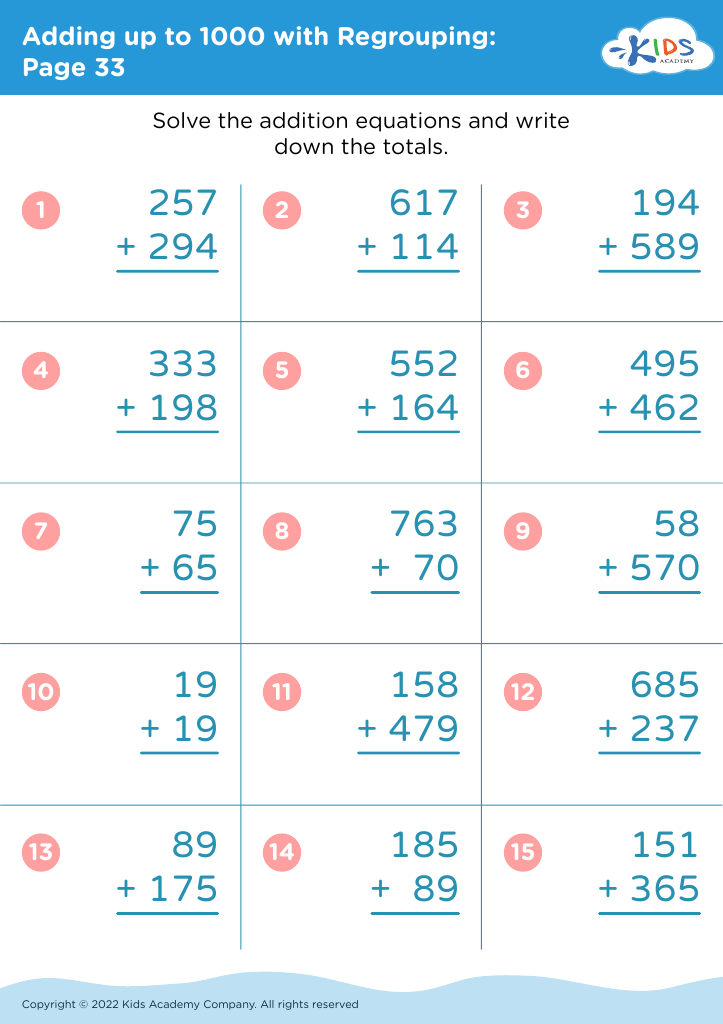
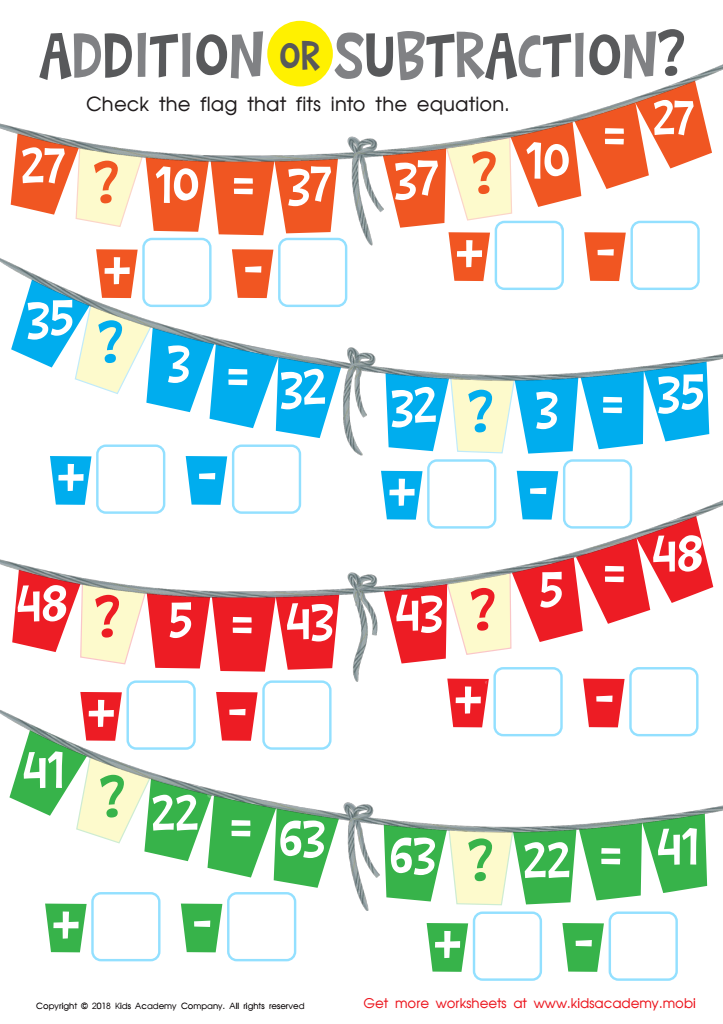
Addition or Subtraction? Worksheet
Help your math whiz's number skills advance with these colorful flag equations! With the free PDF, they'll learn to solve addition and subtraction facts by following the correct orders of operation. And the best part? They'll develop a deeper understanding of how the different operations work together within equations. Give it a try and watch their skills soar!
Addition or Subtraction? Worksheet
Worksheet
Join Kids Academy for Free
Who is primarily going to use this learning content?








Mathematical reasoning in addition is a fundamental skill for children aged 6-7 as it serves as the backbone for their overall mathematical development. At this age, children begin to transition from concrete counting to abstract thinking. When parents and teachers nurture mathematical reasoning in addition, they help children understand not just how to add, but why addition works. This deeper comprehension promotes confidence and independence in problem-solving.
Furthermore, mastery of addition through reasoning aids in laying a strong foundation for more complex mathematical concepts, such as subtraction, multiplication, and division that children will encounter later. Encouraging reasoning allows children to explore different strategies and find the approach that works best for them, fostering critical thinking skills that extend beyond mathematics.
Moreover, engaging with addition can enhance cognitive skills, as children learn to make connections, recognize patterns, and develop logical reasoning. Families and educators who emphasize this aspect of mathematics create an enriching environment where thoughtful inquiry is valued. In a rapidly advancing world, fostering mathematical reasoning ensures children are better prepared for future academic challenges and helps them build essential life skills, such as decision-making and analytical thinking. Thus, emphasizing mathematical reasoning in addition is crucial for holistic child development.








