Motor skills development Addition Worksheets for Ages 6-7
4 filtered results
-
From - To
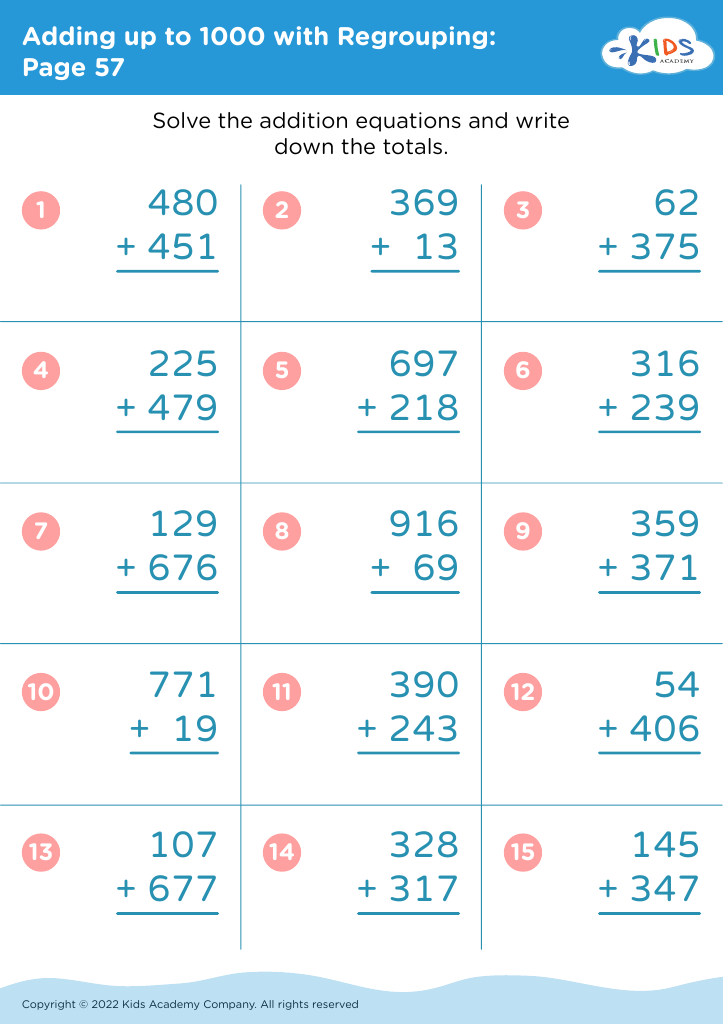
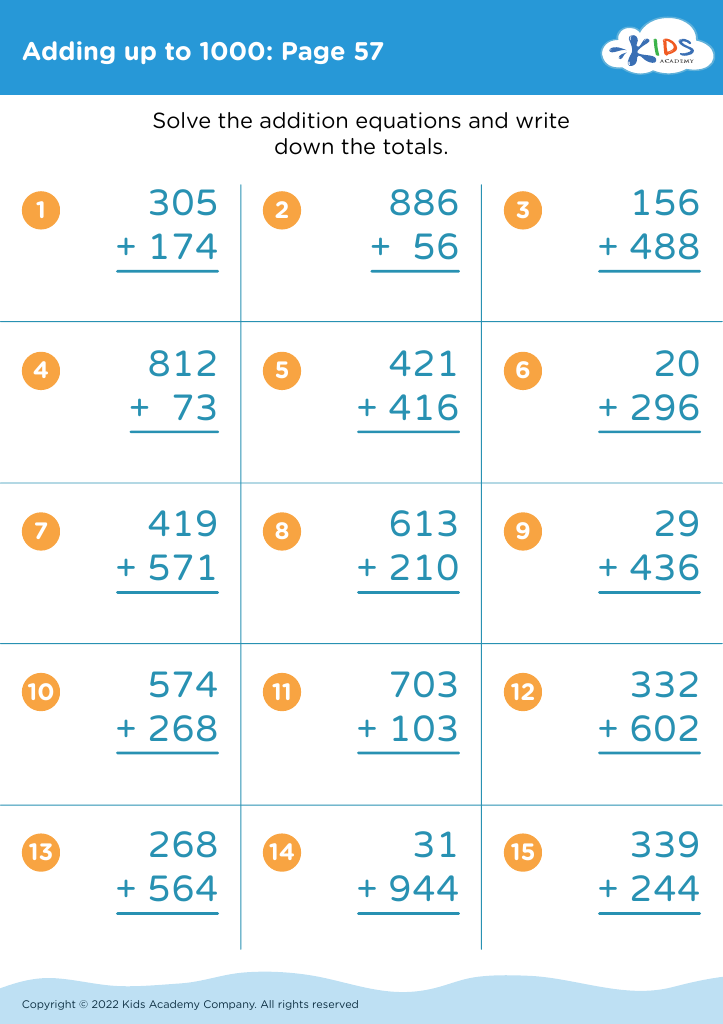
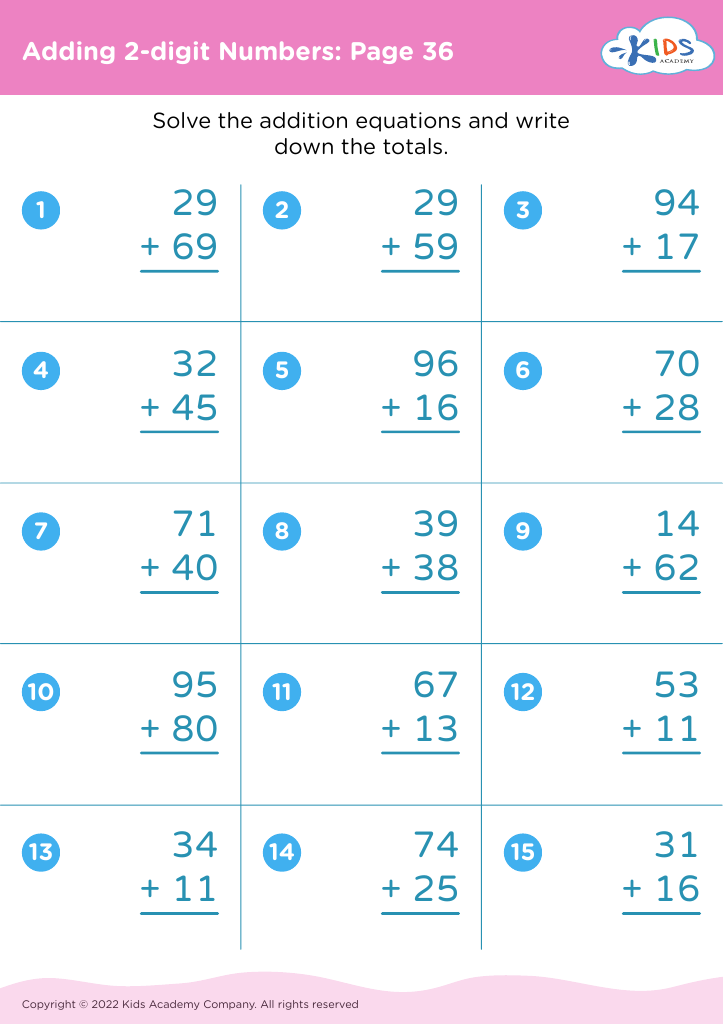
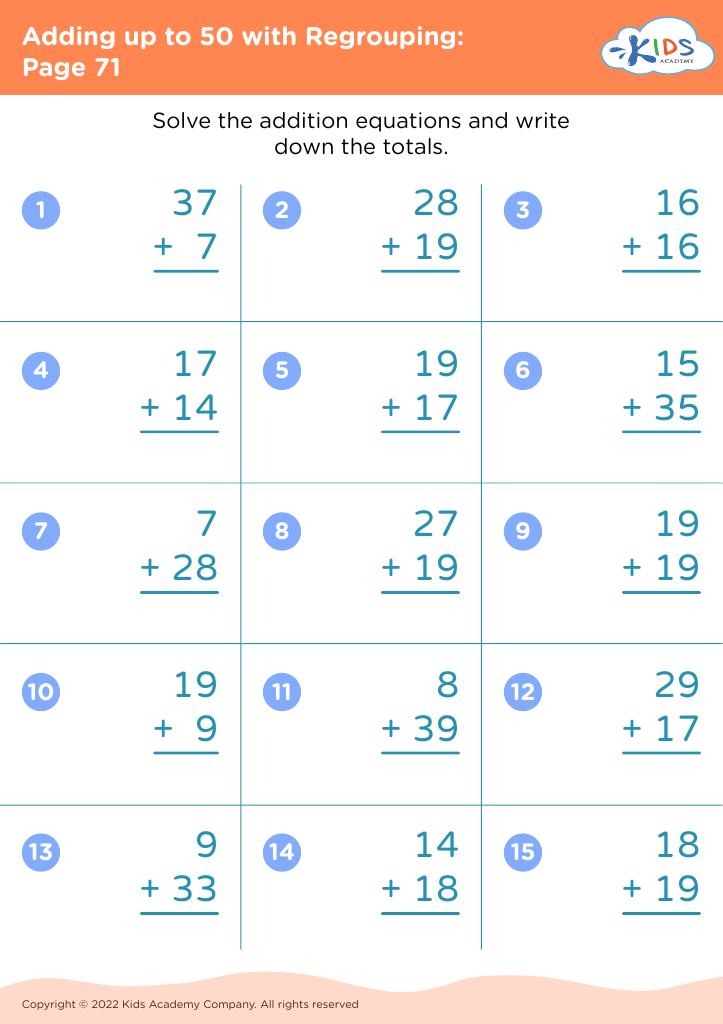
Discover our "Motor Skills Development Addition Worksheets for Ages 6-7"! Designed by educators, these engaging worksheets combine math practice with activities to enhance fine motor skills. Perfect for first graders, each worksheet offers fun, educational exercises that improve hand-eye coordination, pencil control, and number sense. Your child will enjoy learning addition as they trace, color, and write their way to math proficiency. These printables are perfect for both classroom and home use, making math time both productive and enjoyable. Develop your child's motor skills and mathematical confidence today with our expertly crafted resources!








Motor skills development is crucial for children aged 6-7 as it lays the foundation for their overall growth and success in both academic and daily activities. For parents and teachers, emphasizing motor skills is key to fostering a child's physical and cognitive development.
Firstly, fine motor skills, such as writing, cutting, and buttoning clothes, are essential for academic tasks and independence. Mastery of these skills improves handwriting quality and legibility, promoting confidence and proficiency in schoolwork. Secondly, gross motor skills, including running, jumping, and balancing, support physical fitness and coordination, helping children remain active and healthy.
Moreover, motor skills development directly influences cognitive abilities. Tasks that require hand-eye coordination, like playing with building blocks or participating in sports, enhance neurological connections that support learning and problem-solving. Improved motor skills also lead to better concentration and memory, as activities that engage the body can stimulate brain function.
Additionally, social and emotional benefits arise from motor skills proficiency. Children with well-developed motor skills tend to engage more in group activities, fostering teamwork, cooperation, and communication. This can boost self-esteem and reduce feelings of frustration or exclusion.
In summary, motor skills development is not just about physical activities but encompasses critical elements for a child's holistic growth, impacting academic performance, cognitive development, and social integration. Parents and teachers should, therefore, prioritize activities that nurture these skills.








