
Practice subtraction Addition Worksheets for Ages 6-7
5 filtered results
Difficulty Level
Grade
Age
-
From - To
Subject
Activity
Standards
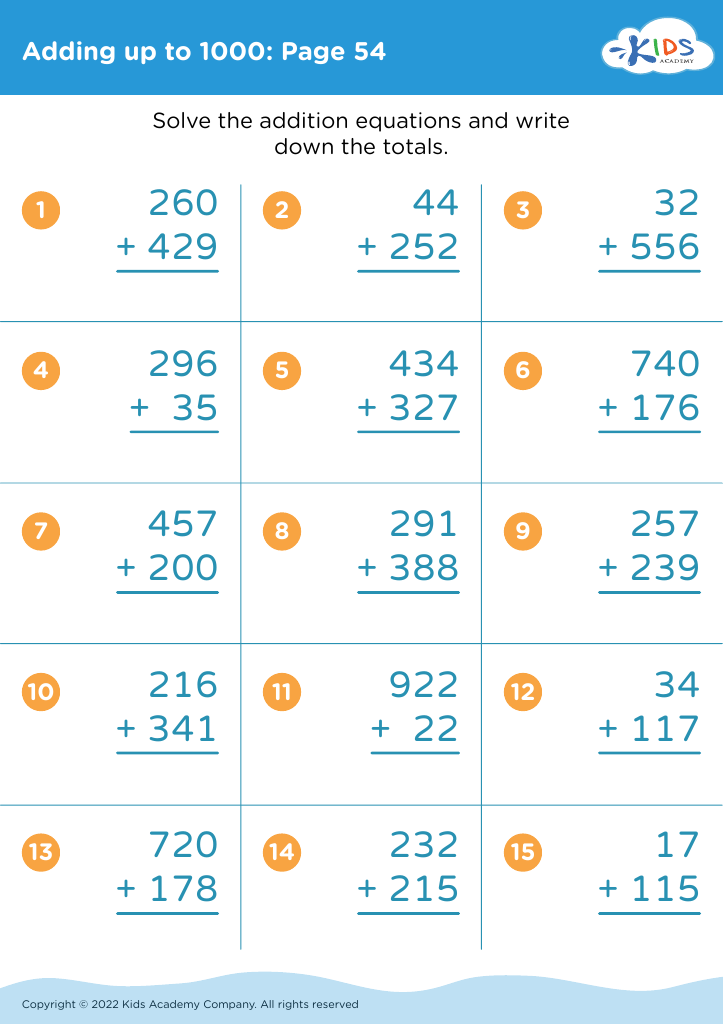
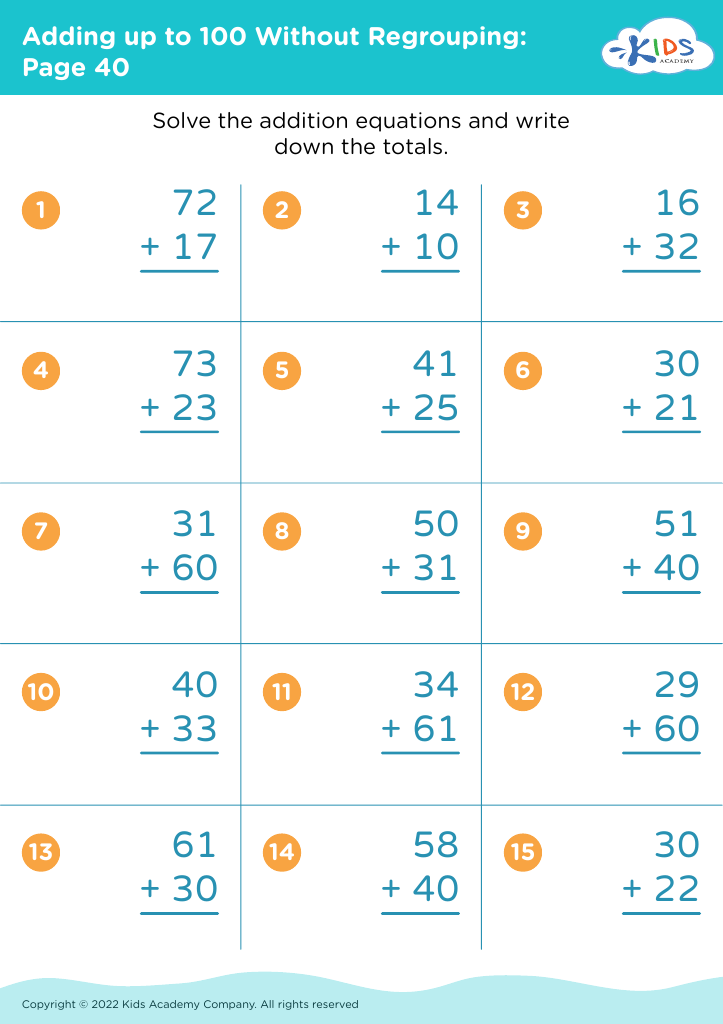
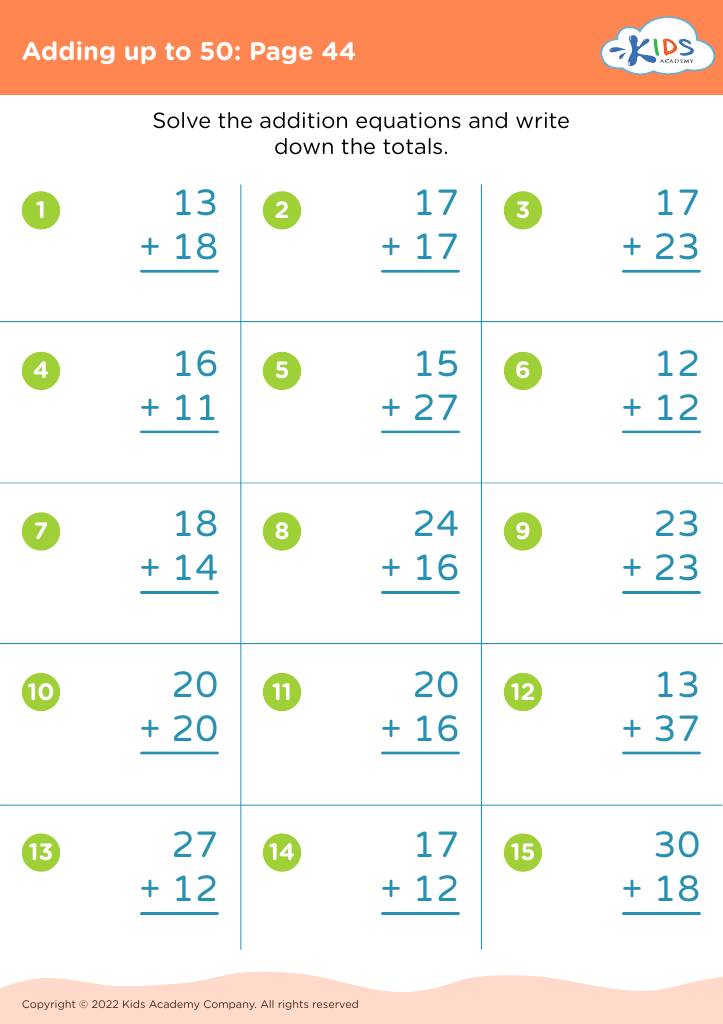
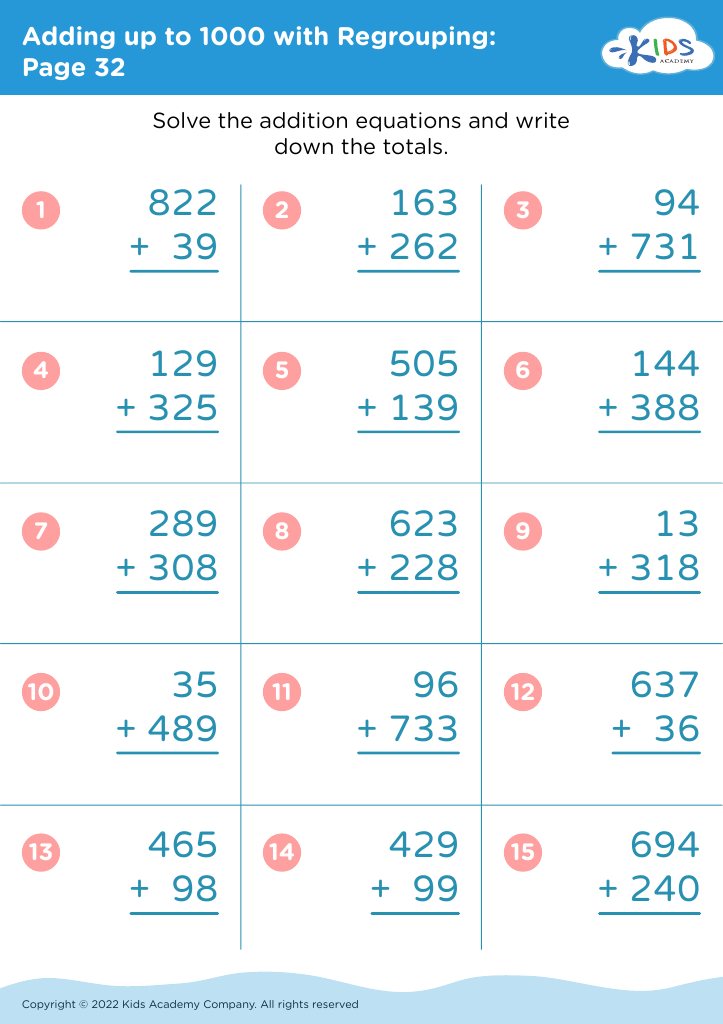
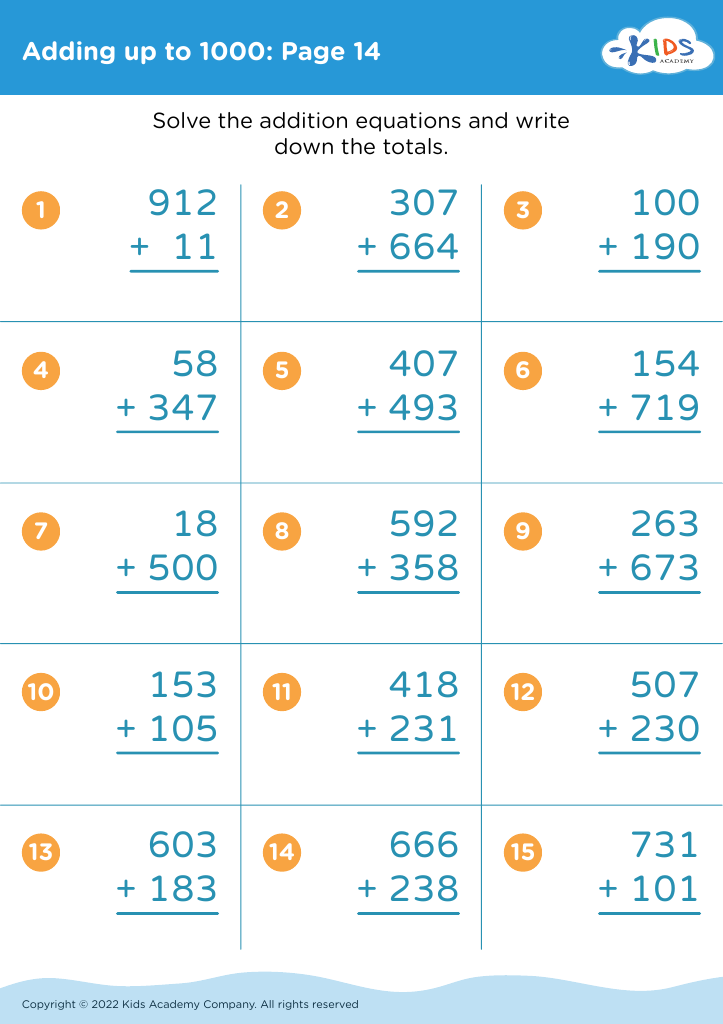
Enhance your child's mathematical skills with our "Practice Subtraction and Addition Worksheets for Ages 6-7." Designed specifically for young learners, these engaging worksheets make mastering basic math concepts fun and enjoyable. Each worksheet features colorful illustrations and varied activities that encourage kids to practice addition and subtraction through interactive exercises. These resources cater to individual learning styles, helping children build confidence in their math abilities. Perfect for home or classroom use, our worksheets align with developmental standards for first graders, ensuring a solid foundation in arithmetic. Get started today and watch your child flourish in their math journey!
Favorites
With answer key
Interactive
Join Kids Academy for Free
Who is primarily going to use this learning content?








Practicing addition and subtraction for ages 6-7 is crucial for several reasons. First, these foundational skills are essential for developing a solid understanding of mathematics. At this age, children are beginning to grasp the concepts of numbers and operations, and ongoing practice helps reinforce these ideas. Mastering addition and subtraction provides the building blocks for more complex mathematical concepts they'll encounter in later grades, such as multiplication, division, and even algebra.
Second, strong arithmetic skills enhance problem-solving abilities. When children are confident in their addition and subtraction skills, they approach math problems with less anxiety and can focus on finding solutions rather than struggling with basic operations. This confidence fosters a positive attitude toward math, encouraging them to explore further and face new challenges.
Also, regular practice cultivates critical thinking and analytical skills, helping children to make connections between different concepts, such as combining items (addition) or separating them (subtraction). For parents and teachers, nurturing these skills not only leads to academic success but also supports cognitive and social-emotional development. Ultimately, investment in early mathematical skills prepares children for a lifelong appreciation of math while laying a robust educational foundation.








