Filters

14 filtered results

Clear all filters
Favorites
With answer key
Interactive

14 filtered results

Difficulty Level

Grade


Explore our engaging Problem-solving Practice Addition Worksheets, designed specifically for children aged 6-7. These interactive worksheets help young learners develop essential math skills while refining their problem-solving abilities. With a variety of fun scenarios and challenges, kids will not only practice addition but also enhance their critical thinking and reasoning skills. Each worksheet is designed to promote a deep understanding of mathematical concepts in an enjoyable way, making learning memorable and effective. Perfect for classroom or at-home use, these resources ensure your child builds a strong foundation in addition through practical applications, boosting confidence and fostering a love for math.
Check out this FREE Trial Lesson on Addition for age 6-7!

Add Within 1,000 Understanding What It Means to Regroup 2 Addends

Favorites
With answer key
Interactive
  • 6-7
  • Problem-solving practice
  • Addition
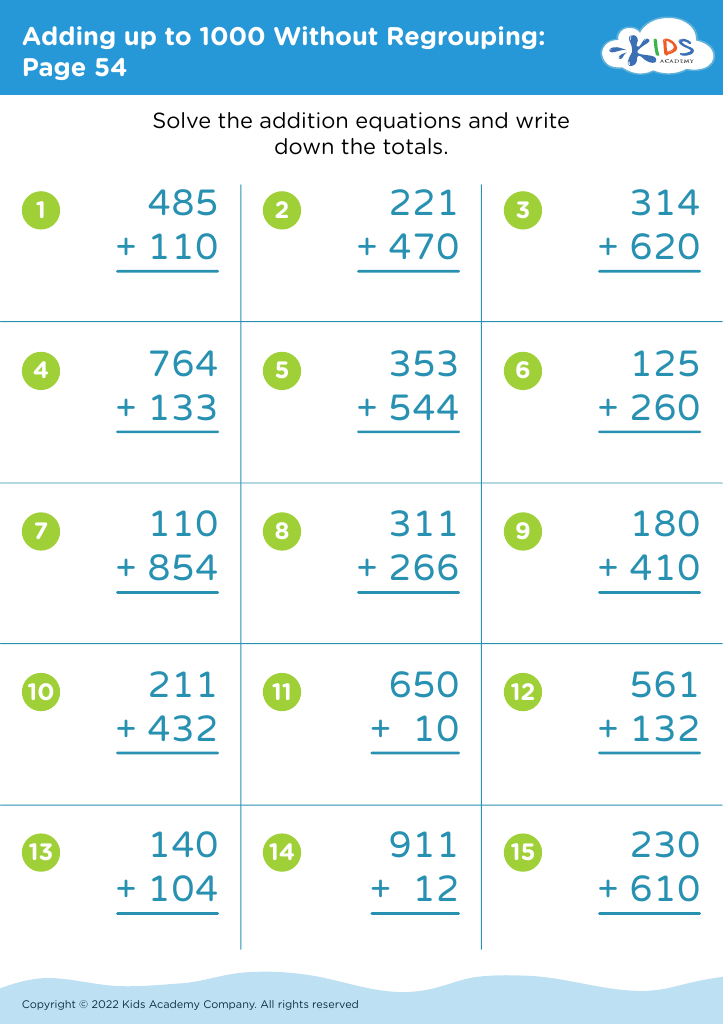
Adding up to 1000 Without Regrouping: Page 54
Worksheet
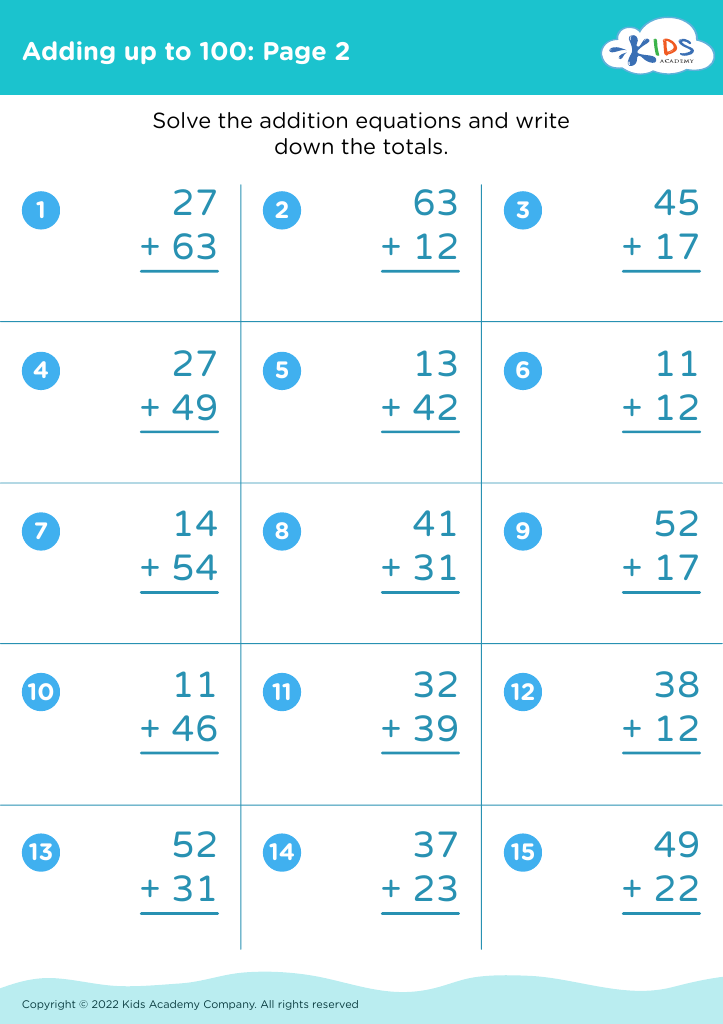
Adding up to 100: Page 2

Adding up to 100: Page 2

Adding up to 100: Page 2
Worksheet
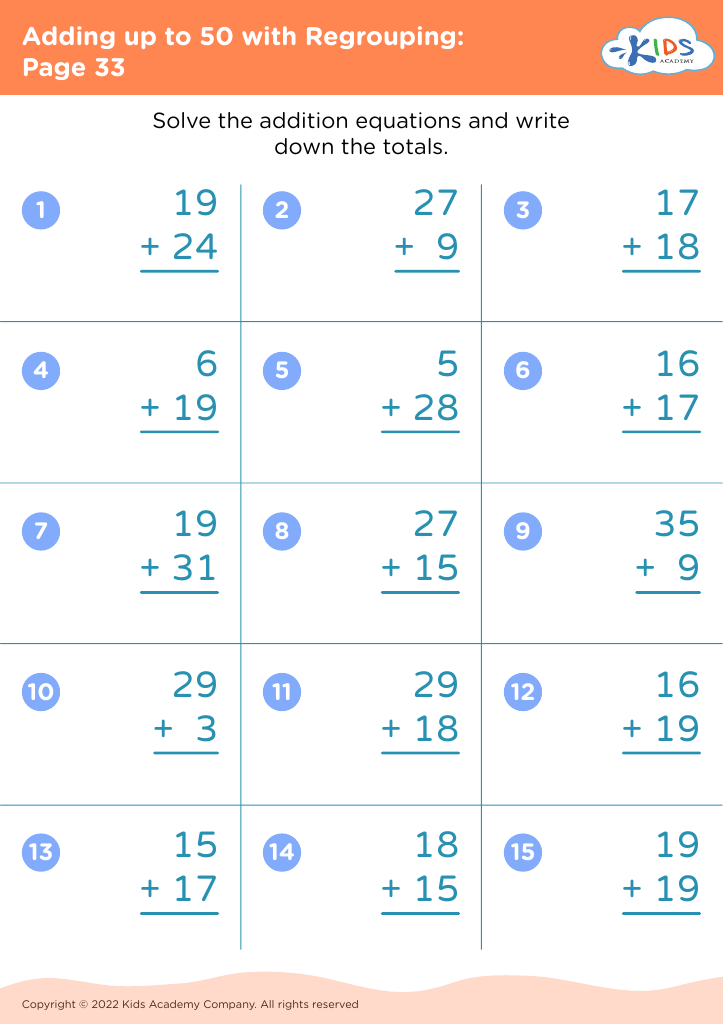
Adding up to 50 with Regrouping: Page 33
Worksheet
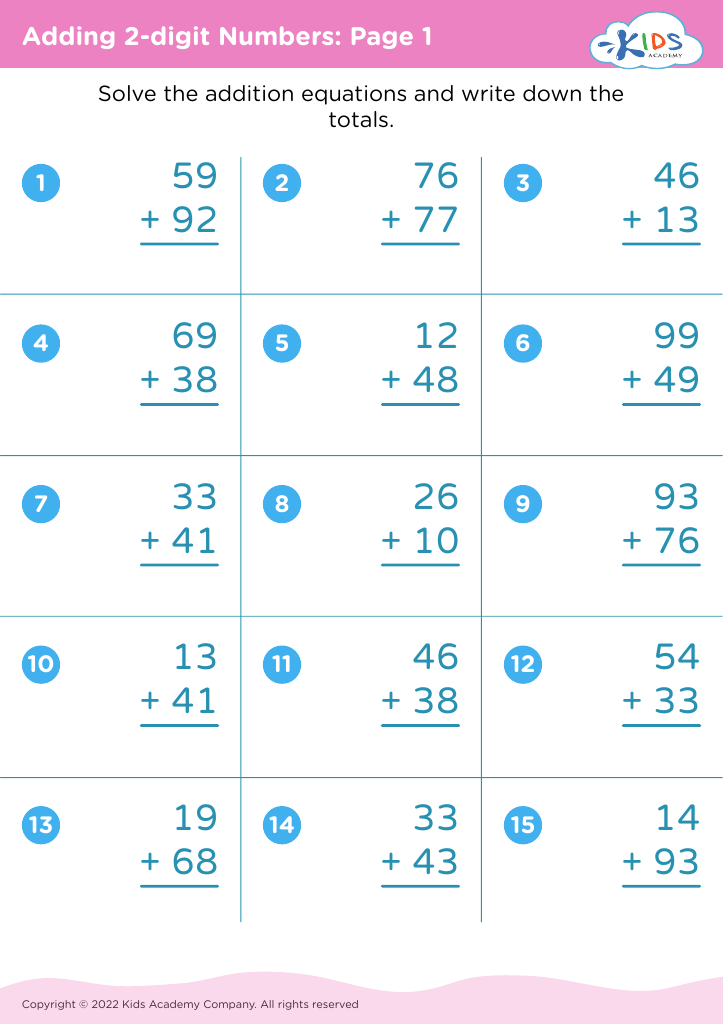
Adding 2-digit Numbers: Page 1

Adding 2-digit Numbers: Page 1

Adding 2-digit Numbers: Page 1
Worksheet
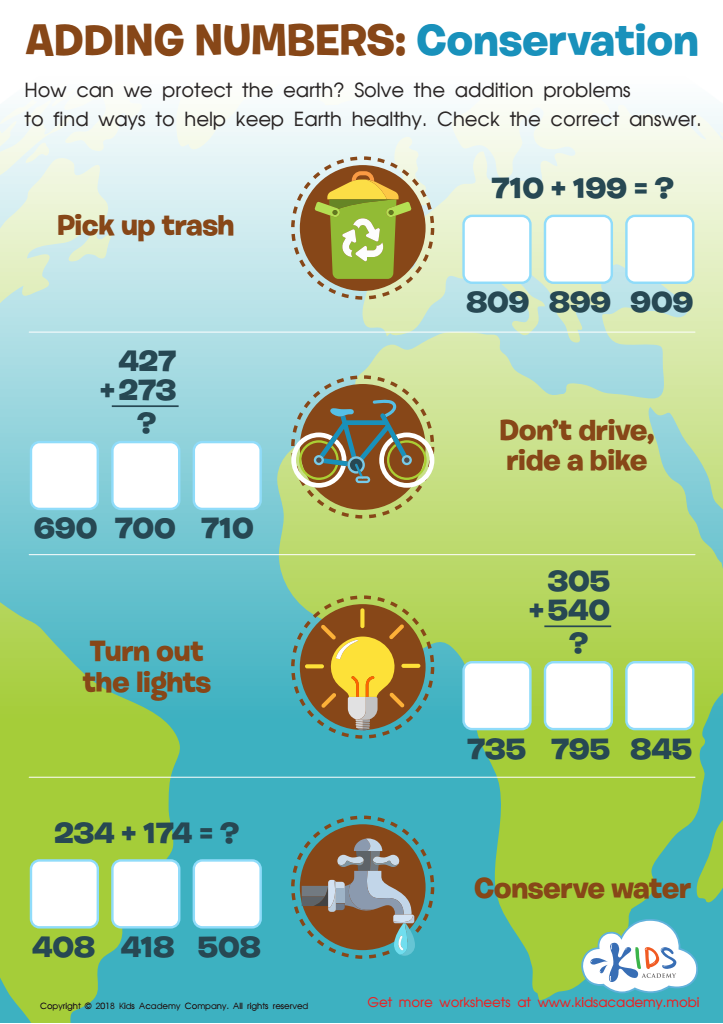
Adding Numbers: Conservation Worksheet

Adding Numbers: Conservation Worksheet

We all live on the Earth, which provides us with the vital necessities for survival. Unfortunately, we too often take advantage of this, causing pollution, water wastage and global warming. Help teach your kids how we can protect our planet - ask them to come up with good ideas and work together to find solutions. Challenge them to solve the subtraction problems to see what they can do to help keep the Earth healthy.
Adding Numbers: Conservation Worksheet
Worksheet
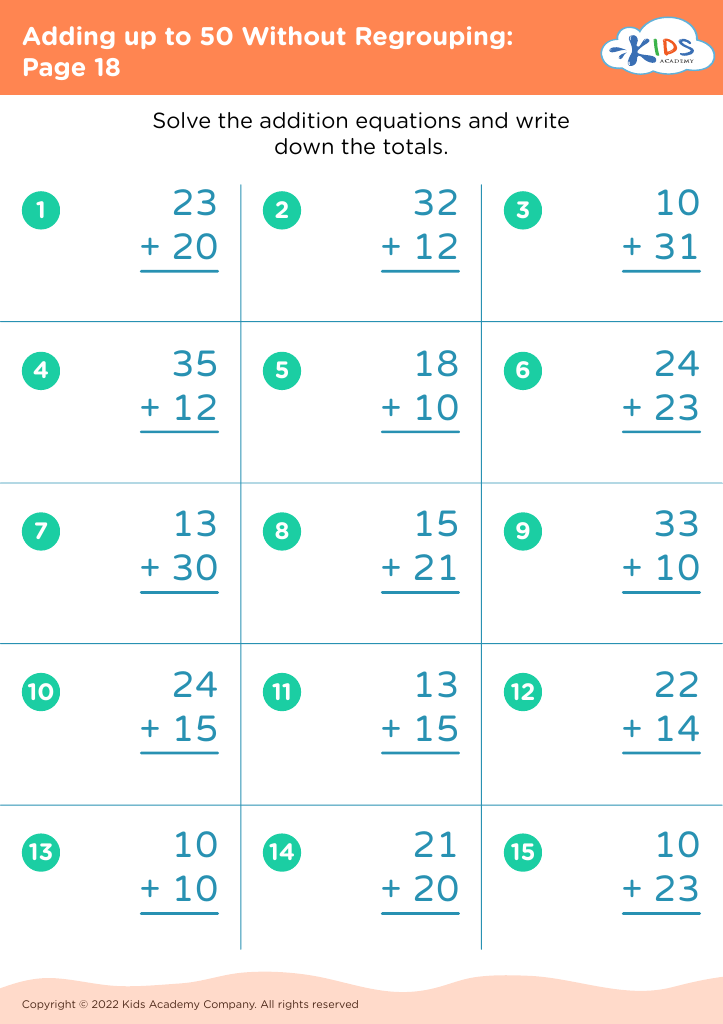
Adding up to 50 Without Regrouping: Page 18
Worksheet
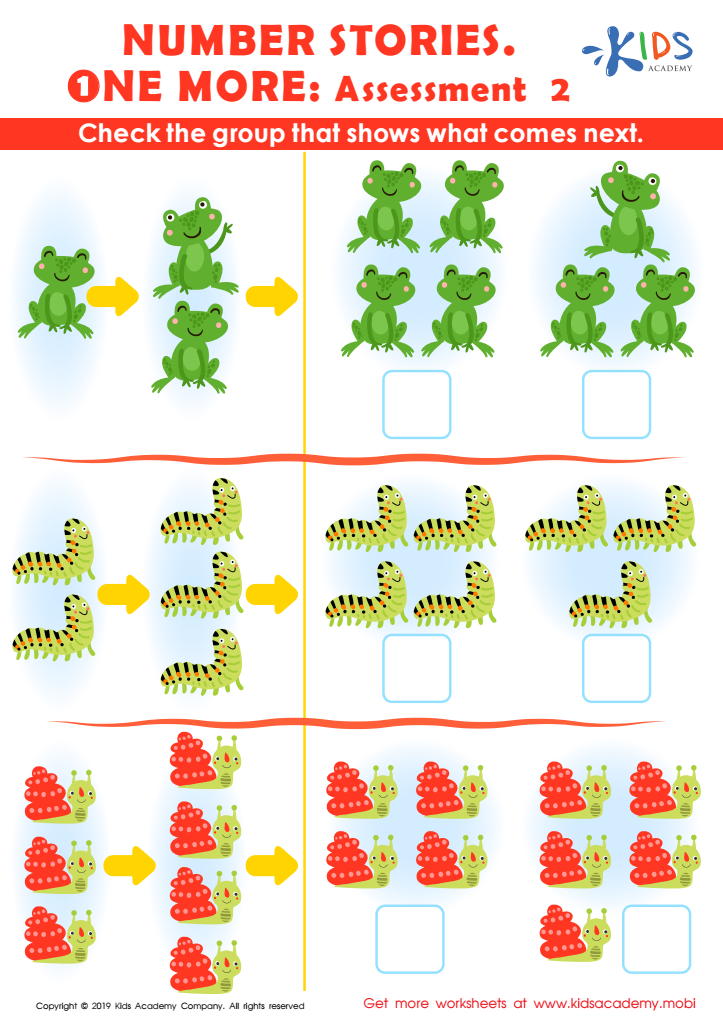
Number Stories One More - Assessment 2 Worksheet Preview

Number Stories One More – Assessment 2 Worksheet
Tracing is a great activity for kids. They can count and trace numbers, recognize animals, and practice drawing on dotted lines. It's entertaining and educational, helping children learn valuable counting skills.
Number Stories One More – Assessment 2 Worksheet
Worksheet
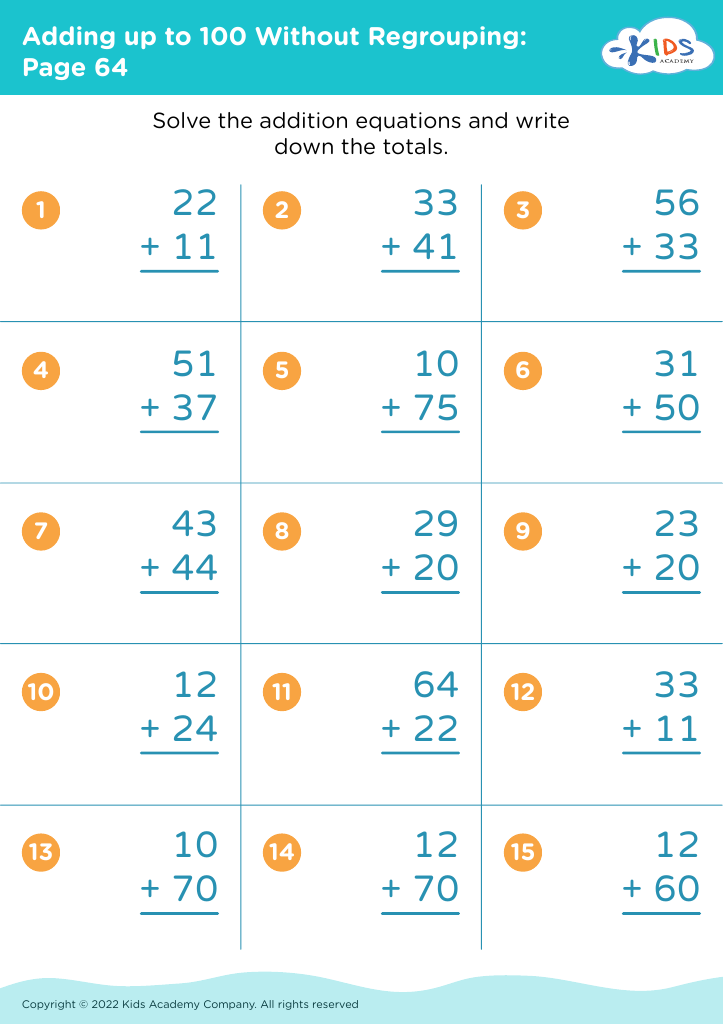
Adding up to 100 Without Regrouping: Page 64
Worksheet
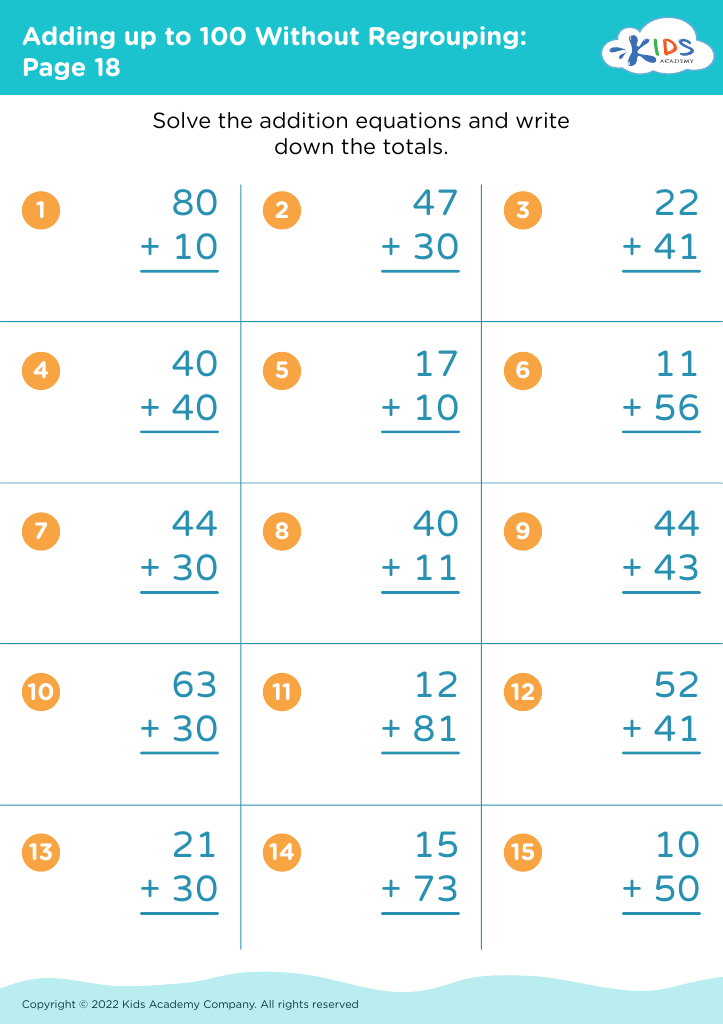
Adding up to 100 Without Regrouping: Page 18
Worksheet
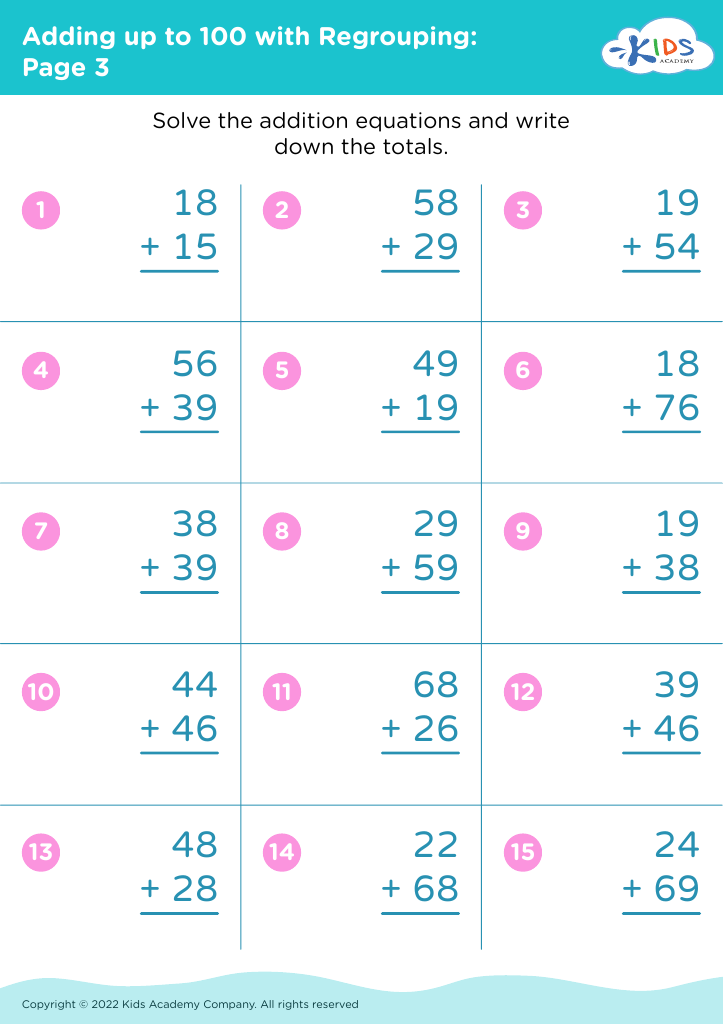
Adding up to 100 with Regrouping: Page 3
Worksheet
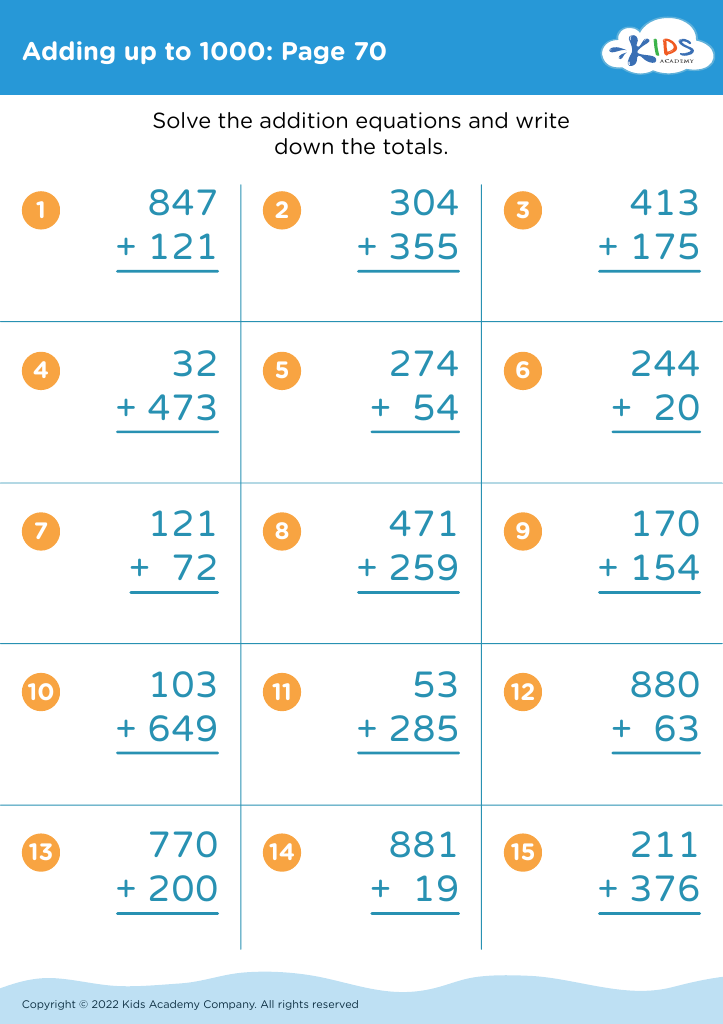
Adding up to 1000: Page 70

Adding up to 1000: Page 70

Adding up to 1000: Page 70
Worksheet
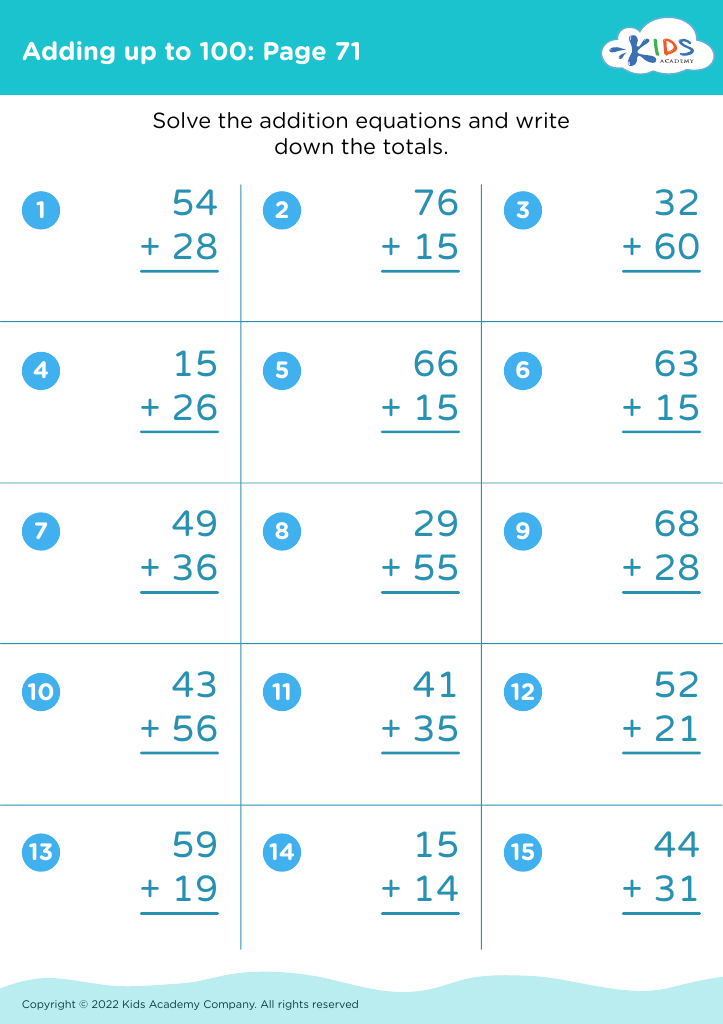
Adding up to 100: Page 71

Adding up to 100: Page 71

Adding up to 100: Page 71
Worksheet
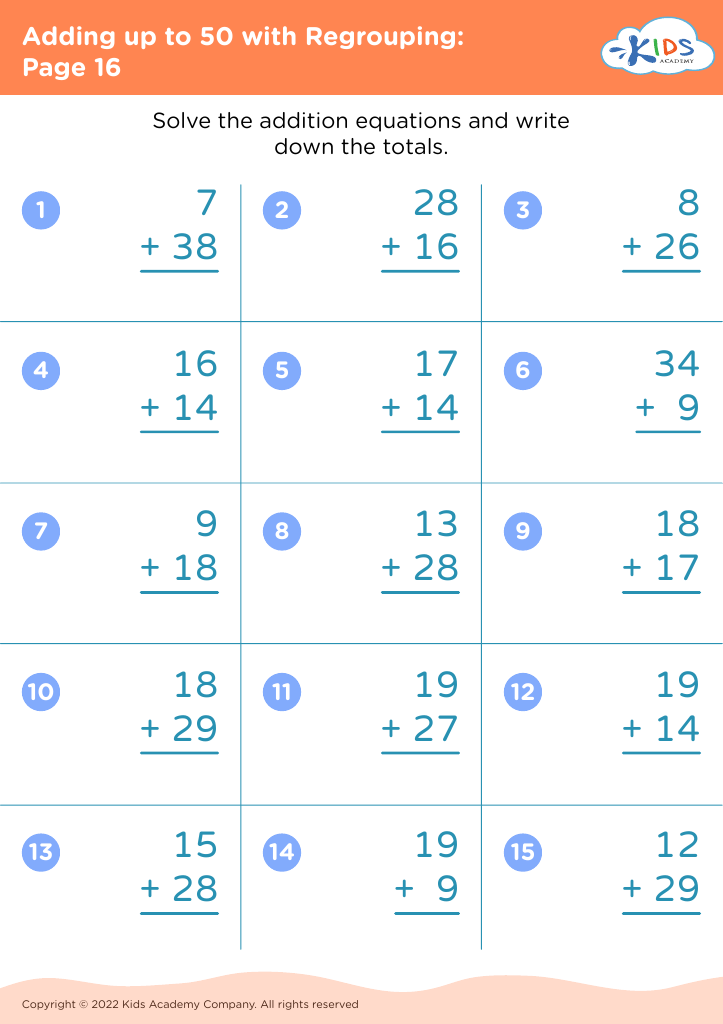
Adding up to 50 with Regrouping: Page 16
Worksheet
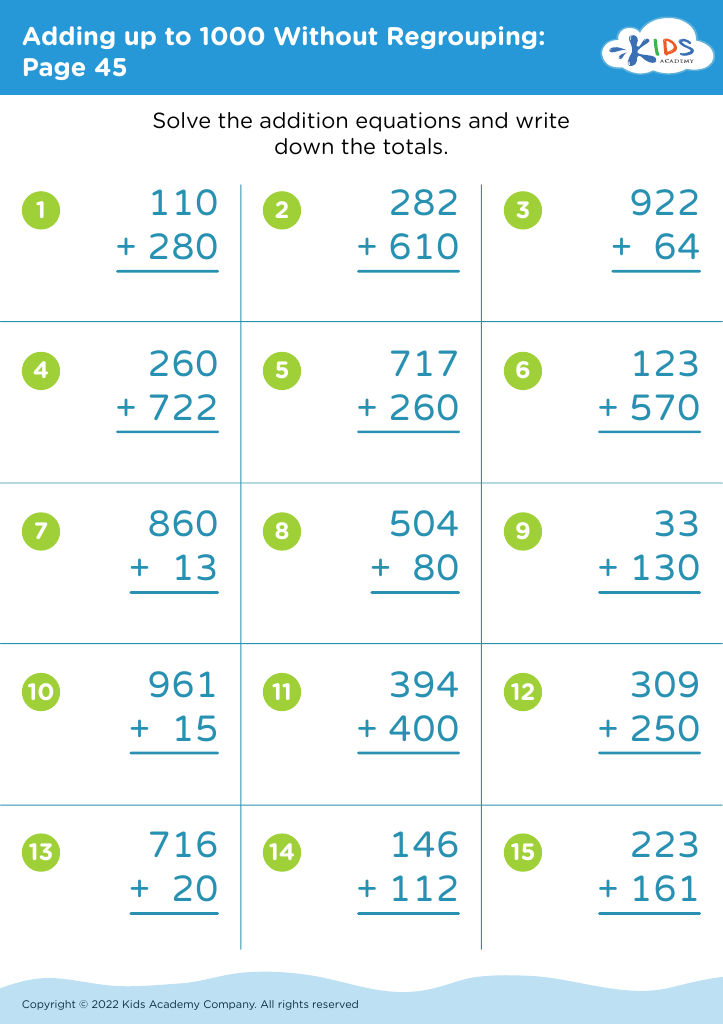
Adding up to 1000 Without Regrouping: Page 45
Worksheet


Problem-solving practice in addition is crucial for children ages 6 to 7 as it lays the foundation for their mathematical understanding and critical thinking skills. At this age, children transition from basic counting to performing simple addition, often using concrete objects to facilitate their learning. Engaging in problem-solving activities helps them to not only master arithmetic but also to understand the context in which addition is used in everyday life.

Parents and teachers should care about this practice because it fosters cognitive development and promotes confidence in math. Encouraging problem-solving allows children to use reasoning skills to approach math in a fun and engaging way, making it less intimidating. Solving real-world problems enhances their ability to think independently and work through challenges, important skills that extend beyond mathematics.

Moreover, as children interact with various problems, they learn to apply strategies, reason logically, and reflect on their solutions, all of which are essential capabilities in today’s complex world. By focusing on addition problem-solving practice, adults empower children to become enthusiastic learners, paving the way for future success in mathematics and other academic areas. Ultimately, nurturing strong problem-solving skills in early education sets the stage for continuous learning and resilience.