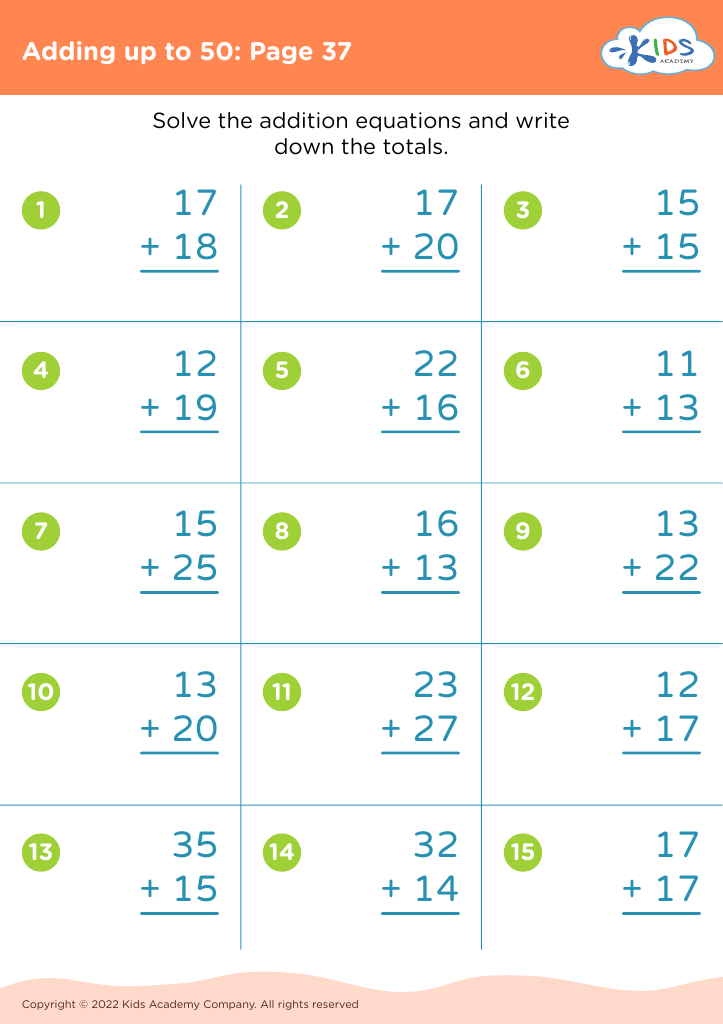
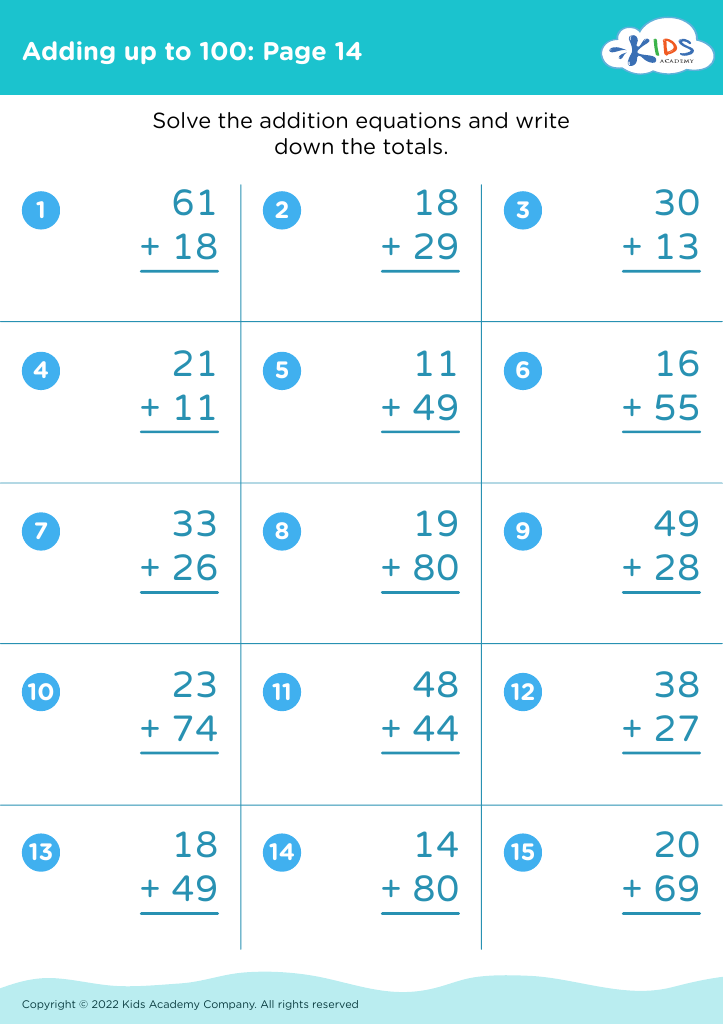
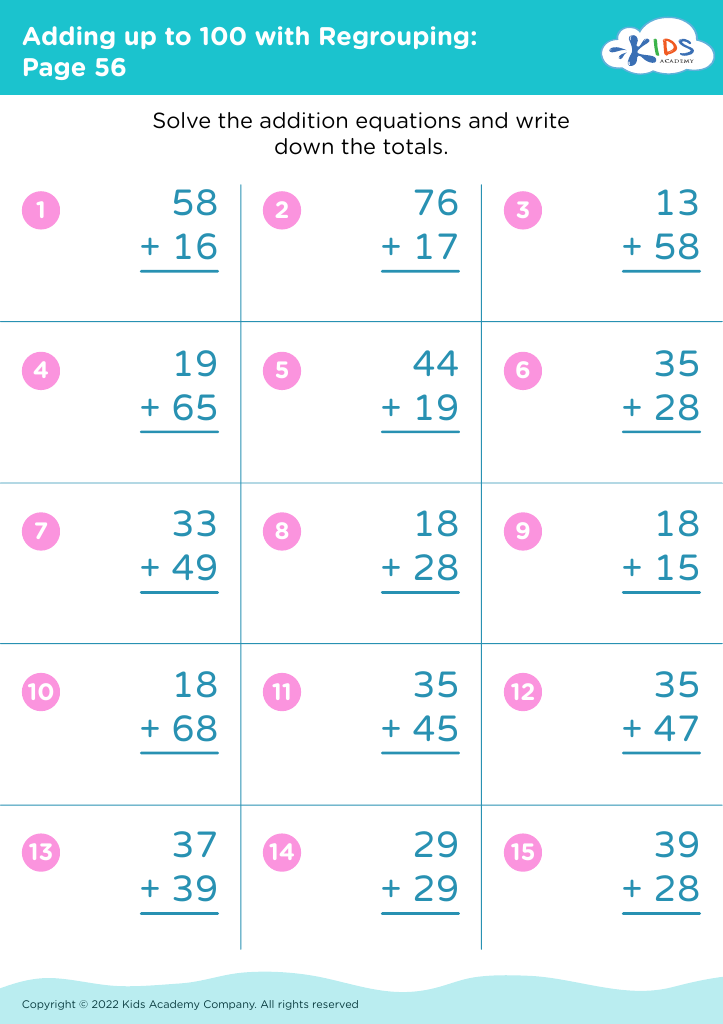
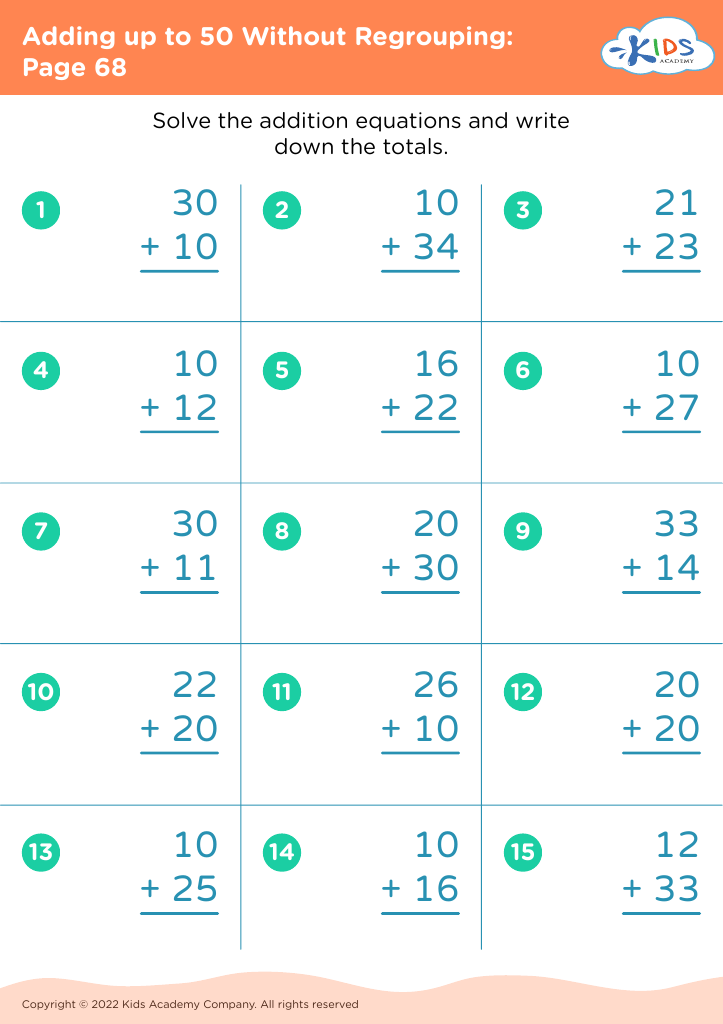







Recognizing shapes and being proficient in addition are fundamental mathematical skills for children aged 6-7. At this crucial developmental stage, children are building a foundation for critical thinking and problem-solving abilities. Understanding shapes fosters spatial awareness, helping children identify patterns and navigate their environment. By learning about different shapes, children are also introduced to concepts like symmetry and measurement, which are essential for advanced math later on.
Addition, on the other hand, is one of the cornerstones of arithmetic. Mastering addition enables students to tackle more complex mathematical operations, forming the basis for future learning in subjects like geometry, algebra, and even real-life applications like budgeting. As children engage with both shapes and addition, they enhance their cognitive skills, making connections between visual information and numerical concepts.
For parents and teachers, nurturing these skills promotes not only academic success but also boosts a child's confidence and enthusiasm for learning. Encouraging recognition of shapes and practicing addition through interactive games and activities will not only make learning enjoyable but will also cultivate a positive attitude towards math. This early investment in their education can have lasting effects throughout a child's academic career. Together, parents and teachers play a vital role in fostering these essential skills.








