
Understanding directions Addition Worksheets for Ages 6-7
3 filtered results
Difficulty Level
Grade
Age
-
From - To
Subject
Activity
Standards
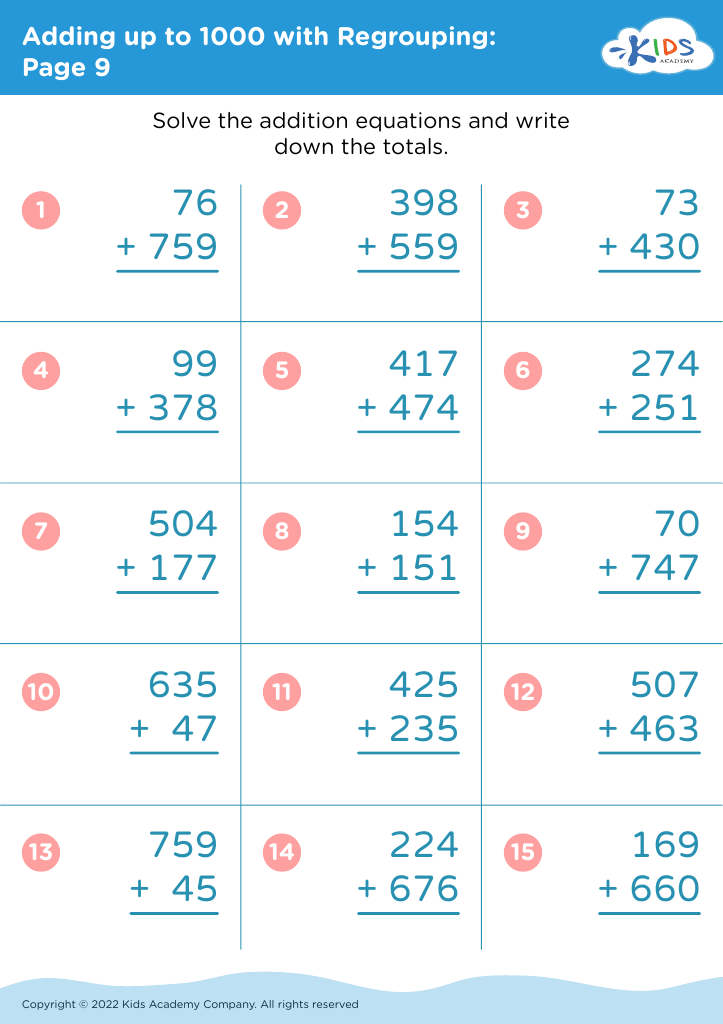
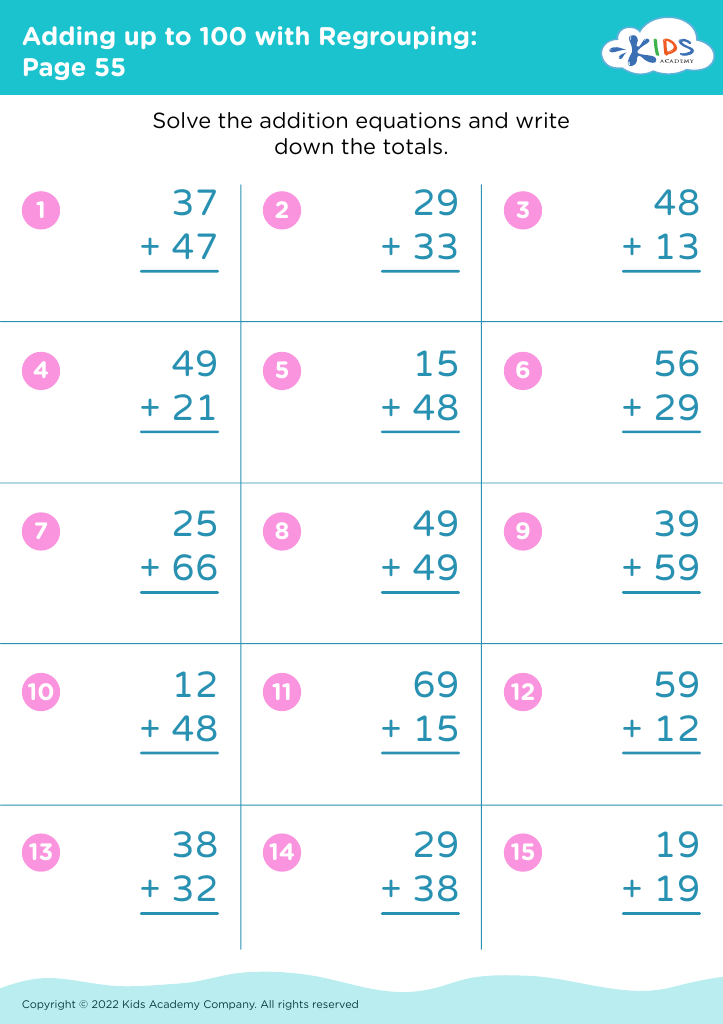
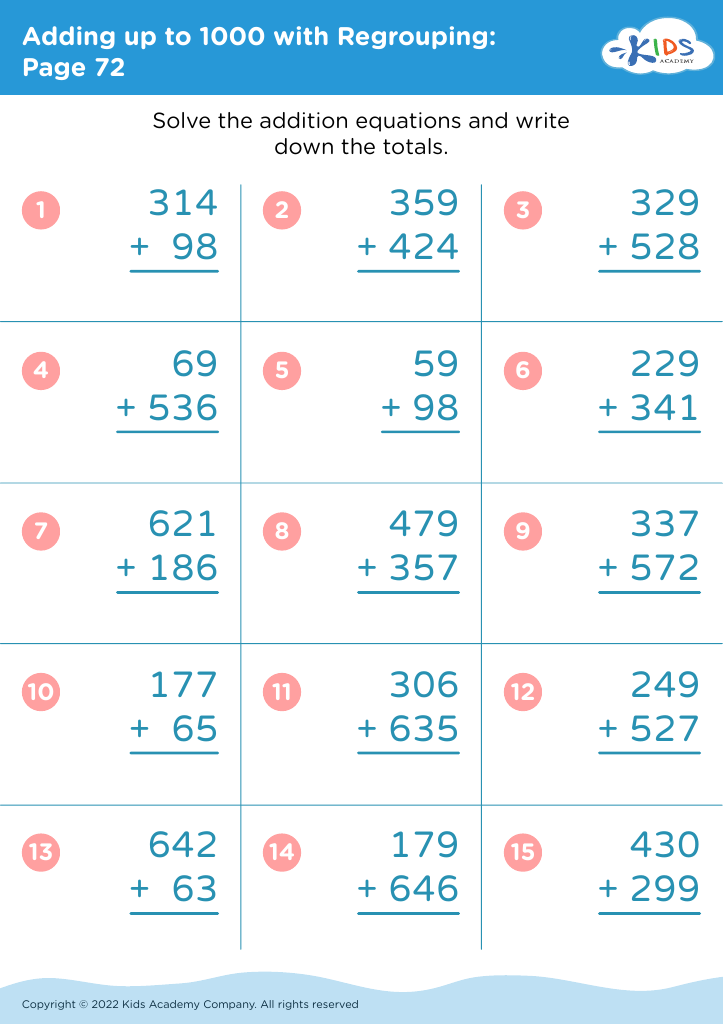
Welcome to our "Understanding Directions Addition Worksheets" for children aged 6-7! These engaging resources help young learners master addition skills while developing their ability to follow directions. Each worksheet features fun, colorful illustrations and clear instructions that support comprehension and confidence in math. As kids work through diverse problems, they will enhance critical thinking and problem-solving abilities. With a focus on making math enjoyable, these worksheets aim to transform learning into a fun, interactive experience. Perfect for home or classroom use, our addition worksheets are designed to foster a strong mathematical foundation. Discover the joy of learning through engaging activities today!
Favorites
With answer key
Interactive
Join Kids Academy for Free
Who is primarily going to use this learning content?








Understanding directions in addition for ages 6-7 is crucial for several reasons. At this age, children are developing foundational math skills that will serve as building blocks for future mathematical concepts. By grasping how to follow directions in addition, children enhance their problem-solving skills, which fosters critical thinking and logical reasoning.
Additionally, comprehending directions helps children build their confidence in mathematics. When they understand how to approach a problem and what is expected, they are more likely to engage positively with the subject. This confidence can reduce anxiety around math as they progress through their education.
Moreover, following directions accurately cultivates attention to detail, which is essential not just in math, but across all subjects. It encourages independent learning, allowing children to feel empowered in their abilities to solve problems without constant oversight.
For parents and teachers, fostering a strong understanding of directional cues can improve overall academic performance. Children who are adept at following instructions and completing addition problems gain critical skills that extend beyond math, preparing them for more complex concepts later on. Therefore, prioritizing direction comprehension in addition is vital for holistic educational development in the early years.








