Understanding number sequence Addition Worksheets for Ages 6-7
3 filtered results
-
From - To
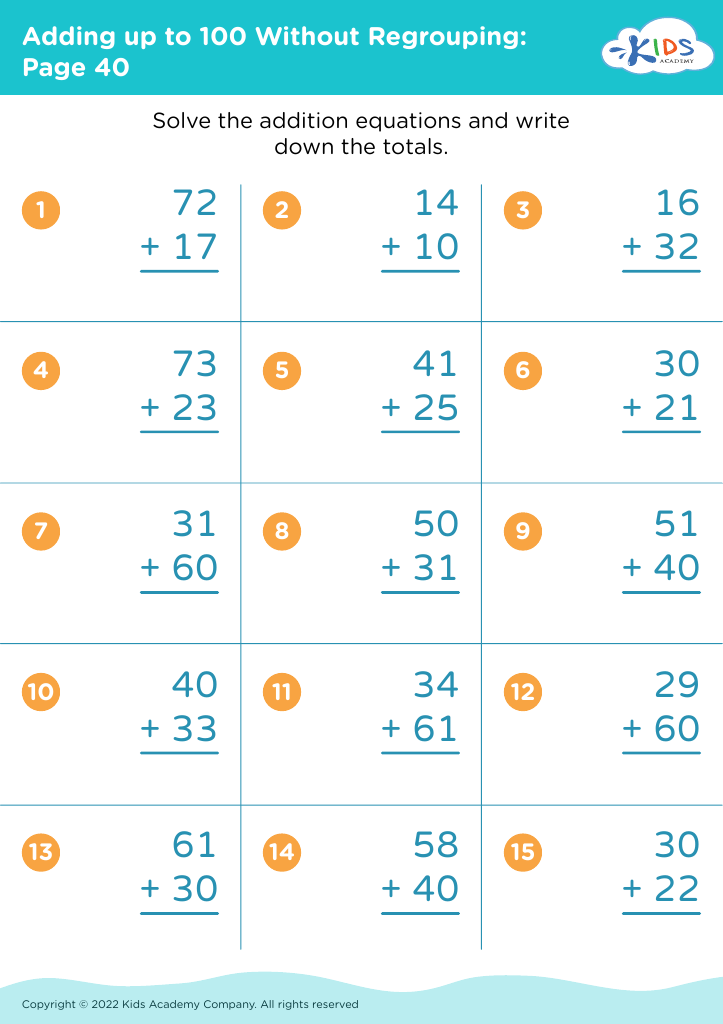
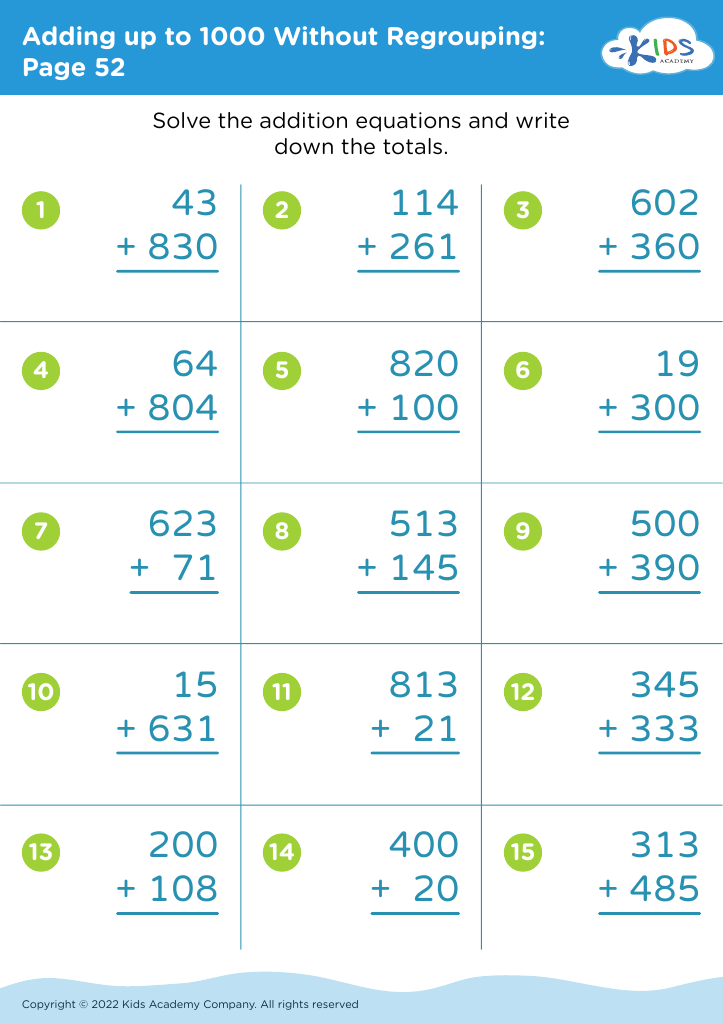
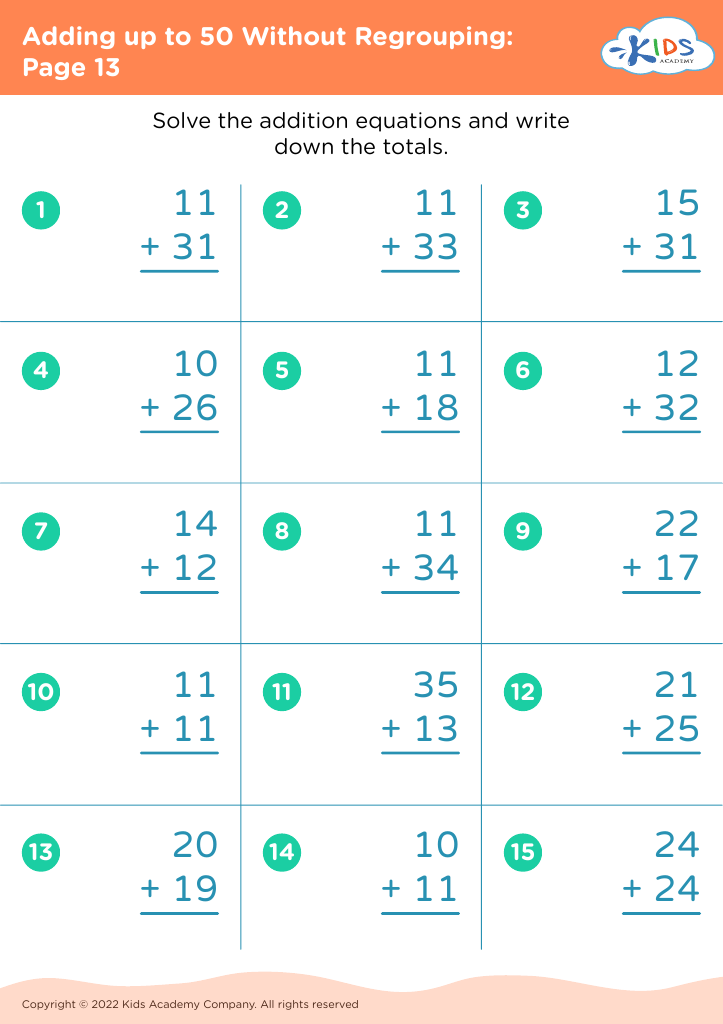
"Understanding Number Sequence Addition Worksheets for Ages 6-7" by Kids Academy are designed to enhance your child's arithmetic abilities through fun and engaging activities. These worksheets help young learners grasp the concept of number sequences, laying a strong foundation for addition skills. Each printable exercise challenges kids to fill in missing numbers, complete patterns, and solve simple addition problems within a structured sequence. With vibrant illustrations and a user-friendly format, these worksheets make learning math enjoyable and effective. Perfect for classroom use or home practice, they support early math proficiency crucial for future academic success.








Understanding number sequence addition is vital for children aged 6-7 as it lays the foundational skills crucial for more advanced mathematics. During this developmental stage, children begin forming their mathematical reasoning, and mastering basic arithmetic principles like addition enhances their ability to tackle complex problems later.
Firstly, grasping addition within number sequences helps children comprehend the importance of order and pattern, crucial in math and daily life. Recognizing patterns boosts cognitive skills, allowing kids to predict outcomes and apply logical thinking to various scenarios.
Secondly, a firm understanding of basic addition fosters confidence and enthusiasm for learning. Achieving proficiency in early math provides a sense of accomplishment that motivates children to tackle more challenging subjects without fear.
Thirdly, early math skills are directly linked to academic success beyond mathematics. Studies have shown that proficiency in early math predicts future achievement in subjects like science and engineering, as well as overall scholastic performance.
Lastly, we live in a numerically-driven world. Basic addition skills equip children for tasks they will encounter in everyday life, such as telling time, handling money, and solving practical problems.
Hence, parents and teachers should prioritize helping children understand number sequences and addition, as these skills are fundamental for both academic success and everyday efficiency.








