Vocabulary development Addition Worksheets for Ages 6-7
5 filtered results
-
From - To
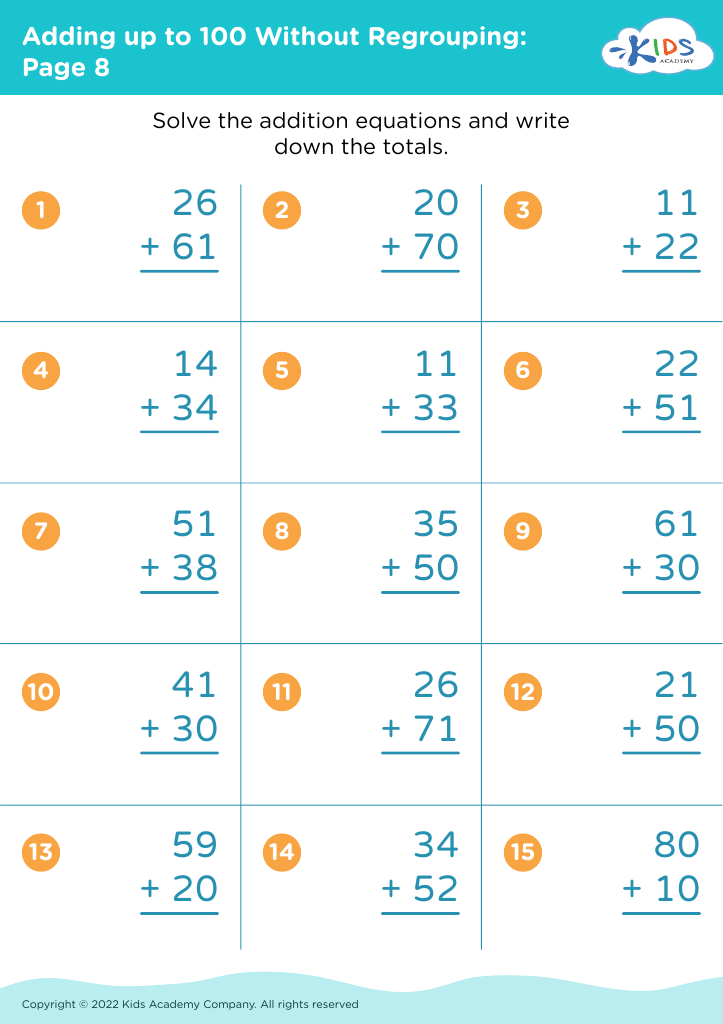
Enhance your child's vocabulary while mastering addition with our engaging worksheets designed specifically for ages 6-7! These carefully crafted activities combine mathematical skills with language development, making learning fun and interactive. Each worksheet encourages critical thinking as kids explore new words related to mathematics, fostering a love for both math and language. From simple word problems to vocabulary exercises, these worksheets are perfect for reinforcing essential skills at home or in the classroom. Make learning a delightful experience for your young mathematicians – download our Vocabulary Development Addition Worksheets today and watch them grow in confidence and competency!








Vocabulary development is crucial for children aged 6-7 as it is the foundation for effective communication and comprehension. At this age, children are frequently transitioning from learning to read to reading to learn. A robust vocabulary enhances their ability to understand texts, express their thoughts, and engage in meaningful conversations.
Parents and teachers should recognize that a rich vocabulary not only boosts academic performance but also fosters confidence and social skills. Children with extensive vocabularies can better articulate their ideas and feelings, leading to improved interactions with peers and adults. This skill is increasingly important as children work in groups and participate in collaborative learning experiences.
Moreover, vocabulary growth at this stage is directly linked to cognitive development. As children encounter new words, they are encouraged to think critically and make connections, which enhances their overall thinking skills. Activities that promote vocabulary, such as reading together, storytelling, and word games, can be both fun and educational.
In summary, prioritizing vocabulary development during ages 6-7 sets the groundwork for academic success, emotional intelligence, and effective communication, making it vital for both parents' and teachers' engagement in their children’s growth.








