
Critical thinking skills Math Worksheets for Ages 6-7
10 filtered results
Difficulty Level
Grade
Age
-
From - To
Subject
Activity
Standards
Our Critical Thinking Skills Math Worksheets for ages 6-7 are designed to engage young learners in meaningful problem-solving while building foundational math skills. These worksheets challenge kids to explore, reason, and make decisions through fun and educational activities. Each worksheet encourages logical thinking, pattern recognition, and analytical skills, essential for cognitive development. Perfect for first graders, our resources make math enjoyable, fostering a deeper understanding and love for the subject. Pave the way for academic success and confident learning with our expertly crafted worksheets tailored to stimulate young minds and enhance critical thinking skills.
Favorites
With answer key
Interactive
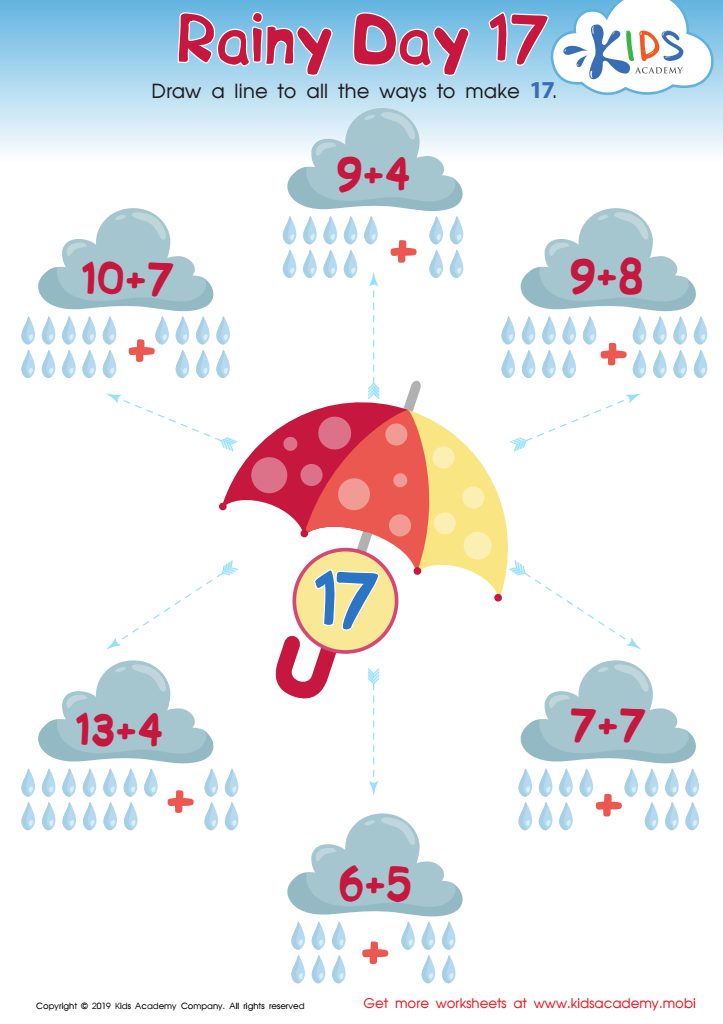
Rainy Day 17 Worksheet
Assist your kids with the 6 equations given. Each cloud displays the sum of two numbers, some of which make 17. Guide them to figure out the total of both numbers when added and draw a line to the umbrella in the center to illustrate the different ways to make 17. This activity will sharpen their addition skills.
 Assign to My Students
Rainy Day 17 Worksheet
Worksheet
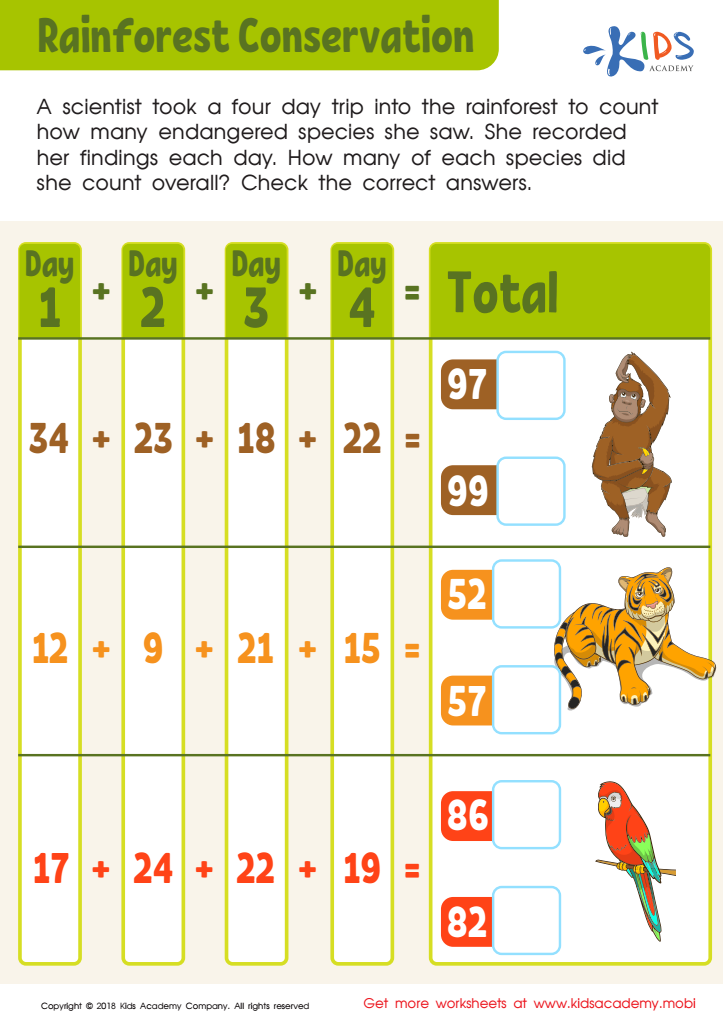
Rainforest Conservation Worksheet
Explain to your child what a rainforest is and why it's important. A scientist took a four-day trip to count endangered species. Let your child count how many of each species were seen in total. Check the answers and help them understand.
Rainforest Conservation Worksheet
Worksheet
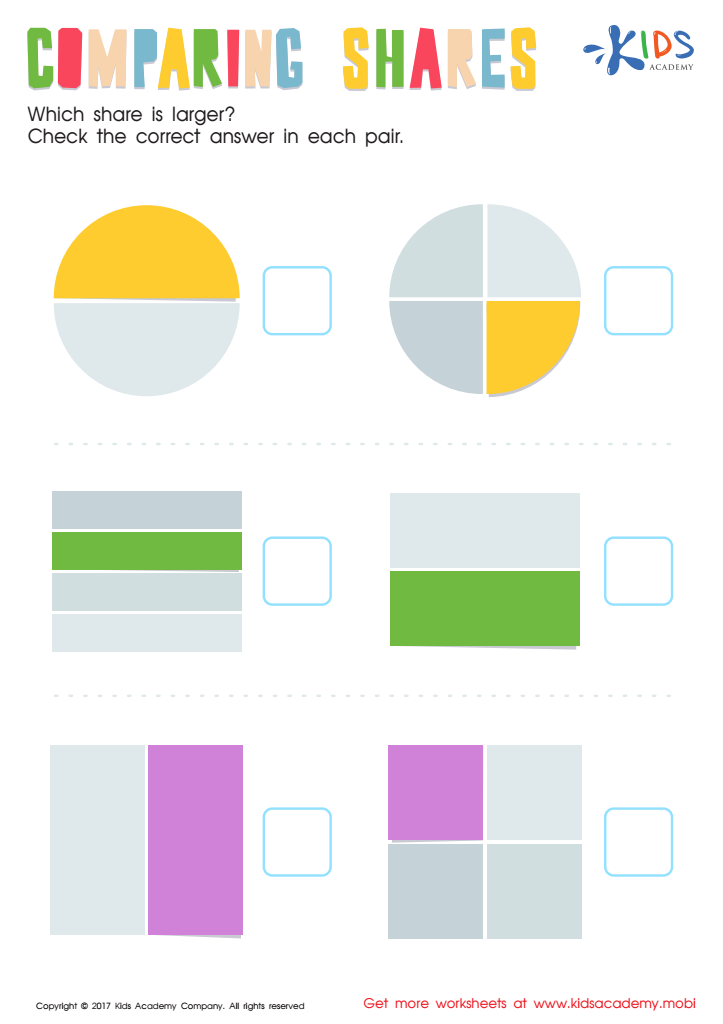
Comparing Shares Worksheet
Can your students identify and draw shapes correctly? If so, this exercise may be too easy. For those who are still learning, extra help may be needed. The worksheet requires students to select which shape is larger in each pair; circles and squares are included.
Comparing Shares Worksheet
Worksheet
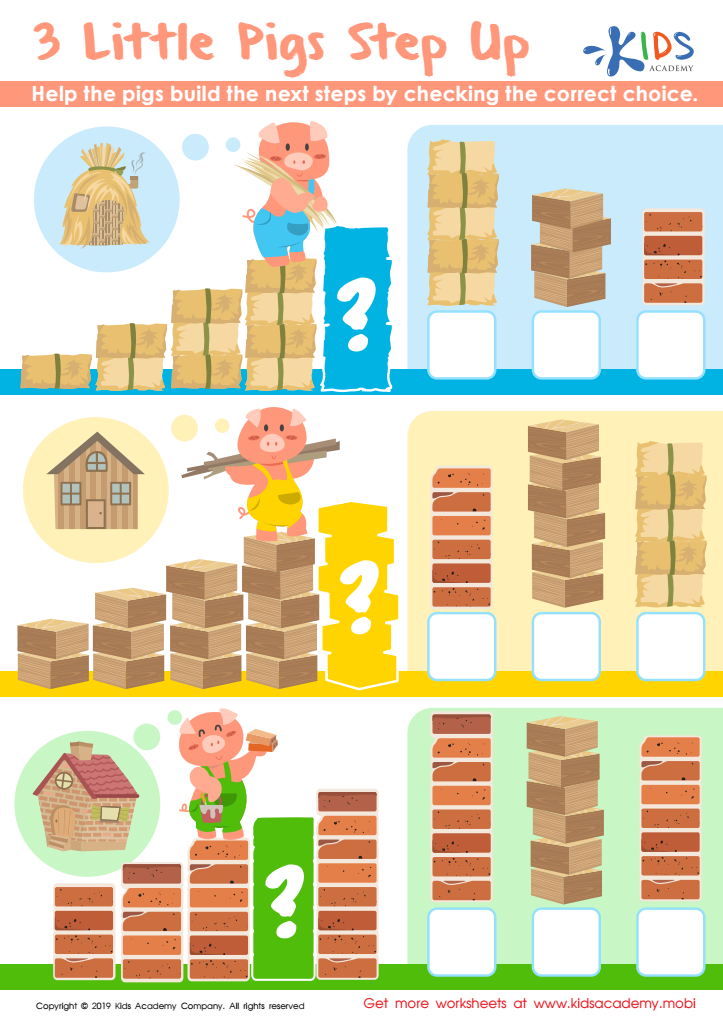
3 Little Pigs Step Up Worksheet
Test your kids' knowledge of the three little pigs' story. Ask them to tell you the important parts and then look at the pictures in this worksheet. Can they identify what's going on? They'll need to count the materials and help build the next steps by choosing the right option.
3 Little Pigs Step Up Worksheet
Worksheet
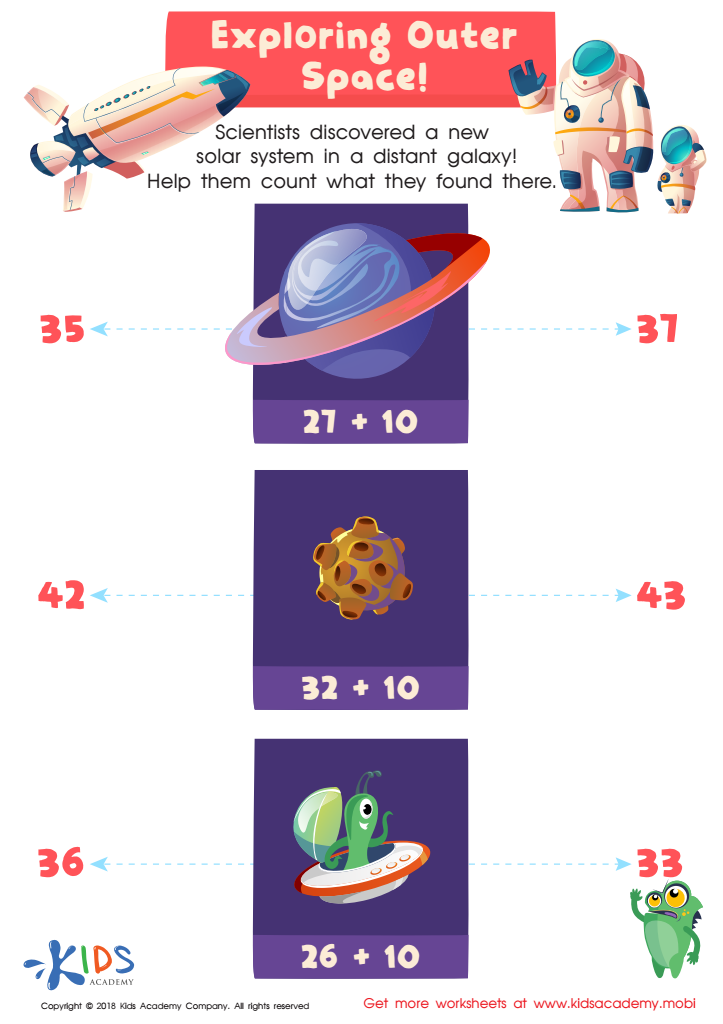
Exploring Outer Space Worksheet
Outer space is an intriguing world. Physics behave differently than on Earth, and much remains to be uncovered. In this worksheet, scientists have located a new solar system in a distant galaxy. Explain to your kids what these two things are, then have them help count the findings. Solve the math problems, then link the lines to the right answer.
Exploring Outer Space Worksheet
Worksheet
Join Kids Academy for Free
Who is primarily going to use this learning content?


.jpg)





Parents and teachers should prioritize developing critical thinking skills in math for children aged 6-7 because these skills are fundamental to their overall cognitive development and future academic success. At this formative age, critical thinking helps children understand the "why" and "how" behind mathematical concepts rather than just memorizing facts or procedures. This deeper understanding fosters problem-solving abilities, enabling children to approach unfamiliar problems with confidence and flexibility.
Critical thinking in math cultivates logical reasoning, enabling kids to make connections between different ideas, recognize patterns, and develop a strong number sense. It prepares them for higher-level math in later grades where concepts become more complex and require a robust foundational understanding.
Moreover, these skills extend beyond mathematics. Critical thinking promotes independent, reflective thought processes, improving children's abilities to analyze information and make reasoned decisions in everyday life. This is crucial for developing autonomy and responsibility as they grow older.
For teachers, incorporating critical thinking into math lessons aligns with modern educational standards that emphasize inquiry-based learning, rather than rote memorization. For parents, it means supporting children in becoming lifelong learners who are not just capable in math but are also prepared to tackle challenges in various disciplines effectively and creatively.








