Developing observational skills Math Worksheets for Ages 6-7
3 filtered results
-
From - To
Enhance your child's learning experience with our "Developing Observational Skills Math Worksheets" tailored for ages 6-7. These engaging worksheets are designed to help young learners sharpen their observation abilities while applying foundational math concepts. Children will explore patterns, comparisons, and details through a variety of fun activities that encourage critical thinking and analytical skills. By observing carefully, they will improve their mathematical comprehension and problem-solving strategies. Perfect for at-home practice or classroom use, these worksheets provide a comprehensive approach to developing essential skills required for future success in mathematics and beyond. Unlock your child's potential today!
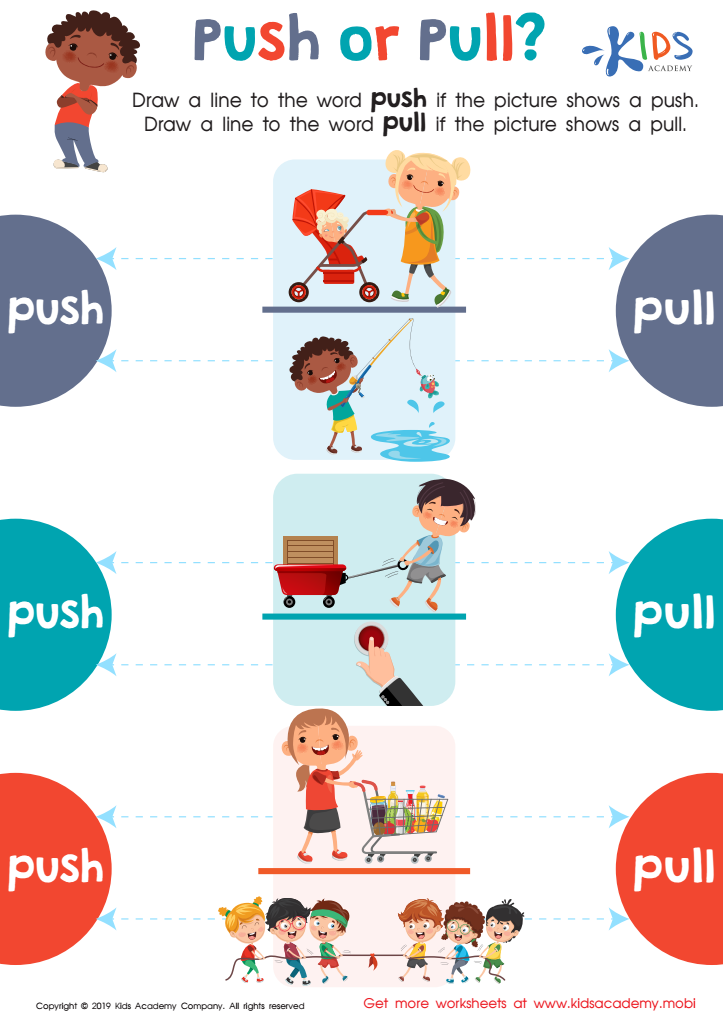
Push or Pull? Worksheet
 Assign to My Students
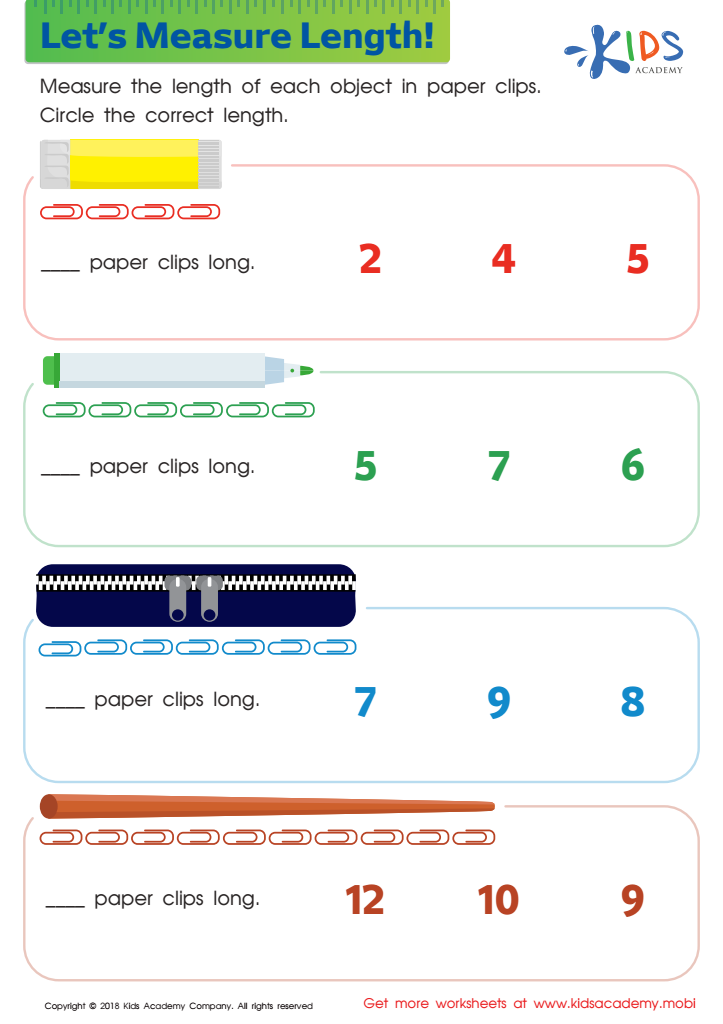
Lets Measure Length Worksheet








Developing observational skills in math for children aged 6-7 is essential as it lays the foundation for critical thinking and problem-solving abilities. At this age, children are naturally curious and eager to explore their surroundings. When parents and teachers emphasize observational skills in math, they help children learn to notice patterns, relationships, and details in numbers, shapes, and measurements.
Observational skills enhance a child’s ability to make connections within mathematical concepts, fostering a deeper understanding of subjects such as geometry and measurement. For example, observing shapes in everyday objects develops spatial awareness, while noticing number patterns reinforces arithmetic skills.
Additionally, observational skills enrich children's learning experiences by engaging them in hands-on activities, which can lead to increased motivation and a positive attitude towards math. By encouraging them to watch for changes, count objects, or predict outcomes, parents and teachers promote active learning and inquiry, skills crucial for lifelong learning.
Incorporating observational tasks in early math experiences not only strengthens academic competencies but also nurtures creativity and imagination. As children learn to observe closely, they learn to apply their mathematical knowledge practically—setting a solid groundwork for future learning success.








