
Improving observation skills Math Worksheets for Ages 6-7
6 filtered results
Difficulty Level
Grade
Age
-
From - To
Subject
Activity
Standards
Enhance your child's math abilities and critical thinking with engaging observation skills math worksheets, designed for ages 6-7! Our specially curated sheets stimulate young minds to identify patterns, spot differences, and make connections between numbers and objects. These exercises not only strengthen foundational math concepts but also boost attention to detail and problem-solving skills. Perfect for classroom use or at-home practice, our fun and educational prints make learning enjoyable. Help your child develop the keen observation needed for academic success through dynamic and interactive content. Visit Kids Academy for instant access and get started today!
Favorites
With answer key
Interactive
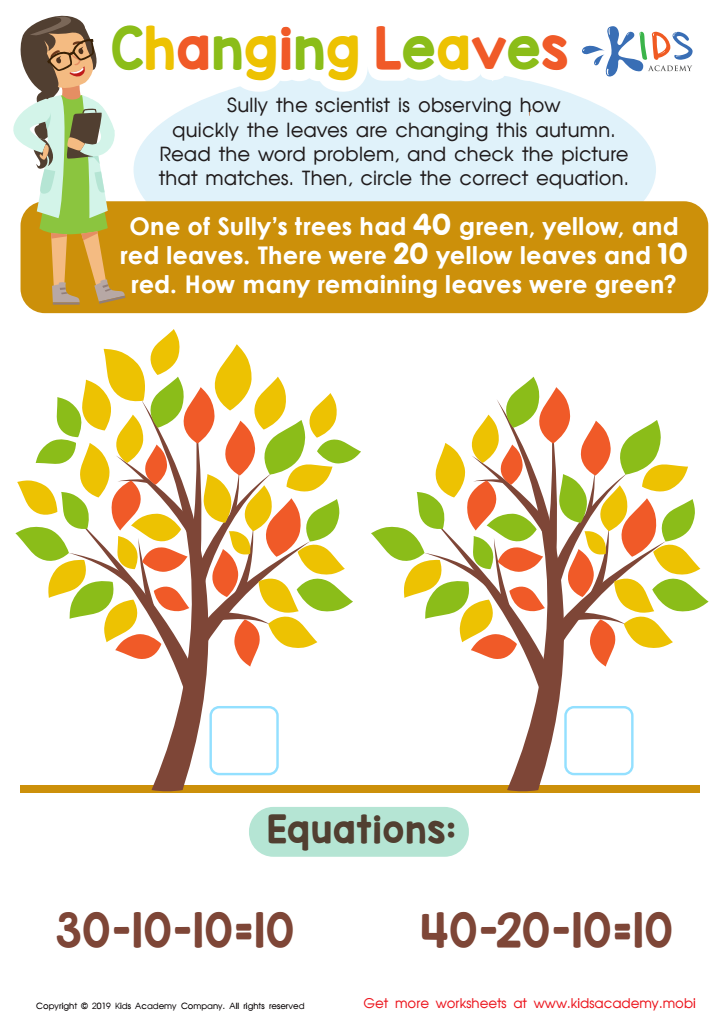
Changing Leaves Worksheet
Fall is the perfect time for kids to help Sully the scientist observe the changing leaves! Download the free worksheet with a subtraction word problem and bolded info to find the matching equation and picture. It's a fun way for your tots to learn while they admire the reddening, yellowing, and orange leaves.
 Assign to My Students
Changing Leaves Worksheet
Worksheet
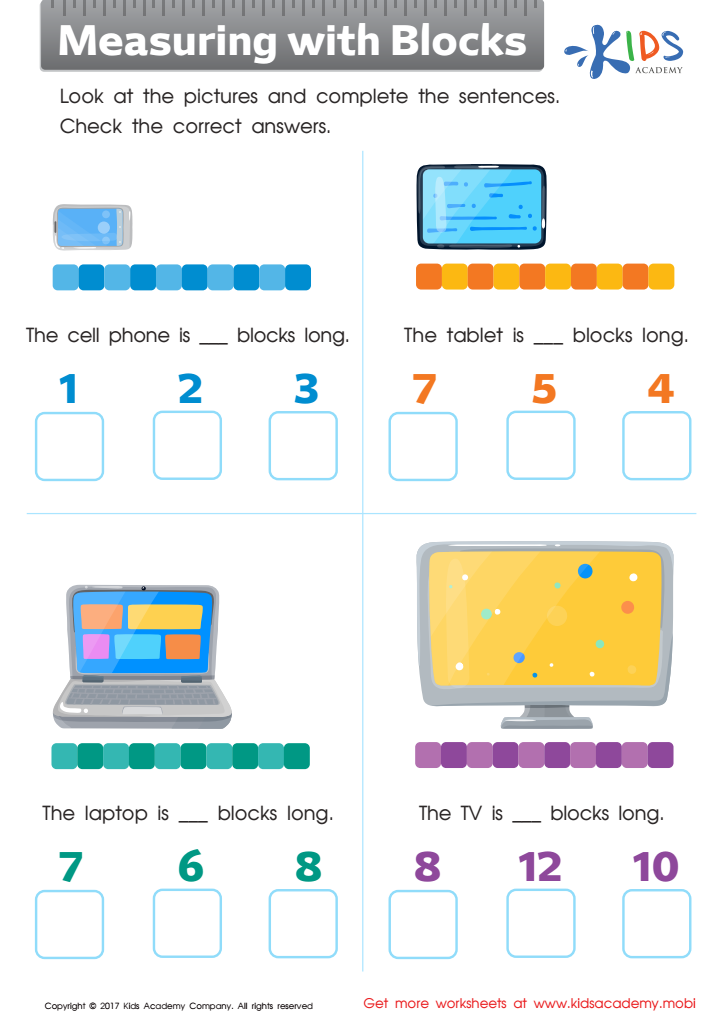
Measuring with Blocks Worksheet
Help your child get ready for math success with this Kids Academy worksheet. It provides colorful blocks to practice measuring objects. Coach them to count the boxes under each picture, then check the box with the right answer. It's a fun way to get acquainted with rulers!
Measuring with Blocks Worksheet
Worksheet
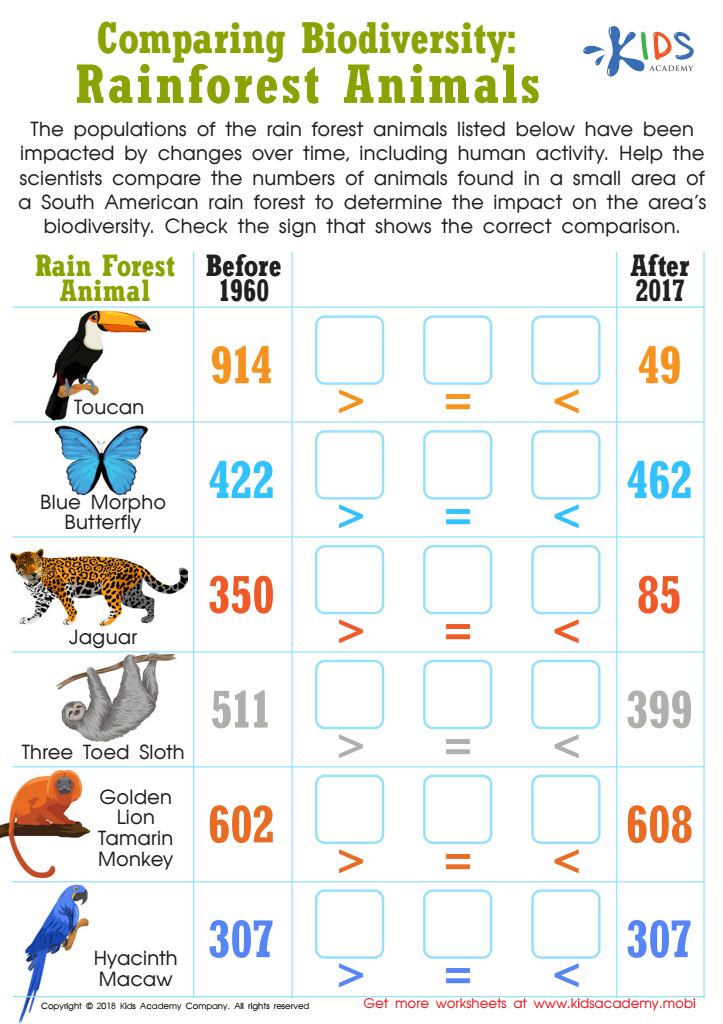
Comparing Biodiversity: Rainforest Animals Worksheet
This dynamic PDF worksheet combines fun and education. Kids will explore rainforest animals and biodiversity, comparing numbers from 1960 to 2017. They'll strengthen number sense and reasoning skills while learning about area biodiversity and its effects. A perfect mix of math and social science!
Comparing Biodiversity: Rainforest Animals Worksheet
Worksheet
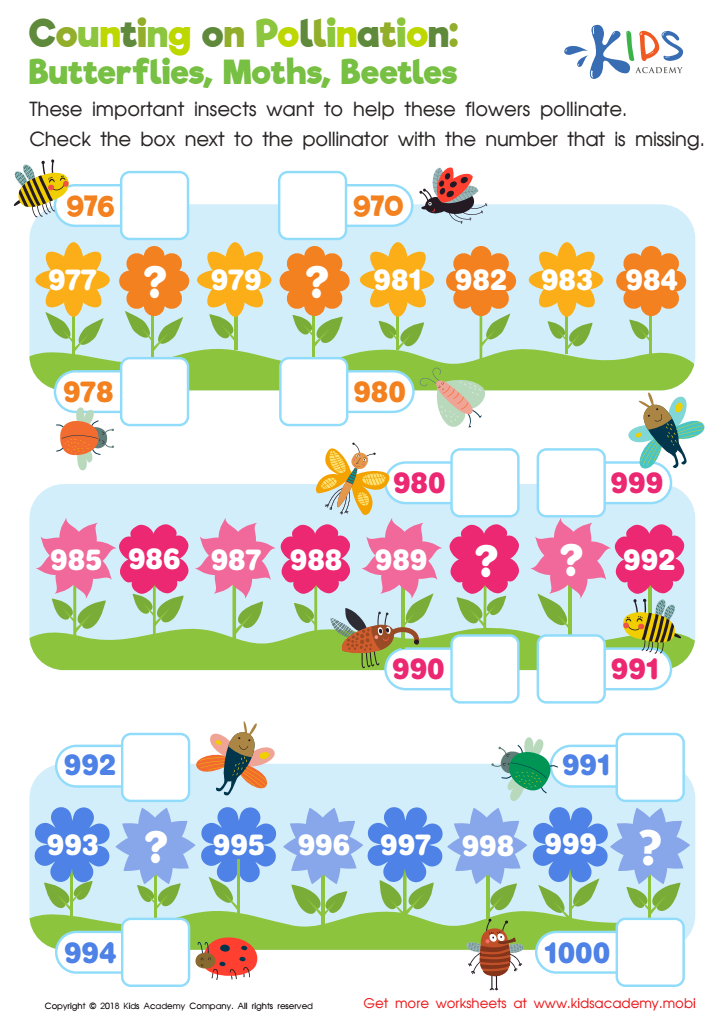
Counting on Pollination: Butterflies, Moths, Beetles Worksheet
A number line can help boost computation accuracy and efficiency. It can also be used with more advanced numbers. Help your child practice by having them identify missing numbers in sequences. This fun worksheet lets them help the pollinators in the process, as they strengthen their number sense.
Counting on Pollination: Butterflies, Moths, Beetles Worksheet
Worksheet
Join Kids Academy for Free
Who is primarily going to use this learning content?





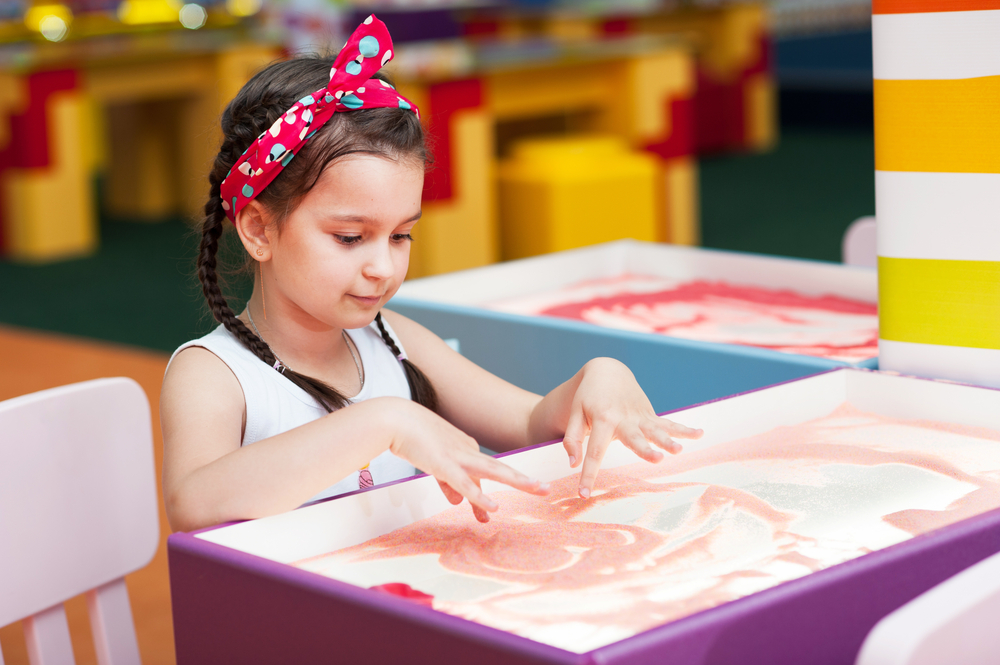


Improving observation skills in math for children ages 6-7 is essential for their foundational development and long-term academic success. During this formative stage, young learners are beginning to understand numbers, patterns, and basic mathematical concepts. Observation skills are crucial for recognizing these patterns and relationships. For example, noticing the similarities and differences in shapes or identifying number sequences helps build critical thinking abilities and promotes a deeper understanding of math.
When parents and teachers emphasize observation, they are nurturing a child's natural curiosity and encouraging an investigative mindset. This not only aids in comprehending mathematical concepts but also enhances problem-solving skills. For young learners, math often revolves around visual aids and hands-on activities. By honing observation skills, children are better equipped to interpret visual information, leading to a stronger grasp of topics like addition, subtraction, and geometry.
Moreover, strong observational abilities align with broader cognitive development. Children who are observant are more likely to notice details, ask questions, and make connections between different subjects. This holistic approach to learning promotes greater engagement and a positive attitude toward education.
In summary, focusing on observation skills in early math education sets the groundwork for future academic achievement and cultivates a versatile and inquisitive mind.








