Real-world application Math Worksheets for Ages 6-7
3 filtered results
-
From - To
Discover the joy of learning with our Real-World Application Math Worksheets for ages 6-7! Our expertly designed worksheets bring everyday scenarios into math practice, helping children understand how math is used in real life. From counting money to measuring objects, these exercises enhance problem-solving skills and practical knowledge, making math both fun and relevant. Each worksheet is crafted to foster confidence and interest in young learners, turning abstract concepts into engaging activities. Boost your child's mathematical abilities and everyday decision-making skills with our easy-to-print, educational resources. Perfect for classroom use or homeschooling.
I used a tone that would resonate with educators and parents, focusing on practical learning and real-world applications, as seen on the Kids Academy website.
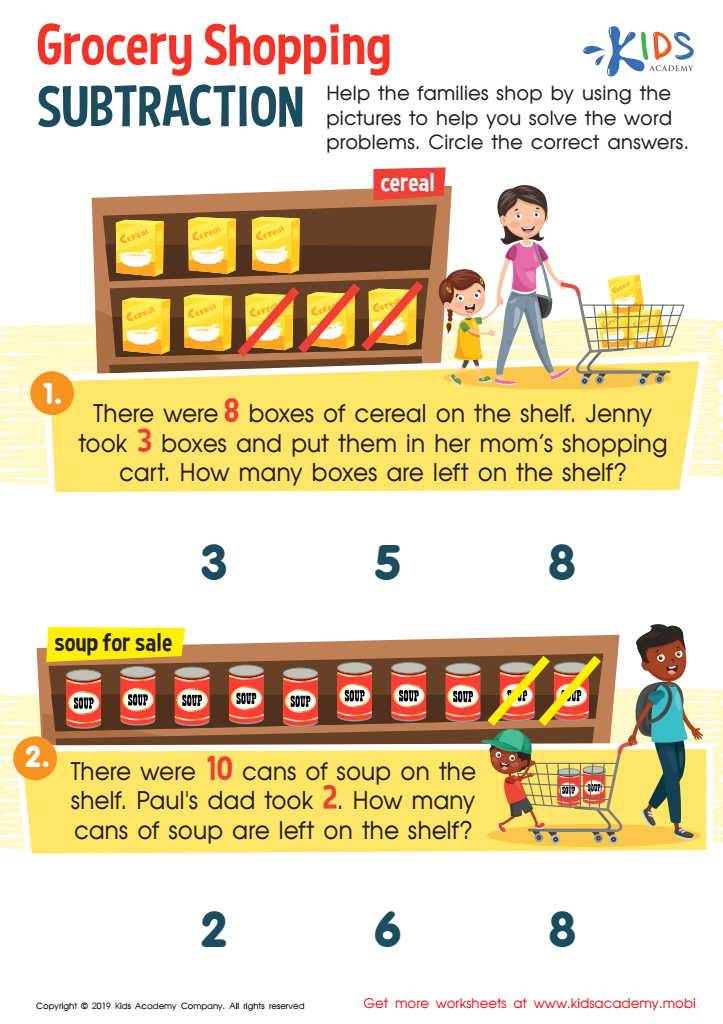
Grocery Shopping Subtraction Worksheet
 Assign to My Students
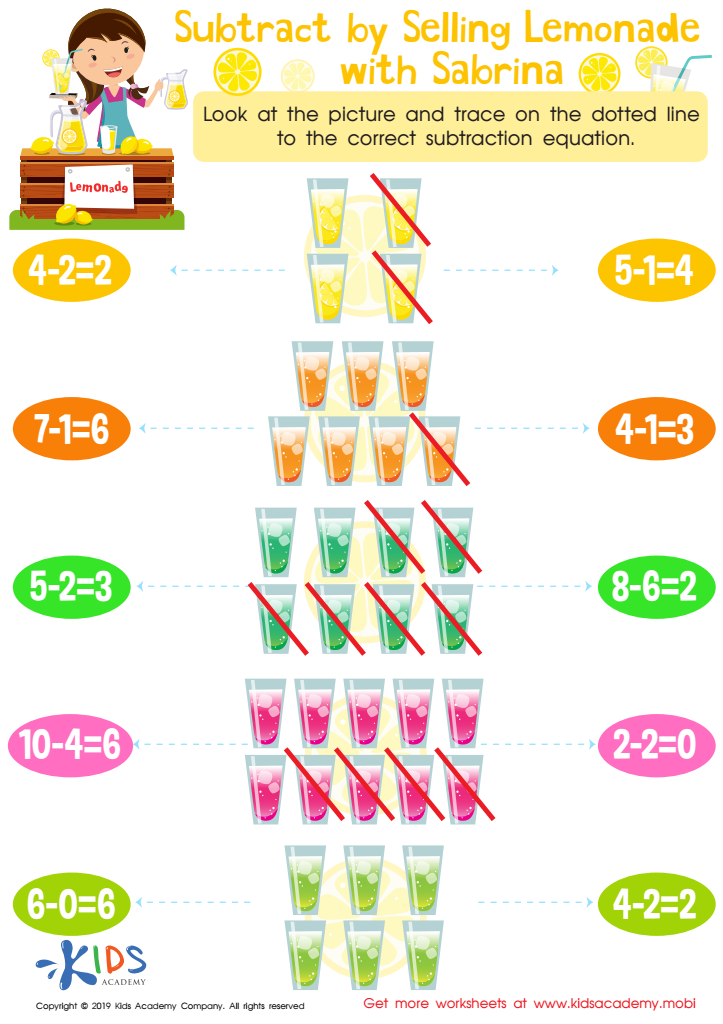
Subtract by Selling Lemonade with Sabrina Worksheet
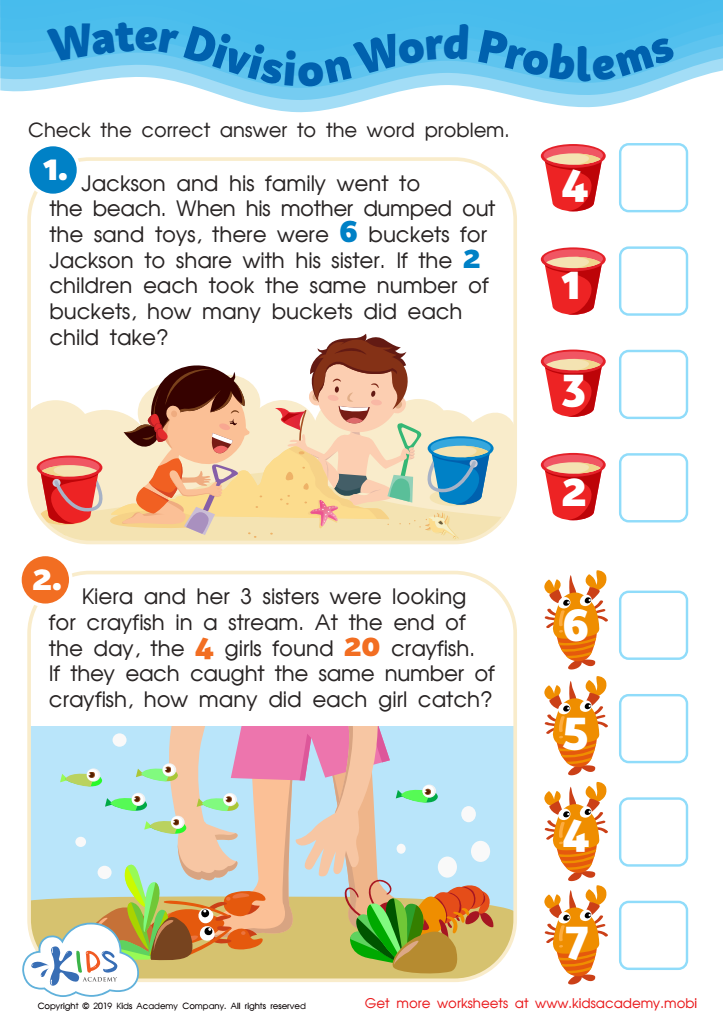
Water Division Word Problems Worksheet








At ages 6-7, children are naturally curious and eager to make sense of the world around them. Real-world application of math helps engage this curiosity and makes learning both meaningful and practical. When children see how math relates to their everyday lives, they become more motivated and less anxious about tackling mathematical problems. This early grasp of math concepts can build a strong foundation for future learning.
For parents and teachers, integrating real-world math applications into lessons provides numerous benefits. First, it enhances problem-solving skills. When children encounter math in real tasks—like measuring ingredients for a recipe or counting change—they develop the ability to think critically and solve problems independently. Second, it deepens their understanding, as concepts are reinforced through practical use rather than rote memorization.
Additionally, real-world math fosters a growth mindset. When children succeed in applying math to real situations, their confidence grows. This enhanced self-efficacy makes them more likely to persist in challenging tasks in the future. Overall, bridging academic learning with everyday experiences not only makes math enjoyable but equips youngsters with essential life skills, setting them up for academic success and informed decision-making. Essentially, it transforms a subject often viewed as abstract into a tangible, essential part of their world.








