
Understanding adjectives Math Worksheets for Ages 6-7
6 filtered results
Difficulty Level
Grade
Age
-
From - To
Subject
Activity
Standards
Discover our engaging "Understanding Adjectives Math Worksheets" tailored for children aged 6-7! These printable resources combine the excitement of math with language skills, helping young learners identify and use adjectives in various contexts. With interactive activities designed to enhance their understanding, students will explore descriptive words through fun math-based challenges. These worksheets encourage critical thinking, improve vocabulary, and reinforce mathematical concepts in an enjoyable way. Plus, they are perfect for classroom or at-home learning environments. Get started today and help your child master the use of adjectives while boosting their math proficiency! Ideal for early grade teachers and parents alike.
Favorites
With answer key
Interactive
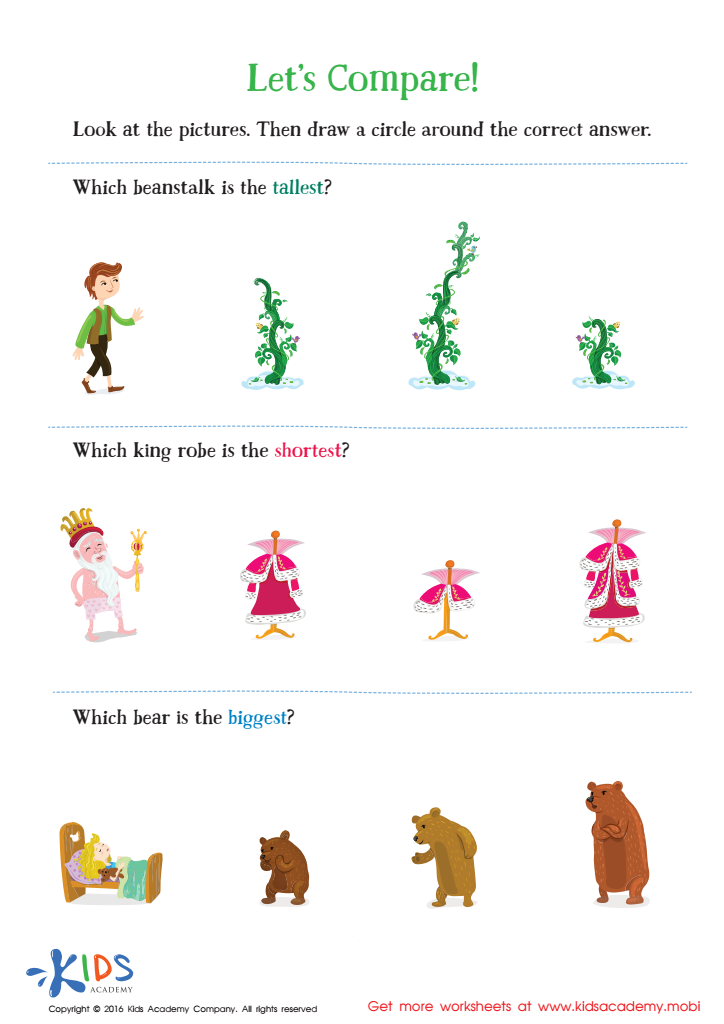
Fairy Tale Worksheet: Let's Compare
Preschoolers need to recognize different sizes of objects. This worksheet combines fun fairy tales with size practice, helping them read, problem solve, and sort through pictures. Your child will love the images and be eager to complete it. Enhance their learning by talking about the tales to build comprehension.
 Assign to My Students
Fairy Tale Worksheet: Let's Compare
Worksheet
Join Kids Academy for Free
Who is primarily going to use this learning content?




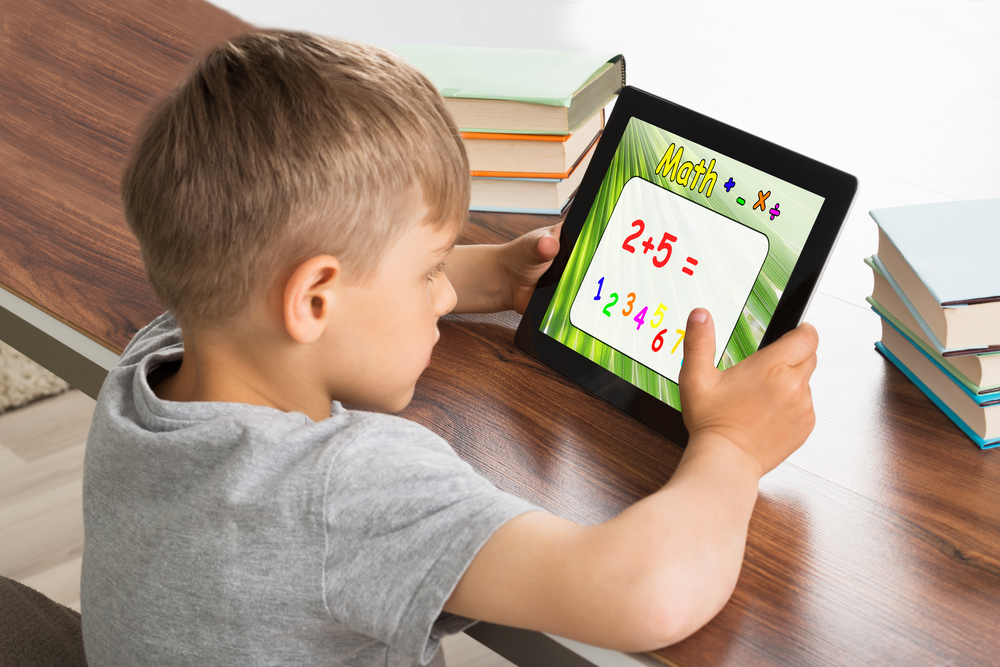


Understanding adjectives in the context of math for children ages 6-7 is crucial as it bolsters their cognitive and language skills while enhancing their mathematical understanding. Adjectives allow children to describe, compare, and categorize quantities, shapes, and sizes, resulting in a richer grasp of mathematical concepts fundamental to their learning journey.
For example, when discussing geometric shapes, adjectives help children distinguish between attributes such as "small" and "large" or "round" and "square," facilitating better visualization and comprehension. This descriptive language promotes critical thinking, enabling them to articulate their reasoning and observations more clearly.
Moreover, integrating adjectives into math activities can make learning more engaging. When children use descriptive language, it transforms abstract concepts into relatable ideas, making math feel more accessible and fun. For parents and teachers, fostering this skill helps children become more proficient communicators, setting them up for success across all subjects.
Ultimately, paying attention to how children understand and use adjectives in math supports their overall language development, nurtures their enthusiasm for learning, and builds a solid foundation for advanced mathematical thinking in the future. This dual focus enriches the educational experience, making it both meaningful and applicable in everyday life.








