Understanding equality Math Worksheets for Ages 6-7
3 filtered results
-
From - To
Unlock math mastery with our "Understanding Equality Math Worksheets for Ages 6-7." These printable worksheets make learning fun and engaging, helping young learners grasp the concept of equality in math. Explore activities designed to enhance critical thinking and problem-solving skills, ensuring a solid foundation in fundamental math principles. Our worksheets are expertly crafted to meet educational standards, offering varied exercises to keep kids interested and motivated. Ideal for classroom use or at-home practice, our worksheets aim to foster a love for math in early learners, guiding them towards academic success. Visit our page to download and start learning today!
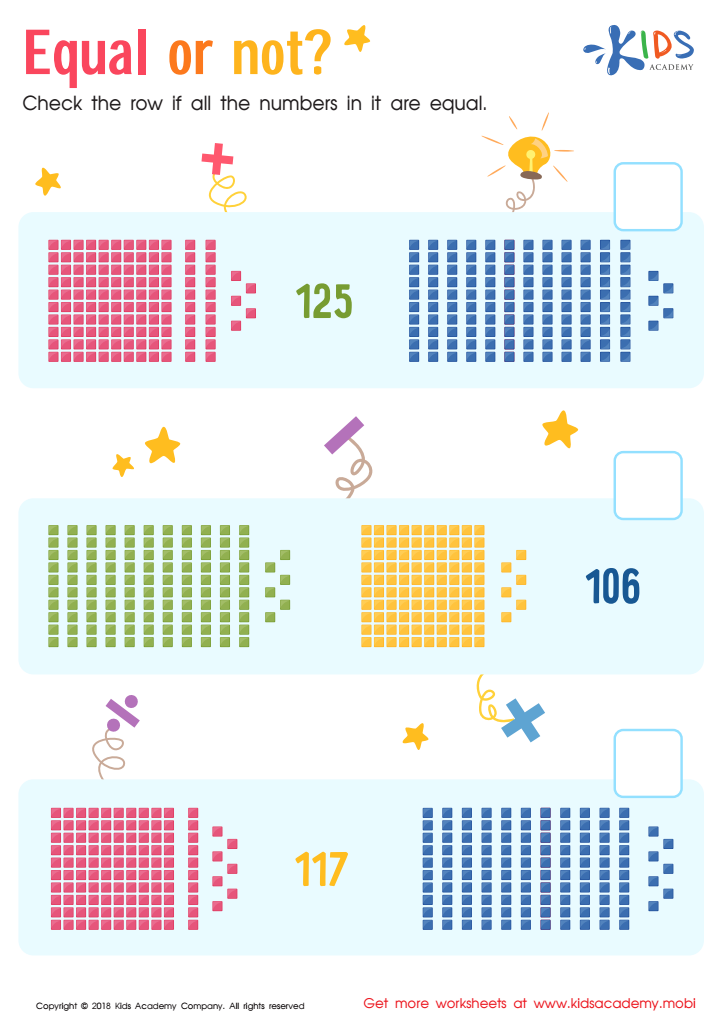
Equal or not Worksheet
 Assign to My Students
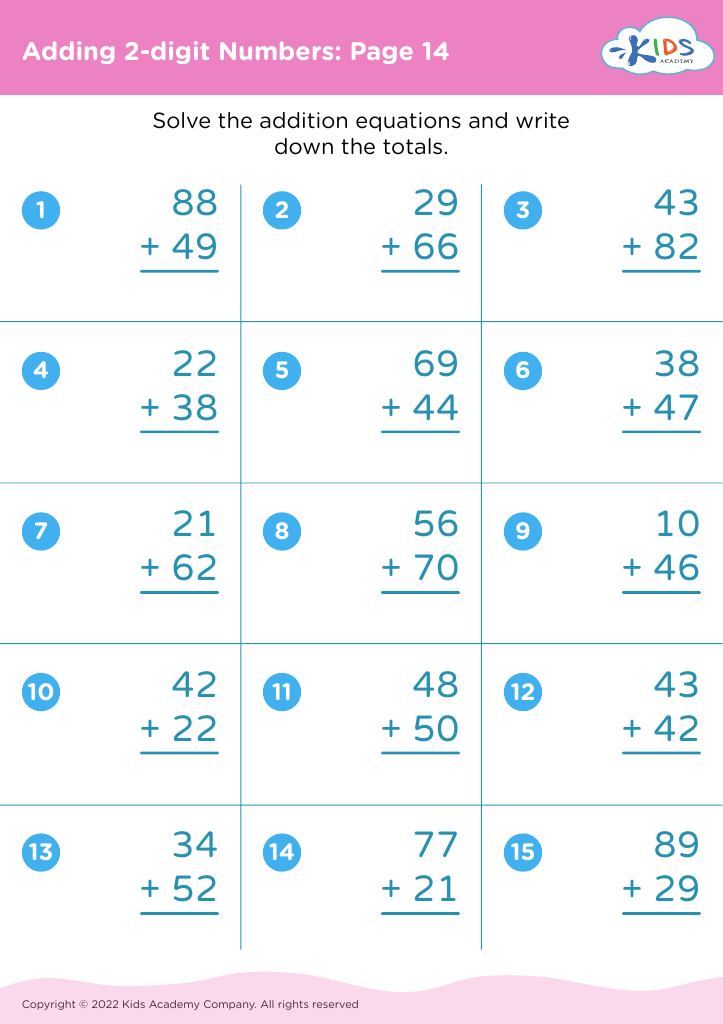
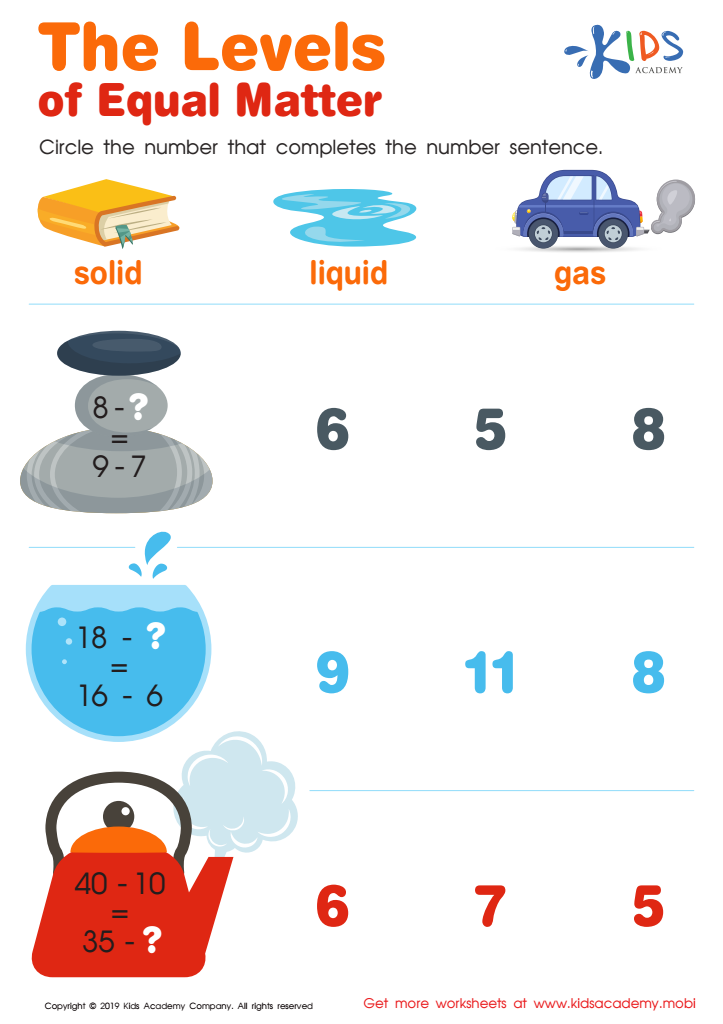
The Levels of Equal Matter Worksheet








Understanding equality in math for 6-7-year-olds is foundational for their overall cognitive and academic development. At this early age, grasping the concept of equality lays the groundwork for advanced mathematical reasoning. When children learn that the symbol "=" means "the same as," they start recognizing that quantities and expressions on either side should balance. This understanding is paramount for mastering arithmetic operations, such as addition and subtraction, and is crucial for solving mathematical problems with accuracy.
Parents and teachers should care about teaching equality because it promotes logical thinking and problem-solving skills, which are beneficial beyond math class. Engaging activities that reinforce equality, such as using balance scales or comparing sets of objects, help children internalize the concept in a tangible and meaningful way.
Moreover, understanding equality fosters a positive mathematical mindset. If children grasp these fundamental principles early, they are less likely to develop math anxiety and more likely to build confidence in their mathematical abilities. This early bolstering of math skills also contributes to a child's success in future subjects within STEM (Science, Technology, Engineering, and Math) fields.
In sum, emphasizing equality in early math education is crucial, as it shapes a child's ability to reason effectively, builds a strong foundation for advanced skills, and instills a confidence that will benefit their overall academic journey.








