Visual interpretation Math Worksheets for Ages 6-7
6 filtered results
-
From - To
Enhance your child's math skills with our engaging Visual Interpretation Math Worksheets designed for ages 6-7! These worksheets encourage children to use visual aids to solve mathematical problems, fostering a deeper understanding of concepts such as addition, subtraction, and basic problem-solving. By incorporating imaginative illustrations, our worksheets captivate young learners and make math fun! Parents and teachers can rely on these resources to support classroom learning or home study. Empower your child's mathematical journey with our tailored visual interpretation exercises, which promote critical thinking and creativity while building confidence in their abilities. Start exploring with Kids Academy today!
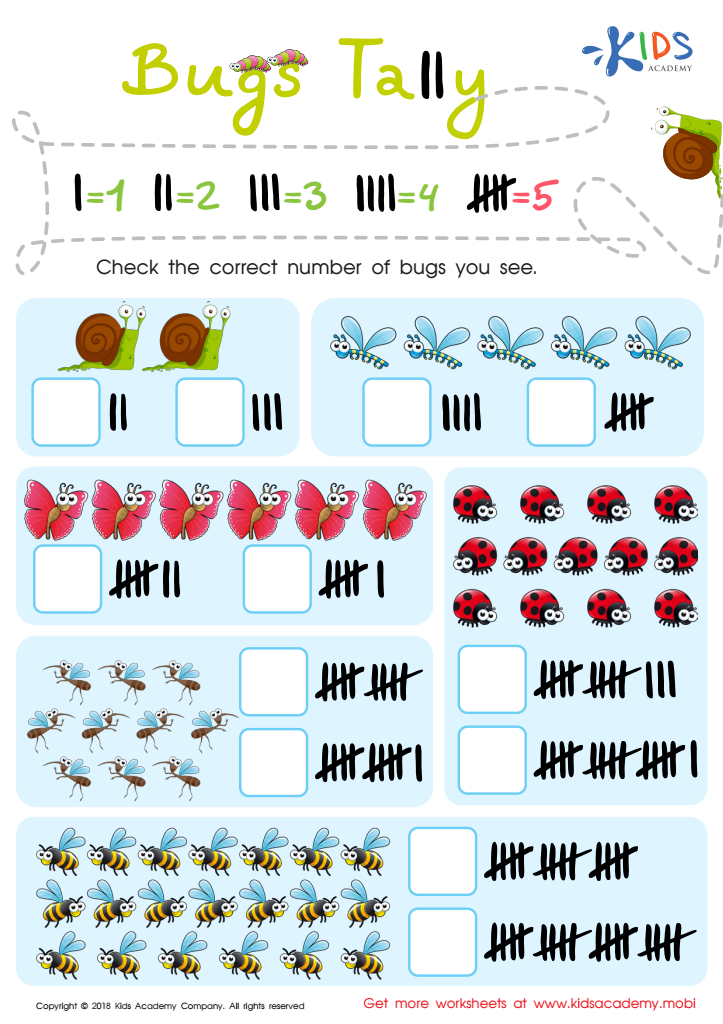
Bugs Tally Worksheet
 Assign to My Students
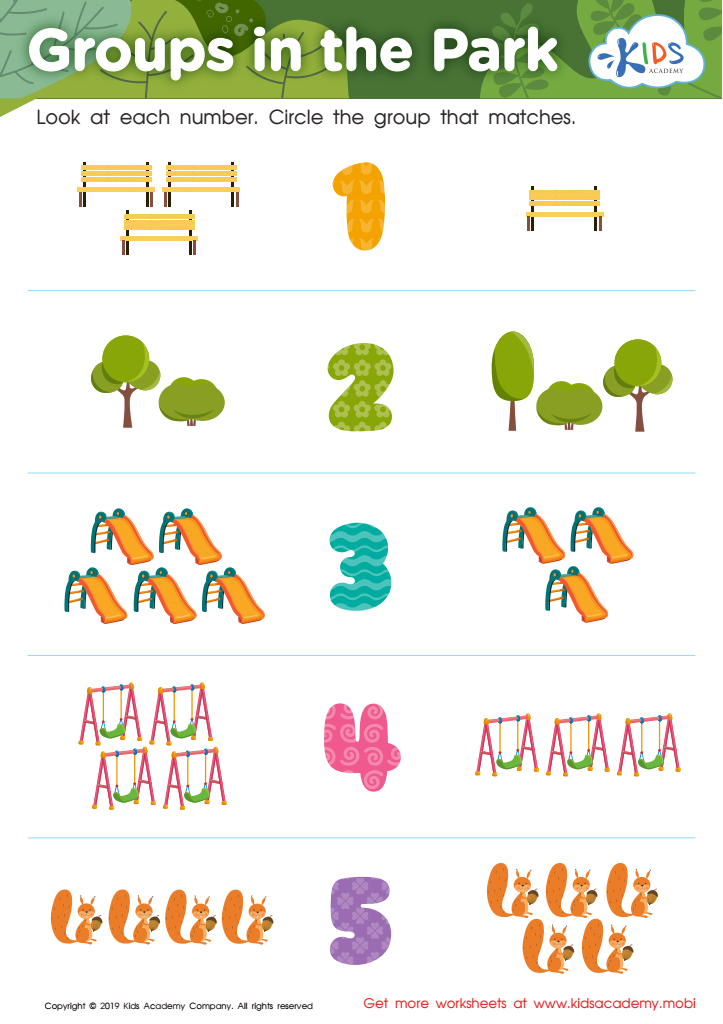
Groups in the Park Worksheet
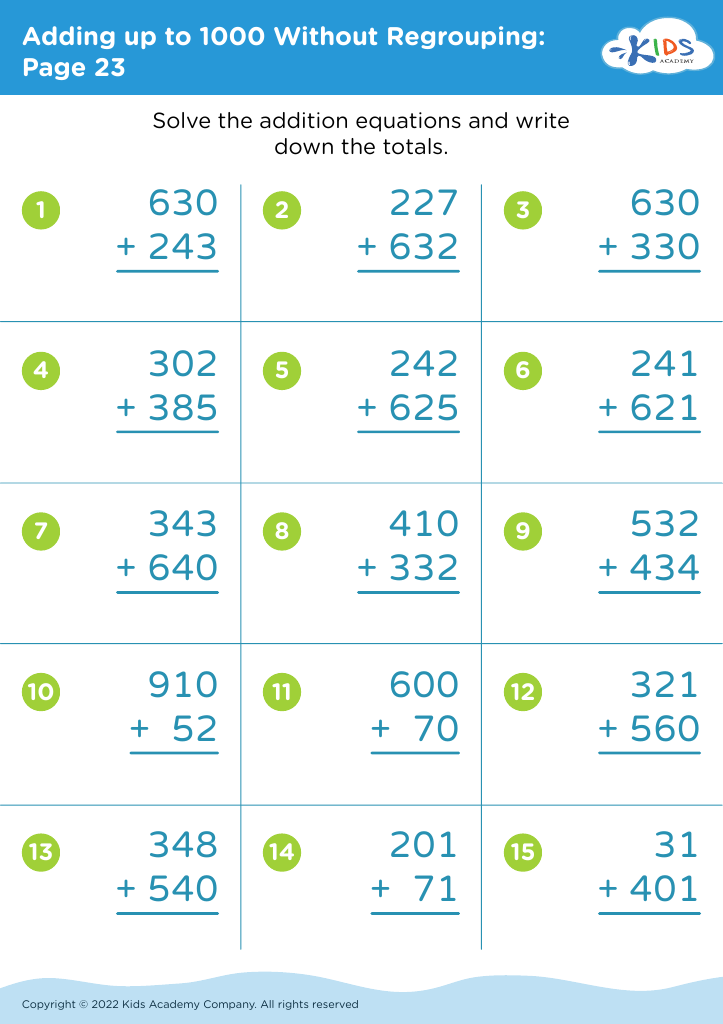
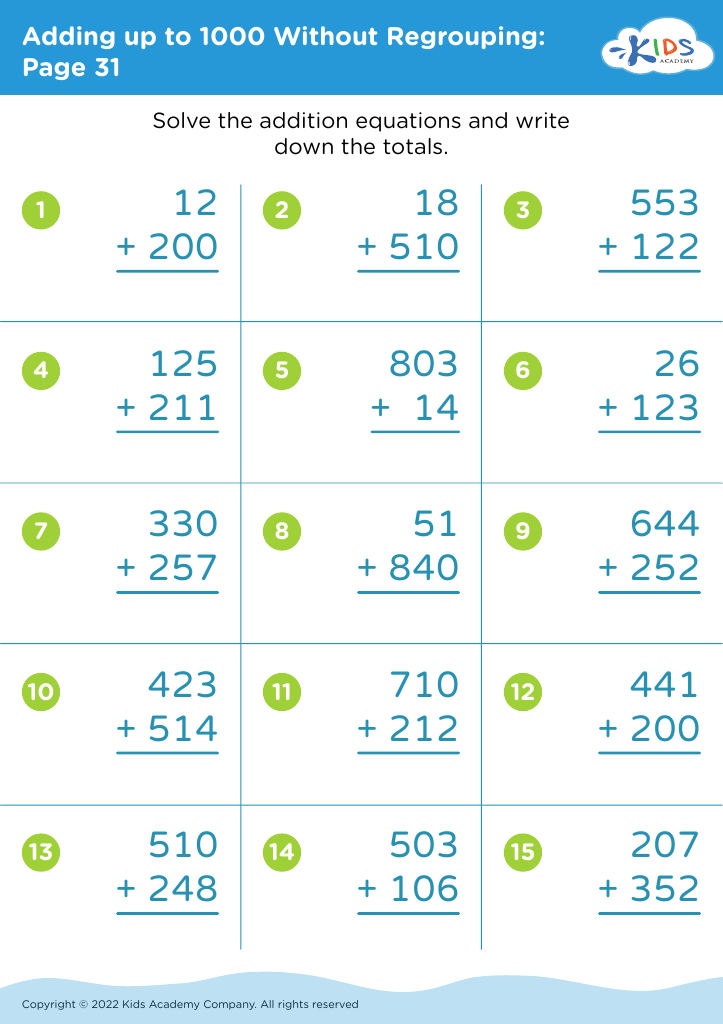







Visual interpretation in math is crucial for children aged 6-7 as it lays the foundation for their mathematical understanding and critical thinking skills. At this developmental stage, children are naturally drawn to visual learning; incorporating images, diagrams, and graphs helps them grasp abstract concepts more concretely. By using visual aids, young learners can better comprehend operations like addition and subtraction, making it easier to visualize quantities and relationships.
For parents and teachers, fostering skills in visual interpretation enhances students' problem-solving abilities. When children can “see” math, they become more engaged and are likely to develop a positive attitude towards the subject. Visual math encourages exploration and creativity, promoting a deeper understanding of patterns and shapes, vital for more complex math concepts later on.
Furthermore, visual interpretation assists in bridging the gap between math and everyday life, enabling students to apply their knowledge pragmatically. By supporting visual learning, parents and teachers are preparing children for future academic success and instilling lifelong skills, such as critical thinking, analysis, and confidence in their mathematical abilities. Prioritizing visual interpretation in math ensures that children are not just memorizing facts but are genuinely understanding and interacting with the world around them through mathematics.








