Animal identification Reading Non-Fiction Worksheets for Ages 6-7
3 filtered results
-
From - To
Welcome to our "Animal Identification Reading Non-Fiction Worksheets" for ages 6-7! These engaging worksheets are designed to enhance your child's reading skills while introducing them to fascinating facts about different animals. Through captivating images and informative text, kids will learn to identify various species, understand their habitats, and discover unique characteristics. Each worksheet encourages critical thinking and comprehension through fun activities, including matching and reading comprehension exercises. Ideal for both classroom settings and at-home learning, our resource promotes literacy and a love for wildlife. Stimulate your child's curiosity and support their educational journey with our animal-themed reading materials!
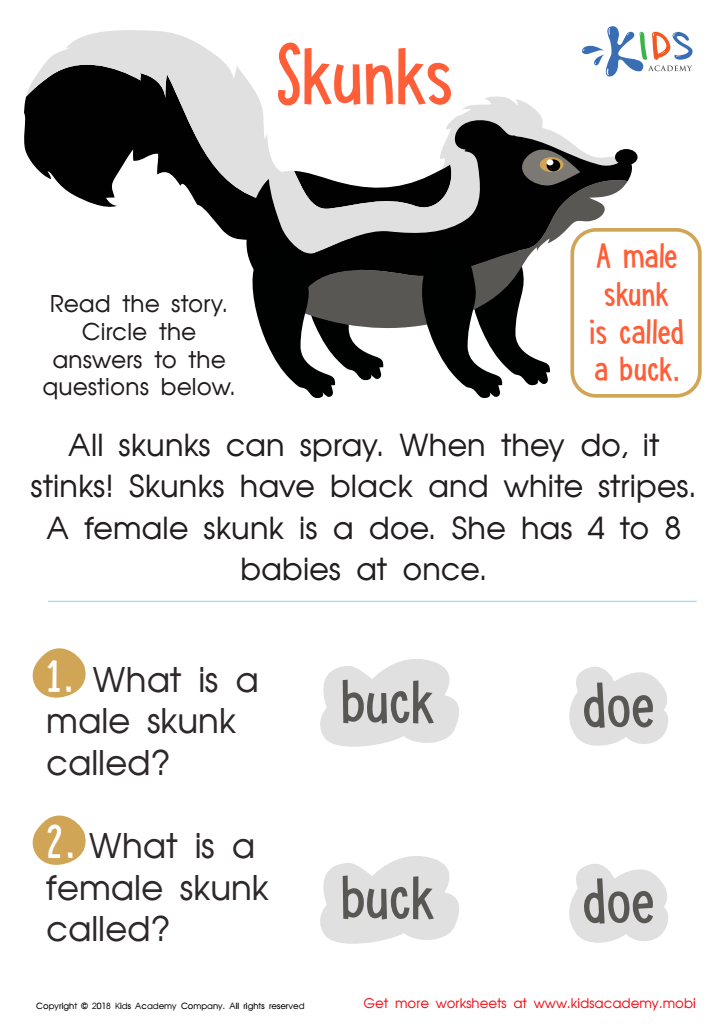
Skunks Worksheet
 Assign to My Students
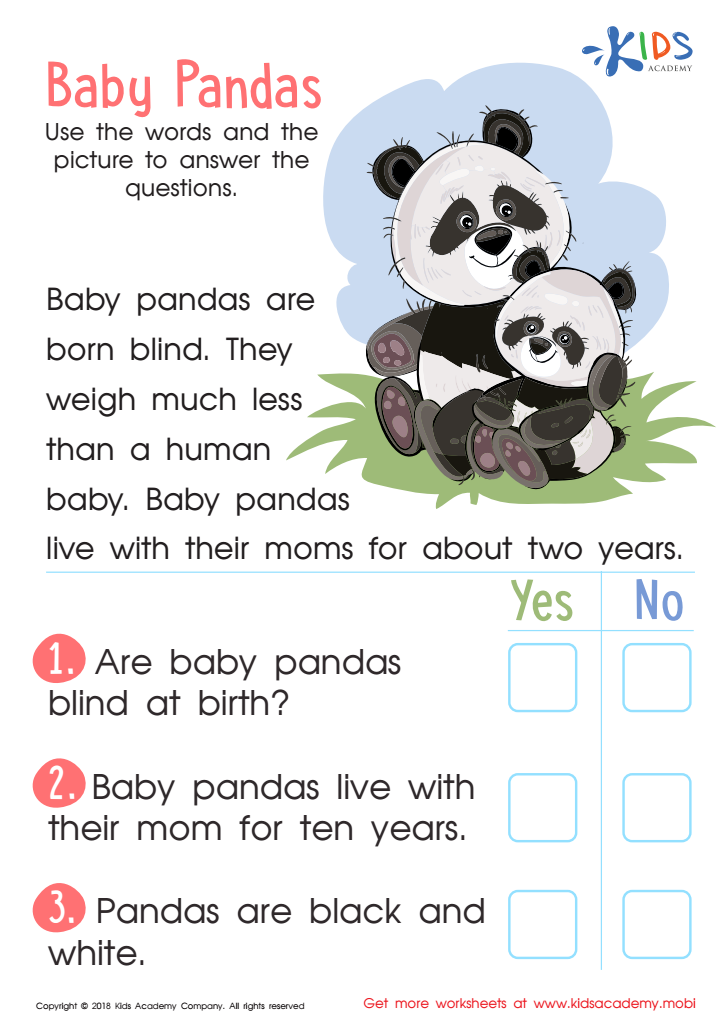
Baby Pandas Worksheet
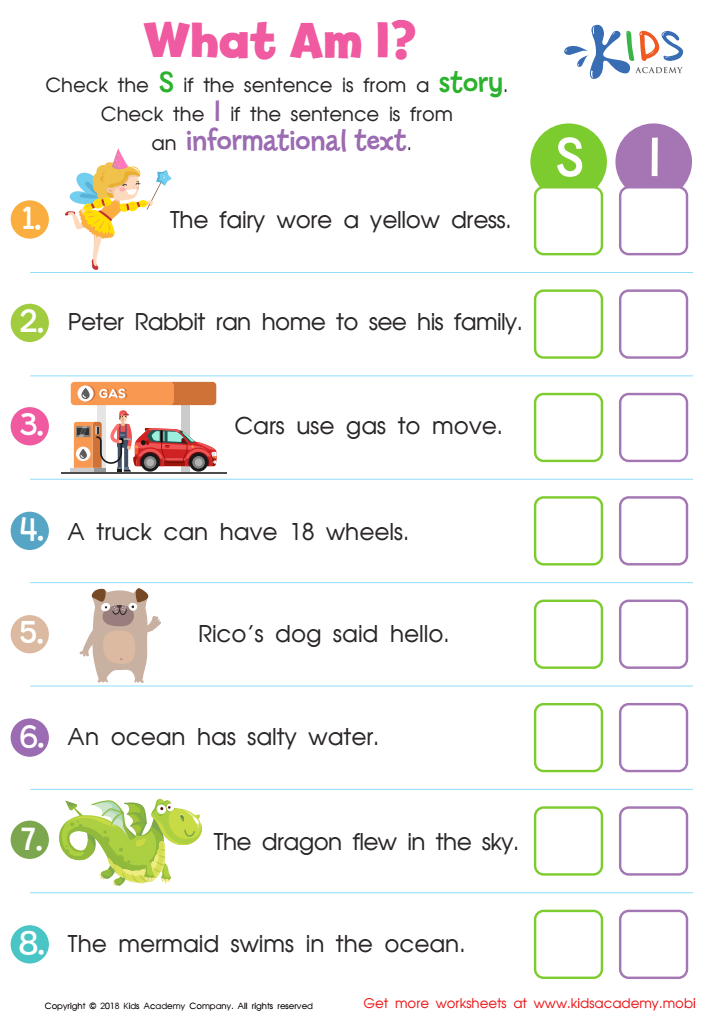
What Am I? Worksheet








Animal identification in non-fiction reading is crucial for children aged 6-7 as it fosters a love for learning and natural curiosity about the world. During these formative years, children are developing foundational skills in reading and comprehension, and non-fiction texts about animals provide engaging content that can captivate their interest.
By exploring various animal species, kids not only enhance their vocabulary and understanding of text structures but also cultivate critical thinking skills as they learn to identify and categorize information. This genre introduces them to scientific concepts, teaching them the importance of observation, classification, and ecosystems.
Furthermore, understanding animal identification prepares children to be informed, responsible future citizens. It encourages empathy for living creatures and motivates them to preserve wildlife and the environment. Parents and teachers play a pivotal role in guiding this exploration, helping foster discussions that deepen comprehension and encourage children to ask questions.
Overall, engaging children in animal identification reading is an important educational component that supports cognitive development, nurtures a sense of wonder about nature, and contributes to the development of future environmental stewards. Thus, it is vital for adults in a child's life to prioritize and support this aspect of their education.








