Enhancing observation skills Reading Non-Fiction Worksheets for Ages 6-7
3 filtered results
-
From - To
Enhancing observation skills through non-fiction reading worksheets for ages 6-7 is an engaging way to help young learners develop critical analytical abilities. Our carefully designed worksheets encourage children to closely observe details, make connections, and think critically about information presented in non-fiction texts. These activities promote curiosity and enhance comprehension, enabling students to derive meaning from factual materials. Perfect for classroom or at-home use, these worksheets support a love for reading while laying the groundwork for strong observational skills. Empower your child’s learning journey and cultivate essential skills that will serve them well in their educational endeavors. Explore our collection today!
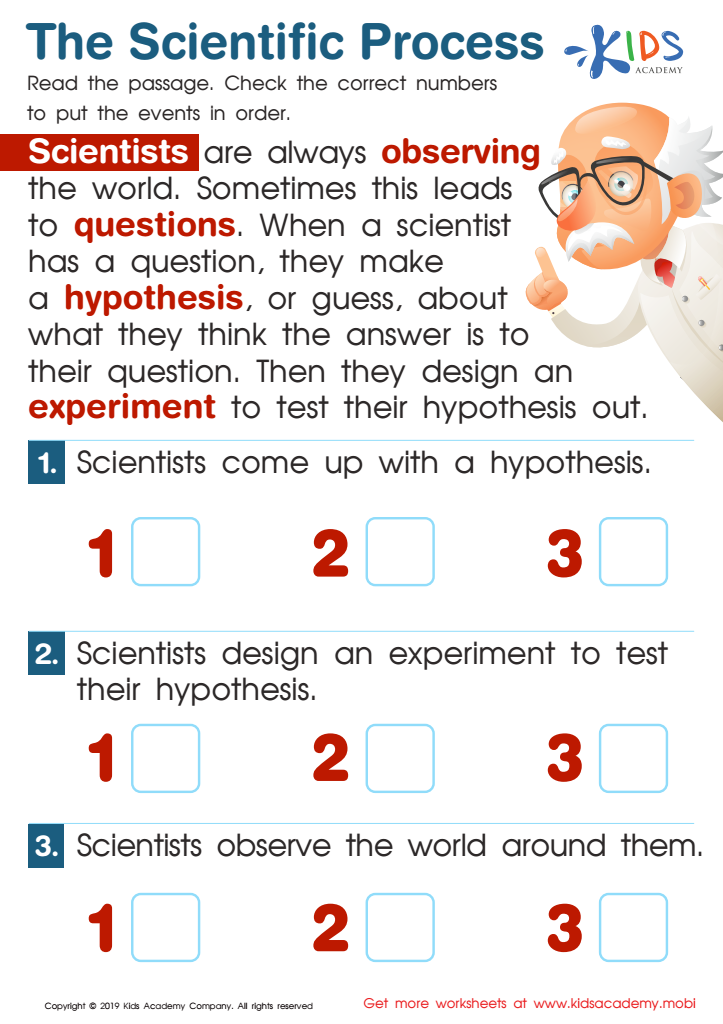
The Scientific Process Worksheet
 Assign to My Students
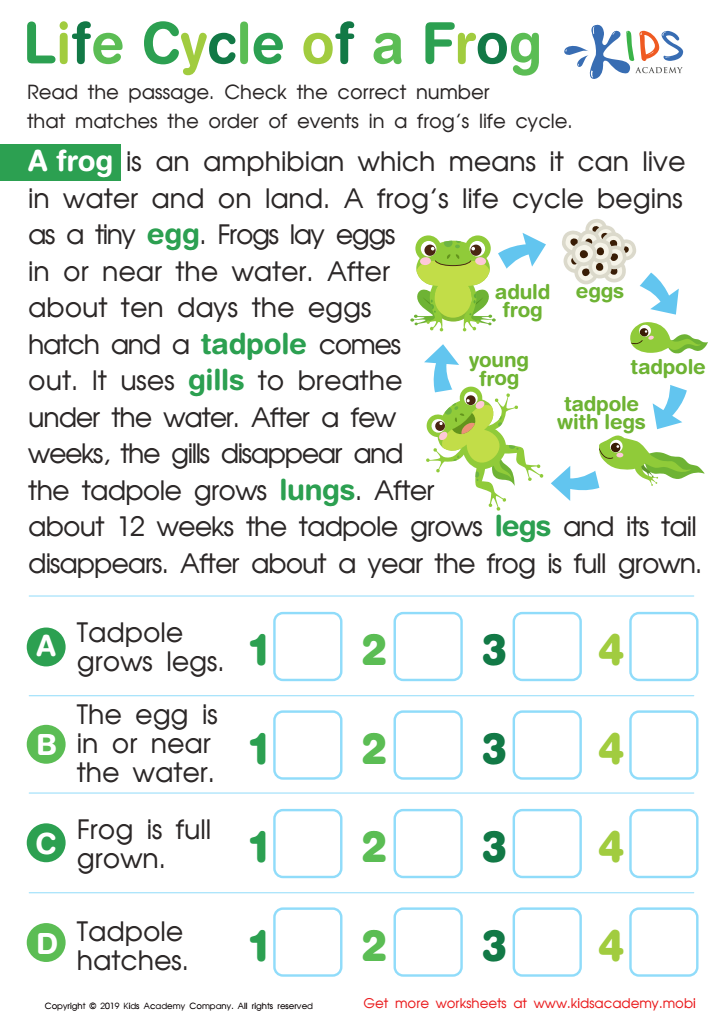
Life Cycle of a Frog Worksheet
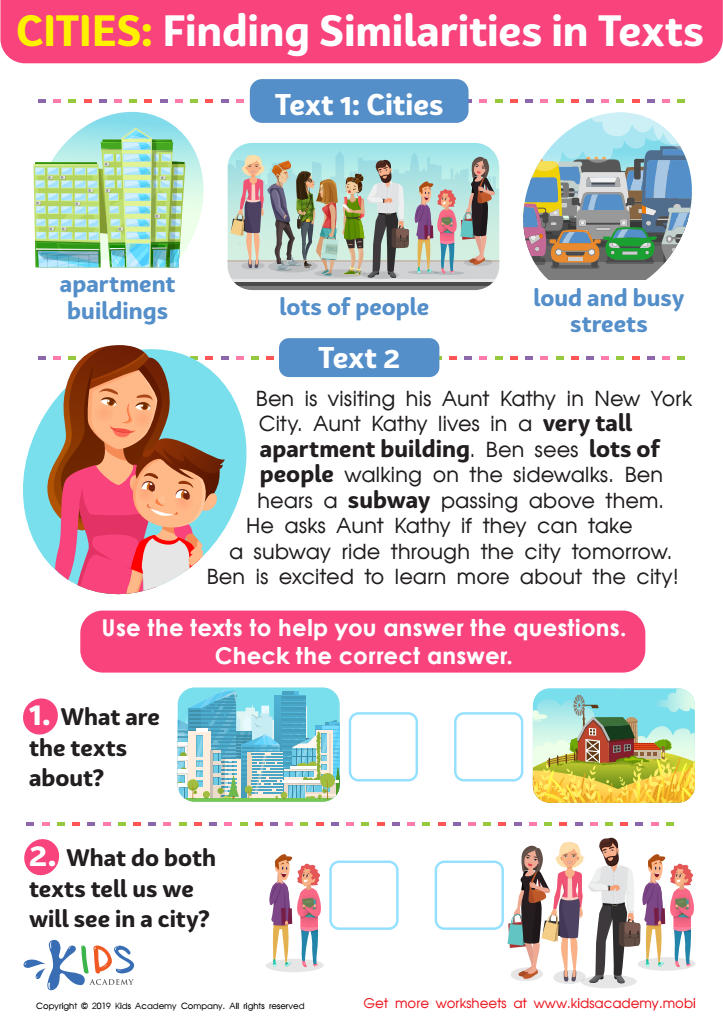
Cities: Finding Similarities Worksheet








Enhancing observation skills in young readers, particularly when engaging with non-fiction texts, is crucial for several reasons. Firstly, children aged 6-7 are at a pivotal developmental stage where they begin to make sense of the world around them. Non-fiction books provide opportunities to explore real-world concepts, fostering curiosity and critical thinking. By strengthening observation skills, children learn to identify and analyze details, such as labels, photographs, and diagrams, which are prevalent in non-fiction literature.
Furthermore, these skills promote comprehension and retention. When children observe key elements within a text, they grasp the material better, making connections that reinforce learning. Teachers and parents can facilitate this process by encouraging discussions about the observed details, fostering language development and vocabulary expansion.
Additionally, enhancing observation skills empowers children to become more independent learners. They learn to extract meaningful information, differentiate between important and irrelevant details, and apply their knowledge to various subjects. Ultimately, cultivating strong observation skills in the context of non-fiction reading not only enriches children's academic experience but also prepares them for lifelong learning, enabling them to critically engage with the vast information they encounter in an increasingly complex world.








