Information recall Reading Non-Fiction Worksheets for Ages 6-7
3 filtered results
-
From - To
Enhance your child's comprehension and memory skills with our Information Recall Reading Non-Fiction Worksheets designed for ages 6-7. These engaging and educational worksheets help young learners develop critical reading habits by focusing on the ability to recall essential details from non-fiction texts. Featuring a variety of interesting topics and interactive activities, these resources build foundational reading skills for academic success. Perfect for both classroom use and at-home practice, the worksheets encourage children to explore diverse subjects while enhancing their understanding and retention of valuable information. Elevate your child's reading abilities and foster a lifelong love for learning with our expertly crafted worksheets.
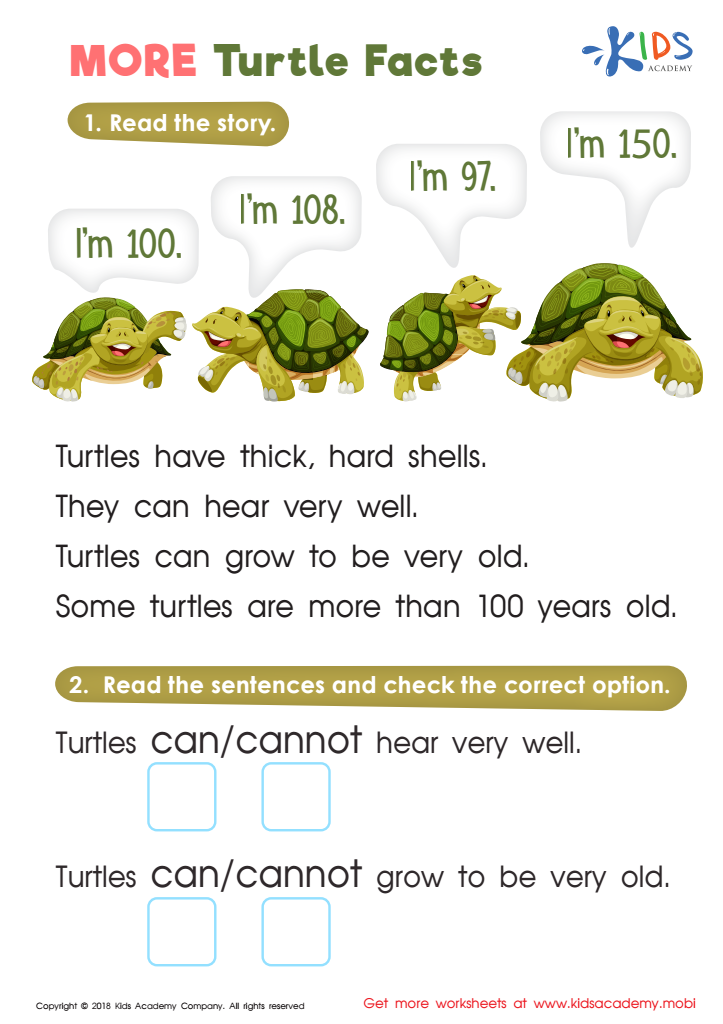
More Turtle Facts Worksheet
 Assign to My Students
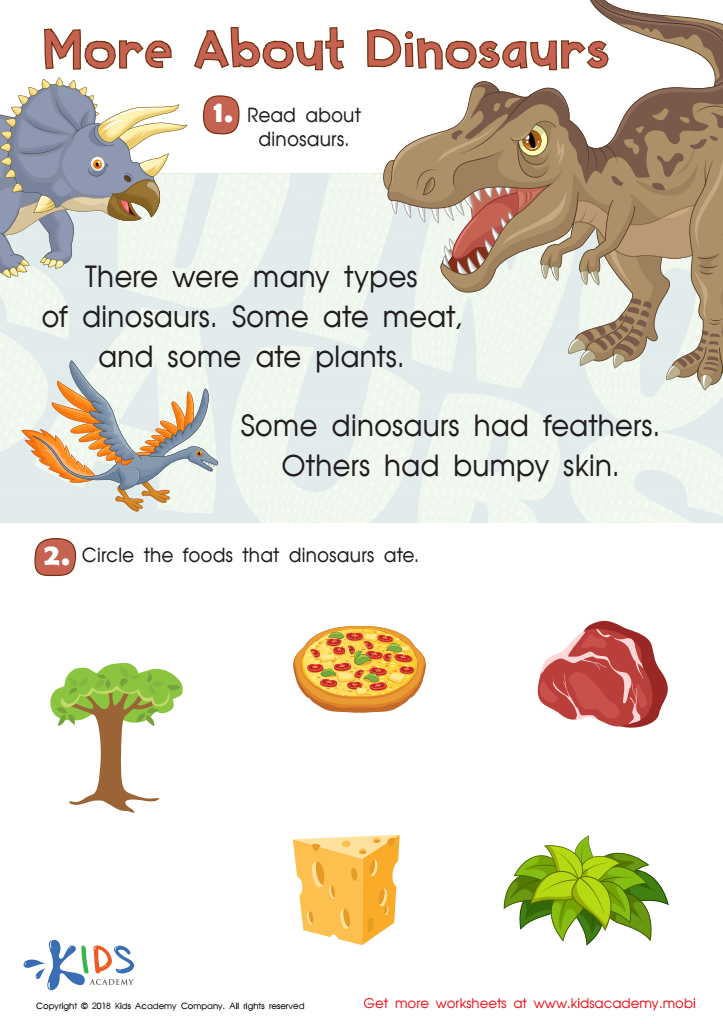
More About Dinosaurs Worksheet
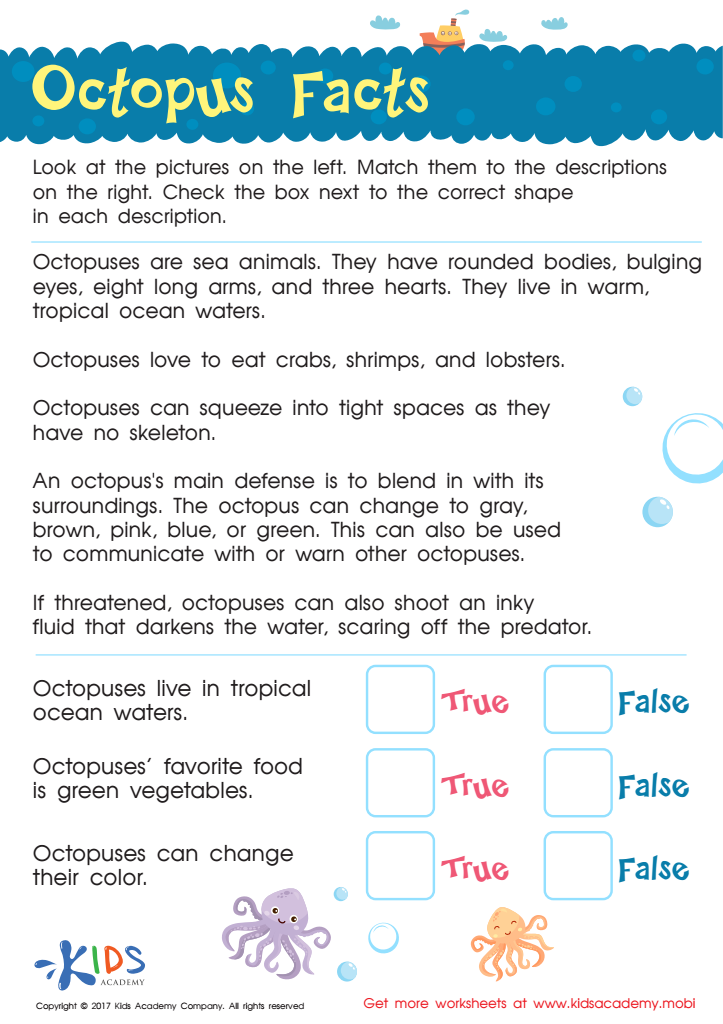
Octopus Facts Worksheet For Kids








Parents and teachers should prioritize information recall when teaching reading non-fiction to children aged 6-7 because it forms the foundation for lifelong learning and critical thinking. At this age, children transition from "learning to read" to "reading to learn," and mastering non-fiction content is crucial. By recalling information, children can comprehend and retain key facts, concepts, and vocabulary, which enhances their overall understanding of the world.
Non-fiction reading improves cognitive development and helps children become better problem-solvers. When children engage with non-fiction, they encounter real-world information that expands their knowledge base. Remembering this information allows them to make connections between different subjects and apply learned concepts to new situations.
Moreover, honing recall skills fosters academic success. Young students who can remember details from non-fiction texts perform better in academic tasks, such as discussions, exams, and projects. This boosts their confidence and encourages a positive attitude toward learning.
Finally, information recall in reading develops essential life skills. The ability to remember and articulate information improves communication skills, both written and verbal. It prepares children for future academic challenges and helps them become informed, analytical thinkers in their personal lives. Cultivating these skills early on sets students on a path to becoming competent and curious lifelong learners.








