Logical Reasoning Reading Non-Fiction Worksheets for Ages 6-7
3 filtered results
-
From - To
Enhance your child's critical thinking with our "Logical Reasoning Reading Non-Fiction Worksheets" designed for ages 6-7. These engaging worksheets focus on developing essential reading comprehension and logical reasoning skills through captivating non-fiction content. Children will practice identifying key ideas, making inferences, and drawing conclusions as they navigate fun and educational readings. Ideal for young learners, these worksheets support the growth of analytical capabilities crucial for academic success. Foster your child's intellectual curiosity and boost their confidence with our expertly crafted materials, aiding in the seamless amalgamation of reading enjoyment and logical analysis. Explore our collection today!
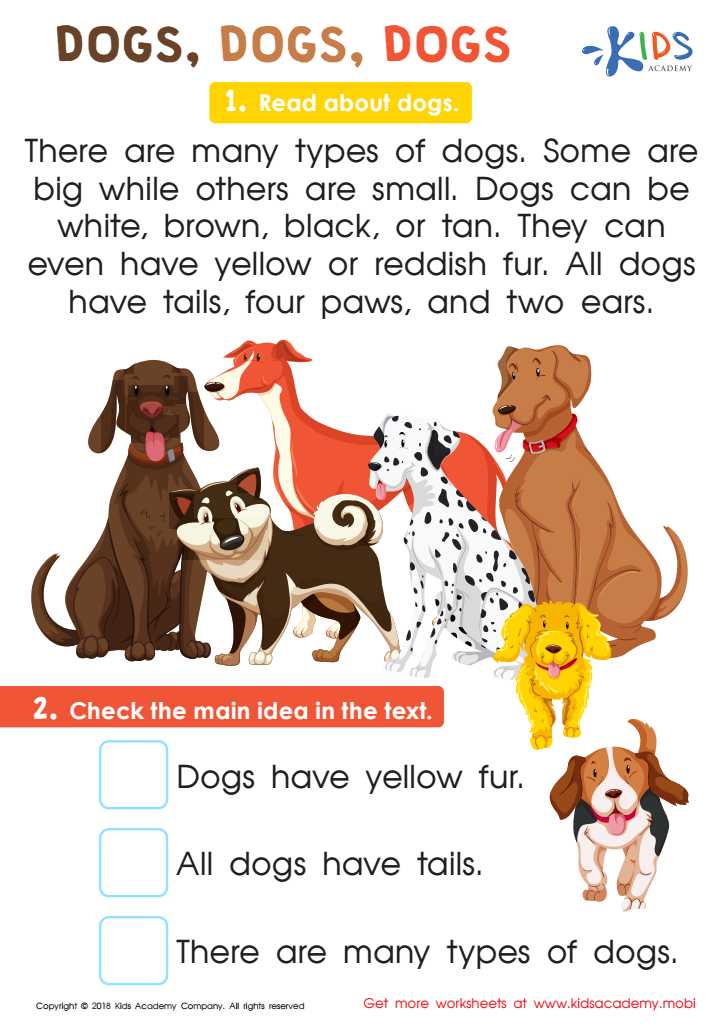
Dogs, Dogs Worksheet
 Assign to My Students
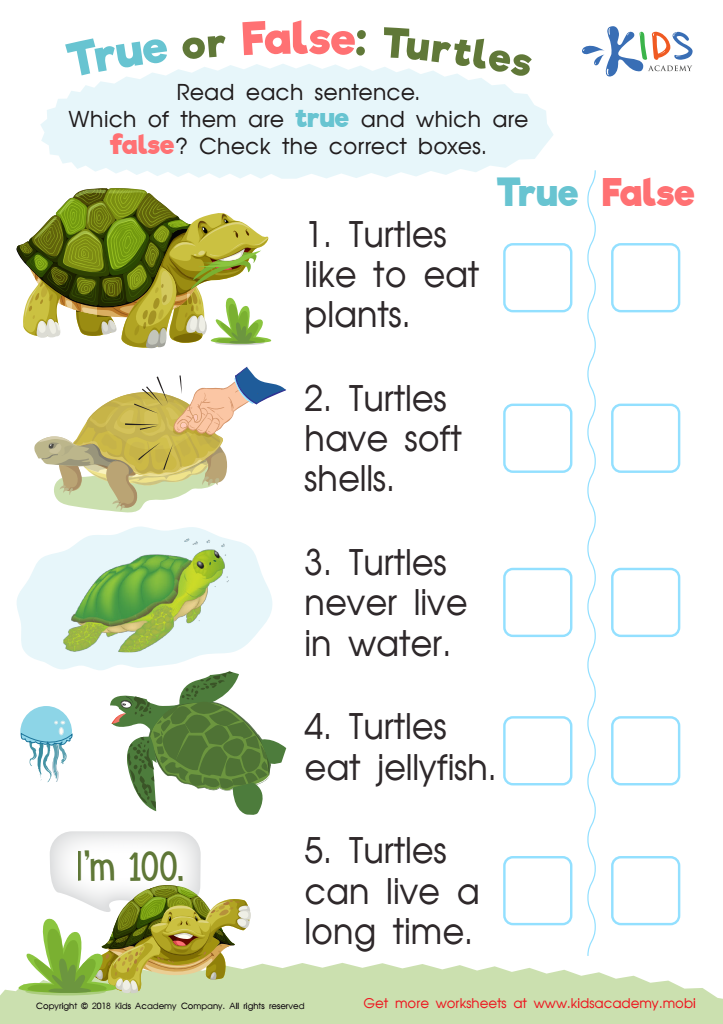
True or False: Turtles Worksheet
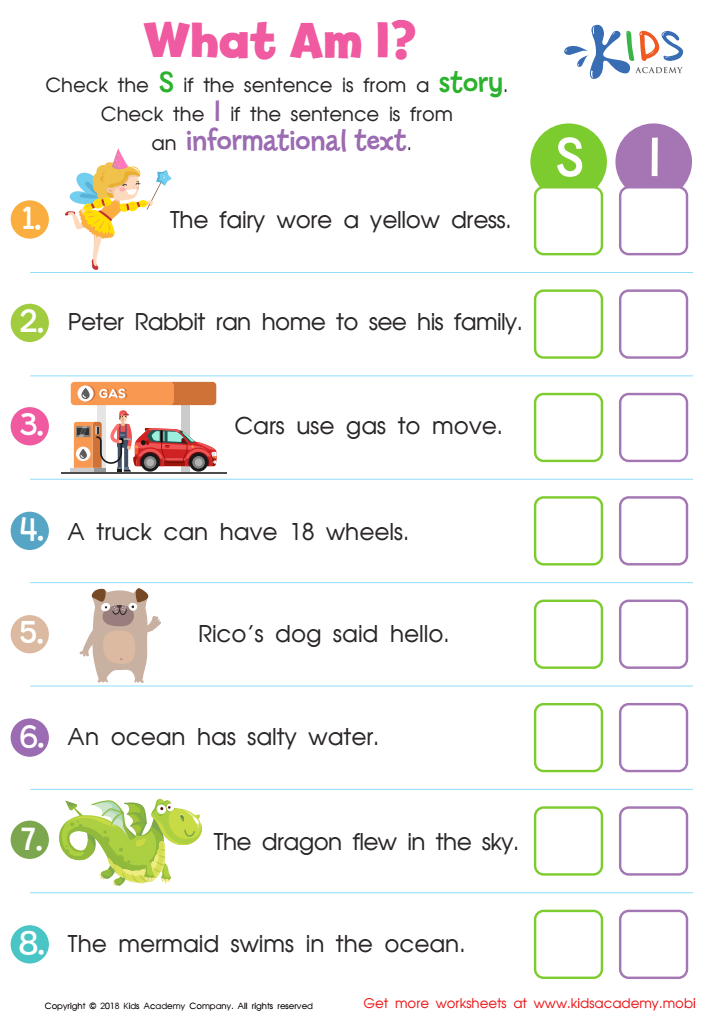
What Am I? Worksheet








Logical reasoning and non-fiction reading are vital components of early education that substantially impact a child's cognitive development and future learning potential. For ages 6-7, this period marks a critical stage where children begin to harness their natural curiosity and develop foundational skills for critical thinking.
Engaging with non-fiction texts allows children to encounter real-world phenomena, expand their vocabulary, and gain factual knowledge. This exposure not only broadens their understanding of the environment but also nurtures an analytical mindset. Logical reasoning involves piecing together information, forming connections, and drawing conclusions, which are essential skills for problem-solving and decision-making.
Parents and teachers who prioritize logical reasoning through non-fiction reading are effectively equipping children with tools for independent thinking. By fostering these skills early on, children become better at questioning information, evaluating evidence, and making informed decisions.
Additionally, non-fiction reading cultivates a sense of perseverance as children navigate through more complex and less narrative-driven content. This lays the groundwork for advanced comprehension skills and lifelong learning.
In essence, emphasizing logical reasoning and non-fiction reading for young children nurtures critical cognitive skills, promotes intellectual curiosity, and prepares them to tackle more intricate academic and real-world challenges incrementally.








