Understanding life cycles Reading Non-Fiction Worksheets for Ages 6-7
3 filtered results
-
From - To
Discover the fascinating world of life cycles with our "Understanding Life Cycles" Non-Fiction Worksheets designed for children aged 6-7. These engaging and informative resources are perfect for enhancing reading skills while exploring the natural processes of growth and change in various organisms. Each worksheet encourages critical thinking and comprehension through fun activities, including reading passages, visualization exercises, and thoughtful questions. Ideal for use in the classroom or at home, these worksheets foster curiosity about nature and encourage a love for learning. Equip young learners with the knowledge of life cycles, sparking their interest in biology and the environment today!
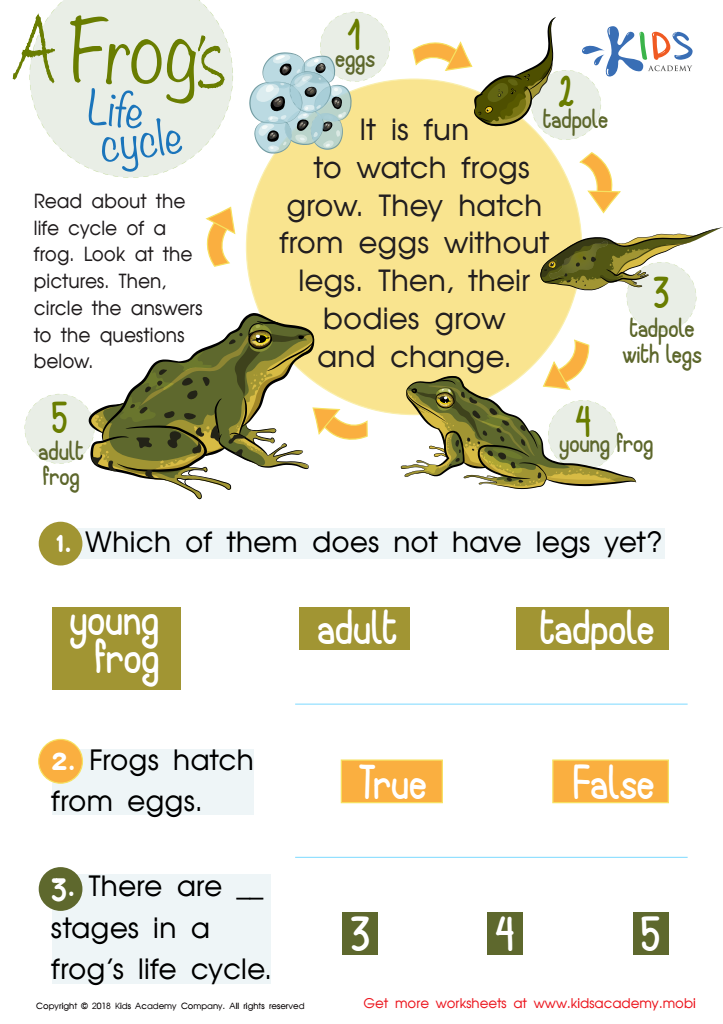
A Frog’s Life Cycle Worksheet
 Assign to My Students
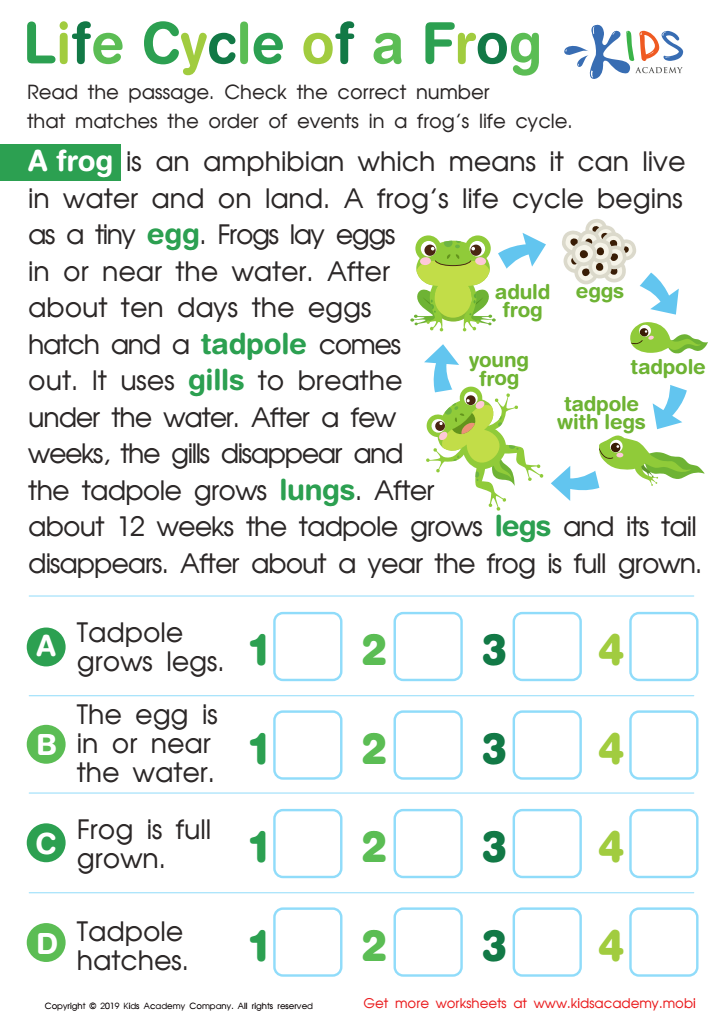
Life Cycle of a Frog Worksheet
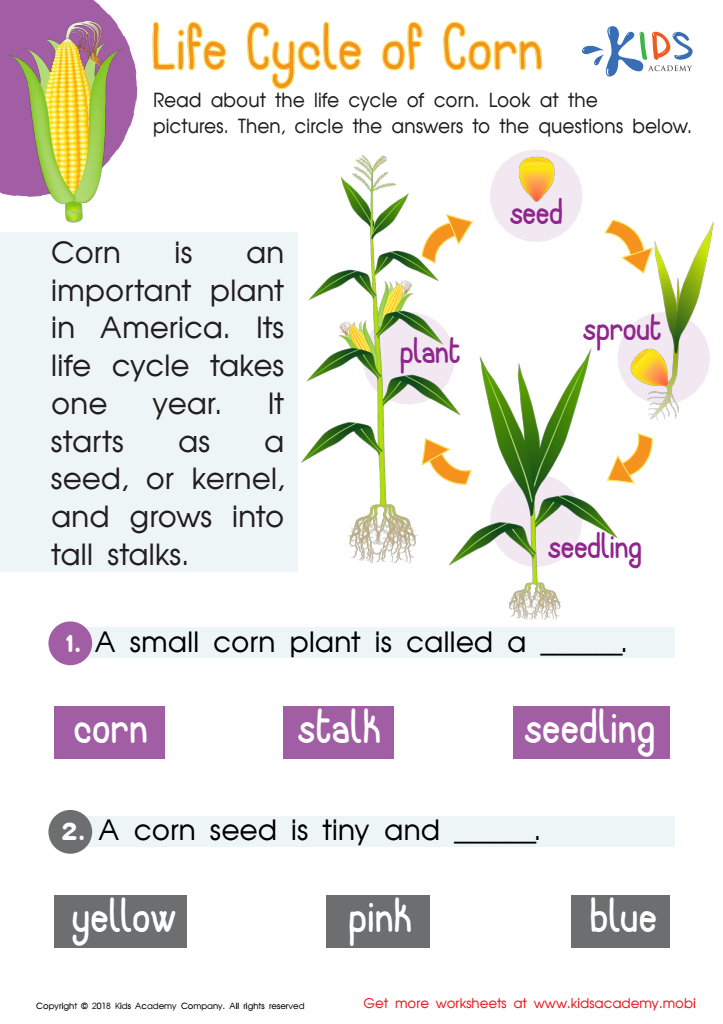
Life Cycle of Corn Worksheet








Understanding life cycles is a vital concept for children aged 6-7, making the reading of non-fiction texts on this topic particularly essential for both parents and teachers. Firstly, life cycles provide foundational knowledge about living organisms, connecting kids to the biological concepts of birth, growth, reproduction, and death. This comprehension cultivates curiosity about nature, encouraging children to observe and appreciate the world around them.
Non-fiction reading supports literacy development by introducing vocabulary specific to subjects like biology, enhancing reading skills, and fostering critical thinking through factual content. As children engage with different life cycles—from plants to animals—they learn to make connections between species and their environments, which can spark further interest in science.
Additionally, understanding life cycles can nurture empathy. Children learn the value of life and ecosystems, leading to a sense of responsibility for environmental stewardship. In a time where ecological awareness is critical, these lessons shape informed, conscientious future citizens.
By incorporating non-fiction reading about life cycles, parents and teachers can provide children with scientific knowledge, literacy skills, and moral development, all of which lay a strong foundation for lifelong learning and responsible living.








