
Vocabulary development Reading Non-Fiction Worksheets for Ages 6-7
3 filtered results
Difficulty Level
Grade
Age
-
From - To
Subject
Activity
Standards
Boost your child's vocabulary development with our expertly designed non-fiction reading worksheets tailored for ages 6-7. These educational resources focus on expanding young readers' word knowledge while engaging them with fascinating non-fiction content. Each worksheet is crafted to align with their reading level, encouraging improved comprehension and language skills. Our interactive activities include word matching, sentence completion, and context clues, making learning both effective and enjoyable. With topics ranging from animals to science, kids will love exploring and learning new words every day. Elevate your child’s learning journey and watch their vocabulary flourish with our non-fiction worksheets.
Favorites
With answer key
Interactive
The Dentist Worksheet
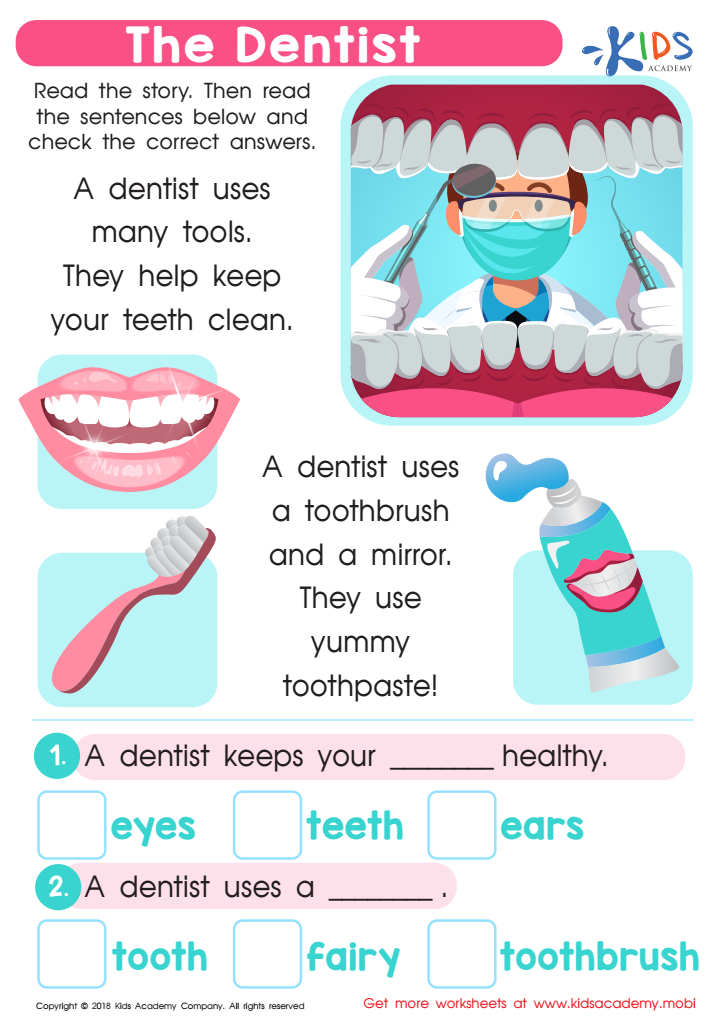
Community helpers are essential for our wellbeing. This vibrant worksheet is a great way to introduce children to the dentist and their tools. They'll read the text, use the pictures and answer questions about what the dentist does and what they use. It's a great way to make the dentist more approachable, as well as help with comprehension.
 Assign to My Students
The Dentist Worksheet
Worksheet
Learn About Vets Worksheet
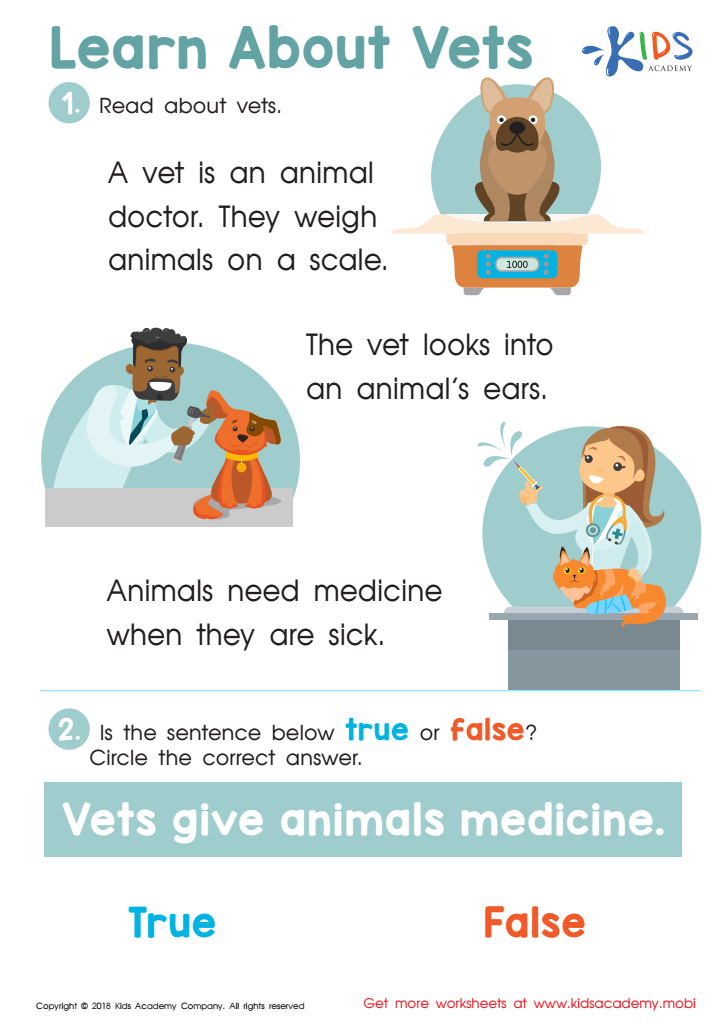
Assess your child's reading comprehension and recall with this ELA worksheet! It reviews interesting facts about vets with brief passages and pictures to help your reader. Ask the question at the bottom to see what they learned. It's a great way to check understanding!
Learn About Vets Worksheet
Worksheet
Marvelous Monarchs Worksheet
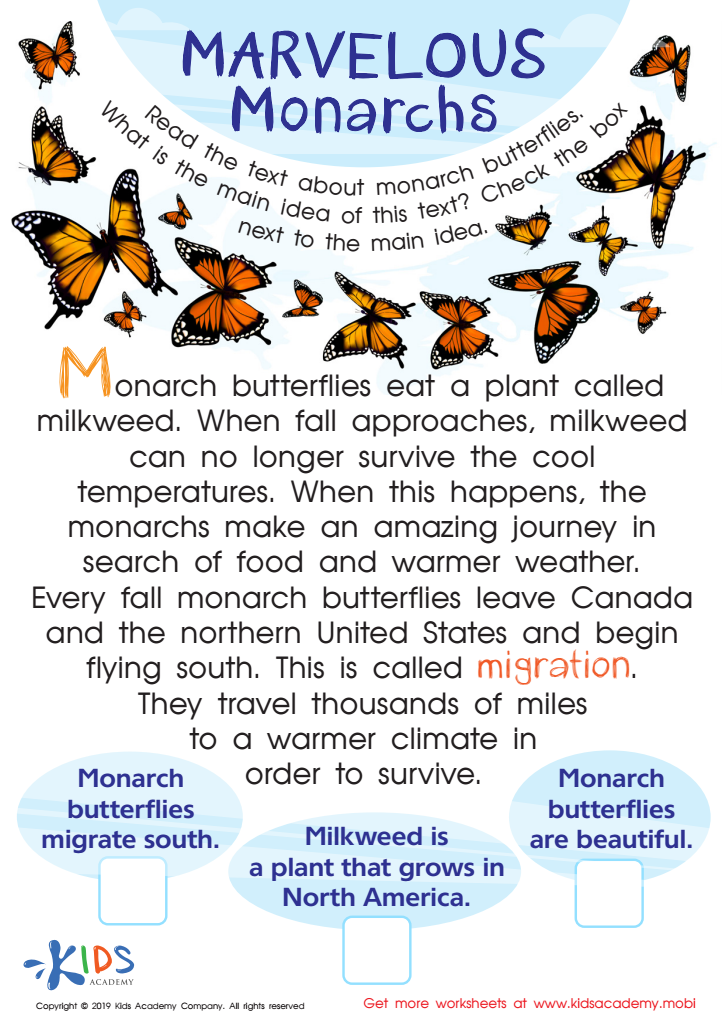
Help your kids have fun while reading - start with small words and short sentences. This worksheet can test your kids' reading and comprehension skills. Ask them to read the text about Monarch butterflies and help them locate the main idea.
Marvelous Monarchs Worksheet
Worksheet
Join Kids Academy for Free
Who is primarily going to use this learning content?








Parents and teachers should prioritize vocabulary development and non-fiction reading for young children, particularly those aged 6-7, because these foundational years are crucial for cognitive and literacy growth. At this stage, children's brains are highly absorbent, making it an optimal period for language acquisition. Expanding their vocabulary enhances their ability to comprehend and express ideas, which is essential across all learning areas.
Reading non-fiction introduces children to a broad range of real-world concepts, fostering curiosity and critical thinking. Non-fiction texts teach facts and information about science, history, nature, and other topics, which can spark interest and excitement about the world around them. This helps children form a well-rounded knowledge base, bridging the gap between what they know and new information, thereby improving comprehension skills.
Moreover, non-fiction reading aids in developing research skills and the ability to process and organize information logically. This prepares children not only for more complex reading tasks as they advance in school but also instills a lifelong interest in learning. In sum, focusing on vocabulary development through non-fiction equips children with essential tools for academic success and informed engagement with their environment.








